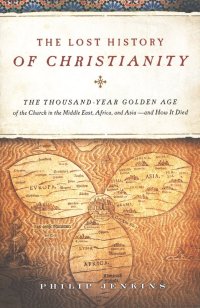
Reading Philip Jenkins’s history of Eastern Christianity yields some interesting insights.
 For the first time since 2018, thousands of college students will gather a few days after Christmas to talk about God’s mission to the world and their place in it.
Organizers of Urbana 2022, a missions conference run by the evangelical campus ministry InterVarsity Christian Fellowship, expect about 6,000 at the conference, to be held December 28-31 in Indianapolis.
That’s about 3,000 fewer students than organizers had first hoped for, said Greg Jao, chief communications officer for InterVarsity, and about 4,000 fewer than attended the Urbana 2018.
Founded in 1946, the Urbana conference has long been a highlight of evangelical ministry to college students. From 1948 to 2003, the conference was held on the campus of the University of Illinois at Urbana-Champaign.
In 1970, Urbana drew about 12,000 students, and by the 1980s and 1990s, it was drawing more than 18,000. Urbana 2000, the largest conference to date, drew more than 20,000. (CT reported that the event drew around 10,000 attendees in 2018 and 16,000 in 2015.)
Past conferences have included evangelical legends such as Billy Graham, Elisabeth Elliot, Francis Schaeffer, Rick Warren, and John Stott as speakers.
Jao said that lingering concerns over COVID-19 and the country’s economic woes are helping to drive projected attendance down for the conference, usually held every three years, but delayed until this year by the pandemic. Like many churches, he said, InterVarsity and other campus ministries are still rebuilding their attendance.
With the first normal school year since the pandemic started in 2020, many students are taking their accustomed Christmas break at home for Christmas. Others are still wary of large gatherings, especially one that lasts several days.
“COVID has had an effect,” said Jao, “in the sense that people aren’t sure if they want to gather with large groups of strangers. Some also just think, ‘I want to be home for Christmas.’”
Inflated travel costs likely play a role as well. Jao said he’s heard from students who were planning to come but balked when they saw airline tickets running twice as high as in 2018.
Jao said InterVarsity leaders have known for months that attendance would likely be down. They’ve been focusing on getting students to come to local conferences or back involved in regular activities at InterVarsity’s 700 chapters across the country
Getting students to sign up for the conference has been a challenge as well. Generation Z students, he said, like to keep their options open and appear less willing to sign up in advance. So past recruitment strategies for the conference, such as offering “early bird” discounts, haven’t worked as well as they have in the past, said Jao.
Urbana has long been known for its focus on addressing the changing role of missionaries in the world, and in addressing social issues in the US. The 1970 conference included addresses from African theologian Byang Kato and Indian evangelist Samuel Kamaleson as well as a speech from Tom Skinner about the connection between social issues and the Christian faith.
“There is no possible way you can talk about preaching the gospel if you do not want to deal with the issues that bind people,” Skinner told students in 1970. “If your gospel is an ‘either-or’ gospel, I must reject it.”
The 2015 Urbana conference caused some controversy after speakers expressed support for the Black Lives Matter movement.
Jao said that the 2022 conference will feature speakers and music from the church outside the United States, designed to help students experience worshipping a “global God.”
“The goal is not to have a Westerner up there saying, ‘Go,’” he said. “It’s actually to have the global church say, ‘We welcome you. Come.’”
He suspects that the decline in 2022 is more of a blip than a long-term trend. And he said that missions remain a core focus of InterVarsity, which serves more than 45,000 students in its chapters. About half the students involved in InterVarsity are students of color.
“We believe God’s bringing a group of core college students who need to hear his invitation,” he said. “Inviting people to God’s global mission has been part of our history from the very beginning, and we’re going to keep doing it.”
In a couple of weeks, we’ll publish a full review of Philip Jenkins’s The Lost History of Christianity on the Christian History website. The book is a wide-ranging study of how religions cope with pressures from changing political fortunes and competing religions – and of how religions fail in the face of such pressures. The author’s main case study is that family of Eastern Christian churches known as Monophysite, Jacobite, Nestorian, or non-Chalcedonian, once a powerful religion from Syria to India and an influence for a while on China. But those churches have been brought to greatly reduced circumstances and in some places extinguished. Jenkins asks why and draws lessons for dealing with contemporary threats to Christianity.
I’ll leave the evaluation of the book to our reviewer, David Koyzis of Redeemer College. For the moment, I’d like to whet your appetite with two tidbits gleaned from my reading of the book.
Constructing Islam on Christian Foundations
First tidbit: Jenkins stresses how much Islam, Christianity’s main competitor in the lands where Nestorians once dominated, borrowed from Christian sources. Much about Islam seems strange to Western observers. But to Syriac and Mesopotamian Christians in Islam’s early years, much would have seemed very familiar – familiar to the point that Islam’s closest Christian critic, John of Damascus, treated it as a Christian heresy rather than as a distinct religion.
Jenkins writes:
Mosques look as they do because their appearance derives from that of Eastern Christian churches in the early days of Islam. Likewise, most of the religious practices of the believers within those mosques stem from the example of Eastern Christians, including the prostrations that appear so alien to modern Westerners. The severe self-denial of Ramadan was originally based on the Eastern practice of Lent. The Quran itself often shows startling parallels with Eastern Christian scriptures, devotional texts, and hymns.
As to those Christian sources for Quranic materials, later in the book Jenkins writes that “most of the Quranic stories about Mary and Jesus find their parallels not in the canonical four Gospels but in apocryphal texts that circulated widely in the East. … The Quran also presents the death of Jesus in exactly the language of those heretical Eastern Christians known as Docetists, who saw the event as an illusion rather than a concrete reality.”
No wonder early observers thought of it as a heresy rather than a different religion. And no wonder it was able to ease the transition of early adherents.
Where the Church Lives Despite Persecution
Second tidbit: Jenkins poses the question as to why Christianity survived in some places where Islam became dominant and almost completely disappeared in others. He chooses as his case studies the Coptic Christians in Egypt (successful survival) and the church in the North African territories around Tunis and Carthage (total eradication of the Christian population).
Both Christian civilizations were overrun by Muslim forces. But the Copts survived and today they continue to thrive spiritually in spite of repressive political and cultural forces. But the North African churches where Tertullian, Cyprian, and Augustine had ministered simply disappeared.
What was the difference? The culture of the church at Carthage was Latin, and, Jenkins writes, “where the [North] African church failed was in not carrying Christianity beyond the Romanized inhabitants of the cities and the great estates, and not sinking roots into the world of the native peoples.” St. Augustine “by far the best known of African bishops … expressed no interest in the rural areas or peoples of his diocese.”
The Copts of Egypt present a great contrast. Although theologians like Athanasius wrote and spoke Greek, the philosophical lingua franca of their times, the Coptic church was anchored in popular movements and the language of indigenous people. Its monastic movement was a key factor. St. Anthony, the desert monk who pioneered monasticism, spoke the people’s Coptic and no Greek, and he drew his fierce spiritual warriors from among the common people. The Coptic Church had sophisticated theological and spiritual literature in the people’s native tongue from early days. By the time the Muslims arrived in the seventh century, the church had long been thoroughly indigenized.
In urban cultures, a hostile religious or political force can banish church leaders and severely restrict the activities of believers. But as a general rule, in the countryside and in the villages, such tight control is very difficult. Thus churches that thoroughly indigenize have a greater chance of surviving hostile turns of history.
* * *
Jenkins’s book is full of information about the Church of the East and insights about what factors contribute to the survival or extinction of religions. There’s much here worth pondering. Watch for the full review in January.