This list represents my own desire during this holy season to experience new birth in my soul, as modeled by that divine-human baby lying humbly in the manger. My main interest is in learning how to do discipleship, in finding affective theology to grow in me a more Christ-minded, thankful, wonder-filled, and kinder lifestyle. These are the books I am sipping tea over and steeping in this Christmas.
 This is the first Christmas with Bethlehem under Jewish political control, and Christians are making the most of it. Some 50,000 tourists, reportedly the largest number ever, were expected to flock into the little town to mark the birth of the Saviour at the place where it happened. To help control the crush, Israeli authorities planned to prohibit non-Christian visitors from entering Bethlehem during the holidays.The big event is a midnight mass at the Church of the Nativity. This year it will be televised around the world via Telestar satellite, according to Religious News Service. Only 700 people can squeeze into the church, but in the adjacent square about 10,000 can watch the mass on a big TV screen.In years past Protestants have been barred from the church. In case of bad weather the Greek Orthodox group has invited them in.For Protestants, the big events are in the Shepherds’ Fields adjoining Bethlehem. Part of the land is owned by the YMCA, and Christmas eve services are held in the same large caves where shepherds took refuge nearly two thousand years ago. The Christmas eve services include times of fellowship and partaking of bread together.For the first time since Israel became a state in 1948, a considerable number of Christian Arabs who are Israeli citizens will be able to go to Bethlehem for Christmas. While Bethlehem was under the rule of Jordan, only a limited number of these Arab Christians were allowed entrance. Bethlehem came under Jewish control last June during the brief war in which Israeli troops swept eastward to the Jordan River, but its fate is extremely uncertain. Although the U. N. Security Council has agreed on delicately balanced guidelines for an indirect Arab-Israeli dialogue on the Middle East crisis, U. N. diplomats generally concede that things may worsen before they get better.People from all over the world go to Bethlehem for Christmas. Evangelicals in recent years have shown a special bent for travel to the Holy Land, and the June war enhanced their interest not only in the geography of Palestine but in its history and, even more, its eschatology.Curiosity has been centered on the question whether the Temple will be rebuilt. Israeli officials from Foreign Minister Abba Eban on down flatly deny any such plans. But rumors persist. A few years ago reports were widely circulated that a prefabricated temple destined for Jerusalem was seen at a port somewhere in Florida. More recently, just before the outbreak of the June war, an advertisement in the Washington Post invited correspondence from people interested in helping to rebuild the Temple. (A CHRISTIANITY TODAY inquiry went unanswered, and the Post refuses to identify the advertiser.)In August, a Hong Kong missionary, Michael Browne, reported in The Christian and Christianity Today that “Israel government representatives have ordered 60,000 tons of finest Bedford stone from Bedford, Indiana, to be used in the erection of the Jerusalem Temple.” The report got major display treatment in the weekly evangelical newspaper, which is the British sister publication of CHRISTIANITY TODAY. Key industry sources in Indiana disclaimed any knowledge of the deal. But Dr. J. D. Douglas, editor of the London-based publication, stood behind the report and said a follow-up article is in the making.Browne wrote that “five hundred rail-car loads of stone from Bedford, considered to be among the finest building stone in the world, are being freighted pre-cut to exact specifications, and one consignment has already been dispatched to Israel. Shipments are being handled by Pier 26 in New York.”He cited a report from “authoritative sources in Sellersburg, Indiana,” adding: “Cornerstones for the third Jersualem Temple are already in Israel. Materials for this Temple have been secretly in preparation for seven years,” the report went on, “and it is believed American Jews are mainly responsible for financially undergirding the whole project. Strong rumors from other usually reliable circles say the two freestanding pillars for the new Temple have already been cast in bronze.”Such reports are of unusual interest to dispensationalists, the eschatalogical monitors among evangelicals, who insist that Old Testament covenants with the nation Israel are yet to be literally fulfilled. A few dispensationalists regard the current state of Israel as a fulfillment of biblical prophecy, but most key thinkers of this school argue that the Jews there are still at the political mercy of the Gentile nations. The consensus is that the “times of the Gentiles” will not be concluded until the second coming of Christ, following seven years of tribulation after the rapture of the Church.The brightest new exponent of this view, Dean Charles Caldwell Ryrie of Dallas Theological Seminary, discussed some of his convictions at a prophetic conference in Washington, D. C., last month. Like another speaker who said he was pre-everything (“I don’t even eat Post Toasties anymore”), Ryrie believes that rapture of the Church and seven years of tribulation will precede the end of “the times of the Gentiles.”A Phi Beta Kappa from Haverford College with a Ph.D. from Edinburgh, the 42-year-old Ryrie typifies a moderating trend within dispensationalism. The swing away from the traditional seven distinct dispensations is underscored in the New Scofield Reference Bible (the first Scofield was the literary focus of dispensationalism for two generations). Ryrie defines a dispensation merely as “a distinguishable economy in the outworking of God’s purpose.” Unlike most dispensationalists of the past, he does not consider specific blocks of time as part of the system.A 1965 book, Dispensationalism Today, lifted Ryrie to the role of scholarly spokesman of moderate dispensationalism. The tall, blond, quiet-spoken son of an Illinois banker was reared in an American Baptist church and now belongs to the First Baptist Church of Dallas, largest in the Southern Baptist Convention.WHITEST CHRISTMASChristmas couldn’t be any whiter than it is in Labrador, that far-north tract of Canada which this year marked the seventy-fifth anniversary of the start of Wilfred Thomason Grenfell’s remarkable work. Today he is honored in many parts of the world as “the Good Samaritan of Labrador,” or even, without exaggeration, as “the creator of a new Labrador.”The Grenfell saga began when he entered a huge tent-like building in London in 1883 and saw “an aged man … praying on a platform before an immense audience. The length of his prayer!” Then a vivacious person jumped up and shouted, “Let us sing a hymn while our brother finishes his prayer!” Since unconventionality, common sense, or humor in anything religious was new to Grenfell, he stayed to hear the speaker.The vivacious man was D. L. Moody, accompanied by Ira Sankey, and that night Grenfell heard and responded to Christ’s call for a life of dedicated service. Although his father was a clergyman, Grenfell’s spiritual impressions lay dormant until Moody showed him that being a Christian meant “loyalty to a living Leader” who demanded “knightly service in the humblest life as the expression of it,” as Grenfell later wrote. He was “prejudiced for an adventurous world,” and after graduation from medical school and several years as a medical missionary to British fishermen, he heard of the plight of Labrador.When Grenfell arrived in Labrador in 1892 he was charmed by icebergs flashing all the colors of the rainbow and by birds both familiar and strange hovering over dense shoals of rippling fish. But he soon realized that Labrador was a rugged paradise. Unlike the British Isles, it had no Gulf Stream to warm its coastline. Instead it was swept by currents from the North Pole, hidden often by fogs, and battered by icebergs. Its interior was little more than a vast rocky tableland covered with stunted spruce trees—a region of terror as well as wonder.The climate notwithstanding, Labrador was, and is, a land of riches, though at that time its hard-working, poverty-stricken, shamefully exploited fishing folk seemed unable to enjoy them.The year-round residents of the 1,100-mile coast were 5,000 Indians, Eskimos, and whites, but each spring 25,000 arrived in a fishing fleet from Newfoundland. With no doctors or hospitals, this large community was plagued by scurvy, tuberculosis, and rickets. A third of the infants died within their first year, and the mortality rate of adults was among the highest anywhere. Malnutrition and sickness earned for Labrador the nickname “Starvation Coast.”For the next half-century, Grenfell and Labrador were identified. He started with a hospital, a small group of nurses, and a steam launch that he learned to steer masterfully among the treacherous currents and icebergs. The full story of his adventures would fill a volume.Grenfell early started a campaign to prevent the fishermen from being exploited by unscrupulous traders. He established schools and two orphanages, cottage industries, and centers for castoff clothing. Today there are four hospitals with up-to-date equipment, fourteen nursing stations, and homes for the crippled and blind. Altogether the Grenfell Associations have a staff of 400, aided also by college volunteers. Grenfell Scholarships have enabled many Labrador young people to study abroad and return home as teachers, nurses, and clergymen.Grenfell’s story is a notable example of the social impact of the Gospel through one man. Although he operated as a healer, not an orator, the lasting result of his work in Labrador is splendid service with a muted witness to the Leader who inspired it.TROUBLES IN BURMA, INDIAFragmentary reports from Burma indicate that the country’s 230,000 Baptists—the world’s fifth-largest Baptist population—have been increasingly restricted by the Socialist regime, which banned all missionaries last year.The Baptist World reports that a cooperative mission project between the Burmese and Indian Baptists in the Naga Hill area apparently has ended. The government reportedly recalled the missionaries for “security reasons.”The Burma Baptist Convention—transferred from missionary to national leaders in 1958—may no longer be able to hold annual meetings; food supplies are short at Zomi Baptist Theological School at Falam (the school that trains pastors for 45,000 Baptists in the Chin Hills), and a village pastor in the Shan State was robbed and killed by bandits in an unexplained raid on his home.Baptist work in Burma began in 1814 with the arrival of pioneer American Baptist missionaries Ann and Adoniram Judson. It has been one of the most rapidly growing Baptist fields in recent years.Foreign missionaries in “sensitive areas” of India also are facing government restrictions, according to Prime Minister Indira Gandhi. She told the Parliament that no new missionaries are allowed to enter the China-Burma border area because many of the Mizo and Naga tribesmen there are Christians and the missionaries’ influence is being blamed—in Indian public opinion—for tribal revolutionary acitvity.Tribesmen along the border have been carrying on an armed revolt against the central government, demanding either an autonomous state or independence. The missionary controversy has been building for some time as certain political figures in sensitive states have called for deportation of foreign missionaries and their replacement with natives.INSTANT MONEY HALTS MERGERA “Save our School” movement—backed by .2 million of student-raised pledges—convinced the trustees of Kentucky Southern College in Louisville to withdraw from a merger agreement with the University of Louisville.Last March the debt-ridden, formerly Southern Baptist college renounced its convention affiliation so that it could accept federal funds. The merger plan was announced November 1 to stave off impending bankruptcy (see News, Dec. 8, 1967, page 47).Proclaiming the fund drive a student victory, backers of the small liberal-arts college said the financial support would ensure its existence as an independent Christian institution. Board chairman LeRoy Highbaugh, Jr., personally pledged 0,000 of the .2 million, and another drive was immediately launched to raise million over the next five years.JOHN F. NELSONREMEMBER ADAM CLAYTON POWELL?What ever happened to Adam Clayton Powell? He’s still in the Bahamas, by Bimini. But his woes are piling up like Christmas mail during a postal strike.South Carolina Insurance Commissioner Charles Gambrell has charged that the longtime Harlem congressman’s Nassau-based insurance firm is illegally soliciting business through Negro churches.The Inter-American Life and Casualty Company, which lists Powell as a director, is pushing a mail sales campaign that asks Negro church secretaries to serve as agents at a month per family, according to Gambrell. An extra carrot is that the church is promised 0 if the policyholder dies. The beneficiary gets 0. Gambrell said he didn’t know what Powell might get.Meanwhile, back in Miami, the unseated Democrat’s estranged wife won a default judgment in a separate-maintenance suit. Some Harlem Negro clergymen think it’s time to elect a new congressman, and Negro-rights celebrity James Meredith, who aborted an earlier campaign, announced he would again run for Powell’s seat.Powell, pastor of the Abyssinian Baptist Church in Harlem, has not budged from Bimini since the House of Representatives charged him with misuse of funds and court defiance. Contempt charges would be pressed if he returned to New York.BY FAITH, NOT SIGHTEven though he can’t see, the Rev. Russell Reinert is a man of vision. He is the first blind man ever accepted for missionary service by Wycliffe Bible Translators, and one of only a handful of blind missionaries in the world.Mr. and Mrs. Reinert are to be house-parents and teachers for children of Wycliffe missionaries on assignment in the Central American jungles. They were recruited for two-year service in Mexico City by the Christian Service Corps, a Washington, D. C.-based agency that provides skilled Christian workers for short-term missionary assignments—a “peace corps of the Church.”Reinert, 26, has never been immobilized by his visual handicap. He attended college and seminary on a government scholarship, graduating summa cum laude from Gordon Divinity School, and has been pastor of the Gonic Baptist Church in Rochester, New Hampshire, for the past three years.“I really don’t mind being blind,” he says, “for I’m able to help others ‘see’ spiritually.”Reinert’s missionary enthusiam dates from his high-school days, shortly after his conversion: “It always has bothered me that maybe we have too many churches [in America] while some areas of the world have no witness at all.”Although he had some eyesight during childhood, Reinert was blind by the time he was 17. His wife has normal vision, and their 17-month-old son has no handicaps. But Reinert had a rough time finding a mission board that would look at him.“In a sense, I’m a pioneer,” he says. His performance will be a proving ground for himself and a test case for boards reluctant to consider the handicapped.Reinert’s purebred golden retriever, “E-Z,” may be the first missionary seeing-eye dog.Because of Wycliffe’s urgent need, Reinert bypassed the corps’s usual two-to three-month training program in Washington, D. C. In its first two years the corps has trained and placed eleven persons in ten countries and has another in training now.Director Robert Meyers, a genial Presbyterian minister who proposed the organization in a 1964 CHRISTIANITY TODAY essay, emphasizes that skilled lay personnel are recruited and channeled “within the existing missionary structure of the Church.” Thus candidates are commissioned in ceremonies in congregations of their various denominations. The corps recently mailed an information sheet to more than 200 mission boards.Similar interest in temporary missions work is seen in the 200 applications received by Short Terms Abroad since it was founded. Most were placed, but the Wheaton, Illinois, offices still report more than 600 openings.This year the Southern Baptist Convention assigned two dozen new volunteers, including two newlywed couples, under its “US-2” program. US-2 is designed to help out career missionaries in the United States and provide two years of useful experiences for Baptists in their twenties. Baptist Press reports that seventeen of eighteen persons in the first US-2 class decided to enter seminary or graduate school.Since 1948, the Methodists have recruited nearly 1,000 persons for special three-year terms overseas. Its US-2 program in home missions, begun in 1951, has involved more than 400 single men and women and married couples without children.NO MORE LIFERSThe United Presbyterian Church will now appoint foreign missionaries for limited terms—some less than two years—rather than for life. The 1,000 persons already serving are not affected. Because of a salary increase, the mission board cut 1968 appointments from seventy to thirty-five. The agency, which pulled all its missionaries out of Egypt during the June war with Israel, has severed ties with the Coptic Evangelical Church to avoid “embarrassment” for the Egyptians.CHURCH-STATE DEVELOPMENTSThe continuing American quest for answers on church-state separation took these directions in recent weeks:• For the second time in 1967, the U. S. Senate passed (71 to 0) a measure to permit court tests of the constitutionality of public aid to church institutions. But House approval is questionable.• The National Council of Churches filed a brief asking the U. S. Supreme Court to recognize taxpayers’ right to challenge such aid. The court will rule this term on the right to sue.• The Supreme Court agreed to rule on the constitutionality of the Federal Communications Commission’s “fairness doctrine” on personal attacks on the air. The doctrine is generally opposed by broadcasters, including right-wing religious speakers.• Pennsylvania’s Supreme Court upheld a law prohibiting most food stores from selling on Sunday, and Governor Shafer signed a bill prohibiting bias in all housing sales.From N.C.C. To The Pentagon?Newspaper reports this month listed J. Irwin Miller, former president of the National Council of Churches, as one of the men being considered to succeed Robert McNamara as Secretary of Defense.The irony in that possibility was that Miller, 58-year-old Indiana industrialist, has been associated with NCC opposition to military escalation in Viet Nam.Miller is board chairman of Cummins Engine Company, whose business includes a small number of defense contracts. He has long been active in the Christian Churches (Disciples of Christ) and has also served as an NCC General Board member. A recent issue of Esquire put his picture on the cover and cited him as Republican presidential timber.FRANCIS CARDINAL SPELLMANThe death of Francis Cardinal Spellman this month marked the end of an era in American Catholicism. The 78-year-old spiritual leader of two million Roman Catholics in the Archdiocese of New York was undoubtedly the nation’s most influential and famous Catholic clergyman.His colorful career welded two disparate attitudes: utter modernity in things material and practical, and conservatism in things ecclesiastical and political. A militant anti-Communist, Spellman urged a role for the United States in Viet Nam back in the 1950s. As Roman vicar of U. S. armed services, for the past fifteen years the cardinal had cheered overseas troops with his annual Christmas visits.Spellman was ordained in 1916. He went to Rome as a translator in 1925 and impressed the Vatican with American publicity techniques. Here he also became fast friends with the late Pope Pius XII, then Eugenio Cardinal Pacelli, who in 1932 consecrated the cherubic Spellman a bishop in St. Peter’s Cathedral. He was named archbishop of New York in 1939 and became a cardinal in 1946.As dean of America’s cardinals, Spellman did much to shape the attitudes of his church and his country. Critics considered him somewhat anachronistic as the ecumenical movement gained strength.He forbade Catholics to see movies he thought were immoral, opposed public aid for birth control, and urged federal aid for parochial schools. He once charged Eleanor Roosevelt with “discrimination unworthy of an American mother” for her opposition to state aid to Catholic schools. Although his church supported it, New York State voters this year rejected a new constitution that would have allowed such aid.The prelate earned a reputation as a master builder. His promotion campaigns raised well over 0 million for ecclesiastical schools, churches, and institutions.Two days before the Requiem Mass in St. Patrick’s Cathedral, attended by President Johnson, Archbishop Iakovos of the Greek Orthodox Church offered a requiem there, saying it was the first for a Catholic prelate by an Eastern Church official since 1054.Archbishop John J. Maguire, coadjutor and vicar general of the archdiocese, was named administrator until Spellman’s successor is named by the Pope.RUSSELL CHANDLERPROGRESSIVE BISHOP QUASHEDArgentine Bishop Jeronimo Jose Podesta, 47, outspoken critic of the nation’s military regime, resigned this month upon the demand of the papal nuncio to the nation. The bishop, in revealing this pressure, said he had hoped for an audience with Pope Paul VI. But the Vatican merely announced his resignation without comment.In his work with 900,000 Catholics in a suburban Buenos Aires diocese, Podesta had a reputation as a social reformer who often quoted Paul’s 1967 encyclical on economic justice. Critics of his political involvements linked him with exiled ex-dictator Juan Peron.KING’S CAPITAL-CRIPPLING CAMPAIGNDr. Martin Luther King, Jr., plans to lead a massive civil-disobedience drive in the nation’s capital next spring to dislocate the government and city functions “until America responds” to the needs of the Negro and white poor.King, who announced specific tie-up strategy this month at a Southern Christian Leadership Conference meeting, said some 3,000 demonstrators will be trained in non-violent disruption techniques. He admitted the campaign may be risky because of the “angry and bitter” feelings among some Negroes, but he said the program—also mapped for several other Northern cities—is a “last desperate demand” and the only alternative to the “worst chaos, hatred and violence any nation has ever encountered.”EVANGELICAL HAWKS AND DOVES“The college young people that I have to face every week are not worrying about the abstract questions we are discussing here, such as the doctrine of separation of church and state. What they throw at us are such immediate, concrete, urgent questions as, ‘What about this war in Viet Nam? Are we right in fighting there? Why is our country so divided on it? What stand shall I take?’ ”Despite this pressing campus mood—described by sociologist Ivan Fahs of Minnesota’s Bethel College—theoretical discussion of war by forty evangelicals this month had its value. Host Myron Augsburger, president of Eastern Mennonite College, summoned the “peace seminar” partly because he is tired of Mennonites talking just with theologically liberal pacifists. So the seminar participants—half Mennonite and half from other traditions, hawks as well as doves—shared a common evangelical theology.Many admitted they learned something from the other side. For instance, those outside the “peace churches” do not always recognize the distinction between two forms of opposition to all wars: “non-resistance” and “pacifism.” Mennonite theologian John C. Wenger said “pacifism as a movement does not always reckon as seriously as it should with the depths of sin and the human heart, and consequently is overly optimistic about the possible abolition of war.” While many pacifists labor humanistically for abolition of war and make international peace their major goal, “the New Testament non-resistant is concerned primarily to bring men and women to the experience of ‘peace with God’ through the Gospel of Christ in repentance and faith.”Perhaps the sharpest cleavage during the probingly courteous three-day meeting came when “non-resistants” were told that the logic of non-participation in war requires non-participation in society and monastic withdrawal from life. The rebuttal was that it is difficult, if not impossible, to defend as righteous the promiscuously destructive character of war. The counter-rebuttal was that though war is never “righteous,” some unrighteous wars are justifiable.The polarity (not explicit) was between the antinomianism of “just war” defenders and the perfectionism of the non-resistants. Willing involvement in unrighteous war seemed too complacent to the one side; the assumption that non-resistants can avoid all involvement seemed too optimistic to the other.316 Million ProtestantsThe 1968 edition of the World Christian Handbook will show that since the 1962 compilation, world population has grown by half a billion, while Protestants and Anglicans now number 316,286,081, a gain of more than 52 million. The new Roman Catholic total is 581 million, with Muslims estimated at 465 million.The handbook, released by London’s Lutterworth Press, may in the future be produced by a new church documentation center in the Netherlands, with both Roman Catholic and World Council of Churches backing.The new fifth edition of the handbook reports country by country, with a breakdown of membership by denomination and mission societies.Some “doves” were surprised that the most articulate defender of justifiable wars was free to concede that all wars are unrighteous. Some “hawks” were surprised that non-resistants did not attribute guilt to those who, in Christian conscience, participate in war.Conservative Baptist Seminary President Vernon Grounds painted with some bold strokes on a big canvas in his talk on social responsibility: “Political action is a legitimate expression of Christian love, and is a self-justifying expression of that love. It is not merely a circuitous method of proselytizing, a technique for obtaining some sort of commitment.… At the risk of misunderstanding, we can affirm that social action as an expression of love is an autonomous activity which does not demand any end beyond itself.”Baylor University historian James Wood discussed nationalism in Hans Kohn’s sense—“a state of mind in which the supreme loyalty of the individual is felt to be due to the nation-state.” Wood said nationalism, including American, “ultimately judges or tolerates all religion on the basis of whether or not it is useful to the state. So long as religion serves the national interests and programs of the nation-state it may be tolerated, even warmly embraced.”In the discussion it was pointed out that Americanism easily leads unwary citizens into uncritical approval of whatever the government does—for example, Viet Nam.In summary, Augsburger said substantial consensus was reached on these points:1. The need for clearer recognition of the human meaning of the Old Testament and the humanity of the incarnate Christ, and of their implications for church ministry.2. The universal character of the Church as it seeks to fulfill its mandate and follow, above all, Christ’s authority.3. The urgent need that the Church express itself more clearly on the evils of social injustice and work against the causes of these evils.4. The Church’s value in exposing the evils of idolatrous nationalism and in calling the nation to refine and restrict the claims it makes for itself.5. War as a judgment of God upon sin; all war as a form of sin; a sense of penitence about the Viet Nam war; prayer and evangelical action as a deterrent to war through Christian redemptive influence.Likely topics for an expected followup seminar are the doctrine of the state, what the Sermon on the Mount says about church and state, and the practicability of total Christian disengagement from war in modern democracies.PAUL S. REES This is the first Christmas with Bethlehem under Jewish political control, and Christians are making the most of it. Some 50,000 tourists, reportedly the largest number ever, were expected to flock into the little town to mark the birth of the Saviour at the place where it happened. To help control the crush, Israeli authorities planned to prohibit non-Christian visitors from entering Bethlehem during the holidays.The big event is a midnight mass at the Church of the Nativity. This year it will be televised around the world via Telestar satellite, according to Religious News Service. Only 700 people can squeeze into the church, but in the adjacent square about 10,000 can watch the mass on a big TV screen.In years past Protestants have been barred from the church. In case of bad weather the Greek Orthodox group has invited them in.For Protestants, the big events are in the Shepherds’ Fields adjoining Bethlehem. Part of the land is owned by the YMCA, and Christmas eve services are held in the same large caves where shepherds took refuge nearly two thousand years ago. The Christmas eve services include times of fellowship and partaking of bread together.For the first time since Israel became a state in 1948, a considerable number of Christian Arabs who are Israeli citizens will be able to go to Bethlehem for Christmas. While Bethlehem was under the rule of Jordan, only a limited number of these Arab Christians were allowed entrance. Bethlehem came under Jewish control last June during the brief war in which Israeli troops swept eastward to the Jordan River, but its fate is extremely uncertain. Although the U. N. Security Council has agreed on delicately balanced guidelines for an indirect Arab-Israeli dialogue on the Middle East crisis, U. N. diplomats generally concede that things may worsen before they get better.People from all over the world go to Bethlehem for Christmas. Evangelicals in recent years have shown a special bent for travel to the Holy Land, and the June war enhanced their interest not only in the geography of Palestine but in its history and, even more, its eschatology.Curiosity has been centered on the question whether the Temple will be rebuilt. Israeli officials from Foreign Minister Abba Eban on down flatly deny any such plans. But rumors persist. A few years ago reports were widely circulated that a prefabricated temple destined for Jerusalem was seen at a port somewhere in Florida. More recently, just before the outbreak of the June war, an advertisement in the Washington Post invited correspondence from people interested in helping to rebuild the Temple. (A CHRISTIANITY TODAY inquiry went unanswered, and the Post refuses to identify the advertiser.)In August, a Hong Kong missionary, Michael Browne, reported in The Christian and Christianity Today that “Israel government representatives have ordered 60,000 tons of finest Bedford stone from Bedford, Indiana, to be used in the erection of the Jerusalem Temple.” The report got major display treatment in the weekly evangelical newspaper, which is the British sister publication of CHRISTIANITY TODAY. Key industry sources in Indiana disclaimed any knowledge of the deal. But Dr. J. D. Douglas, editor of the London-based publication, stood behind the report and said a follow-up article is in the making.Browne wrote that “five hundred rail-car loads of stone from Bedford, considered to be among the finest building stone in the world, are being freighted pre-cut to exact specifications, and one consignment has already been dispatched to Israel. Shipments are being handled by Pier 26 in New York.”He cited a report from “authoritative sources in Sellersburg, Indiana,” adding: “Cornerstones for the third Jersualem Temple are already in Israel. Materials for this Temple have been secretly in preparation for seven years,” the report went on, “and it is believed American Jews are mainly responsible for financially undergirding the whole project. Strong rumors from other usually reliable circles say the two freestanding pillars for the new Temple have already been cast in bronze.”Such reports are of unusual interest to dispensationalists, the eschatalogical monitors among evangelicals, who insist that Old Testament covenants with the nation Israel are yet to be literally fulfilled. A few dispensationalists regard the current state of Israel as a fulfillment of biblical prophecy, but most key thinkers of this school argue that the Jews there are still at the political mercy of the Gentile nations. The consensus is that the “times of the Gentiles” will not be concluded until the second coming of Christ, following seven years of tribulation after the rapture of the Church.The brightest new exponent of this view, Dean Charles Caldwell Ryrie of Dallas Theological Seminary, discussed some of his convictions at a prophetic conference in Washington, D. C., last month. Like another speaker who said he was pre-everything (“I don’t even eat Post Toasties anymore”), Ryrie believes that rapture of the Church and seven years of tribulation will precede the end of “the times of the Gentiles.”A Phi Beta Kappa from Haverford College with a Ph.D. from Edinburgh, the 42-year-old Ryrie typifies a moderating trend within dispensationalism. The swing away from the traditional seven distinct dispensations is underscored in the New Scofield Reference Bible (the first Scofield was the literary focus of dispensationalism for two generations). Ryrie defines a dispensation merely as “a distinguishable economy in the outworking of God’s purpose.” Unlike most dispensationalists of the past, he does not consider specific blocks of time as part of the system.A 1965 book, Dispensationalism Today, lifted Ryrie to the role of scholarly spokesman of moderate dispensationalism. The tall, blond, quiet-spoken son of an Illinois banker was reared in an American Baptist church and now belongs to the First Baptist Church of Dallas, largest in the Southern Baptist Convention.WHITEST CHRISTMASChristmas couldn’t be any whiter than it is in Labrador, that far-north tract of Canada which this year marked the seventy-fifth anniversary of the start of Wilfred Thomason Grenfell’s remarkable work. Today he is honored in many parts of the world as “the Good Samaritan of Labrador,” or even, without exaggeration, as “the creator of a new Labrador.”The Grenfell saga began when he entered a huge tent-like building in London in 1883 and saw “an aged man … praying on a platform before an immense audience. The length of his prayer!” Then a vivacious person jumped up and shouted, “Let us sing a hymn while our brother finishes his prayer!” Since unconventionality, common sense, or humor in anything religious was new to Grenfell, he stayed to hear the speaker.The vivacious man was D. L. Moody, accompanied by Ira Sankey, and that night Grenfell heard and responded to Christ’s call for a life of dedicated service. Although his father was a clergyman, Grenfell’s spiritual impressions lay dormant until Moody showed him that being a Christian meant “loyalty to a living Leader” who demanded “knightly service in the humblest life as the expression of it,” as Grenfell later wrote. He was “prejudiced for an adventurous world,” and after graduation from medical school and several years as a medical missionary to British fishermen, he heard of the plight of Labrador.When Grenfell arrived in Labrador in 1892 he was charmed by icebergs flashing all the colors of the rainbow and by birds both familiar and strange hovering over dense shoals of rippling fish. But he soon realized that Labrador was a rugged paradise. Unlike the British Isles, it had no Gulf Stream to warm its coastline. Instead it was swept by currents from the North Pole, hidden often by fogs, and battered by icebergs. Its interior was little more than a vast rocky tableland covered with stunted spruce trees—a region of terror as well as wonder.The climate notwithstanding, Labrador was, and is, a land of riches, though at that time its hard-working, poverty-stricken, shamefully exploited fishing folk seemed unable to enjoy them.The year-round residents of the 1,100-mile coast were 5,000 Indians, Eskimos, and whites, but each spring 25,000 arrived in a fishing fleet from Newfoundland. With no doctors or hospitals, this large community was plagued by scurvy, tuberculosis, and rickets. A third of the infants died within their first year, and the mortality rate of adults was among the highest anywhere. Malnutrition and sickness earned for Labrador the nickname “Starvation Coast.”For the next half-century, Grenfell and Labrador were identified. He started with a hospital, a small group of nurses, and a steam launch that he learned to steer masterfully among the treacherous currents and icebergs. The full story of his adventures would fill a volume.Grenfell early started a campaign to prevent the fishermen from being exploited by unscrupulous traders. He established schools and two orphanages, cottage industries, and centers for castoff clothing. Today there are four hospitals with up-to-date equipment, fourteen nursing stations, and homes for the crippled and blind. Altogether the Grenfell Associations have a staff of 400, aided also by college volunteers. Grenfell Scholarships have enabled many Labrador young people to study abroad and return home as teachers, nurses, and clergymen.Grenfell’s story is a notable example of the social impact of the Gospel through one man. Although he operated as a healer, not an orator, the lasting result of his work in Labrador is splendid service with a muted witness to the Leader who inspired it.TROUBLES IN BURMA, INDIAFragmentary reports from Burma indicate that the country’s 230,000 Baptists—the world’s fifth-largest Baptist population—have been increasingly restricted by the Socialist regime, which banned all missionaries last year.The Baptist World reports that a cooperative mission project between the Burmese and Indian Baptists in the Naga Hill area apparently has ended. The government reportedly recalled the missionaries for “security reasons.”The Burma Baptist Convention—transferred from missionary to national leaders in 1958—may no longer be able to hold annual meetings; food supplies are short at Zomi Baptist Theological School at Falam (the school that trains pastors for 45,000 Baptists in the Chin Hills), and a village pastor in the Shan State was robbed and killed by bandits in an unexplained raid on his home.Baptist work in Burma began in 1814 with the arrival of pioneer American Baptist missionaries Ann and Adoniram Judson. It has been one of the most rapidly growing Baptist fields in recent years.Foreign missionaries in “sensitive areas” of India also are facing government restrictions, according to Prime Minister Indira Gandhi. She told the Parliament that no new missionaries are allowed to enter the China-Burma border area because many of the Mizo and Naga tribesmen there are Christians and the missionaries’ influence is being blamed—in Indian public opinion—for tribal revolutionary acitvity.Tribesmen along the border have been carrying on an armed revolt against the central government, demanding either an autonomous state or independence. The missionary controversy has been building for some time as certain political figures in sensitive states have called for deportation of foreign missionaries and their replacement with natives.INSTANT MONEY HALTS MERGERA “Save our School” movement—backed by .2 million of student-raised pledges—convinced the trustees of Kentucky Southern College in Louisville to withdraw from a merger agreement with the University of Louisville.Last March the debt-ridden, formerly Southern Baptist college renounced its convention affiliation so that it could accept federal funds. The merger plan was announced November 1 to stave off impending bankruptcy (see News, Dec. 8, 1967, page 47).Proclaiming the fund drive a student victory, backers of the small liberal-arts college said the financial support would ensure its existence as an independent Christian institution. Board chairman LeRoy Highbaugh, Jr., personally pledged 0,000 of the .2 million, and another drive was immediately launched to raise million over the next five years.JOHN F. NELSONREMEMBER ADAM CLAYTON POWELL?What ever happened to Adam Clayton Powell? He’s still in the Bahamas, by Bimini. But his woes are piling up like Christmas mail during a postal strike.South Carolina Insurance Commissioner Charles Gambrell has charged that the longtime Harlem congressman’s Nassau-based insurance firm is illegally soliciting business through Negro churches.The Inter-American Life and Casualty Company, which lists Powell as a director, is pushing a mail sales campaign that asks Negro church secretaries to serve as agents at a month per family, according to Gambrell. An extra carrot is that the church is promised 0 if the policyholder dies. The beneficiary gets 0. Gambrell said he didn’t know what Powell might get.Meanwhile, back in Miami, the unseated Democrat’s estranged wife won a default judgment in a separate-maintenance suit. Some Harlem Negro clergymen think it’s time to elect a new congressman, and Negro-rights celebrity James Meredith, who aborted an earlier campaign, announced he would again run for Powell’s seat.Powell, pastor of the Abyssinian Baptist Church in Harlem, has not budged from Bimini since the House of Representatives charged him with misuse of funds and court defiance. Contempt charges would be pressed if he returned to New York.BY FAITH, NOT SIGHTEven though he can’t see, the Rev. Russell Reinert is a man of vision. He is the first blind man ever accepted for missionary service by Wycliffe Bible Translators, and one of only a handful of blind missionaries in the world.Mr. and Mrs. Reinert are to be house-parents and teachers for children of Wycliffe missionaries on assignment in the Central American jungles. They were recruited for two-year service in Mexico City by the Christian Service Corps, a Washington, D. C.-based agency that provides skilled Christian workers for short-term missionary assignments—a “peace corps of the Church.”Reinert, 26, has never been immobilized by his visual handicap. He attended college and seminary on a government scholarship, graduating summa cum laude from Gordon Divinity School, and has been pastor of the Gonic Baptist Church in Rochester, New Hampshire, for the past three years.“I really don’t mind being blind,” he says, “for I’m able to help others ‘see’ spiritually.”Reinert’s missionary enthusiam dates from his high-school days, shortly after his conversion: “It always has bothered me that maybe we have too many churches [in America] while some areas of the world have no witness at all.”Although he had some eyesight during childhood, Reinert was blind by the time he was 17. His wife has normal vision, and their 17-month-old son has no handicaps. But Reinert had a rough time finding a mission board that would look at him.“In a sense, I’m a pioneer,” he says. His performance will be a proving ground for himself and a test case for boards reluctant to consider the handicapped.Reinert’s purebred golden retriever, “E-Z,” may be the first missionary seeing-eye dog.Because of Wycliffe’s urgent need, Reinert bypassed the corps’s usual two-to three-month training program in Washington, D. C. In its first two years the corps has trained and placed eleven persons in ten countries and has another in training now.Director Robert Meyers, a genial Presbyterian minister who proposed the organization in a 1964 CHRISTIANITY TODAY essay, emphasizes that skilled lay personnel are recruited and channeled “within the existing missionary structure of the Church.” Thus candidates are commissioned in ceremonies in congregations of their various denominations. The corps recently mailed an information sheet to more than 200 mission boards.Similar interest in temporary missions work is seen in the 200 applications received by Short Terms Abroad since it was founded. Most were placed, but the Wheaton, Illinois, offices still report more than 600 openings.This year the Southern Baptist Convention assigned two dozen new volunteers, including two newlywed couples, under its “US-2” program. US-2 is designed to help out career missionaries in the United States and provide two years of useful experiences for Baptists in their twenties. Baptist Press reports that seventeen of eighteen persons in the first US-2 class decided to enter seminary or graduate school.Since 1948, the Methodists have recruited nearly 1,000 persons for special three-year terms overseas. Its US-2 program in home missions, begun in 1951, has involved more than 400 single men and women and married couples without children.NO MORE LIFERSThe United Presbyterian Church will now appoint foreign missionaries for limited terms—some less than two years—rather than for life. The 1,000 persons already serving are not affected. Because of a salary increase, the mission board cut 1968 appointments from seventy to thirty-five. The agency, which pulled all its missionaries out of Egypt during the June war with Israel, has severed ties with the Coptic Evangelical Church to avoid “embarrassment” for the Egyptians.CHURCH-STATE DEVELOPMENTSThe continuing American quest for answers on church-state separation took these directions in recent weeks:• For the second time in 1967, the U. S. Senate passed (71 to 0) a measure to permit court tests of the constitutionality of public aid to church institutions. But House approval is questionable.• The National Council of Churches filed a brief asking the U. S. Supreme Court to recognize taxpayers’ right to challenge such aid. The court will rule this term on the right to sue.• The Supreme Court agreed to rule on the constitutionality of the Federal Communications Commission’s “fairness doctrine” on personal attacks on the air. The doctrine is generally opposed by broadcasters, including right-wing religious speakers.• Pennsylvania’s Supreme Court upheld a law prohibiting most food stores from selling on Sunday, and Governor Shafer signed a bill prohibiting bias in all housing sales.From N.C.C. To The Pentagon?Newspaper reports this month listed J. Irwin Miller, former president of the National Council of Churches, as one of the men being considered to succeed Robert McNamara as Secretary of Defense.The irony in that possibility was that Miller, 58-year-old Indiana industrialist, has been associated with NCC opposition to military escalation in Viet Nam.Miller is board chairman of Cummins Engine Company, whose business includes a small number of defense contracts. He has long been active in the Christian Churches (Disciples of Christ) and has also served as an NCC General Board member. A recent issue of Esquire put his picture on the cover and cited him as Republican presidential timber.FRANCIS CARDINAL SPELLMANThe death of Francis Cardinal Spellman this month marked the end of an era in American Catholicism. The 78-year-old spiritual leader of two million Roman Catholics in the Archdiocese of New York was undoubtedly the nation’s most influential and famous Catholic clergyman.His colorful career welded two disparate attitudes: utter modernity in things material and practical, and conservatism in things ecclesiastical and political. A militant anti-Communist, Spellman urged a role for the United States in Viet Nam back in the 1950s. As Roman vicar of U. S. armed services, for the past fifteen years the cardinal had cheered overseas troops with his annual Christmas visits.Spellman was ordained in 1916. He went to Rome as a translator in 1925 and impressed the Vatican with American publicity techniques. Here he also became fast friends with the late Pope Pius XII, then Eugenio Cardinal Pacelli, who in 1932 consecrated the cherubic Spellman a bishop in St. Peter’s Cathedral. He was named archbishop of New York in 1939 and became a cardinal in 1946.As dean of America’s cardinals, Spellman did much to shape the attitudes of his church and his country. Critics considered him somewhat anachronistic as the ecumenical movement gained strength.He forbade Catholics to see movies he thought were immoral, opposed public aid for birth control, and urged federal aid for parochial schools. He once charged Eleanor Roosevelt with “discrimination unworthy of an American mother” for her opposition to state aid to Catholic schools. Although his church supported it, New York State voters this year rejected a new constitution that would have allowed such aid.The prelate earned a reputation as a master builder. His promotion campaigns raised well over 0 million for ecclesiastical schools, churches, and institutions.Two days before the Requiem Mass in St. Patrick’s Cathedral, attended by President Johnson, Archbishop Iakovos of the Greek Orthodox Church offered a requiem there, saying it was the first for a Catholic prelate by an Eastern Church official since 1054.Archbishop John J. Maguire, coadjutor and vicar general of the archdiocese, was named administrator until Spellman’s successor is named by the Pope.RUSSELL CHANDLERPROGRESSIVE BISHOP QUASHEDArgentine Bishop Jeronimo Jose Podesta, 47, outspoken critic of the nation’s military regime, resigned this month upon the demand of the papal nuncio to the nation. The bishop, in revealing this pressure, said he had hoped for an audience with Pope Paul VI. But the Vatican merely announced his resignation without comment.In his work with 900,000 Catholics in a suburban Buenos Aires diocese, Podesta had a reputation as a social reformer who often quoted Paul’s 1967 encyclical on economic justice. Critics of his political involvements linked him with exiled ex-dictator Juan Peron.KING’S CAPITAL-CRIPPLING CAMPAIGNDr. Martin Luther King, Jr., plans to lead a massive civil-disobedience drive in the nation’s capital next spring to dislocate the government and city functions “until America responds” to the needs of the Negro and white poor.King, who announced specific tie-up strategy this month at a Southern Christian Leadership Conference meeting, said some 3,000 demonstrators will be trained in non-violent disruption techniques. He admitted the campaign may be risky because of the “angry and bitter” feelings among some Negroes, but he said the program—also mapped for several other Northern cities—is a “last desperate demand” and the only alternative to the “worst chaos, hatred and violence any nation has ever encountered.”EVANGELICAL HAWKS AND DOVES“The college young people that I have to face every week are not worrying about the abstract questions we are discussing here, such as the doctrine of separation of church and state. What they throw at us are such immediate, concrete, urgent questions as, ‘What about this war in Viet Nam? Are we right in fighting there? Why is our country so divided on it? What stand shall I take?’ ”Despite this pressing campus mood—described by sociologist Ivan Fahs of Minnesota’s Bethel College—theoretical discussion of war by forty evangelicals this month had its value. Host Myron Augsburger, president of Eastern Mennonite College, summoned the “peace seminar” partly because he is tired of Mennonites talking just with theologically liberal pacifists. So the seminar participants—half Mennonite and half from other traditions, hawks as well as doves—shared a common evangelical theology.Many admitted they learned something from the other side. For instance, those outside the “peace churches” do not always recognize the distinction between two forms of opposition to all wars: “non-resistance” and “pacifism.” Mennonite theologian John C. Wenger said “pacifism as a movement does not always reckon as seriously as it should with the depths of sin and the human heart, and consequently is overly optimistic about the possible abolition of war.” While many pacifists labor humanistically for abolition of war and make international peace their major goal, “the New Testament non-resistant is concerned primarily to bring men and women to the experience of ‘peace with God’ through the Gospel of Christ in repentance and faith.”Perhaps the sharpest cleavage during the probingly courteous three-day meeting came when “non-resistants” were told that the logic of non-participation in war requires non-participation in society and monastic withdrawal from life. The rebuttal was that it is difficult, if not impossible, to defend as righteous the promiscuously destructive character of war. The counter-rebuttal was that though war is never “righteous,” some unrighteous wars are justifiable.The polarity (not explicit) was between the antinomianism of “just war” defenders and the perfectionism of the non-resistants. Willing involvement in unrighteous war seemed too complacent to the one side; the assumption that non-resistants can avoid all involvement seemed too optimistic to the other.316 Million ProtestantsThe 1968 edition of the World Christian Handbook will show that since the 1962 compilation, world population has grown by half a billion, while Protestants and Anglicans now number 316,286,081, a gain of more than 52 million. The new Roman Catholic total is 581 million, with Muslims estimated at 465 million.The handbook, released by London’s Lutterworth Press, may in the future be produced by a new church documentation center in the Netherlands, with both Roman Catholic and World Council of Churches backing.The new fifth edition of the handbook reports country by country, with a breakdown of membership by denomination and mission societies.Some “doves” were surprised that the most articulate defender of justifiable wars was free to concede that all wars are unrighteous. Some “hawks” were surprised that non-resistants did not attribute guilt to those who, in Christian conscience, participate in war.Conservative Baptist Seminary President Vernon Grounds painted with some bold strokes on a big canvas in his talk on social responsibility: “Political action is a legitimate expression of Christian love, and is a self-justifying expression of that love. It is not merely a circuitous method of proselytizing, a technique for obtaining some sort of commitment.… At the risk of misunderstanding, we can affirm that social action as an expression of love is an autonomous activity which does not demand any end beyond itself.”Baylor University historian James Wood discussed nationalism in Hans Kohn’s sense—“a state of mind in which the supreme loyalty of the individual is felt to be due to the nation-state.” Wood said nationalism, including American, “ultimately judges or tolerates all religion on the basis of whether or not it is useful to the state. So long as religion serves the national interests and programs of the nation-state it may be tolerated, even warmly embraced.”In the discussion it was pointed out that Americanism easily leads unwary citizens into uncritical approval of whatever the government does—for example, Viet Nam.In summary, Augsburger said substantial consensus was reached on these points:1. The need for clearer recognition of the human meaning of the Old Testament and the humanity of the incarnate Christ, and of their implications for church ministry.2. The universal character of the Church as it seeks to fulfill its mandate and follow, above all, Christ’s authority.3. The urgent need that the Church express itself more clearly on the evils of social injustice and work against the causes of these evils.4. The Church’s value in exposing the evils of idolatrous nationalism and in calling the nation to refine and restrict the claims it makes for itself.5. War as a judgment of God upon sin; all war as a form of sin; a sense of penitence about the Viet Nam war; prayer and evangelical action as a deterrent to war through Christian redemptive influence.Likely topics for an expected followup seminar are the doctrine of the state, what the Sermon on the Mount says about church and state, and the practicability of total Christian disengagement from war in modern democracies.PAUL S. REES |
St. Augustine: Sermons for Christmas and EpiphanyTranslated and annotated by Thomas Comerford Lawler |
From the Paulist Press Ancient Christian Writers series, this splendid book of sermons invites us into the lives of the earliest Christians. Here, as the translator says in his excellent introduction, the "brilliant and profoundly spiritual" Augustine explores the divine mystery of the Verbum infans (the unspeaking infant Word) in fifteen sermons for the Christmas season, two for New Year's, and six for Epiphany. With great pastoral care for his congregation, Augustine expounds the Christian creed, exposes the heretical fallacies of his time, explains difficult passages of Scripture, praises God's infinite and ineffable mercy, and works to resolve his listeners' doubts—all in language that is accessible to the ordinary layperson. Above all, Augustine asks us to celebrate with deepest joy and gratitude the "wondrous humility" of the omnipotent and divine Word's coming into this world as a helpless human infant.
|
* * * |
 |
Dietrich Bonhoeffer's Christmas SermonsTranslated and edited by Edwin H. Robertson |
Hanged on April 9, 1945, for conspiring in a plot to assassinate Hitler, Dietrich Bonhoeffer was one of the most unforgettable Christian writers of the 20th century. He writes that Advent is genuinely celebrated by "those who are troubled in soul, who know themselves to be poor and imperfect, who look forward to something greater to come." This collection of his complete Advent sermons challenges us to consider how Christ's incarnation can transform our lives. It also includes insightful biographical information.
|
* * * |
 This is the first Christmas with Bethlehem under Jewish political control, and Christians are making the most of it. Some 50,000 tourists, reportedly the largest number ever, were expected to flock into the little town to mark the birth of the Saviour at the place where it happened. To help control the crush, Israeli authorities planned to prohibit non-Christian visitors from entering Bethlehem during the holidays.The big event is a midnight mass at the Church of the Nativity. This year it will be televised around the world via Telestar satellite, according to Religious News Service. Only 700 people can squeeze into the church, but in the adjacent square about 10,000 can watch the mass on a big TV screen.In years past Protestants have been barred from the church. In case of bad weather the Greek Orthodox group has invited them in.For Protestants, the big events are in the Shepherds’ Fields adjoining Bethlehem. Part of the land is owned by the YMCA, and Christmas eve services are held in the same large caves where shepherds took refuge nearly two thousand years ago. The Christmas eve services include times of fellowship and partaking of bread together.For the first time since Israel became a state in 1948, a considerable number of Christian Arabs who are Israeli citizens will be able to go to Bethlehem for Christmas. While Bethlehem was under the rule of Jordan, only a limited number of these Arab Christians were allowed entrance. Bethlehem came under Jewish control last June during the brief war in which Israeli troops swept eastward to the Jordan River, but its fate is extremely uncertain. Although the U. N. Security Council has agreed on delicately balanced guidelines for an indirect Arab-Israeli dialogue on the Middle East crisis, U. N. diplomats generally concede that things may worsen before they get better.People from all over the world go to Bethlehem for Christmas. Evangelicals in recent years have shown a special bent for travel to the Holy Land, and the June war enhanced their interest not only in the geography of Palestine but in its history and, even more, its eschatology.Curiosity has been centered on the question whether the Temple will be rebuilt. Israeli officials from Foreign Minister Abba Eban on down flatly deny any such plans. But rumors persist. A few years ago reports were widely circulated that a prefabricated temple destined for Jerusalem was seen at a port somewhere in Florida. More recently, just before the outbreak of the June war, an advertisement in the Washington Post invited correspondence from people interested in helping to rebuild the Temple. (A CHRISTIANITY TODAY inquiry went unanswered, and the Post refuses to identify the advertiser.)In August, a Hong Kong missionary, Michael Browne, reported in The Christian and Christianity Today that “Israel government representatives have ordered 60,000 tons of finest Bedford stone from Bedford, Indiana, to be used in the erection of the Jerusalem Temple.” The report got major display treatment in the weekly evangelical newspaper, which is the British sister publication of CHRISTIANITY TODAY. Key industry sources in Indiana disclaimed any knowledge of the deal. But Dr. J. D. Douglas, editor of the London-based publication, stood behind the report and said a follow-up article is in the making.Browne wrote that “five hundred rail-car loads of stone from Bedford, considered to be among the finest building stone in the world, are being freighted pre-cut to exact specifications, and one consignment has already been dispatched to Israel. Shipments are being handled by Pier 26 in New York.”He cited a report from “authoritative sources in Sellersburg, Indiana,” adding: “Cornerstones for the third Jersualem Temple are already in Israel. Materials for this Temple have been secretly in preparation for seven years,” the report went on, “and it is believed American Jews are mainly responsible for financially undergirding the whole project. Strong rumors from other usually reliable circles say the two freestanding pillars for the new Temple have already been cast in bronze.”Such reports are of unusual interest to dispensationalists, the eschatalogical monitors among evangelicals, who insist that Old Testament covenants with the nation Israel are yet to be literally fulfilled. A few dispensationalists regard the current state of Israel as a fulfillment of biblical prophecy, but most key thinkers of this school argue that the Jews there are still at the political mercy of the Gentile nations. The consensus is that the “times of the Gentiles” will not be concluded until the second coming of Christ, following seven years of tribulation after the rapture of the Church.The brightest new exponent of this view, Dean Charles Caldwell Ryrie of Dallas Theological Seminary, discussed some of his convictions at a prophetic conference in Washington, D. C., last month. Like another speaker who said he was pre-everything (“I don’t even eat Post Toasties anymore”), Ryrie believes that rapture of the Church and seven years of tribulation will precede the end of “the times of the Gentiles.”A Phi Beta Kappa from Haverford College with a Ph.D. from Edinburgh, the 42-year-old Ryrie typifies a moderating trend within dispensationalism. The swing away from the traditional seven distinct dispensations is underscored in the New Scofield Reference Bible (the first Scofield was the literary focus of dispensationalism for two generations). Ryrie defines a dispensation merely as “a distinguishable economy in the outworking of God’s purpose.” Unlike most dispensationalists of the past, he does not consider specific blocks of time as part of the system.A 1965 book, Dispensationalism Today, lifted Ryrie to the role of scholarly spokesman of moderate dispensationalism. The tall, blond, quiet-spoken son of an Illinois banker was reared in an American Baptist church and now belongs to the First Baptist Church of Dallas, largest in the Southern Baptist Convention.WHITEST CHRISTMASChristmas couldn’t be any whiter than it is in Labrador, that far-north tract of Canada which this year marked the seventy-fifth anniversary of the start of Wilfred Thomason Grenfell’s remarkable work. Today he is honored in many parts of the world as “the Good Samaritan of Labrador,” or even, without exaggeration, as “the creator of a new Labrador.”The Grenfell saga began when he entered a huge tent-like building in London in 1883 and saw “an aged man … praying on a platform before an immense audience. The length of his prayer!” Then a vivacious person jumped up and shouted, “Let us sing a hymn while our brother finishes his prayer!” Since unconventionality, common sense, or humor in anything religious was new to Grenfell, he stayed to hear the speaker.The vivacious man was D. L. Moody, accompanied by Ira Sankey, and that night Grenfell heard and responded to Christ’s call for a life of dedicated service. Although his father was a clergyman, Grenfell’s spiritual impressions lay dormant until Moody showed him that being a Christian meant “loyalty to a living Leader” who demanded “knightly service in the humblest life as the expression of it,” as Grenfell later wrote. He was “prejudiced for an adventurous world,” and after graduation from medical school and several years as a medical missionary to British fishermen, he heard of the plight of Labrador.When Grenfell arrived in Labrador in 1892 he was charmed by icebergs flashing all the colors of the rainbow and by birds both familiar and strange hovering over dense shoals of rippling fish. But he soon realized that Labrador was a rugged paradise. Unlike the British Isles, it had no Gulf Stream to warm its coastline. Instead it was swept by currents from the North Pole, hidden often by fogs, and battered by icebergs. Its interior was little more than a vast rocky tableland covered with stunted spruce trees—a region of terror as well as wonder.The climate notwithstanding, Labrador was, and is, a land of riches, though at that time its hard-working, poverty-stricken, shamefully exploited fishing folk seemed unable to enjoy them.The year-round residents of the 1,100-mile coast were 5,000 Indians, Eskimos, and whites, but each spring 25,000 arrived in a fishing fleet from Newfoundland. With no doctors or hospitals, this large community was plagued by scurvy, tuberculosis, and rickets. A third of the infants died within their first year, and the mortality rate of adults was among the highest anywhere. Malnutrition and sickness earned for Labrador the nickname “Starvation Coast.”For the next half-century, Grenfell and Labrador were identified. He started with a hospital, a small group of nurses, and a steam launch that he learned to steer masterfully among the treacherous currents and icebergs. The full story of his adventures would fill a volume.Grenfell early started a campaign to prevent the fishermen from being exploited by unscrupulous traders. He established schools and two orphanages, cottage industries, and centers for castoff clothing. Today there are four hospitals with up-to-date equipment, fourteen nursing stations, and homes for the crippled and blind. Altogether the Grenfell Associations have a staff of 400, aided also by college volunteers. Grenfell Scholarships have enabled many Labrador young people to study abroad and return home as teachers, nurses, and clergymen.Grenfell’s story is a notable example of the social impact of the Gospel through one man. Although he operated as a healer, not an orator, the lasting result of his work in Labrador is splendid service with a muted witness to the Leader who inspired it.TROUBLES IN BURMA, INDIAFragmentary reports from Burma indicate that the country’s 230,000 Baptists—the world’s fifth-largest Baptist population—have been increasingly restricted by the Socialist regime, which banned all missionaries last year.The Baptist World reports that a cooperative mission project between the Burmese and Indian Baptists in the Naga Hill area apparently has ended. The government reportedly recalled the missionaries for “security reasons.”The Burma Baptist Convention—transferred from missionary to national leaders in 1958—may no longer be able to hold annual meetings; food supplies are short at Zomi Baptist Theological School at Falam (the school that trains pastors for 45,000 Baptists in the Chin Hills), and a village pastor in the Shan State was robbed and killed by bandits in an unexplained raid on his home.Baptist work in Burma began in 1814 with the arrival of pioneer American Baptist missionaries Ann and Adoniram Judson. It has been one of the most rapidly growing Baptist fields in recent years.Foreign missionaries in “sensitive areas” of India also are facing government restrictions, according to Prime Minister Indira Gandhi. She told the Parliament that no new missionaries are allowed to enter the China-Burma border area because many of the Mizo and Naga tribesmen there are Christians and the missionaries’ influence is being blamed—in Indian public opinion—for tribal revolutionary acitvity.Tribesmen along the border have been carrying on an armed revolt against the central government, demanding either an autonomous state or independence. The missionary controversy has been building for some time as certain political figures in sensitive states have called for deportation of foreign missionaries and their replacement with natives.INSTANT MONEY HALTS MERGERA “Save our School” movement—backed by .2 million of student-raised pledges—convinced the trustees of Kentucky Southern College in Louisville to withdraw from a merger agreement with the University of Louisville.Last March the debt-ridden, formerly Southern Baptist college renounced its convention affiliation so that it could accept federal funds. The merger plan was announced November 1 to stave off impending bankruptcy (see News, Dec. 8, 1967, page 47).Proclaiming the fund drive a student victory, backers of the small liberal-arts college said the financial support would ensure its existence as an independent Christian institution. Board chairman LeRoy Highbaugh, Jr., personally pledged 0,000 of the .2 million, and another drive was immediately launched to raise million over the next five years.JOHN F. NELSONREMEMBER ADAM CLAYTON POWELL?What ever happened to Adam Clayton Powell? He’s still in the Bahamas, by Bimini. But his woes are piling up like Christmas mail during a postal strike.South Carolina Insurance Commissioner Charles Gambrell has charged that the longtime Harlem congressman’s Nassau-based insurance firm is illegally soliciting business through Negro churches.The Inter-American Life and Casualty Company, which lists Powell as a director, is pushing a mail sales campaign that asks Negro church secretaries to serve as agents at a month per family, according to Gambrell. An extra carrot is that the church is promised 0 if the policyholder dies. The beneficiary gets 0. Gambrell said he didn’t know what Powell might get.Meanwhile, back in Miami, the unseated Democrat’s estranged wife won a default judgment in a separate-maintenance suit. Some Harlem Negro clergymen think it’s time to elect a new congressman, and Negro-rights celebrity James Meredith, who aborted an earlier campaign, announced he would again run for Powell’s seat.Powell, pastor of the Abyssinian Baptist Church in Harlem, has not budged from Bimini since the House of Representatives charged him with misuse of funds and court defiance. Contempt charges would be pressed if he returned to New York.BY FAITH, NOT SIGHTEven though he can’t see, the Rev. Russell Reinert is a man of vision. He is the first blind man ever accepted for missionary service by Wycliffe Bible Translators, and one of only a handful of blind missionaries in the world.Mr. and Mrs. Reinert are to be house-parents and teachers for children of Wycliffe missionaries on assignment in the Central American jungles. They were recruited for two-year service in Mexico City by the Christian Service Corps, a Washington, D. C.-based agency that provides skilled Christian workers for short-term missionary assignments—a “peace corps of the Church.”Reinert, 26, has never been immobilized by his visual handicap. He attended college and seminary on a government scholarship, graduating summa cum laude from Gordon Divinity School, and has been pastor of the Gonic Baptist Church in Rochester, New Hampshire, for the past three years.“I really don’t mind being blind,” he says, “for I’m able to help others ‘see’ spiritually.”Reinert’s missionary enthusiam dates from his high-school days, shortly after his conversion: “It always has bothered me that maybe we have too many churches [in America] while some areas of the world have no witness at all.”Although he had some eyesight during childhood, Reinert was blind by the time he was 17. His wife has normal vision, and their 17-month-old son has no handicaps. But Reinert had a rough time finding a mission board that would look at him.“In a sense, I’m a pioneer,” he says. His performance will be a proving ground for himself and a test case for boards reluctant to consider the handicapped.Reinert’s purebred golden retriever, “E-Z,” may be the first missionary seeing-eye dog.Because of Wycliffe’s urgent need, Reinert bypassed the corps’s usual two-to three-month training program in Washington, D. C. In its first two years the corps has trained and placed eleven persons in ten countries and has another in training now.Director Robert Meyers, a genial Presbyterian minister who proposed the organization in a 1964 CHRISTIANITY TODAY essay, emphasizes that skilled lay personnel are recruited and channeled “within the existing missionary structure of the Church.” Thus candidates are commissioned in ceremonies in congregations of their various denominations. The corps recently mailed an information sheet to more than 200 mission boards.Similar interest in temporary missions work is seen in the 200 applications received by Short Terms Abroad since it was founded. Most were placed, but the Wheaton, Illinois, offices still report more than 600 openings.This year the Southern Baptist Convention assigned two dozen new volunteers, including two newlywed couples, under its “US-2” program. US-2 is designed to help out career missionaries in the United States and provide two years of useful experiences for Baptists in their twenties. Baptist Press reports that seventeen of eighteen persons in the first US-2 class decided to enter seminary or graduate school.Since 1948, the Methodists have recruited nearly 1,000 persons for special three-year terms overseas. Its US-2 program in home missions, begun in 1951, has involved more than 400 single men and women and married couples without children.NO MORE LIFERSThe United Presbyterian Church will now appoint foreign missionaries for limited terms—some less than two years—rather than for life. The 1,000 persons already serving are not affected. Because of a salary increase, the mission board cut 1968 appointments from seventy to thirty-five. The agency, which pulled all its missionaries out of Egypt during the June war with Israel, has severed ties with the Coptic Evangelical Church to avoid “embarrassment” for the Egyptians.CHURCH-STATE DEVELOPMENTSThe continuing American quest for answers on church-state separation took these directions in recent weeks:• For the second time in 1967, the U. S. Senate passed (71 to 0) a measure to permit court tests of the constitutionality of public aid to church institutions. But House approval is questionable.• The National Council of Churches filed a brief asking the U. S. Supreme Court to recognize taxpayers’ right to challenge such aid. The court will rule this term on the right to sue.• The Supreme Court agreed to rule on the constitutionality of the Federal Communications Commission’s “fairness doctrine” on personal attacks on the air. The doctrine is generally opposed by broadcasters, including right-wing religious speakers.• Pennsylvania’s Supreme Court upheld a law prohibiting most food stores from selling on Sunday, and Governor Shafer signed a bill prohibiting bias in all housing sales.From N.C.C. To The Pentagon?Newspaper reports this month listed J. Irwin Miller, former president of the National Council of Churches, as one of the men being considered to succeed Robert McNamara as Secretary of Defense.The irony in that possibility was that Miller, 58-year-old Indiana industrialist, has been associated with NCC opposition to military escalation in Viet Nam.Miller is board chairman of Cummins Engine Company, whose business includes a small number of defense contracts. He has long been active in the Christian Churches (Disciples of Christ) and has also served as an NCC General Board member. A recent issue of Esquire put his picture on the cover and cited him as Republican presidential timber.FRANCIS CARDINAL SPELLMANThe death of Francis Cardinal Spellman this month marked the end of an era in American Catholicism. The 78-year-old spiritual leader of two million Roman Catholics in the Archdiocese of New York was undoubtedly the nation’s most influential and famous Catholic clergyman.His colorful career welded two disparate attitudes: utter modernity in things material and practical, and conservatism in things ecclesiastical and political. A militant anti-Communist, Spellman urged a role for the United States in Viet Nam back in the 1950s. As Roman vicar of U. S. armed services, for the past fifteen years the cardinal had cheered overseas troops with his annual Christmas visits.Spellman was ordained in 1916. He went to Rome as a translator in 1925 and impressed the Vatican with American publicity techniques. Here he also became fast friends with the late Pope Pius XII, then Eugenio Cardinal Pacelli, who in 1932 consecrated the cherubic Spellman a bishop in St. Peter’s Cathedral. He was named archbishop of New York in 1939 and became a cardinal in 1946.As dean of America’s cardinals, Spellman did much to shape the attitudes of his church and his country. Critics considered him somewhat anachronistic as the ecumenical movement gained strength.He forbade Catholics to see movies he thought were immoral, opposed public aid for birth control, and urged federal aid for parochial schools. He once charged Eleanor Roosevelt with “discrimination unworthy of an American mother” for her opposition to state aid to Catholic schools. Although his church supported it, New York State voters this year rejected a new constitution that would have allowed such aid.The prelate earned a reputation as a master builder. His promotion campaigns raised well over 0 million for ecclesiastical schools, churches, and institutions.Two days before the Requiem Mass in St. Patrick’s Cathedral, attended by President Johnson, Archbishop Iakovos of the Greek Orthodox Church offered a requiem there, saying it was the first for a Catholic prelate by an Eastern Church official since 1054.Archbishop John J. Maguire, coadjutor and vicar general of the archdiocese, was named administrator until Spellman’s successor is named by the Pope.RUSSELL CHANDLERPROGRESSIVE BISHOP QUASHEDArgentine Bishop Jeronimo Jose Podesta, 47, outspoken critic of the nation’s military regime, resigned this month upon the demand of the papal nuncio to the nation. The bishop, in revealing this pressure, said he had hoped for an audience with Pope Paul VI. But the Vatican merely announced his resignation without comment.In his work with 900,000 Catholics in a suburban Buenos Aires diocese, Podesta had a reputation as a social reformer who often quoted Paul’s 1967 encyclical on economic justice. Critics of his political involvements linked him with exiled ex-dictator Juan Peron.KING’S CAPITAL-CRIPPLING CAMPAIGNDr. Martin Luther King, Jr., plans to lead a massive civil-disobedience drive in the nation’s capital next spring to dislocate the government and city functions “until America responds” to the needs of the Negro and white poor.King, who announced specific tie-up strategy this month at a Southern Christian Leadership Conference meeting, said some 3,000 demonstrators will be trained in non-violent disruption techniques. He admitted the campaign may be risky because of the “angry and bitter” feelings among some Negroes, but he said the program—also mapped for several other Northern cities—is a “last desperate demand” and the only alternative to the “worst chaos, hatred and violence any nation has ever encountered.”EVANGELICAL HAWKS AND DOVES“The college young people that I have to face every week are not worrying about the abstract questions we are discussing here, such as the doctrine of separation of church and state. What they throw at us are such immediate, concrete, urgent questions as, ‘What about this war in Viet Nam? Are we right in fighting there? Why is our country so divided on it? What stand shall I take?’ ”Despite this pressing campus mood—described by sociologist Ivan Fahs of Minnesota’s Bethel College—theoretical discussion of war by forty evangelicals this month had its value. Host Myron Augsburger, president of Eastern Mennonite College, summoned the “peace seminar” partly because he is tired of Mennonites talking just with theologically liberal pacifists. So the seminar participants—half Mennonite and half from other traditions, hawks as well as doves—shared a common evangelical theology.Many admitted they learned something from the other side. For instance, those outside the “peace churches” do not always recognize the distinction between two forms of opposition to all wars: “non-resistance” and “pacifism.” Mennonite theologian John C. Wenger said “pacifism as a movement does not always reckon as seriously as it should with the depths of sin and the human heart, and consequently is overly optimistic about the possible abolition of war.” While many pacifists labor humanistically for abolition of war and make international peace their major goal, “the New Testament non-resistant is concerned primarily to bring men and women to the experience of ‘peace with God’ through the Gospel of Christ in repentance and faith.”Perhaps the sharpest cleavage during the probingly courteous three-day meeting came when “non-resistants” were told that the logic of non-participation in war requires non-participation in society and monastic withdrawal from life. The rebuttal was that it is difficult, if not impossible, to defend as righteous the promiscuously destructive character of war. The counter-rebuttal was that though war is never “righteous,” some unrighteous wars are justifiable.The polarity (not explicit) was between the antinomianism of “just war” defenders and the perfectionism of the non-resistants. Willing involvement in unrighteous war seemed too complacent to the one side; the assumption that non-resistants can avoid all involvement seemed too optimistic to the other.316 Million ProtestantsThe 1968 edition of the World Christian Handbook will show that since the 1962 compilation, world population has grown by half a billion, while Protestants and Anglicans now number 316,286,081, a gain of more than 52 million. The new Roman Catholic total is 581 million, with Muslims estimated at 465 million.The handbook, released by London’s Lutterworth Press, may in the future be produced by a new church documentation center in the Netherlands, with both Roman Catholic and World Council of Churches backing.The new fifth edition of the handbook reports country by country, with a breakdown of membership by denomination and mission societies.Some “doves” were surprised that the most articulate defender of justifiable wars was free to concede that all wars are unrighteous. Some “hawks” were surprised that non-resistants did not attribute guilt to those who, in Christian conscience, participate in war.Conservative Baptist Seminary President Vernon Grounds painted with some bold strokes on a big canvas in his talk on social responsibility: “Political action is a legitimate expression of Christian love, and is a self-justifying expression of that love. It is not merely a circuitous method of proselytizing, a technique for obtaining some sort of commitment.… At the risk of misunderstanding, we can affirm that social action as an expression of love is an autonomous activity which does not demand any end beyond itself.”Baylor University historian James Wood discussed nationalism in Hans Kohn’s sense—“a state of mind in which the supreme loyalty of the individual is felt to be due to the nation-state.” Wood said nationalism, including American, “ultimately judges or tolerates all religion on the basis of whether or not it is useful to the state. So long as religion serves the national interests and programs of the nation-state it may be tolerated, even warmly embraced.”In the discussion it was pointed out that Americanism easily leads unwary citizens into uncritical approval of whatever the government does—for example, Viet Nam.In summary, Augsburger said substantial consensus was reached on these points:1. The need for clearer recognition of the human meaning of the Old Testament and the humanity of the incarnate Christ, and of their implications for church ministry.2. The universal character of the Church as it seeks to fulfill its mandate and follow, above all, Christ’s authority.3. The urgent need that the Church express itself more clearly on the evils of social injustice and work against the causes of these evils.4. The Church’s value in exposing the evils of idolatrous nationalism and in calling the nation to refine and restrict the claims it makes for itself.5. War as a judgment of God upon sin; all war as a form of sin; a sense of penitence about the Viet Nam war; prayer and evangelical action as a deterrent to war through Christian redemptive influence.Likely topics for an expected followup seminar are the doctrine of the state, what the Sermon on the Mount says about church and state, and the practicability of total Christian disengagement from war in modern democracies.PAUL S. REES This is the first Christmas with Bethlehem under Jewish political control, and Christians are making the most of it. Some 50,000 tourists, reportedly the largest number ever, were expected to flock into the little town to mark the birth of the Saviour at the place where it happened. To help control the crush, Israeli authorities planned to prohibit non-Christian visitors from entering Bethlehem during the holidays.The big event is a midnight mass at the Church of the Nativity. This year it will be televised around the world via Telestar satellite, according to Religious News Service. Only 700 people can squeeze into the church, but in the adjacent square about 10,000 can watch the mass on a big TV screen.In years past Protestants have been barred from the church. In case of bad weather the Greek Orthodox group has invited them in.For Protestants, the big events are in the Shepherds’ Fields adjoining Bethlehem. Part of the land is owned by the YMCA, and Christmas eve services are held in the same large caves where shepherds took refuge nearly two thousand years ago. The Christmas eve services include times of fellowship and partaking of bread together.For the first time since Israel became a state in 1948, a considerable number of Christian Arabs who are Israeli citizens will be able to go to Bethlehem for Christmas. While Bethlehem was under the rule of Jordan, only a limited number of these Arab Christians were allowed entrance. Bethlehem came under Jewish control last June during the brief war in which Israeli troops swept eastward to the Jordan River, but its fate is extremely uncertain. Although the U. N. Security Council has agreed on delicately balanced guidelines for an indirect Arab-Israeli dialogue on the Middle East crisis, U. N. diplomats generally concede that things may worsen before they get better.People from all over the world go to Bethlehem for Christmas. Evangelicals in recent years have shown a special bent for travel to the Holy Land, and the June war enhanced their interest not only in the geography of Palestine but in its history and, even more, its eschatology.Curiosity has been centered on the question whether the Temple will be rebuilt. Israeli officials from Foreign Minister Abba Eban on down flatly deny any such plans. But rumors persist. A few years ago reports were widely circulated that a prefabricated temple destined for Jerusalem was seen at a port somewhere in Florida. More recently, just before the outbreak of the June war, an advertisement in the Washington Post invited correspondence from people interested in helping to rebuild the Temple. (A CHRISTIANITY TODAY inquiry went unanswered, and the Post refuses to identify the advertiser.)In August, a Hong Kong missionary, Michael Browne, reported in The Christian and Christianity Today that “Israel government representatives have ordered 60,000 tons of finest Bedford stone from Bedford, Indiana, to be used in the erection of the Jerusalem Temple.” The report got major display treatment in the weekly evangelical newspaper, which is the British sister publication of CHRISTIANITY TODAY. Key industry sources in Indiana disclaimed any knowledge of the deal. But Dr. J. D. Douglas, editor of the London-based publication, stood behind the report and said a follow-up article is in the making.Browne wrote that “five hundred rail-car loads of stone from Bedford, considered to be among the finest building stone in the world, are being freighted pre-cut to exact specifications, and one consignment has already been dispatched to Israel. Shipments are being handled by Pier 26 in New York.”He cited a report from “authoritative sources in Sellersburg, Indiana,” adding: “Cornerstones for the third Jersualem Temple are already in Israel. Materials for this Temple have been secretly in preparation for seven years,” the report went on, “and it is believed American Jews are mainly responsible for financially undergirding the whole project. Strong rumors from other usually reliable circles say the two freestanding pillars for the new Temple have already been cast in bronze.”Such reports are of unusual interest to dispensationalists, the eschatalogical monitors among evangelicals, who insist that Old Testament covenants with the nation Israel are yet to be literally fulfilled. A few dispensationalists regard the current state of Israel as a fulfillment of biblical prophecy, but most key thinkers of this school argue that the Jews there are still at the political mercy of the Gentile nations. The consensus is that the “times of the Gentiles” will not be concluded until the second coming of Christ, following seven years of tribulation after the rapture of the Church.The brightest new exponent of this view, Dean Charles Caldwell Ryrie of Dallas Theological Seminary, discussed some of his convictions at a prophetic conference in Washington, D. C., last month. Like another speaker who said he was pre-everything (“I don’t even eat Post Toasties anymore”), Ryrie believes that rapture of the Church and seven years of tribulation will precede the end of “the times of the Gentiles.”A Phi Beta Kappa from Haverford College with a Ph.D. from Edinburgh, the 42-year-old Ryrie typifies a moderating trend within dispensationalism. The swing away from the traditional seven distinct dispensations is underscored in the New Scofield Reference Bible (the first Scofield was the literary focus of dispensationalism for two generations). Ryrie defines a dispensation merely as “a distinguishable economy in the outworking of God’s purpose.” Unlike most dispensationalists of the past, he does not consider specific blocks of time as part of the system.A 1965 book, Dispensationalism Today, lifted Ryrie to the role of scholarly spokesman of moderate dispensationalism. The tall, blond, quiet-spoken son of an Illinois banker was reared in an American Baptist church and now belongs to the First Baptist Church of Dallas, largest in the Southern Baptist Convention.WHITEST CHRISTMASChristmas couldn’t be any whiter than it is in Labrador, that far-north tract of Canada which this year marked the seventy-fifth anniversary of the start of Wilfred Thomason Grenfell’s remarkable work. Today he is honored in many parts of the world as “the Good Samaritan of Labrador,” or even, without exaggeration, as “the creator of a new Labrador.”The Grenfell saga began when he entered a huge tent-like building in London in 1883 and saw “an aged man … praying on a platform before an immense audience. The length of his prayer!” Then a vivacious person jumped up and shouted, “Let us sing a hymn while our brother finishes his prayer!” Since unconventionality, common sense, or humor in anything religious was new to Grenfell, he stayed to hear the speaker.The vivacious man was D. L. Moody, accompanied by Ira Sankey, and that night Grenfell heard and responded to Christ’s call for a life of dedicated service. Although his father was a clergyman, Grenfell’s spiritual impressions lay dormant until Moody showed him that being a Christian meant “loyalty to a living Leader” who demanded “knightly service in the humblest life as the expression of it,” as Grenfell later wrote. He was “prejudiced for an adventurous world,” and after graduation from medical school and several years as a medical missionary to British fishermen, he heard of the plight of Labrador.When Grenfell arrived in Labrador in 1892 he was charmed by icebergs flashing all the colors of the rainbow and by birds both familiar and strange hovering over dense shoals of rippling fish. But he soon realized that Labrador was a rugged paradise. Unlike the British Isles, it had no Gulf Stream to warm its coastline. Instead it was swept by currents from the North Pole, hidden often by fogs, and battered by icebergs. Its interior was little more than a vast rocky tableland covered with stunted spruce trees—a region of terror as well as wonder.The climate notwithstanding, Labrador was, and is, a land of riches, though at that time its hard-working, poverty-stricken, shamefully exploited fishing folk seemed unable to enjoy them.The year-round residents of the 1,100-mile coast were 5,000 Indians, Eskimos, and whites, but each spring 25,000 arrived in a fishing fleet from Newfoundland. With no doctors or hospitals, this large community was plagued by scurvy, tuberculosis, and rickets. A third of the infants died within their first year, and the mortality rate of adults was among the highest anywhere. Malnutrition and sickness earned for Labrador the nickname “Starvation Coast.”For the next half-century, Grenfell and Labrador were identified. He started with a hospital, a small group of nurses, and a steam launch that he learned to steer masterfully among the treacherous currents and icebergs. The full story of his adventures would fill a volume.Grenfell early started a campaign to prevent the fishermen from being exploited by unscrupulous traders. He established schools and two orphanages, cottage industries, and centers for castoff clothing. Today there are four hospitals with up-to-date equipment, fourteen nursing stations, and homes for the crippled and blind. Altogether the Grenfell Associations have a staff of 400, aided also by college volunteers. Grenfell Scholarships have enabled many Labrador young people to study abroad and return home as teachers, nurses, and clergymen.Grenfell’s story is a notable example of the social impact of the Gospel through one man. Although he operated as a healer, not an orator, the lasting result of his work in Labrador is splendid service with a muted witness to the Leader who inspired it.TROUBLES IN BURMA, INDIAFragmentary reports from Burma indicate that the country’s 230,000 Baptists—the world’s fifth-largest Baptist population—have been increasingly restricted by the Socialist regime, which banned all missionaries last year.The Baptist World reports that a cooperative mission project between the Burmese and Indian Baptists in the Naga Hill area apparently has ended. The government reportedly recalled the missionaries for “security reasons.”The Burma Baptist Convention—transferred from missionary to national leaders in 1958—may no longer be able to hold annual meetings; food supplies are short at Zomi Baptist Theological School at Falam (the school that trains pastors for 45,000 Baptists in the Chin Hills), and a village pastor in the Shan State was robbed and killed by bandits in an unexplained raid on his home.Baptist work in Burma began in 1814 with the arrival of pioneer American Baptist missionaries Ann and Adoniram Judson. It has been one of the most rapidly growing Baptist fields in recent years.Foreign missionaries in “sensitive areas” of India also are facing government restrictions, according to Prime Minister Indira Gandhi. She told the Parliament that no new missionaries are allowed to enter the China-Burma border area because many of the Mizo and Naga tribesmen there are Christians and the missionaries’ influence is being blamed—in Indian public opinion—for tribal revolutionary acitvity.Tribesmen along the border have been carrying on an armed revolt against the central government, demanding either an autonomous state or independence. The missionary controversy has been building for some time as certain political figures in sensitive states have called for deportation of foreign missionaries and their replacement with natives.INSTANT MONEY HALTS MERGERA “Save our School” movement—backed by .2 million of student-raised pledges—convinced the trustees of Kentucky Southern College in Louisville to withdraw from a merger agreement with the University of Louisville.Last March the debt-ridden, formerly Southern Baptist college renounced its convention affiliation so that it could accept federal funds. The merger plan was announced November 1 to stave off impending bankruptcy (see News, Dec. 8, 1967, page 47).Proclaiming the fund drive a student victory, backers of the small liberal-arts college said the financial support would ensure its existence as an independent Christian institution. Board chairman LeRoy Highbaugh, Jr., personally pledged 0,000 of the .2 million, and another drive was immediately launched to raise million over the next five years.JOHN F. NELSONREMEMBER ADAM CLAYTON POWELL?What ever happened to Adam Clayton Powell? He’s still in the Bahamas, by Bimini. But his woes are piling up like Christmas mail during a postal strike.South Carolina Insurance Commissioner Charles Gambrell has charged that the longtime Harlem congressman’s Nassau-based insurance firm is illegally soliciting business through Negro churches.The Inter-American Life and Casualty Company, which lists Powell as a director, is pushing a mail sales campaign that asks Negro church secretaries to serve as agents at a month per family, according to Gambrell. An extra carrot is that the church is promised 0 if the policyholder dies. The beneficiary gets 0. Gambrell said he didn’t know what Powell might get.Meanwhile, back in Miami, the unseated Democrat’s estranged wife won a default judgment in a separate-maintenance suit. Some Harlem Negro clergymen think it’s time to elect a new congressman, and Negro-rights celebrity James Meredith, who aborted an earlier campaign, announced he would again run for Powell’s seat.Powell, pastor of the Abyssinian Baptist Church in Harlem, has not budged from Bimini since the House of Representatives charged him with misuse of funds and court defiance. Contempt charges would be pressed if he returned to New York.BY FAITH, NOT SIGHTEven though he can’t see, the Rev. Russell Reinert is a man of vision. He is the first blind man ever accepted for missionary service by Wycliffe Bible Translators, and one of only a handful of blind missionaries in the world.Mr. and Mrs. Reinert are to be house-parents and teachers for children of Wycliffe missionaries on assignment in the Central American jungles. They were recruited for two-year service in Mexico City by the Christian Service Corps, a Washington, D. C.-based agency that provides skilled Christian workers for short-term missionary assignments—a “peace corps of the Church.”Reinert, 26, has never been immobilized by his visual handicap. He attended college and seminary on a government scholarship, graduating summa cum laude from Gordon Divinity School, and has been pastor of the Gonic Baptist Church in Rochester, New Hampshire, for the past three years.“I really don’t mind being blind,” he says, “for I’m able to help others ‘see’ spiritually.”Reinert’s missionary enthusiam dates from his high-school days, shortly after his conversion: “It always has bothered me that maybe we have too many churches [in America] while some areas of the world have no witness at all.”Although he had some eyesight during childhood, Reinert was blind by the time he was 17. His wife has normal vision, and their 17-month-old son has no handicaps. But Reinert had a rough time finding a mission board that would look at him.“In a sense, I’m a pioneer,” he says. His performance will be a proving ground for himself and a test case for boards reluctant to consider the handicapped.Reinert’s purebred golden retriever, “E-Z,” may be the first missionary seeing-eye dog.Because of Wycliffe’s urgent need, Reinert bypassed the corps’s usual two-to three-month training program in Washington, D. C. In its first two years the corps has trained and placed eleven persons in ten countries and has another in training now.Director Robert Meyers, a genial Presbyterian minister who proposed the organization in a 1964 CHRISTIANITY TODAY essay, emphasizes that skilled lay personnel are recruited and channeled “within the existing missionary structure of the Church.” Thus candidates are commissioned in ceremonies in congregations of their various denominations. The corps recently mailed an information sheet to more than 200 mission boards.Similar interest in temporary missions work is seen in the 200 applications received by Short Terms Abroad since it was founded. Most were placed, but the Wheaton, Illinois, offices still report more than 600 openings.This year the Southern Baptist Convention assigned two dozen new volunteers, including two newlywed couples, under its “US-2” program. US-2 is designed to help out career missionaries in the United States and provide two years of useful experiences for Baptists in their twenties. Baptist Press reports that seventeen of eighteen persons in the first US-2 class decided to enter seminary or graduate school.Since 1948, the Methodists have recruited nearly 1,000 persons for special three-year terms overseas. Its US-2 program in home missions, begun in 1951, has involved more than 400 single men and women and married couples without children.NO MORE LIFERSThe United Presbyterian Church will now appoint foreign missionaries for limited terms—some less than two years—rather than for life. The 1,000 persons already serving are not affected. Because of a salary increase, the mission board cut 1968 appointments from seventy to thirty-five. The agency, which pulled all its missionaries out of Egypt during the June war with Israel, has severed ties with the Coptic Evangelical Church to avoid “embarrassment” for the Egyptians.CHURCH-STATE DEVELOPMENTSThe continuing American quest for answers on church-state separation took these directions in recent weeks:• For the second time in 1967, the U. S. Senate passed (71 to 0) a measure to permit court tests of the constitutionality of public aid to church institutions. But House approval is questionable.• The National Council of Churches filed a brief asking the U. S. Supreme Court to recognize taxpayers’ right to challenge such aid. The court will rule this term on the right to sue.• The Supreme Court agreed to rule on the constitutionality of the Federal Communications Commission’s “fairness doctrine” on personal attacks on the air. The doctrine is generally opposed by broadcasters, including right-wing religious speakers.• Pennsylvania’s Supreme Court upheld a law prohibiting most food stores from selling on Sunday, and Governor Shafer signed a bill prohibiting bias in all housing sales.From N.C.C. To The Pentagon?Newspaper reports this month listed J. Irwin Miller, former president of the National Council of Churches, as one of the men being considered to succeed Robert McNamara as Secretary of Defense.The irony in that possibility was that Miller, 58-year-old Indiana industrialist, has been associated with NCC opposition to military escalation in Viet Nam.Miller is board chairman of Cummins Engine Company, whose business includes a small number of defense contracts. He has long been active in the Christian Churches (Disciples of Christ) and has also served as an NCC General Board member. A recent issue of Esquire put his picture on the cover and cited him as Republican presidential timber.FRANCIS CARDINAL SPELLMANThe death of Francis Cardinal Spellman this month marked the end of an era in American Catholicism. The 78-year-old spiritual leader of two million Roman Catholics in the Archdiocese of New York was undoubtedly the nation’s most influential and famous Catholic clergyman.His colorful career welded two disparate attitudes: utter modernity in things material and practical, and conservatism in things ecclesiastical and political. A militant anti-Communist, Spellman urged a role for the United States in Viet Nam back in the 1950s. As Roman vicar of U. S. armed services, for the past fifteen years the cardinal had cheered overseas troops with his annual Christmas visits.Spellman was ordained in 1916. He went to Rome as a translator in 1925 and impressed the Vatican with American publicity techniques. Here he also became fast friends with the late Pope Pius XII, then Eugenio Cardinal Pacelli, who in 1932 consecrated the cherubic Spellman a bishop in St. Peter’s Cathedral. He was named archbishop of New York in 1939 and became a cardinal in 1946.As dean of America’s cardinals, Spellman did much to shape the attitudes of his church and his country. Critics considered him somewhat anachronistic as the ecumenical movement gained strength.He forbade Catholics to see movies he thought were immoral, opposed public aid for birth control, and urged federal aid for parochial schools. He once charged Eleanor Roosevelt with “discrimination unworthy of an American mother” for her opposition to state aid to Catholic schools. Although his church supported it, New York State voters this year rejected a new constitution that would have allowed such aid.The prelate earned a reputation as a master builder. His promotion campaigns raised well over 0 million for ecclesiastical schools, churches, and institutions.Two days before the Requiem Mass in St. Patrick’s Cathedral, attended by President Johnson, Archbishop Iakovos of the Greek Orthodox Church offered a requiem there, saying it was the first for a Catholic prelate by an Eastern Church official since 1054.Archbishop John J. Maguire, coadjutor and vicar general of the archdiocese, was named administrator until Spellman’s successor is named by the Pope.RUSSELL CHANDLERPROGRESSIVE BISHOP QUASHEDArgentine Bishop Jeronimo Jose Podesta, 47, outspoken critic of the nation’s military regime, resigned this month upon the demand of the papal nuncio to the nation. The bishop, in revealing this pressure, said he had hoped for an audience with Pope Paul VI. But the Vatican merely announced his resignation without comment.In his work with 900,000 Catholics in a suburban Buenos Aires diocese, Podesta had a reputation as a social reformer who often quoted Paul’s 1967 encyclical on economic justice. Critics of his political involvements linked him with exiled ex-dictator Juan Peron.KING’S CAPITAL-CRIPPLING CAMPAIGNDr. Martin Luther King, Jr., plans to lead a massive civil-disobedience drive in the nation’s capital next spring to dislocate the government and city functions “until America responds” to the needs of the Negro and white poor.King, who announced specific tie-up strategy this month at a Southern Christian Leadership Conference meeting, said some 3,000 demonstrators will be trained in non-violent disruption techniques. He admitted the campaign may be risky because of the “angry and bitter” feelings among some Negroes, but he said the program—also mapped for several other Northern cities—is a “last desperate demand” and the only alternative to the “worst chaos, hatred and violence any nation has ever encountered.”EVANGELICAL HAWKS AND DOVES“The college young people that I have to face every week are not worrying about the abstract questions we are discussing here, such as the doctrine of separation of church and state. What they throw at us are such immediate, concrete, urgent questions as, ‘What about this war in Viet Nam? Are we right in fighting there? Why is our country so divided on it? What stand shall I take?’ ”Despite this pressing campus mood—described by sociologist Ivan Fahs of Minnesota’s Bethel College—theoretical discussion of war by forty evangelicals this month had its value. Host Myron Augsburger, president of Eastern Mennonite College, summoned the “peace seminar” partly because he is tired of Mennonites talking just with theologically liberal pacifists. So the seminar participants—half Mennonite and half from other traditions, hawks as well as doves—shared a common evangelical theology.Many admitted they learned something from the other side. For instance, those outside the “peace churches” do not always recognize the distinction between two forms of opposition to all wars: “non-resistance” and “pacifism.” Mennonite theologian John C. Wenger said “pacifism as a movement does not always reckon as seriously as it should with the depths of sin and the human heart, and consequently is overly optimistic about the possible abolition of war.” While many pacifists labor humanistically for abolition of war and make international peace their major goal, “the New Testament non-resistant is concerned primarily to bring men and women to the experience of ‘peace with God’ through the Gospel of Christ in repentance and faith.”Perhaps the sharpest cleavage during the probingly courteous three-day meeting came when “non-resistants” were told that the logic of non-participation in war requires non-participation in society and monastic withdrawal from life. The rebuttal was that it is difficult, if not impossible, to defend as righteous the promiscuously destructive character of war. The counter-rebuttal was that though war is never “righteous,” some unrighteous wars are justifiable.The polarity (not explicit) was between the antinomianism of “just war” defenders and the perfectionism of the non-resistants. Willing involvement in unrighteous war seemed too complacent to the one side; the assumption that non-resistants can avoid all involvement seemed too optimistic to the other.316 Million ProtestantsThe 1968 edition of the World Christian Handbook will show that since the 1962 compilation, world population has grown by half a billion, while Protestants and Anglicans now number 316,286,081, a gain of more than 52 million. The new Roman Catholic total is 581 million, with Muslims estimated at 465 million.The handbook, released by London’s Lutterworth Press, may in the future be produced by a new church documentation center in the Netherlands, with both Roman Catholic and World Council of Churches backing.The new fifth edition of the handbook reports country by country, with a breakdown of membership by denomination and mission societies.Some “doves” were surprised that the most articulate defender of justifiable wars was free to concede that all wars are unrighteous. Some “hawks” were surprised that non-resistants did not attribute guilt to those who, in Christian conscience, participate in war.Conservative Baptist Seminary President Vernon Grounds painted with some bold strokes on a big canvas in his talk on social responsibility: “Political action is a legitimate expression of Christian love, and is a self-justifying expression of that love. It is not merely a circuitous method of proselytizing, a technique for obtaining some sort of commitment.… At the risk of misunderstanding, we can affirm that social action as an expression of love is an autonomous activity which does not demand any end beyond itself.”Baylor University historian James Wood discussed nationalism in Hans Kohn’s sense—“a state of mind in which the supreme loyalty of the individual is felt to be due to the nation-state.” Wood said nationalism, including American, “ultimately judges or tolerates all religion on the basis of whether or not it is useful to the state. So long as religion serves the national interests and programs of the nation-state it may be tolerated, even warmly embraced.”In the discussion it was pointed out that Americanism easily leads unwary citizens into uncritical approval of whatever the government does—for example, Viet Nam.In summary, Augsburger said substantial consensus was reached on these points:1. The need for clearer recognition of the human meaning of the Old Testament and the humanity of the incarnate Christ, and of their implications for church ministry.2. The universal character of the Church as it seeks to fulfill its mandate and follow, above all, Christ’s authority.3. The urgent need that the Church express itself more clearly on the evils of social injustice and work against the causes of these evils.4. The Church’s value in exposing the evils of idolatrous nationalism and in calling the nation to refine and restrict the claims it makes for itself.5. War as a judgment of God upon sin; all war as a form of sin; a sense of penitence about the Viet Nam war; prayer and evangelical action as a deterrent to war through Christian redemptive influence.Likely topics for an expected followup seminar are the doctrine of the state, what the Sermon on the Mount says about church and state, and the practicability of total Christian disengagement from war in modern democracies.PAUL S. REES |
Advent and Christmas Wisdom from St. Thomas AquinasBy Andrew Carl Wisdom, OP |
Through the writings and prayers of this Doctor of the Church and founder of the Order of the Preachers (Dominicans), this Christmas book calls us to loving action founded on the discipline of daily prayer. Its devotions from Advent through Christmas lead us into intimacy with God. Each includes a reflection from Aquinas, Scripture verses, a prayer, and a call to action that helps us live out God's new birth in some practical way each day, thus emulating Aquinas's goal: "Nothing but you, Lord. Nothing but you."
|
* * * |
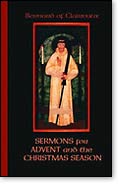 Window On The WorldThe World Book Encyclopedia (Field Enterprises Educational Corporation, 1967, 20 volumes, 2.30, deluxe binding), is reviewed by David E. Kucharsky, associate editor,CHRISTIANITY TODAY.An encyclopedia can break a budget, pad a library, illustrate a sermon, settle an argument, help make up for a scanty education, or prove you’re not an obscurantist. The World Book Encyclopedia can also add prestige to a home or a pastor’s study, though not as much as Britannica. But the reason for owning an encyclopedia is that regular referral cultivates the mind. And no encyclopedia invites continued use more than World Book.World Book is currently the world’s best-selling and most widely used encyclopedia. It is a family encylopedia that is comprehensive and scholarly without being stuffy, and it is a delight to read. It costs less than a color TV or a good set of china or wall-to-wall carpeting, and it rates financial priority over all these.But there is the theological problem. Can the evangelical trust World Book for balanced treatment of key issues in Christian thought and experience? Perhaps no better test could be applied than the question, “What think ye of Jesus?” Judge for yourself:“Jesus Christ was the founder of the Christian religion. Christians believe that He is the Son of God who was sent to earth to save mankind. Even many persons who are not Christians believe that He was a great and wise teacher. He has probably influenced humanity more than anyone else who ever lived.…”It is a succinct handling, though attributive in describing the most significant aspect of Christ’s person. The following passage from World Book’s article on the Reformation has a much surer construction:“In Germany, the Reformation began in the heart of an Augustinian monk, Martin Luther. Luther based his thinking on the Epistles of St. Paul. They led him to conclude that only faith in the sacrifice of Jesus Christ, rather than priests, sacraments, or good works, could ensure salvation. He also concluded that only the Bible, not the pope, was infallible, or free from error.”It is gratifying to report that World Book editors have the help of some competent evangelical scholars. Among the 2,700 authorities who shape the content are Bruce M. Metzger of Princeton Theological Seminary, Earle E. Cairns of Wheaton College, Gleason L. Archer of Trinity Evangelical Divinity School, and Merrill F. Unger of Dallas Theological Seminary, all of whom are in the conservative Protestant tradition.Jewish scholars Cyrus H. Gordon and Nelson Glueck are among the consultants and contributors. Top editorial rank among religion specialists belongs to William A. Clebsch, associate professor of religion at Stanford.Assessing current ideologies, World Book takes a hard line against Communism:“We call Communism totalitarian because it is total in two ways. (1) It controls and dominates all human thoughts and actions. (2) It uses any means to achieve its goals. Communism tries to regulate every part of a person’s daily life. It has no respect for family life or for religion.”The article on evolution is a fairly typical modern secular treatment, but it is supplemented with a column headed “Unsolved Problems of Evolution.” A three-point indictment of the theory of evolution on religious grounds includes the assertion that “if man is in the process of evolving from a lower state, sin tends to become mere imperfection, and the Gospel of redemption from the guilt of sin tends to lose all meaning.” Objections to evolution on scientific grounds are noted also.World Book is largely non-committal on the historicity of the Bible, except to cite the consensus of scholars. For example, the article on Isaiah says, “Scholars have agreed that it was written by a number of persons.” The repeated indication that current scholarly opinion is the final word is a weakness of World Book.The big theological cleavages of our day have not yet found their way into this encyclopedia. The article on Karl Barth, however, does include an analysis of his thought, and runs a marked contrast to the article on Paul Tillich, which is mere biography.A most rewarding aspect of World Book is its attempt to simplify the complex and to show rather than tell. Some may be repelled by what they consider oversimplification, but one can well argue that this extreme is preferable to incomprehensibility (an option more common than one might think).World Book offers good Canadian coverage. It digs into obscure topics as well as offering fresh insights into the familiar. It includes review questions and helpful bibliographies, and is self-indexed. The current set is lavishly illustrated—25,000 illustrations with 7,300 of them in color and 1,900 maps. An exclusive feature is that its content is based on exhaustive research of school curriculums and informational needs in libraries and homes. It is also up to date and is continually being revised, going to press two or three times each year. And the World Book annuals help to keep the set current.Churches would do well to seize the service opportunity offered by the fact that World Book is available in Braille and large-type editions. The Braille edition, a praiseworthy sign of the leadership of World Book publishers, is the largest project ever accomplished in Braille.That the evangelical is taking an increasingly important part in the cross fire of intellectual conflict is evident in World Book. To be sure, the encyclopedia does not have anything resembling the Christian world view undergirding its treatment of the various disciplines. But here and there encouraging recognition is given to evangelical thinking. The entry on the ecumenical movement, for example, refers the reader to an article on the Evangelical Alliance as well as to one on the World Council of Churches. As evangelicals continue to make gains in the realm of ideas, recognition by the secular media will increase.Christ Or Buddha?Buddhism and the Claims of Christ, by D. T. Niles (John Knox, 1967, 96 pp., paper .75), is reviewed by Lit-sen Chang, lecturer in missions, Gordon Divinity School, Wenham, Massachusetts.In the West there are increasing signs of a revolt against the uniqueness of Christianity, and a chase after exotic religions. There is an attempt to set aside the finality of Jesus Christ and to reduce Christianity to an ethnic basis in harmony with non-Christian religions. In the wave of humanistic syncretism and the advance of the philosophy of meaninglessness, this book, first published in Ceylon in 1946 for catechumens with Buddhist background, has become timely for the West, where Buddhism has been gaining converts.Dr. D. T. Niles, author of many books on Christian missions and Oriental religions, is Ceylonese by birth, but he received his higher education in the West and has traveled extensively throughout the world. Out of this background that combines Eastern religious experiences with Western academic training, he is able to present Christianity in fresh thought forms as it encounters the essential tenets of Buddhism. By becoming a Buddhist to the Buddhists, he strives to proclaim the Gospel of Jesus Christ in language familiar to and significant for Buddhists, with an understanding and friendly spirit, yet without compromise.In the strategy of missions today, there are two extreme approaches. The “eclectic” approach overemphasizes general revelation at the expense of special revelation, and stresses the similarities of all religions, overlooking their striking differences. This approach inevitably leads to syncretism and creates the erroneous view that all religions are simply different paths to the same God and that the Church is “latently present” (as Paul Tillich puts it) in paganism. Thus it sets aside the uniqueness of Christianity. The “exclusive” or “expulsive” approach denies the value of general revelation and its relation to special revelation, and thus weakens the basis for meaningful discussion with non-Christians. This approach tends to suspend Christianity in the air and makes it appear irrelevant to the life of the world.Niles’s approach is neither wholly “eclectic” nor wholly “exclusive.” Without attempting syncretism, he uses the cardinal concepts and idioms of Buddhism to convey the Christian message to Buddhists so as to help them “enter into a personal relationship with God in Christ Jesus.” Without completely denying the truth in Buddhism, Niles points out that it is the truth as man sees it from his predicament as man. It is only a protest, and no protest, however profound, can be turned into a true religion or can give hope to this perishing world.Reading For PerspectiveCHRISTIANITY TODAY’S REVIEW EDITORS CALL ATTENTION TO THESE NEW TITLES:• The Wycliffe Historical Geography of Bible Lands, by Charles F. Pfeiffer and Howard F. Vos (Moody, .95). An informative text, excellent photographs, and useful maps highlight this reference work on ten Bible lands.• Run While the Sun Is Hot, by W. Harold Fuller (Sudan Interior Mission, .95). Fuller’s challenging incidents and stories, gleaned from his travels to SIM fields in Africa, will create greater appreciation for the work of missions.• Set Forth Your Case, by Clark H. Pinnock (Craig, .50). These studies in Christian apologetics offer solid evidence for the integrity of the historic biblical Gospel and show it to be rationally compelling and vastly superior to existential aberrations in contemporary theology.Starting without a God and from a false perspective on life, Buddhism denies the relevance of the divine side of life. Once God is ruled out, death becomes the boundary of life. So Buddha, who claimed to be the “Enlightened One,” had never really been enlightened, for he knew only the law of death and not the Way of Life. The basic difference between Christianity and Buddhism, according to Niles, is this: Buddha saw that life was meaningless and set out to rescue men from this meaninglessness; Jesus, on the other hand, saw that life could become meaningful in God and set out to call men to share this meaning. “I am come,” he said, “that they might have life, and that they might have it more abundantly.”Although this book offers a valuable refutation of Buddhism, it is not without weakness and distortion. As Niles strives to use the cardinal Buddhist terms to convey the Christian message, readers should always be aware of the risk of identifying Buddhism with Christianity. For instance, the author says: “For a Buddhist, taking ‘Pansil’ seems to have the same emotive value as the taking of Holy Communion for a Christian”; but actually the two rites have nothing in common.In the latter part of the book, Niles says: “God forgives when I repent—that is Old Testament teaching; God has forgiven, before I repent—that is New Testament teaching (Romans 5:8).” This view dismembers the organism of Scripture. For God has a unified approach in his redemptive plan for mankind. Both in the Old Testament and in the New, God’s grace always precedes man’s action; nevertheless he also demands man’s repentance. When Niles speaks of redemption, reconciliation, justification, and propitiation, he emphasizes in each case that “it has been done.” Although he uses such terms as “conversion” and “evangelism,” he gives them special connotations. So to illustrate conversion he uses not the case of the prodigal son but rather that of the leper who had already been healed and simply “came back and gave God thanks.” This implies universalism, the dangerous notion that all men have already been saved—a great distortion of the Gospel.Subjectivism Run Riot!The Church Unbound, by Norman K. Gottwald (Lippincott, 1967, 188 pp., .95), is reviewed by Edward J. Young, professor of Old Testament, Westminster Theological Seminary, Philadelphia, Pennsylvania.What is the proper relation between Church and culture? By carefully examining the relation between Israel and the nations “in biblical terms,” Professor Gottwald has produced an interesting and thought-provoking discussion of the question. On the basis of a study of certain passages from the Old Testament, he considers the Church as distinguished from culture, culture as attracted to the Church, the Church incorporating culture, and culture approximating the Church. This historical study is then made the basis for a consideration of Church and culture in our day.That the study is grounded upon acceptance of the dominant school of prophetic study is bound to affect the author’s conclusions and his application of prophetic teaching to the present day. I myself am unable to accept any view of the prophets that does not regard them as spokesmen, who not only thought they were messengers (Bote) of the Lord, but had in actual fact received special revelation from the one living and true God. Therefore I cannot agree with the basic understanding of the prophets found in this work. I cannot accept the view that there was an “Isaiah of the exile,” for the whole denial of Isaianic authorship of the prophecy is based on a misunderstanding of the teaching of the book as well as on a flat repudiation of what the New Testament says about the book’s authorship. Nor can I accept what appears to be a false universalism. “If the covenant circle includes me in spite of my limitations and rebellion, in principle and intent it includes everyone.”Gottwald’s view of the Church is not that of the New Testament. The Church, he says, is not limited to an institution or to Christians; “the church’s invisibility also refers to the activity of men in culture at large, which is in the character of the church but which is not consciously identified with the historic church.” Thus “the civil rights revolution may be church. Community organization of the poor may be church. Centers for dope addicts and alcoholics may be church. Student activities to gain constitutional rights on campus and to acquire a significant share in educational policy-making may be church.” But enough! “In each case the criterion for judging participation in causes must be the activity of God as best the committed church can discern it.” This is subjectivism run riot.Strangely enough, the “activity of God” seems to be limited to causes that are presently dear to the hearts of political liberals. Would the “activity of God” ever be seen, for example, in an effort to protect the rights of property owners or to protect hard-working taxpayers from being compelled to support wasteful “welfare” projects that seem principally to benefit the shiftless, the irresponsible, and the indifferent? I have my doubts.Far more serious, however, is the fact that this work does not recognize that man is a fallen creature who loves darkness rather than light. No human church or humanitarian effort can ever meet the deep-seated need of fallen man. “Cease ye from man,” said the Holy Spirit through Isaiah, “whose breath is in his nostrils.” From the easygoing humanism of Gottwald’s work we turn to the words of the late J. Gresham Machen: “Human goodness will avail nothing for lost souls; ye must be born again.”Once Over LightlyHighlights of Christian Missions, by Harold R. Cook (Moody, 1967, 256 pp., .95), is reviewed by Harold Lindsell, professor of Bible, Wheaton College, Wheaton, Illinois.This book has a special purpose: to give Moody Bible Institute students a quick survey of missionary endeavor from the days of the apostles. Within the limits the author sets, he fulfills his purpose.The volume is divided into three sections. One treats the expansion of Christianity historically—in ninety pages. The treatment is consistent with the purpose: it is panoramic and thus sketchy. The second section deals with home missions and is oriented primarily to the American scene. It is quite general and is descriptive rather than analytical. Some basic problems are mentioned, but not much by way of solution is offered. The third part of the volume sketches the geography and missionary work of the Church in Africa, Asia, and so on. A short bibliography is appended.The author hopes his book will be used in local congregations and has written in non-technical language. It is a good book for the lay reader who wants a quick, easily read overview of missionary endeavor. It is not useful to the informed reader or the specialist.The publisher has done the author a disservice by overstating the usefulness of the volume on the jacket. It is hardly a “valuable resource volume,” and to call it “a comprehensive view of missionary endeavor which includes little-known men and events as well as those more widely reported” is to embarrass the author, whose own preface says something quite different. The blurb writer might have spent his energy more profitably in editing the book itself.Conviction, Compassion, And StyleA Varied Harvest: Out of a Teacher’s Life and Thought, by Frank E. Gaebelein (Eerdmans, 1967, 198 pp, .95; also in paper, .45), is reviewed by Emile Cailliet, Stuart Professor Emeritus of Christian Philosophy, Princeton Theological Seminary, Princeton, New Jersey.The browser who grazes among the shining leaves and twigs of our day’s inflationary output of printed matter is likely to ignore this title, possibly with the thought that here is another bundle of essays and addresses gathered together by one of those emeriti who cannot bear to think that any of their productions might be lost to posterity. Very well, then! Let prejudice have its way. We judge books. By certain books we are judged. Frank E. Gaebelein’s A Varied Harvest is a book for discriminating readers.It has rightly been said that “the style is the man.” A personality comes to expression in these pages—one of the strongest, most persuasive leaders of evangelical Christianity in our day. From his early childhood his nurture has been Holy Writ. For forty years he was headmaster of the Stony Brook School, and during these years he came to grips with the problems raised by Christian education and youth, and coped with the intricacies of public affairs and social concern, of culture and taste. When he retired from academic life, CHRISTIANITY TODAY invited him to serve as co-editor, which he did from 1963 to 1966. He has occupied many pulpits in churches, colleges, and universities. Throughout this rich career he has been led to achieve a most impressive integration of evangelical thought in action, and it is this that comes to expression in A Varied Harvest.No wonder the book is so strongly articulated. The sturdy, impelling ways in which paragraphs and chapters press forward the case for a working faith well bespeak the character of the fully surrendered soul who tells the story. We see him plotting a strategy for Christian education, taking full advantage of the educating power of the Bible, rallying men of good will with the outcry, “What are we doing to our youth?,” pleading for Christian compassion, exalting the Christian’s intellectual life, pleading for a recovery of taste, enthusiastically magnifying the Church and its ministry at work and, above all, the truth of God’s Word and the majesty of Jesus Christ.Well might the reader get out of breath keeping pace with the man on his way, illustrating as he does Kierkegaard’s description, “Purity of heart is to will one thing.” Happily he gives the reader an opportunity to go with him on a vacation, and the section on mountain climbing makes for pure delight. But even then, the evangelical teacher allows his companions no rest from Christian instruction. The memory of a treacherous ascent of the East Ridge of the Grand Teton, alternating between difficult rock and precipitous snow as a storm howls along the sky, invites the “lesson” that “sometimes God puts us in places of severe testing.” There is no harm in this to be sure, except that one wishes at times through these particular pages that happenings might be allowed to speak for themselves. A point is reached where lecturing carries its stumbling block within itself. But then, to quote Kierkegaard again: “Purity of heart is to will one thing.”Jaspers’ Wistful DialoguePhilosophical Faith and Revelation, by Karl Jaspers (Harper & Row, 1967, 394 pp., ), is reviewed by Stanley Obitts, assistant professor of philosophy, Westmont College, Santa Barbara, California.Karl Jaspers’ Philosophical Faith and Revelation, translated by E. B. Ashton, is the eighteenth volume in Harper & Row’s prestigious “Religious Perspectives” series. The purpose of the series is to “present the numinous reality within the experience of man.” This work, described by Hannah Arendt as “the only authentic philosophy of religion written in the twentieth century,” is the final and systematic form of the octogenarian Jaspers’ almost wistful dialogue within himself between the siren call of the Christian believer’s cognitive revelation of God and the unescapable but philosophically limiting method of modern science.Jaspers decides that the true philosopher seeking the whole of Being will neither ignore the two sides of the dialogue nor relinquish to either one his freedom of intellectual struggle. The withdrawnness of “transcendence” requires a “philosophical faith” in which the choice of what a man “will live by and for is his to dare and to destine,” declares this German existentialist. As anyone familiar with Jaspers knows, the notion of a “philosophical faith” is designed to avoid, on one hand, the irrationalism of Kierkegaard’s religious faith, with its “leap,” and, on the other hand, Heidegger’s curtailment of metaphysical speculation about the Being of the things-that-are to transcendental horizons projected by the self.The more rational and optimistic Jaspers sees the self’s reading of its “general situation-limits” as directing its attention away from the “Encompassing” that it is and toward the other “Encompassing” that is Being itself, of which the self is a part. This latter, the Transcendent, is, as Heidegger would agree, not man’s object; but neither is it, contrary to Heidegger, just man’s creation or “interpretation.”The person rightly beginning his quest for truth with the facts of empirical existence handled so well by the sciences soon discovers these to be only appearances of a Being continually eluding his grasp. The signs of the Transcendent’s manifestations must be read as “ciphers.” At this point the unwary may be deluded by the pretense of a historically factual revelation, the truth of which is authenticated by the witness of the Holy Spirit. But being unable to predict or comprehend revelation, reason cannot sit in judgment on it. God’s revelation, if it came, could never be enmeshed by the general concepts employed in philosophy. Hence, philosophy’s faith springs neither from the factual source and exact procedures of the sciences nor from the faith in revelation of theology. It is its own source; it is “philosophical faith”; and as faith in reason, it is affected by its opposite, faith in revelation. The two faiths must forever be willing to learn from each other, counsels Jaspers, even though neither one will be fully scrutable to the other.He eloquently portrays the nihilistic bondage of man resulting from the scientific superstition and technological dominance of our day. But how free is a man, really, who is told that God is beyond all objects, “ciphers,” and categories of thought? If, as Jaspers claims, Being speaks in the ensuing silence as Transcendence “reconstitutes itself for Existence” and reaches those who have a “readiness for existential action in the world” within and without, philosophy being a “liberating force in its negations,” then what keeps Jaspers’ “philosophical faith” from becoming either a kind of epistemological voluntarism or else an incipient mysticism? If twentieth-century philosophy of religion in the Occident is as beholden to the post-Kantian tradition as Jaspers appears to think, then it is little wonder that the “honest” generation is giving Eastern religious thought such a serious look. But perhaps Augustine’s use of the Christian revelation as a basic source for philosophy, binding together philosophy and faith in revelation, is still a viable alternative.The Cullmann SlantOikonomia: Heilsgeschichte als Thema der Theologie, edited by Felix Christ (Herbert Reich Evang. Verlag, Hamburg, 1967, 412 pp., DM 40), is reviewed by Ralph P. Martin, lecturer in New Testament studies, University of Manchester, England.The name of Oscar Cullmann is internationally known among students of Christian theology. It is a further tribute to his fame and scholarship that after the publication of an important Festschrift to honor his sixtieth birthday there appears this volume to mark his sixty-fifth year. The earlier volume was entitled Neotestamentica et Patristica and was written by a representative group of international scholars. This new book covers a wider field, from Old Testament to dogmatics, from ecumenical studies to practical theology. And most of the writers are, it seems, scholars who have come under Cullmann’s direct influence. Indeed, most of them write from a distinctive Cull-mannian slant, expressed by the conviction that the magic word to solve the mysteries of the Bible and theology—and even some thorny matters such as the veneration of Mary—is Heilsgeschichte (salvation history).Of the thirty-six essays (written in English, French, and German) that make up this tribute, we may select the following as representative, though not necessarily the most important. The opening contribution (in German) surveys the three motifs of Old Testament theology and history in the light of Heilsgeschichte, and finds that the ideas of creation, election, and exhortation in the Law were capable of perversion by exposure to the clangers of paganizing, ritualizing and legalizing. A discussion of the Temple-theology by Lloyd Gaston throws light on a central issue in Jesus’ ministry and early Christianity, while Robert Meye’s treatment of the messianic secret in Mark attempts to take the matter beyond where Wrede left it. Other studies in biblical theology are competent and full of insight. There are treatments of the wedding in John 2 and of the imagery of the vine in John 15, as well as of Paul’s apostolic awareness and teaching.In the area of historical theology I. J. Hesselink offers a new understanding of Calvin, whose notion of “suspended grace” provides the clue to his view of the Old Testament as a preparation for Christ. The points of contact between second-century gnosticism and Bultmann’s theology (alleged by Cullmann) are examined (in German) by W. Rordorf. (A translation of this important study is in New Testament Studies, 13). T. F. Torrance has a long, erudite article on Clement of Alexandria’s knowledge of God. A critical inspection of Cullmann’s functional Christology is made by David Wallace from the standpoint of the Chalcedonian formula, though his discovery of “Hebrew metaphysical affirmations about God” sounds strange.Two studies on the Virgin Mary make for unusual reading, and the attempt to find her a place in the heilsgeschichtlich program is not overly convincing. On the level of practical theology there are contributions on preaching as storytelling (in German), the place of the sacraments, and even the Passion music of Bach.In all, this is an interesting compilation in honor of a prominent theologian, even if no single essay can be judged world-shaking.Book BriefsDictionary of Christian Ethics, edited by John McQuarrie (Westminster 1967, 366 pp., .50). A useful book mostly by non-evangelical contributors, on ethical terms, concepts, and viewpoints; bibliography references reflect few conservative works.Count It All Joy, by William Stringfellow (Eerdmans, 1967, 101 pp., ). Against the backdrop of the Book of James, the author-attorney offers somewhat unsatisfying observations on wisdom, doubt, and temptation. Along the way he takes potshots at sectarianism as secularization, evangelistic crusades, pietism.The Ongoing Purpose of God, by William H. Clark (California Lantern Press, 1967, 147 pp., .95). Strong sermons that bristle with faith and conviction from a respected Presbyterian missionary and pastor.Hostage in Djakarta, by Harold Lovestrand (Moody, 1967, 215 pp., .95). A TEAM missionary vividly describes his imprisonment in an Indonesian jail. An inspiring story of a man’s faith and God’s faithfulness.Alcohol Problems: A Report to the Nation, prepared by Thomas F. A. Plaut (Oxford, 1967, 200 pp., .75). That controversial report!Peloubet’s Select Notes, 1968, by Wilbur M. Smith (W. A. Wilde, 1967, 432 pp., .25).Christian Worship: Its Theology and Practice, by Franklin M. Segler (Broadman, 1967, 245 pp., .95). A sensible and practical book on worship: its biblical foundations, its theology and psychology, its forms and order.The Apostolic Fathers, Volume V, by William R. Schoedel (Nelson, 1967, 130 pp., ). A new translation with commentary of Polycarp to the Philippians, Martyrdom of Polycarp, Fragments of Papias.In Defense of the Faith, by W. A. Criswell (Zondervan, 1967, 88 pp., .50). In five lucid sermons the pastor of one of the world’s largest churches confronts atheist, liberal, Communist, materialist, and sinner with the Gospel. Preached during the 1967 Easter season.PaperbacksOutside the Gate, by Carl McIntire (Christian Beacon Press, 1967, 351 pp., ). A distorted and unreliable attack on the World Congress on Evangelism and particularly on its leaders, set to Carl McIntire’s theme song, “Only the ACCC is left” (or right)!For God’s Sake Faugh!, by Nelvin Vos (John Knox, 1967, 75 pp., .50). From a Christian perspective, Vos examines the vital role of laughter in life. He views human laughter as a means of self-discovery and a balm of healing because God really has the last laugh. Incisive, stimulating, and entertaining.A Comparison of World Religion, by Henry J. Heydt (Christian Literature Crusade, 1967, 112 pp., .75). An oversimplified survey of the history and literature of eleven world religions that compares their teaching on important topics and shows Christianity’s distinctives.A Reader in Contemporary Theology, edited by John Bowden and James Richmond (Westminster, 1967, 190 pp., .95). A sampler of selections by Protestant and Roman Catholic theologians (Barth, Bultmann, Rahner, Van Peursen, Buber, and others) that consider biblical interpretation and the doctrine of God.The Church: Design for Survival, by E. Glenn Hinson (Broadman, 1967, 128 pp., .95). A well-balanced book that rejects the current emphasis on secularization of the Church and points up the need for an adaptable and flexible Church that views its present mission in the lights of its biblical and historical backgrounds.For All the World: The Christian Mission in the Modern Age, by John V. Taylor (Westminster, 1966, 92 pp., .45). A call for involvement by the whole Church in God’s mission to the world through proclamation, witness, and service.Barth’s Soteriology, Bultmann’s Demythologized Kerygma, and Brunner’s Dialectical Encounter, by Robert L. Reymond (Presbyterian and Reformed, 1967, 41 pp., 30 pp., 29 pp., $.75 each). A scholar committed to the authority of an infallible Bible offers three penetrating critiques of crucial aspects of the views of Europe’s three most influential twentieth-century theologians. Recommended.The Reluctant Worker Priest, by Eugene P. Heideman (Eerdmans, 1967, 106 pp., .45). Experiences of a Protestant pastor who takes an industrial job and finds it an avenue to Christian ministry. Window On The WorldThe World Book Encyclopedia (Field Enterprises Educational Corporation, 1967, 20 volumes, 2.30, deluxe binding), is reviewed by David E. Kucharsky, associate editor,CHRISTIANITY TODAY.An encyclopedia can break a budget, pad a library, illustrate a sermon, settle an argument, help make up for a scanty education, or prove you’re not an obscurantist. The World Book Encyclopedia can also add prestige to a home or a pastor’s study, though not as much as Britannica. But the reason for owning an encyclopedia is that regular referral cultivates the mind. And no encyclopedia invites continued use more than World Book.World Book is currently the world’s best-selling and most widely used encyclopedia. It is a family encylopedia that is comprehensive and scholarly without being stuffy, and it is a delight to read. It costs less than a color TV or a good set of china or wall-to-wall carpeting, and it rates financial priority over all these.But there is the theological problem. Can the evangelical trust World Book for balanced treatment of key issues in Christian thought and experience? Perhaps no better test could be applied than the question, “What think ye of Jesus?” Judge for yourself:“Jesus Christ was the founder of the Christian religion. Christians believe that He is the Son of God who was sent to earth to save mankind. Even many persons who are not Christians believe that He was a great and wise teacher. He has probably influenced humanity more than anyone else who ever lived.…”It is a succinct handling, though attributive in describing the most significant aspect of Christ’s person. The following passage from World Book’s article on the Reformation has a much surer construction:“In Germany, the Reformation began in the heart of an Augustinian monk, Martin Luther. Luther based his thinking on the Epistles of St. Paul. They led him to conclude that only faith in the sacrifice of Jesus Christ, rather than priests, sacraments, or good works, could ensure salvation. He also concluded that only the Bible, not the pope, was infallible, or free from error.”It is gratifying to report that World Book editors have the help of some competent evangelical scholars. Among the 2,700 authorities who shape the content are Bruce M. Metzger of Princeton Theological Seminary, Earle E. Cairns of Wheaton College, Gleason L. Archer of Trinity Evangelical Divinity School, and Merrill F. Unger of Dallas Theological Seminary, all of whom are in the conservative Protestant tradition.Jewish scholars Cyrus H. Gordon and Nelson Glueck are among the consultants and contributors. Top editorial rank among religion specialists belongs to William A. Clebsch, associate professor of religion at Stanford.Assessing current ideologies, World Book takes a hard line against Communism:“We call Communism totalitarian because it is total in two ways. (1) It controls and dominates all human thoughts and actions. (2) It uses any means to achieve its goals. Communism tries to regulate every part of a person’s daily life. It has no respect for family life or for religion.”The article on evolution is a fairly typical modern secular treatment, but it is supplemented with a column headed “Unsolved Problems of Evolution.” A three-point indictment of the theory of evolution on religious grounds includes the assertion that “if man is in the process of evolving from a lower state, sin tends to become mere imperfection, and the Gospel of redemption from the guilt of sin tends to lose all meaning.” Objections to evolution on scientific grounds are noted also.World Book is largely non-committal on the historicity of the Bible, except to cite the consensus of scholars. For example, the article on Isaiah says, “Scholars have agreed that it was written by a number of persons.” The repeated indication that current scholarly opinion is the final word is a weakness of World Book.The big theological cleavages of our day have not yet found their way into this encyclopedia. The article on Karl Barth, however, does include an analysis of his thought, and runs a marked contrast to the article on Paul Tillich, which is mere biography.A most rewarding aspect of World Book is its attempt to simplify the complex and to show rather than tell. Some may be repelled by what they consider oversimplification, but one can well argue that this extreme is preferable to incomprehensibility (an option more common than one might think).World Book offers good Canadian coverage. It digs into obscure topics as well as offering fresh insights into the familiar. It includes review questions and helpful bibliographies, and is self-indexed. The current set is lavishly illustrated—25,000 illustrations with 7,300 of them in color and 1,900 maps. An exclusive feature is that its content is based on exhaustive research of school curriculums and informational needs in libraries and homes. It is also up to date and is continually being revised, going to press two or three times each year. And the World Book annuals help to keep the set current.Churches would do well to seize the service opportunity offered by the fact that World Book is available in Braille and large-type editions. The Braille edition, a praiseworthy sign of the leadership of World Book publishers, is the largest project ever accomplished in Braille.That the evangelical is taking an increasingly important part in the cross fire of intellectual conflict is evident in World Book. To be sure, the encyclopedia does not have anything resembling the Christian world view undergirding its treatment of the various disciplines. But here and there encouraging recognition is given to evangelical thinking. The entry on the ecumenical movement, for example, refers the reader to an article on the Evangelical Alliance as well as to one on the World Council of Churches. As evangelicals continue to make gains in the realm of ideas, recognition by the secular media will increase.Christ Or Buddha?Buddhism and the Claims of Christ, by D. T. Niles (John Knox, 1967, 96 pp., paper .75), is reviewed by Lit-sen Chang, lecturer in missions, Gordon Divinity School, Wenham, Massachusetts.In the West there are increasing signs of a revolt against the uniqueness of Christianity, and a chase after exotic religions. There is an attempt to set aside the finality of Jesus Christ and to reduce Christianity to an ethnic basis in harmony with non-Christian religions. In the wave of humanistic syncretism and the advance of the philosophy of meaninglessness, this book, first published in Ceylon in 1946 for catechumens with Buddhist background, has become timely for the West, where Buddhism has been gaining converts.Dr. D. T. Niles, author of many books on Christian missions and Oriental religions, is Ceylonese by birth, but he received his higher education in the West and has traveled extensively throughout the world. Out of this background that combines Eastern religious experiences with Western academic training, he is able to present Christianity in fresh thought forms as it encounters the essential tenets of Buddhism. By becoming a Buddhist to the Buddhists, he strives to proclaim the Gospel of Jesus Christ in language familiar to and significant for Buddhists, with an understanding and friendly spirit, yet without compromise.In the strategy of missions today, there are two extreme approaches. The “eclectic” approach overemphasizes general revelation at the expense of special revelation, and stresses the similarities of all religions, overlooking their striking differences. This approach inevitably leads to syncretism and creates the erroneous view that all religions are simply different paths to the same God and that the Church is “latently present” (as Paul Tillich puts it) in paganism. Thus it sets aside the uniqueness of Christianity. The “exclusive” or “expulsive” approach denies the value of general revelation and its relation to special revelation, and thus weakens the basis for meaningful discussion with non-Christians. This approach tends to suspend Christianity in the air and makes it appear irrelevant to the life of the world.Niles’s approach is neither wholly “eclectic” nor wholly “exclusive.” Without attempting syncretism, he uses the cardinal concepts and idioms of Buddhism to convey the Christian message to Buddhists so as to help them “enter into a personal relationship with God in Christ Jesus.” Without completely denying the truth in Buddhism, Niles points out that it is the truth as man sees it from his predicament as man. It is only a protest, and no protest, however profound, can be turned into a true religion or can give hope to this perishing world.Reading For PerspectiveCHRISTIANITY TODAY’S REVIEW EDITORS CALL ATTENTION TO THESE NEW TITLES:• The Wycliffe Historical Geography of Bible Lands, by Charles F. Pfeiffer and Howard F. Vos (Moody, .95). An informative text, excellent photographs, and useful maps highlight this reference work on ten Bible lands.• Run While the Sun Is Hot, by W. Harold Fuller (Sudan Interior Mission, .95). Fuller’s challenging incidents and stories, gleaned from his travels to SIM fields in Africa, will create greater appreciation for the work of missions.• Set Forth Your Case, by Clark H. Pinnock (Craig, .50). These studies in Christian apologetics offer solid evidence for the integrity of the historic biblical Gospel and show it to be rationally compelling and vastly superior to existential aberrations in contemporary theology.Starting without a God and from a false perspective on life, Buddhism denies the relevance of the divine side of life. Once God is ruled out, death becomes the boundary of life. So Buddha, who claimed to be the “Enlightened One,” had never really been enlightened, for he knew only the law of death and not the Way of Life. The basic difference between Christianity and Buddhism, according to Niles, is this: Buddha saw that life was meaningless and set out to rescue men from this meaninglessness; Jesus, on the other hand, saw that life could become meaningful in God and set out to call men to share this meaning. “I am come,” he said, “that they might have life, and that they might have it more abundantly.”Although this book offers a valuable refutation of Buddhism, it is not without weakness and distortion. As Niles strives to use the cardinal Buddhist terms to convey the Christian message, readers should always be aware of the risk of identifying Buddhism with Christianity. For instance, the author says: “For a Buddhist, taking ‘Pansil’ seems to have the same emotive value as the taking of Holy Communion for a Christian”; but actually the two rites have nothing in common.In the latter part of the book, Niles says: “God forgives when I repent—that is Old Testament teaching; God has forgiven, before I repent—that is New Testament teaching (Romans 5:8).” This view dismembers the organism of Scripture. For God has a unified approach in his redemptive plan for mankind. Both in the Old Testament and in the New, God’s grace always precedes man’s action; nevertheless he also demands man’s repentance. When Niles speaks of redemption, reconciliation, justification, and propitiation, he emphasizes in each case that “it has been done.” Although he uses such terms as “conversion” and “evangelism,” he gives them special connotations. So to illustrate conversion he uses not the case of the prodigal son but rather that of the leper who had already been healed and simply “came back and gave God thanks.” This implies universalism, the dangerous notion that all men have already been saved—a great distortion of the Gospel.Subjectivism Run Riot!The Church Unbound, by Norman K. Gottwald (Lippincott, 1967, 188 pp., .95), is reviewed by Edward J. Young, professor of Old Testament, Westminster Theological Seminary, Philadelphia, Pennsylvania.What is the proper relation between Church and culture? By carefully examining the relation between Israel and the nations “in biblical terms,” Professor Gottwald has produced an interesting and thought-provoking discussion of the question. On the basis of a study of certain passages from the Old Testament, he considers the Church as distinguished from culture, culture as attracted to the Church, the Church incorporating culture, and culture approximating the Church. This historical study is then made the basis for a consideration of Church and culture in our day.That the study is grounded upon acceptance of the dominant school of prophetic study is bound to affect the author’s conclusions and his application of prophetic teaching to the present day. I myself am unable to accept any view of the prophets that does not regard them as spokesmen, who not only thought they were messengers (Bote) of the Lord, but had in actual fact received special revelation from the one living and true God. Therefore I cannot agree with the basic understanding of the prophets found in this work. I cannot accept the view that there was an “Isaiah of the exile,” for the whole denial of Isaianic authorship of the prophecy is based on a misunderstanding of the teaching of the book as well as on a flat repudiation of what the New Testament says about the book’s authorship. Nor can I accept what appears to be a false universalism. “If the covenant circle includes me in spite of my limitations and rebellion, in principle and intent it includes everyone.”Gottwald’s view of the Church is not that of the New Testament. The Church, he says, is not limited to an institution or to Christians; “the church’s invisibility also refers to the activity of men in culture at large, which is in the character of the church but which is not consciously identified with the historic church.” Thus “the civil rights revolution may be church. Community organization of the poor may be church. Centers for dope addicts and alcoholics may be church. Student activities to gain constitutional rights on campus and to acquire a significant share in educational policy-making may be church.” But enough! “In each case the criterion for judging participation in causes must be the activity of God as best the committed church can discern it.” This is subjectivism run riot.Strangely enough, the “activity of God” seems to be limited to causes that are presently dear to the hearts of political liberals. Would the “activity of God” ever be seen, for example, in an effort to protect the rights of property owners or to protect hard-working taxpayers from being compelled to support wasteful “welfare” projects that seem principally to benefit the shiftless, the irresponsible, and the indifferent? I have my doubts.Far more serious, however, is the fact that this work does not recognize that man is a fallen creature who loves darkness rather than light. No human church or humanitarian effort can ever meet the deep-seated need of fallen man. “Cease ye from man,” said the Holy Spirit through Isaiah, “whose breath is in his nostrils.” From the easygoing humanism of Gottwald’s work we turn to the words of the late J. Gresham Machen: “Human goodness will avail nothing for lost souls; ye must be born again.”Once Over LightlyHighlights of Christian Missions, by Harold R. Cook (Moody, 1967, 256 pp., .95), is reviewed by Harold Lindsell, professor of Bible, Wheaton College, Wheaton, Illinois.This book has a special purpose: to give Moody Bible Institute students a quick survey of missionary endeavor from the days of the apostles. Within the limits the author sets, he fulfills his purpose.The volume is divided into three sections. One treats the expansion of Christianity historically—in ninety pages. The treatment is consistent with the purpose: it is panoramic and thus sketchy. The second section deals with home missions and is oriented primarily to the American scene. It is quite general and is descriptive rather than analytical. Some basic problems are mentioned, but not much by way of solution is offered. The third part of the volume sketches the geography and missionary work of the Church in Africa, Asia, and so on. A short bibliography is appended.The author hopes his book will be used in local congregations and has written in non-technical language. It is a good book for the lay reader who wants a quick, easily read overview of missionary endeavor. It is not useful to the informed reader or the specialist.The publisher has done the author a disservice by overstating the usefulness of the volume on the jacket. It is hardly a “valuable resource volume,” and to call it “a comprehensive view of missionary endeavor which includes little-known men and events as well as those more widely reported” is to embarrass the author, whose own preface says something quite different. The blurb writer might have spent his energy more profitably in editing the book itself.Conviction, Compassion, And StyleA Varied Harvest: Out of a Teacher’s Life and Thought, by Frank E. Gaebelein (Eerdmans, 1967, 198 pp, .95; also in paper, .45), is reviewed by Emile Cailliet, Stuart Professor Emeritus of Christian Philosophy, Princeton Theological Seminary, Princeton, New Jersey.The browser who grazes among the shining leaves and twigs of our day’s inflationary output of printed matter is likely to ignore this title, possibly with the thought that here is another bundle of essays and addresses gathered together by one of those emeriti who cannot bear to think that any of their productions might be lost to posterity. Very well, then! Let prejudice have its way. We judge books. By certain books we are judged. Frank E. Gaebelein’s A Varied Harvest is a book for discriminating readers.It has rightly been said that “the style is the man.” A personality comes to expression in these pages—one of the strongest, most persuasive leaders of evangelical Christianity in our day. From his early childhood his nurture has been Holy Writ. For forty years he was headmaster of the Stony Brook School, and during these years he came to grips with the problems raised by Christian education and youth, and coped with the intricacies of public affairs and social concern, of culture and taste. When he retired from academic life, CHRISTIANITY TODAY invited him to serve as co-editor, which he did from 1963 to 1966. He has occupied many pulpits in churches, colleges, and universities. Throughout this rich career he has been led to achieve a most impressive integration of evangelical thought in action, and it is this that comes to expression in A Varied Harvest.No wonder the book is so strongly articulated. The sturdy, impelling ways in which paragraphs and chapters press forward the case for a working faith well bespeak the character of the fully surrendered soul who tells the story. We see him plotting a strategy for Christian education, taking full advantage of the educating power of the Bible, rallying men of good will with the outcry, “What are we doing to our youth?,” pleading for Christian compassion, exalting the Christian’s intellectual life, pleading for a recovery of taste, enthusiastically magnifying the Church and its ministry at work and, above all, the truth of God’s Word and the majesty of Jesus Christ.Well might the reader get out of breath keeping pace with the man on his way, illustrating as he does Kierkegaard’s description, “Purity of heart is to will one thing.” Happily he gives the reader an opportunity to go with him on a vacation, and the section on mountain climbing makes for pure delight. But even then, the evangelical teacher allows his companions no rest from Christian instruction. The memory of a treacherous ascent of the East Ridge of the Grand Teton, alternating between difficult rock and precipitous snow as a storm howls along the sky, invites the “lesson” that “sometimes God puts us in places of severe testing.” There is no harm in this to be sure, except that one wishes at times through these particular pages that happenings might be allowed to speak for themselves. A point is reached where lecturing carries its stumbling block within itself. But then, to quote Kierkegaard again: “Purity of heart is to will one thing.”Jaspers’ Wistful DialoguePhilosophical Faith and Revelation, by Karl Jaspers (Harper & Row, 1967, 394 pp., ), is reviewed by Stanley Obitts, assistant professor of philosophy, Westmont College, Santa Barbara, California.Karl Jaspers’ Philosophical Faith and Revelation, translated by E. B. Ashton, is the eighteenth volume in Harper & Row’s prestigious “Religious Perspectives” series. The purpose of the series is to “present the numinous reality within the experience of man.” This work, described by Hannah Arendt as “the only authentic philosophy of religion written in the twentieth century,” is the final and systematic form of the octogenarian Jaspers’ almost wistful dialogue within himself between the siren call of the Christian believer’s cognitive revelation of God and the unescapable but philosophically limiting method of modern science.Jaspers decides that the true philosopher seeking the whole of Being will neither ignore the two sides of the dialogue nor relinquish to either one his freedom of intellectual struggle. The withdrawnness of “transcendence” requires a “philosophical faith” in which the choice of what a man “will live by and for is his to dare and to destine,” declares this German existentialist. As anyone familiar with Jaspers knows, the notion of a “philosophical faith” is designed to avoid, on one hand, the irrationalism of Kierkegaard’s religious faith, with its “leap,” and, on the other hand, Heidegger’s curtailment of metaphysical speculation about the Being of the things-that-are to transcendental horizons projected by the self.The more rational and optimistic Jaspers sees the self’s reading of its “general situation-limits” as directing its attention away from the “Encompassing” that it is and toward the other “Encompassing” that is Being itself, of which the self is a part. This latter, the Transcendent, is, as Heidegger would agree, not man’s object; but neither is it, contrary to Heidegger, just man’s creation or “interpretation.”The person rightly beginning his quest for truth with the facts of empirical existence handled so well by the sciences soon discovers these to be only appearances of a Being continually eluding his grasp. The signs of the Transcendent’s manifestations must be read as “ciphers.” At this point the unwary may be deluded by the pretense of a historically factual revelation, the truth of which is authenticated by the witness of the Holy Spirit. But being unable to predict or comprehend revelation, reason cannot sit in judgment on it. God’s revelation, if it came, could never be enmeshed by the general concepts employed in philosophy. Hence, philosophy’s faith springs neither from the factual source and exact procedures of the sciences nor from the faith in revelation of theology. It is its own source; it is “philosophical faith”; and as faith in reason, it is affected by its opposite, faith in revelation. The two faiths must forever be willing to learn from each other, counsels Jaspers, even though neither one will be fully scrutable to the other.He eloquently portrays the nihilistic bondage of man resulting from the scientific superstition and technological dominance of our day. But how free is a man, really, who is told that God is beyond all objects, “ciphers,” and categories of thought? If, as Jaspers claims, Being speaks in the ensuing silence as Transcendence “reconstitutes itself for Existence” and reaches those who have a “readiness for existential action in the world” within and without, philosophy being a “liberating force in its negations,” then what keeps Jaspers’ “philosophical faith” from becoming either a kind of epistemological voluntarism or else an incipient mysticism? If twentieth-century philosophy of religion in the Occident is as beholden to the post-Kantian tradition as Jaspers appears to think, then it is little wonder that the “honest” generation is giving Eastern religious thought such a serious look. But perhaps Augustine’s use of the Christian revelation as a basic source for philosophy, binding together philosophy and faith in revelation, is still a viable alternative.The Cullmann SlantOikonomia: Heilsgeschichte als Thema der Theologie, edited by Felix Christ (Herbert Reich Evang. Verlag, Hamburg, 1967, 412 pp., DM 40), is reviewed by Ralph P. Martin, lecturer in New Testament studies, University of Manchester, England.The name of Oscar Cullmann is internationally known among students of Christian theology. It is a further tribute to his fame and scholarship that after the publication of an important Festschrift to honor his sixtieth birthday there appears this volume to mark his sixty-fifth year. The earlier volume was entitled Neotestamentica et Patristica and was written by a representative group of international scholars. This new book covers a wider field, from Old Testament to dogmatics, from ecumenical studies to practical theology. And most of the writers are, it seems, scholars who have come under Cullmann’s direct influence. Indeed, most of them write from a distinctive Cull-mannian slant, expressed by the conviction that the magic word to solve the mysteries of the Bible and theology—and even some thorny matters such as the veneration of Mary—is Heilsgeschichte (salvation history).Of the thirty-six essays (written in English, French, and German) that make up this tribute, we may select the following as representative, though not necessarily the most important. The opening contribution (in German) surveys the three motifs of Old Testament theology and history in the light of Heilsgeschichte, and finds that the ideas of creation, election, and exhortation in the Law were capable of perversion by exposure to the clangers of paganizing, ritualizing and legalizing. A discussion of the Temple-theology by Lloyd Gaston throws light on a central issue in Jesus’ ministry and early Christianity, while Robert Meye’s treatment of the messianic secret in Mark attempts to take the matter beyond where Wrede left it. Other studies in biblical theology are competent and full of insight. There are treatments of the wedding in John 2 and of the imagery of the vine in John 15, as well as of Paul’s apostolic awareness and teaching.In the area of historical theology I. J. Hesselink offers a new understanding of Calvin, whose notion of “suspended grace” provides the clue to his view of the Old Testament as a preparation for Christ. The points of contact between second-century gnosticism and Bultmann’s theology (alleged by Cullmann) are examined (in German) by W. Rordorf. (A translation of this important study is in New Testament Studies, 13). T. F. Torrance has a long, erudite article on Clement of Alexandria’s knowledge of God. A critical inspection of Cullmann’s functional Christology is made by David Wallace from the standpoint of the Chalcedonian formula, though his discovery of “Hebrew metaphysical affirmations about God” sounds strange.Two studies on the Virgin Mary make for unusual reading, and the attempt to find her a place in the heilsgeschichtlich program is not overly convincing. On the level of practical theology there are contributions on preaching as storytelling (in German), the place of the sacraments, and even the Passion music of Bach.In all, this is an interesting compilation in honor of a prominent theologian, even if no single essay can be judged world-shaking.Book BriefsDictionary of Christian Ethics, edited by John McQuarrie (Westminster 1967, 366 pp., .50). A useful book mostly by non-evangelical contributors, on ethical terms, concepts, and viewpoints; bibliography references reflect few conservative works.Count It All Joy, by William Stringfellow (Eerdmans, 1967, 101 pp., ). Against the backdrop of the Book of James, the author-attorney offers somewhat unsatisfying observations on wisdom, doubt, and temptation. Along the way he takes potshots at sectarianism as secularization, evangelistic crusades, pietism.The Ongoing Purpose of God, by William H. Clark (California Lantern Press, 1967, 147 pp., .95). Strong sermons that bristle with faith and conviction from a respected Presbyterian missionary and pastor.Hostage in Djakarta, by Harold Lovestrand (Moody, 1967, 215 pp., .95). A TEAM missionary vividly describes his imprisonment in an Indonesian jail. An inspiring story of a man’s faith and God’s faithfulness.Alcohol Problems: A Report to the Nation, prepared by Thomas F. A. Plaut (Oxford, 1967, 200 pp., .75). That controversial report!Peloubet’s Select Notes, 1968, by Wilbur M. Smith (W. A. Wilde, 1967, 432 pp., .25).Christian Worship: Its Theology and Practice, by Franklin M. Segler (Broadman, 1967, 245 pp., .95). A sensible and practical book on worship: its biblical foundations, its theology and psychology, its forms and order.The Apostolic Fathers, Volume V, by William R. Schoedel (Nelson, 1967, 130 pp., ). A new translation with commentary of Polycarp to the Philippians, Martyrdom of Polycarp, Fragments of Papias.In Defense of the Faith, by W. A. Criswell (Zondervan, 1967, 88 pp., .50). In five lucid sermons the pastor of one of the world’s largest churches confronts atheist, liberal, Communist, materialist, and sinner with the Gospel. Preached during the 1967 Easter season.PaperbacksOutside the Gate, by Carl McIntire (Christian Beacon Press, 1967, 351 pp., ). A distorted and unreliable attack on the World Congress on Evangelism and particularly on its leaders, set to Carl McIntire’s theme song, “Only the ACCC is left” (or right)!For God’s Sake Faugh!, by Nelvin Vos (John Knox, 1967, 75 pp., .50). From a Christian perspective, Vos examines the vital role of laughter in life. He views human laughter as a means of self-discovery and a balm of healing because God really has the last laugh. Incisive, stimulating, and entertaining.A Comparison of World Religion, by Henry J. Heydt (Christian Literature Crusade, 1967, 112 pp., .75). An oversimplified survey of the history and literature of eleven world religions that compares their teaching on important topics and shows Christianity’s distinctives.A Reader in Contemporary Theology, edited by John Bowden and James Richmond (Westminster, 1967, 190 pp., .95). A sampler of selections by Protestant and Roman Catholic theologians (Barth, Bultmann, Rahner, Van Peursen, Buber, and others) that consider biblical interpretation and the doctrine of God.The Church: Design for Survival, by E. Glenn Hinson (Broadman, 1967, 128 pp., .95). A well-balanced book that rejects the current emphasis on secularization of the Church and points up the need for an adaptable and flexible Church that views its present mission in the lights of its biblical and historical backgrounds.For All the World: The Christian Mission in the Modern Age, by John V. Taylor (Westminster, 1966, 92 pp., .45). A call for involvement by the whole Church in God’s mission to the world through proclamation, witness, and service.Barth’s Soteriology, Bultmann’s Demythologized Kerygma, and Brunner’s Dialectical Encounter, by Robert L. Reymond (Presbyterian and Reformed, 1967, 41 pp., 30 pp., 29 pp., $.75 each). A scholar committed to the authority of an infallible Bible offers three penetrating critiques of crucial aspects of the views of Europe’s three most influential twentieth-century theologians. Recommended.The Reluctant Worker Priest, by Eugene P. Heideman (Eerdmans, 1967, 106 pp., .45). Experiences of a Protestant pastor who takes an industrial job and finds it an avenue to Christian ministry. |
Bernard of Clairvaux: Sermons for Advent and the Christmas SeasonTranslated by Irene Edmonds, Wendy Mary Beckett, and Conrad Greenia |
Based on the critical Latin edition by Jean Leclercq and H. M. Rochais, this scholarly collection succeeds in being both engaging and readable. It includes an excellent introduction by Wim Verbaal, situating the reader in Bernard's 12th century milieu, when he was an unknown Cistercian abbot. It includes seven sermons on the Lord's Advent; six on the eve of Christ's birth; five on the Lord's "birthday"; one on the feasts of St. Stephen, St. John, and the Holy Innocents; three on the Lord's Epiphany; and several for afterwards, all with this eternally vibrant theme: "There will be no lack of what you can do so long as you do not lack brotherly love."
|
* * * |
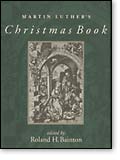 |
Martin Luther's Christmas BookEdited by Roland H. Bainton |
The well-known Reformation scholar and author Roland H. Bainton (d. 1984) here presents 30 timely excerpts from Martin Luther's Christmas sermons, nine Nativity illustrations by Luther's contemporaries (including four by Albrecht Dürer), and two of Luther's five Christmas carols. Luther's down-to-earth meditations on the reality of Christ's birth—Mary's cold and lonely stress, Joseph's misgivings, Herod's scheming, the wise men's questions, and the divine baby's naked accessibility—reveal the miracle of the Incarnation as a real event in history. Luther's message is that we should keep Christmas every day of the year.
Carmen Butcher is associate professor of English at Shorter College in Rome, Georgia, scholar-in-residence, and <link url=”http://www.carmenbutcher.com/carmenbutcher/main.aspx” window=”new”>Christian author and blogger