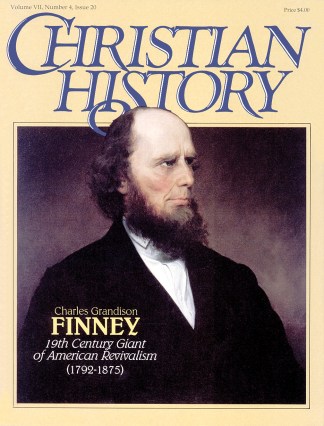
Finney was a social reformer, and did not shrink from fighting common practices of the church that he believed were hypocritical. Among the crusades he enlisted in was the issue of pew rents. In New York City, he became a force in what was called in his day the free church movement.
As hard as it is for us to conceive, in Finney’s time, and before, in most churches many pews were rented, and a pew tax was charged. This was a way of covering expenses, but it discriminated against the poor. Wealthier families could purchase the privilege to sit where they wanted. Poor people were thereby restricted to back-of-the-church seats, or the balcony. Poor neighborhoods could not support a local church. Our example here is from 1833; the fee is $26.05, no small amount in those days. Notice the penalty for late payment!
In other words, you could not just walk into a church to hear the good news and sit anywhere; for most seats were reserved. The system had the effect of making those more “significant” folk, who could afford the best seats in the house, the most influential and important in the congregation, and therefore, in the affairs of the church. Thus, poor people had little or no say in church matters or were simply unchurched. So much for the Bible’s teaching that God does not respect one person above another.
Finney and others attacked this despicable practice, which was common in the more socially “elevated” Presbyterianism he ministered in. These reformers wanted to see the church a place free from prejudice, where differences of class, wealth, and race did not discredit equality in Christ. The rise of great cities like New York underlined the need for the poor and minorities to be warmly accepted on equal terms in the Church with the socially privilged; but human pride worked against this, and they were relegated to the cheap seats.
Surprisingly, many wealthy leaders, like the Tappan brothers, were instrumental in breaking down this discriminatory practice. the Broadway Tabernacle in New York City, which was built for Finney in 1836, was a free church; no one was allowed priviledged seats at any cost. They wanted the message clear that all would be welcomed with open arms to hear of God’s judgement and mercy.
“For if there come into your assembly a man with a gold ring, in fine apparel, and there come in also a poor man in vile raiment, and ye have respect to him that weareth the fine clothing and say unto him, Sit thou here in a good place; and say unto the poor, Stand thou there, or sit here under my footstool, are ye not then partial in yourselves, and are become judges with evil thoughts?” James, chapter 2
Copyright © 1988 by the author or Christianity Today/Christian History magazine. Click here for reprint information on Christian History.