





 If Her.meneutics acts as a virtual water cooler for today’s evangelical women, then our workplace was abuzz this year with discussions about sex: unnecessarily steamy plots on TV, modesty on college campuses, and flirting on Facebook and other websites. That sexual ethics and ideals get evangelicals talking is not surprising. What was surprising, and refreshing to the editors, was the wide range of other topics discussed on the women’s blog this year. Just scroll through our list of interests in the left-hand column of the page, or the list of tags in the right-hand column, and you’ll see that our writers—of which we included many new ones this year: Amy Julia Becker, Ellen Painter Dollar, Rachel Stone, Margot Starbuck, and Gina Dalfonzo, to name a handful—can connect their Christian faith with seemingly any cultural trend, news development, pop culture artifact, or book. We are grateful for their words and wisdom.
And now to the list. If any of your favorite posts from 2010 are missing, mention them in the comment section. There, you can also mention what you’d like to see us cover in 2011. On the docket for the near future: when celebrities go public about miscarriage, a dating website exclusively for virgins, and book reviews of Kimberly Smith’s Passport through Darkness and Lori Gottlieb’s Marry Him.
(10) Virtual Flirting Comes to Christian Colleges, by Marlena Graves // Comments: 17
Is LikeaLittle.com, the newest fad in Internet dating, a fun diversion or an impediment to healthy community?
(9) Modesty: A Female-Only Virtue? by Katelyn Beaty // Comments: 46
Scripture suggests that modesty means more than keeping the right parts covered.
(8) A New Message at the Strip Club-Church Showdown, by Margot Starbuck // Comments: 24
What happened when two Christian women entered the Fox Hole strip club in Warsaw, Ohio.
(7) Where Was God in the Earthquake? by Fleming Rutledge // Comments: 33
A theological response to the Haitian calamity.
(6) My Lazy Christmas Wish, by Lynne Hybels // Comments: 28
At 29, 39, and 49, I couldn’t imagine an unhurried holiday season. At 59, I have realized that very little matters.
(5) ‘Hallelujah’ Comes to the Food Court, by Rachel Marie Stone // Comments: 19
Why one performance of Handel’s Messiah has attracted an audience of over 7 million.
(4) An Open Letter to Anne Rice, by Karen Spears Zacharias // Comments: 56
What I see when I look at the church.
(3) Avoiding Old Flames on Facebook, by Jenell Williams Paris // Comments: 50
That it’s only a virtual friendship is all the more reason to stay away from it.
(2) Freed by Bill Clinton, Saved by Jesus, interview by Katelyn Beaty // Comments: 8The World Is Bigger Now recounts Christian journalist Euna Lee’s imprisonment in a North Korean jail.
(1) Why Sex Ruins TV Romances, by Gina Dalfonzo // Comments: 35
And it’s not for the reasons you think.
Other notable posts of 2010:Ooh La La over Lady Gaga, by Jennifer Grant // Comments: 32
Why Should the Devil Get Halloween? by Caryn Rivadeneira // Comments: 38
Christian Female Musicians, Missing in Action, by Laura Leonard // Comments: 60
How Many Kids Should We Have? by Amy Julia Becker // Comments: 32
Little Girls and Single Ladies, by Elrena Evans // Comments: 13
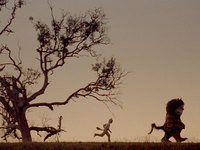
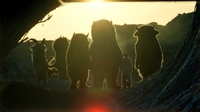
More images from the Spike Jonze adaptation of Where the Wild Things Are are popping up online. The much-delayed movie is currently slated for an October 16, 2009 release. It’s always a bit nerve-racking to see a beloved book turned into a movie, but these pictures are making my heart race, in the good way.
 Instead of pulling together a predictable “best of 2010” books list, we at Her.meneutics thought our readers would enjoy a list of our favorite books written by women that we read throughout the year. Enjoy our recommendations, and add your own in the comments section.
Embracing Your Second Calling, by Dale Hanson Bourke (2010)
This book doesn’t cover every facet of mid-life, but does a terrific job exploring the emotional and spiritual transformation that must happen in our souls at midlife. This meaty book doesn’t rely on shopworn Christian cliches; in fact, Bourke’s transparency about her own ambitions, losses, bitterness, and stumbling steps into her own third act are a refreshing companion on the journey to surrendering to God’s purposes for the rest of our lives.—Michelle Van Loon
The Sabbath World: Glimpses of a Different Order of Time, by Judith Shulevitz (2010)
Sabbath, says Shulevitz, “is not only an idea. It is also something you keep. With other people.” After spending my first 30 years keeping Sabbath with Seventh-day Adventists, I read quite a few Protestant books on Sabbath-keeping by people who liked the idea but had little experience of the practice. In Shulevitz, a semi-observant Jew, I finally found a contemporary author who gets it. Her survey, written as a memoir but packed with fascinating information, covers Christian as well as Jewish approaches to Sabbath-keeping.—LaVonne Neff
The Warmth of Other Suns: The Epic Story of America’s Great Migration, by Isabel Wilkerson (2010)
To tell the story of a generation of African Americans who migrated from the Jim Crow South to northern cities in search of a better life, Wilkerson follows the lives of three people who made the trek. You’ll be immersed in their stories even as you gain a rich new perspective on the courageous, difficult, and often-misunderstood journey they made. —Hannah Faith Notess
The Spirit of Food: 34 Writers on Feasting and Fasting Toward God, by Leslie Leyland Fields, ed. (2010)
I don’t generally include an edited book among my favorites; this one is an exception, and I’ve been feasting and savoring it bit by bit for six months. Essays (most written by women) move between personal stories from their kitchens and thoughtful reflections, drawing me into deeper thinking about faith and food. We are invited to remember God’s bounty, our dependence on those mostly invisible laborers and processes that provide us with food, and to think about eating in ways that reflect good stewardship of all creation, including humans, animals, soil, plants, water, and air. Fields reminds us that an act so ordinary as eating is also deeply spiritual, and that eating well involves more than balancing nutrients and food groups. Essays end with a favorite recipe from each author; I highly recommend trying the perfect loaf of bread from the Sullivan Street Bakery.—Lisa Graham McMinn
Reading Lolita in Tehran: A Memoir in Books, by Azar Nafisi (2003)
This book recalls a clandestine book club in which the author and several other women read and discussed classic works of Western literature that had been forbidden by the Islamic revolutionaries during the Iranian Revolution. Nafisi’s story is a compelling testament to the power of literature and to the way in which the freedom to read is inextricably tied to political and religious freedom.—Karen Swallow Prior
Every Last One, by Anna Quindlen (2010)
This novel, about a suburban mother of three dealing with family tragedy, breaks some of my normal rules for favorite books. I often avoid novels about mourning parents and threatened children, because I find it too easy to imagine my family in a similar situation. But my ability to identify with this novel’s protagonist, Mary Beth Latham, is precisely why I loved this book. Quindlen’s descriptions of Mary Beth’s state of mind in the months just before tragedy strikes, as she ponders a settled and loving, if not terribly passionate, marriage, along with the joys, heartache, and daily annoyances of being a mother, made me feel that the author had seen right into my own thoughts. Ultimately, Mary Beth must cope with sadness and regret of terrible scope. While she comes apart in all the ways I imagine I would come apart under similar circumstances, the novel is ultimately hopeful, as Mary Beth calls on her deepest reserves of love to continue living after heartbreaking loss.—Ellen Painter Dollar
The Hunger Games, by Suzanne Collins (2008)
I read the first book in Suzanne Collins’s trilogy this year, and was shocked by the amount of violence in this book written about and marketed to young adults. The content of the book seems worthy of controversy, but the way Collins handles themes of murder, government oppression, rebellion and desperation—interweaving them with concerns of morality and finding a way to balance love with survival—make this book a worthwhile read. Narrated by a teenage girl named Katniss, the book does a fine job prompting questions about the meaning of character and how to sort out priorities. The series merits thoughtful discussion between younger readers and older ones, both of whom will likely find it entertaining and compelling.—Alicia Cohn
Unbroken, by Laura Hillenbrand (2010)
The author of Seabiscuit delivers a page-turning story of heroism, suffering, and redemption in the life of Louis Zamperini, an Olympic contender who gets lost at sea during World War II.—Sarah Pulliam Bailey
My Ántonia, by Willa Cather (1918) A Midwestern girl, I read My Ántonia as much for the beautiful language and descriptions of my native landscape as for the story of Ántonia Shimerda, a Nebraska woman. Ántonia’s generosity, independence, and resilience inspire me, and I escape into the book every year or two. The novel is presented as Jim Burden’s memoir. Jim’s recollections of life on the prairie and his friendship with Ántonia are emotionally gripping. Here’s one passage that makes me think of twilight in rural Illinois when, driving past farmland and dilapidated barns, I can almost feel the presence of the sedulous pioneers who once worked the land: “As we walked homeward across the fields, the sun dropped and lay like a great golden globe in the low west. While it hung there, the moon rose in the east, as big as a cart-wheel, pale silver and streaked with rose colour, thin as a bubble or a ghost-moon …. In that singular light every little tree and shock of wheat, every sunflower stalk and clump of snow-on-the-mountain, drew itself up high and pointed; the very clods and furrows in the fields seemed to stand up sharply. I felt the old pull of the earth, the solemn magic that comes out of those fields at nightfall.”—Jennifer Grant
Lit: A Memoir, by Mary Karr (2010)
After watching Mary Karr crack up a gymnasium full of book lovers at this year’s Festival of Faith of Writing, I knew I wanted to read Lit, Karr’s third memoir, about her improbable conversion to Catholicism in the wake of divorce and an alcohol addiction. With a writing style one part straight-shooting Texan, one part luminous poet, Karr recounts her topsy-turvy journey to Jesus with a fierce humor that shook me yet kept me enthralled. If you’re looking for a spiritual memoir that leaves the harsh edges unrefined, jutting out like an elbow to the gut, I highly recommend this book.—Katelyn Beaty
 The most recent issue of Vogue Paris (or should I say l’issue de janvier/fé vrier?) struck a nerve when it hit newsstands, upsetting the very readers who count on the magazine to be provocative. They’re guaranteed it. Vogue Paris‘s editor in chief, Carine Roitfeld, once told a British journalist that she tries to include “something every month that is—how you say?—not politically correct. A little bit at the limit. Sex, nudity, a bit rock’n’roll, a sense of humour.”
Wait, I should clarify: Roitfeld is French Vogue‘s former editor. Within a few weeks of the December issue’s release, Roitfeld announced that she was leaving the magazine. Some commentators speculate that the Cadeaux, or, for English speakers, “Gifts,” photo spread went too far, even for French Vogue. What, in this unfailingly erotic publication, could be so troubling that it would arouse rumors such as that one?
In “Cadeaux,” the models are very slim—but that’s nothing new. Nor is it earth-shattering that they wear too much makeup or that there is something suggestive in the picture of the model inexplicably holding a toothbrush in her mouth. Aren’t such photos de rigueur for Vogue? It couldn’t be the opulence of the props or that the stiletto-wearing models recline on animal skins. Nor should their blank (yet at the same time, somehow, hostile) expressions raise eyebrows. Non, c’est vrai, all of that is to be expected.
So what could be so bad that it could possibly have cost Roitfeld her job?
I suppose the fact that the models are no older than six or seven years old might have something to do with it.
Wait, a minute, though. Are fans of the December issue correct when they say that those of us who find some of these images disturbing are just dirty-minded ourselves? The girls, after all, aren’t naked or engaged in sexual acts. What’s wrong with a game of dress-up? Don’t all little girls love to raid their mommies’ closets and put on high heels and silky slips from time to time? Could I be—how you say?—prudish or naïf to find the pictures unsettling?
The Romantic poet William Wordsworth is known for having written poems idealizing the innocence of childhood. His “Ode: Intimations of Immortality from Recollections of Early Childhood” explores the damage to “delight and liberty, the simple creed of childhood” as children glimpse and then engage in the adult world.
That poem came to my mind a few years ago when my older daughter moved out of size 6X clothes. Suddenly instead of the lollipops, ladybugs, and butterflies that had adorned the shirts and dresses on the racks in the little girls’ department, I found myself in a land of low-riding, “distressed” blue jeans and where skulls leered at me from the fronts of T-shirts. They were clothes that seemed suitable for young adults experimenting with an edgy new look or for Jennifer Beals’s character in Flashdance. They didn’t, however, feel appropriate for my daughter’s first day of kindergarten. I retreated online to Hanna Andersson and L. L. Bean—the latter a name so often seen on my kids’ clothes that, once or twice, one of my kids was called by that name. I liked the way these companies viewed children as children. The models in their catalogs smiled brightly. They were pictured on swing sets or skiing or jumping rope. Not to get all poetic on you, but they seemed to embrace Wordsworth’s notion of childhood’s creed. The children were happy, and they were free.
And, yes, of course toddling around in your mom’s high heels is a happy pastime for many girls. But the French Vogue spread is different. Its purpose is to sell high-end products, such as parfum, to adults. That there is so much sex in the surrounding pages also affects the way these images are understood.
Fashion designer Tom Ford was the guest editor and designed the controversial issue, including “Cadeaux.” Is it relevant that Ford is a close friend to photographer Terry Richardson (whose work is featured elsewhere in the December/January issue), and that Richardson has been accused of preying on child models and has written and gleefully performed a song called “Child Molester’s Coming For You”?
I think so.
It’s not only the surrounding pages or Ford’s affiliation with Richardson that trouble me in regards to the photos. It’s some of the elements of the wider culture as well. This is a world in which many very young girls look to Paris Hilton as a role model, a woman who was arrested for the third time (most recently for cocaine possession) last summer and who addresses her young fans about the perils of making sex videos with their boyfriends. “I want young girls to never put themselves in that situation …. Don’t ever let someone talk you into doing something you don’t want to do,” she advises. It’s a culture in which teen clothing companies add maternity lines to their offerings. (And what’s with Justice’s “Monster High?” Blech. It makes me long for the soft embrace of my old Raggedy Ann doll.)
Fashion can be inventive and fun. It can drive us to question some of what we take for granted—and I think those are good things. But the cynical “Cadeaux” goes too far. Instead of eroticizing them and presenting these little girls as sexy pushers of luxury items, mes amis, I say let them eat cake.
Fresh out of the Easy-Bake Oven.







