 Our house was still smoking, the day an arsonist randomly set it on fire, when the questions began to pour in. “What do you need?” friends and neighbors started asking. Our family had all been at home and in bed when the fire was set, and we escaped with nothing but my laptop and the clothes on our backs. Yet I couldn’t think of how to answer—until I remembered a line from a previous conversation with my neighbor, who was undergoing chemotherapy at the time: “Anything anyone does for my kids helps me.”
So I began saying, “Gift cards for books. For the children.”
I asked our children to list which stores they wanted gift certificates from. I began with our youngest, age 7 at the time. Eden sat down and made the list you see in the photo below (after the jump).
25¢
As we stood on the lawn, watching the house burn, she said, “I’m so glad I put most of my money in the bank this week!” We had made a recent trip to the credit union, but she had reserved a quarter.
TIGER BOOK
The night before the fire, we had begun reading Kate DiCamillo’s The Tiger Rising, a book about grief and loss.
Then Eden listed,
STRTS (shirts)
SURS (shoes)
PANS
CLOTHING
Then she added,
LIFE
That pressed the air out of my chest.
I wept reading over her list. Then I tried to pin her down. (You see my personal list at the bottom of the photo.) “Would you like a gift certificate from Target or from Old Navy?” I was considering actual stores, but Eden got to the heart of her loss.
I pulled myself up. The child had said what she needed, so I gave her a quarter and called my dear friend, Jane, who ran out and bought The Tiger Rising that day. Clothes and books and toys and art supplies and gift cards came flooding in.
My husband, Paul, and I were at first reluctant to accept help. We thought we were fine and figured we would sort out the insurance and financial details on our own. We were mistaken. Not only were we delusional, we also found it surprisingly uncomfortable to be on the receiving end of extraordinary generosity. Wrangling with the township, utilities, and insurance was beyond exhausting. It was only when we moved back into the new house that we began the slow process of mourning the fact that a crime had been committed against us. When we were asked, “What do you need?” I can see now we could have co-opted Eden’s list for the entire family: “Please send money, books, clothes and—while you’re at it, if you would be so kind—we could really use our old life back.”
Immediately after a house fire, a person’s needs seem complex, but they’re quite simple. Everything narrows and focuses: You need shelter, food, and clothes. In the early days, even our prayers were simple: “Thank you. Thank you.” We were just so grateful to be alive.
After a tragedy, those of us on the outside often wonder what to say. We look for the escape hatch of a platitude or a verse. Or we are tempted to think we need to offer a reason, find a purpose, or defend God. We shouldn’t. A simple, “I’m sorry,” is appropriate. God doesn’t need us to be his PR reps, and people in midst of calamity aren’t asking questions, at least not yet. Usually they’re simply trying to keep going, take the next step, and figure out how to live this new, strange life.
The “I’m sorry” won’t feel like enough. There is a tension in suffering, a stress in its very existence, even if not our own. When something horrible happens to someone we know, for a moment, we realize this terrible thing is possible in our world too, and that’s scary. It’s the rare friend who is willing to hunker down with you in the mystery of deep sorrow—knowing full well it could be their own.
If you want to help someone after a house fire, or any crisis, you need to know they probably won’t even know what they need. Or, if they do, odds are they won’t have the strength or will to ask. Saying, “Anything I can do to help, just let me know,” isn’t actually helpful. If you want to demonstrate love and support, figure out a practical need and fulfill it as unobtrusively as possible. In the case of a fire, it doesn’t matter if it’s right away or a year later.
Paul and I can’t remember any of the encouraging comments that we’re sure were said to us after our house burnt down. But we’ll never forget the practical tasks people undertook, what items they gave, and how generous and kind they were in the midst of it all.
In Eden’s note above, she circled the items of top priority. Equally first were the quarter, the book, and her life. You can’t tell a child, “This is it, Baby. We’ll give you 25¢ and replace your book, but you are never getting back into the cocoon of your home and life before someone set it on fire.”
You can replace some of her belongings, help her family, surround her with love and affection and, in so doing, be a haven for her and for them when their first haven is gone.
Alison Hodgson is the expert on the etiquette of perilous times. She writes for Houzz.com and blogs at olderthanjesus.blogspot.com.
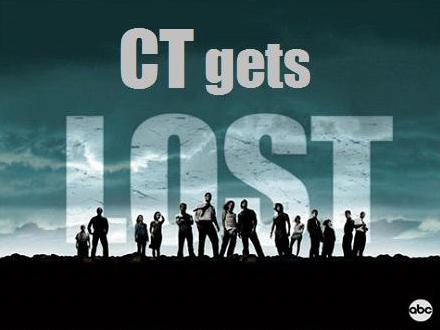
Have you seen the 24-version of the Oceanic Flight 815 crash? This YouTube hit takes all the action happening around the time of the crash and puts it chronological order. It’s fun. But it also helped stress something to me. The final words Juliet says before hearing the crashing plane? “Here I am thinking free will still actually exists…” (See this at the 6:40 mark).
I don’t believe there are too many coincidences in Lost. And this statement clearly fits with Jack and Locke’s long-running debate about destiny vs. choice. In fact, as we look back, we can see that theme growing stronger and stronger throughout the series–culminating with last season’s “Whatever happened happened” missive, Jacob’s repeated assertions that characters have a choice and the huge cliffhanger leaving us wondering, “Did Jack’s plan work? Did he change everything on faith?”
So where does Lost go know with it’s exploration of free will? Co-producer Carlton Cuse told Entertainment Weekly that “this notion of predeterminism is something we’re very actively exploring this season.” I’m expecting a lot of redemption in this season. Who stays lost and who gets found? And in that mix will be the ever present underlying question: Were their paths laid out or do characters truly choose their paths?
What do you think? Where is Lost going with free will? Will it affirm it? Or will it turn out that Jacob and his nemesis have been using the characters as pawns all along? Does Jacob have to touch you for you to be saved? Or can you choose him?
Will any of this actually be answered or left for us to decide?
Todd Hertz, a CT movie critic, is also a regular contributor for ThinkChristian.net where he’ll also be writing about Lost this season.