"What should you say to a guy if he says: 'I don't like wearing a condom'? Text your reply." The text was just one of many that popped up on my screen in what felt like the most unfortunate times—including at church on Easter Sunday—as I clutched my screen hoping those nearby couldn't see the messages about birth control, baby daddies, STDs, condoms, or Plan B.
In the wake of the highly criticized New York anti-teen pregnancy campaign, I signed up to receive texts from them about teenage pregnancy. The messages present straightforward facts about sex. They tell teens that "pulling out" is not an effective way to prevent pregnancy. They explain how to respond to a boyfriend who doesn't like wearing a condom. Tell him: "Wear one or we're not having sex," the message encourages. The campaign supports the use of Plan B, reminding teens to take it if the condom breaks or if no protection was used at all. The texts discourage teen pregnancy by reminding them that parents spend more on diapers per month than they spend on shoes; they will be responsible for child support until their child is 21 (and their driver's licenses will be taken away if they get behind on payments).
Initially, I have to applaud New York on trying to reach text-crazed teens—that last year were said to send an average of 60 texts per day—through such an accessible, familiar medium. A recent study found that hyper-texting teens, defined as those who send more than 120 texts per day, were more likely to use have had sex and used drugs. However, McLuhan's famous "the medium is the message" rings true here, meaning the way through which the message is communicated can hold more value than the message itself. Therefore, the texts containing vital information may not seen as important, instead they come across as disposable, delete-able, and easily ignored—because of the medium by which they are communicated.
If teens receive between 60 and 120 texts per day, that one message with a fact about being able to get pregnant on your period or the web address for a nearby clinic to receive free birth control is going to be lost in the umm, text-mosphere (sorry, I couldn't help it.), especially when "sex ed" is competing with constant updates from best friends and boyfriends. Plus, teens are hooked on texting for its instant gratification—quick communication and continual feedback—but when I texted back an SOS message to this 877-877 number, "I'm pregnant! What should I do?" or "My friend tells me having an abortion is the best way to fix this. Help!," I was met with silence on the other end. I wondered if teens see it as a hotline and have texted similar messages. For teens, the medium of texting requires a 24/7 response.
Some teens may have parents or mentors in their lives talking about sex—but my fear is far too many are only learning sex-ed on billboards, in classrooms, and through pithy messages. It's time for today's teens to lift their eyes from smart phones and engage with the people around them—free and unashamed to ask questions about sex—but that won't happen if we're encouraging more texting and less face-to-face interaction.
The text portion of the campaign unfortunately also employs the same shame tactics as the posters dotting bus stations and street corners in the Big Apple. For example, the campaign sends out updates and questions about pregnant teen Anaya, who pleas for help about her fear of looking fat in her prom dress, gets called a "fat loser," can't convince her boyfriend to marry her, and ends up shunned by her parents. Shaming teen moms is not the right approach to reducing teen pregnancy and wrongly insinuates that teen pregnancy causes poverty, when often, it's the other way around.
The worst part of the text campaign, though, is the absence of personal connection that comes from receiving mass texts from a faceless, absent source. Already, this generation seems to be missing out on the personal aspects of dating and relationships, like the excitement of hearing someone's voice during a late-night phone call or getting asked out on a real date for the first time, and now, we've relegated "the talk" to the digital realm as well. We've all been around teenagers who can't seem to pick their heads up from their texting and Twitter conversations long enough to look us and engage in real-life conversations, and instead of encouraging them to value in-person interactions, we show them that even the most important discussions—on sex, health, our bodies, our relationships—can take place in the confines of our cell phone.
The text component of the New York anti-teen pregnancy campaign only perpetuates the cycle of very critical, coming-of-age conversations happening on screen. It's the same problem with text-dating that leaves the engaged parties feeling connected, intimate even in the case of sexting, when in reality it's a far from a real relationship. You can't dialogue about important life decisions, talk about birth control, or have a heart-to-heart effectively over short messages. Neither can you process important information about sexual education.
We need mentors, we need parents, we need people in the flesh to educate teens because that communicates importance—not fact-filled texts and shame-inducing billboards.
Ruthie Dean is the co-author of Real Men Don't Text (September 2013). She'd love to meet you on her blog, www.ruthiedean.com or on Twitter, @Ruthie_Dean.
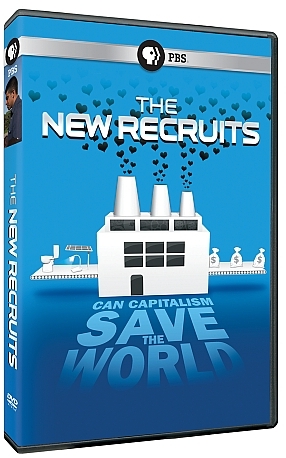
The filmmakers behind The New Recruits, airing on PBS stations on Tuesday, June 15, say it’s a cross between The Apprentice and Slumdog Millionaire. Perhaps, but the main thing is this: The documentary explores how capitalism and Christianity are doing a world of good to help the poor.
The film follows Joel Montgomery, a Christian from Alabama, and two other business school graduates who use their smarts in creative ways to alleviate poverty in different parts of the world. It documents Montgomery’s quest to help rural Pakistani farmers counter an impending water crisis, using drip irrigation systems as an alternative to flooding their fields. Montgomery’s faith is a focal point of the film.
The 30-year-old Montgomery, who had previously led missions trips to Costa Rica and Malawi and had delivered Christmas presents to Hurricane Katrina victims, told The Tuscaloosa News that as a specialist in international development, he entered the field of “social entrepreneurship,” which explores ways that global business can serve, rather than take from, the poor.
“The premise is that you’re helping the underserved go to the next level,” he told the newspaper. “You’re creating jobs, and ultimately helping the country develop. . . . [With charity alone], you create a tremendous amount of dependency. Number two, you’re treating the poor as passive, not active participants. And your growth is always limited by the amount of money you can raise.”
Montgomery continued, “I see myself as long-term being an ambassador between business and the church. The church sends billions of dollars a year abroad, and a lot of that money is not having the impact that people think it’s having. One of my goals is to affect the lives of millions of people, not for my own glory, but because of my faith.”
For air dates and times, click here. The DVD is also available for purchase, and here’s the trailer: