News

Protest Picnic Defends Ramadan Rights of Algerian Christians

Non-Christians make unusual stand for religious freedom in North African country.

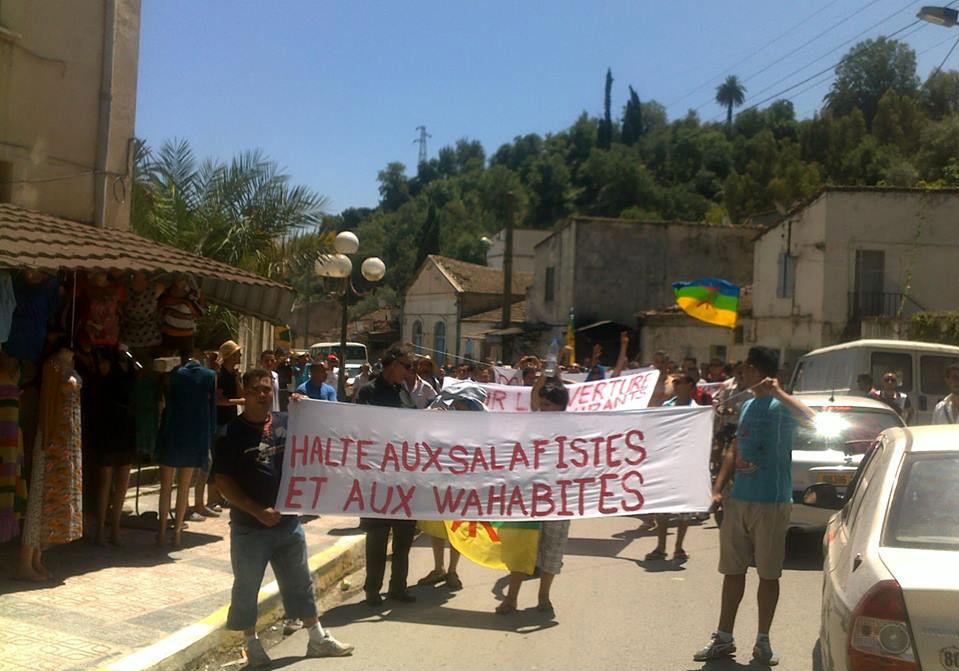
The protest picnic was followed by a march.

The protest picnic was followed by a march.

Christianity Today August 8, 2013
World Watch Monitor

(WWM) As millions of Muslims celebrate the end of Ramadan today, news has surfaced of an unusual religious freedom protest in Algeria.

About 200 people ate together at a public lunch in the town of Tizi Ouzou on Saturday to protest against the "persecution of non-fasters and creeping Islamisation" in the Kabylie region in northern Algeria. Local law enforcement agencies looked on but did not act as sandwiches and soft drinks were shared during a picnic held just a short stroll from law enforcement headquarters.

"This is Kabylie, and here we do what we want. We have to respect our culture, our traditions, our individual and religious freedoms. It doesn't matter if they're Jewish, Christian or Muslim," one protester told the BBC.

In Algeria, where Islam is the state religion, breaking the Ramadan fast in public is punishable by fine and imprisonment. In 2010, two Algerian Christians were taken to court for publicly breaking the fast, although they were later acquitted. Algerian Christians also faced persecution when government officials repurposed Protestant churches after the country gained independence.

In connection to the picnic, protesters told World Watch Monitor the event was organized as a response to the alleged intimidation of non-fasters on July 19 by police in Tigzirt, 35 km north of Tizi Ouzou.

A number of local Islamic associations expressed their indignation and called on the state to punish those involved. Meanwhile, the Algerian Minister of Religious Affairs Abu Abdellah Ghoulamallah said the picnics were "provocative and ridiculous."

But the state news agency APS reported that the protesters were "not attacking Islam" but asking for "freedom of worship and conscience [which is] guaranteed by the Algerian law."

However, APS's claim that the non-fasters included "followers of the evangelistic church who drank beer" was contested and considered by some an attempt to discredit the protesters.

One picnicker, who wished to remain nameless, told World Watch Monitor: "From the first moment to the last, I did not once witness the presence of any evangelist who drinks beer."

"The values of tolerance and peaceful co-existence of people of all opinions and faiths that has existed in Kabylie since the dawn of time is being trampled upon," read a translated petition circulated by picnickers. "The Algerian government is intruding into private life and persecuting non-fasters."

Our Latest

News

Washington Attack Suspect Sought to Justify Himself to Christians

In writings, Cole Tomas Allen thanked his church and argued that his attempt to assassinate Trump administration officials was compatible with his faith.

Being Human

Shame, Sexual Abuse, and Gaslighting with Christine Caine & Yana Jenay Conner

Can forgiveness meet reality when we navigate family trauma with truth?

The Revival That Wasn’t—and the One That May Be

Josh Packard and Raymond Chang

Young people remain deeply wary of large institutions, but they are undeniably interested in faith.

You Don’t Graduate from Discernment

Paul Gutacker

As you seek your vocation with diploma in hand, the way of the Cross must still shape your days.

The Russell Moore Show

How Do I Teach My Children the Christian Faith?

Russell answers a listener question about how we can pass our Christian faith heritage to our children without making it weird.

News

Australia’s Teen Social Media Ban Isn’t Perfect. But It’s Helping Analog Families.

Amy Lewis in Geelong, Australia

Teens have workarounds to get on the apps, but parents have it easier delaying children’s introduction to social networks.

The Bulletin

Attitudes Toward Israel, Kash Patel’s Lawsuit, and John Mark Comer’s Fame

Clarissa Moll, Russell Moore

Americans’ growing frustrations with Israel, Kash Patel sues The Atlantic for $250 million, and the popularity of John Mark Comer.

News

How a Kidnapping Changed a Theologian’s Mind

Interview by Emmanuel Nwachukwu

An interview with Sunday Bobai Agang about the lessons he learned from his abduction last month.

addApple PodcastsDown ArrowDown ArrowDown Arrowarrow_left_altLeft ArrowLeft ArrowRight ArrowRight ArrowRight Arrowarrow_up_altUp ArrowUp ArrowAvailable at Amazoncaret-downCloseCloseellipseEmailEmailExpandExpandExternalExternalFacebookfacebook-squarefolderGiftGiftGooglegoogleGoogle KeephamburgerInstagraminstagram-squareLinkLinklinkedin-squareListenListenListenChristianity TodayCT Creative Studio Logologo_orgMegaphoneMenuMenupausePinterestPlayPlayPocketPodcastprintremoveRSSRSSSaveSavesaveSearchSearchsearchSpotifyStitcherTelegramTable of ContentsTable of Contentstwitter-squareWhatsAppXYouTubeYouTube