Protestant pastors are too hard on their churches. Either that, or churchgoers are too easy on them, according to a new Barna Group study on discipleship sponsored by The Navigators and NavPress.
Less than 1 percent of senior pastors and discipleship pastors told Barna that “today’s churches are doing very well at discipling new and young believers.” Six in 10 said that churches are discipling “not too well.”
But those in the pews disagree. More than 9 in 10 said that their church “definitely” (52%) or “probably” (40%) does “a good job of helping people grow spiritually.”
Barna interviewed more than 2,000 Christian adults—both practicing and non-practicing—and 800 Protestant pastors for its newest report, The State of Discipleship. (Barna defines practicing Christians as those who say their faith is very important to them and who have attended church in the last month.)
 Barna Group
Christians who have attended church in the past six months and consider spiritual growth important are even more positive. About 94 percent said their church places “a lot” of (67%) or “some” (27%) emphasis on spiritual growth.
The reviews are even more affirmative from practicing Christians: 73 percent said their church places “a lot” of emphasis on spiritual growth.
Barna looked at different ways to encourage spiritual growth. One-third of Christian adults said their church recommends meeting with a spiritual mentor. Half said their church publicly endorses group Bible studies. And half said their church encourages studying the Bible independently.
 Barna Group
Pastors acknowledged that encouragement when it comes to their own churches. While only 8 percent said they are doing “very well,” another 56 percent said their church was doing “somewhat well at discipling new and young believers.”
“Pastors give their own church higher marks than churches overall, but few believe churches—their own or in general—are excelling in discipleship,” the report stated.
The disconnect between pastors and parishioners isn’t the only one Barna noted.
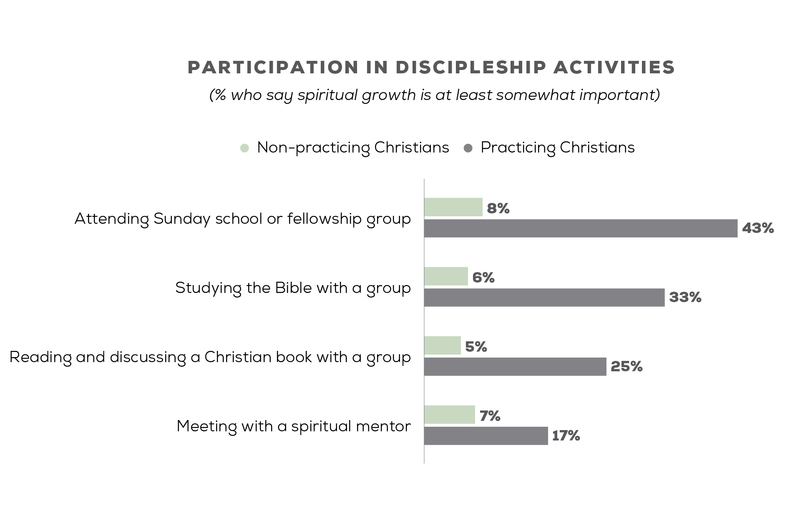
“Despite believing their church emphasizes spiritual growth, engagement with the practices associated with discipleship leave much to be desired,” the report stated. Fewer than half of practicing Christian adults are involved in activities such as Sunday school or fellowship groups (43%), a group Bible study (33%), or meeting with a spiritual mentor (17%).
 Barna Group
Spiritual mentoring leaps when it comes to pastors. Six in 10 pastors (60%) are being mentored, and more than 9 in 10 pastors (94%) are mentoring someone else. Discipleship pastors are more likely (72%) to have a spiritual mentor than senior pastors (59%). And leaders in churches of more than 500 members are more likely (78%) to be mentored than those in a church with 100–499 members (64%) or those with fewer than 100 members (55%).
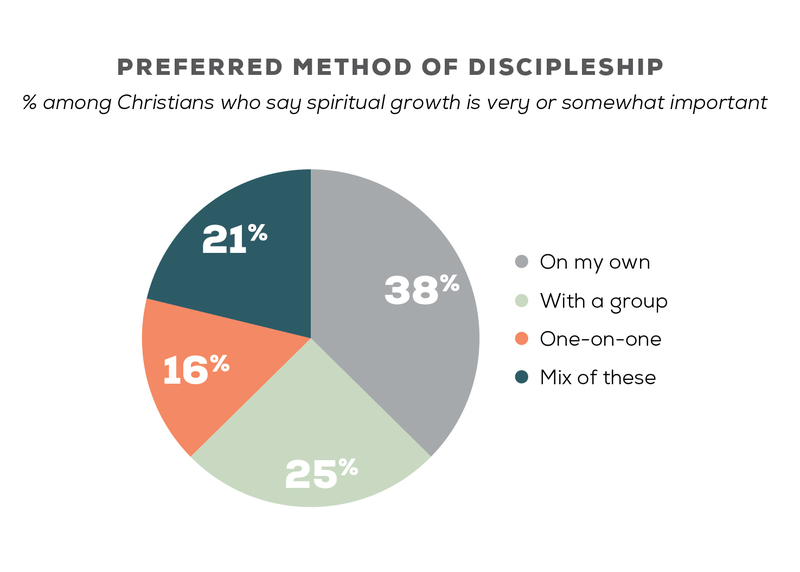
The lower numbers for parishioner involvement in activities match up with the way Christians prefer to manage their discipleship. A quarter of those who say spiritual growth is important would rather be with a group, 16 percent prefer to meet one-on-one, and 21 percent would rather do a mix of individual and group options. But a plurality (37%) prefer to pursue discipleship on their own.
 Barna Group
Interestingly, those who are involved in discipleship activities don’t report much more progress in their spiritual growth than those who aren’t involved. Barna states this is a perception problem.
“Even among non-practicing Christians, a majority believes they have made spiritual progress in the last year,” the report stated.
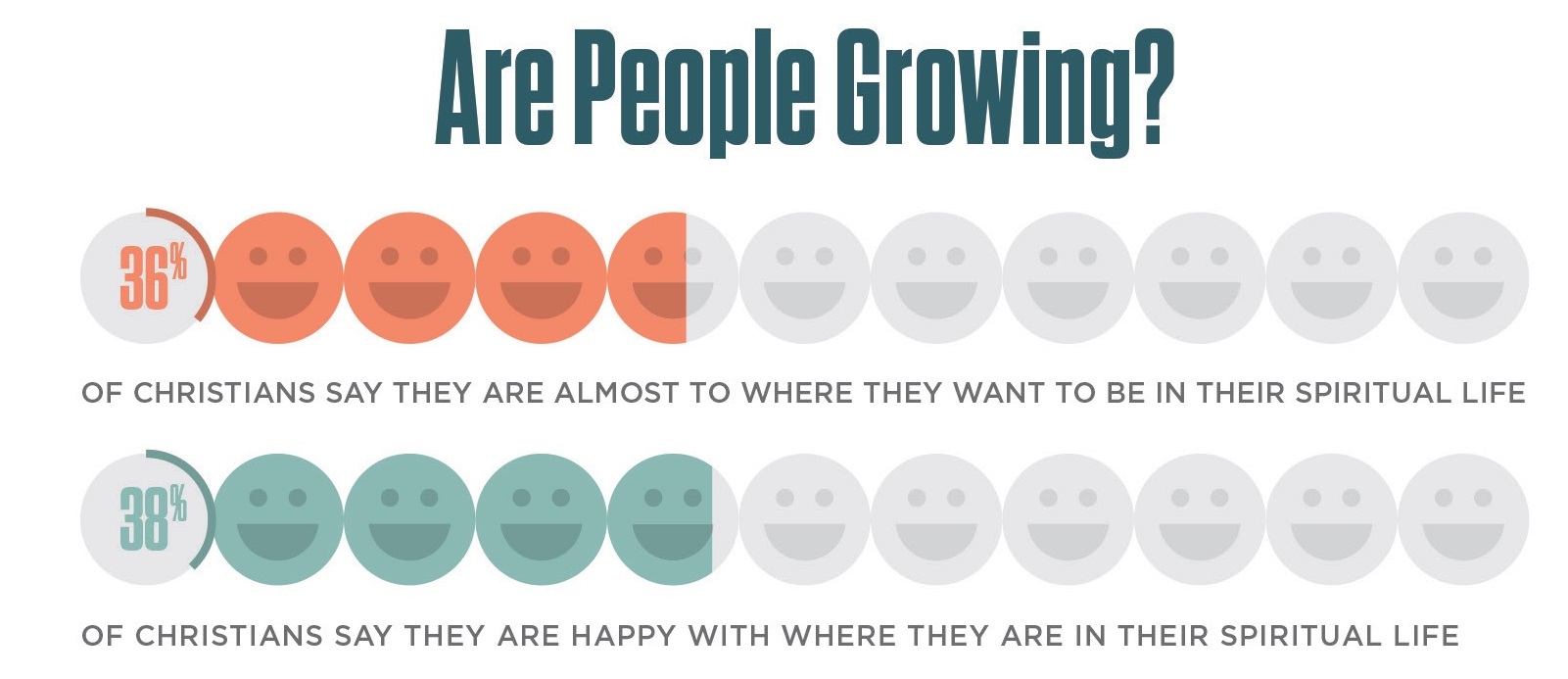
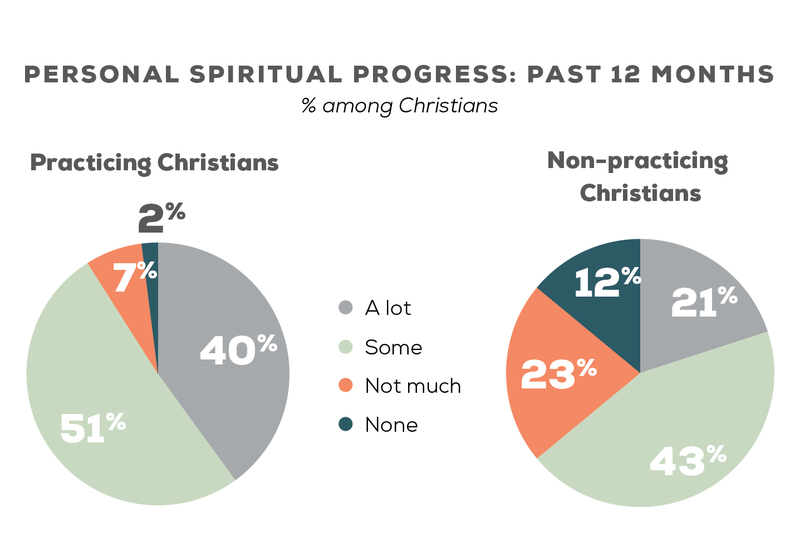
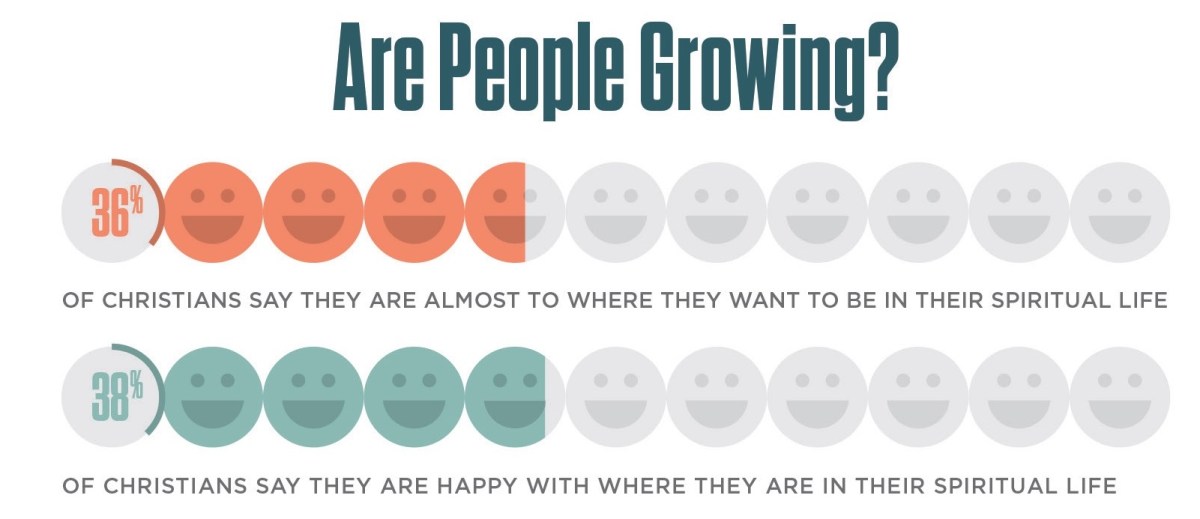
Indeed, Christians are just as generous with themselves as they are with their churches: more than 9 in 10 practicing Christians (91%) said they made “a lot” (40%) or “some” (51%) progress in their personal spiritual growth in the past year. And nearly three-quarters said they were either “happy with where they are in their spiritual life” (38%) or “almost to where they want to be” (36%).
 Barna Group
Even so, most Christians want to keep growing. Almost 8 in 10 (77%) said it is “very important to see growth in their spiritual life.” The reason? For most practicing Christians, it’s a desire to know God more (46%), to be more like Jesus (41%), and because the Bible tell us to be more like Jesus (34%).
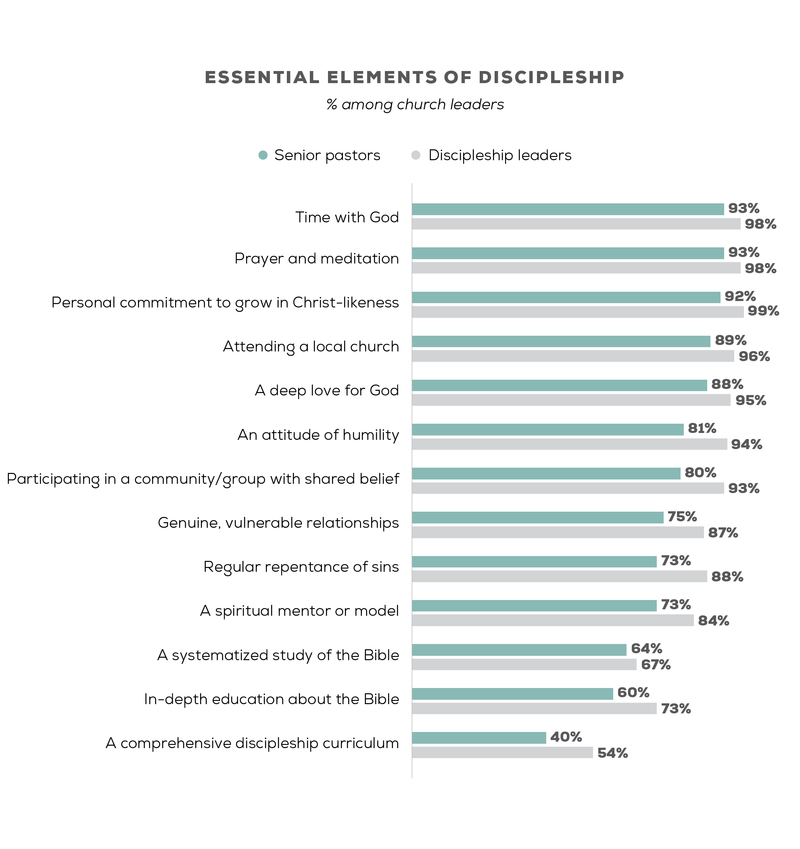
According to pastors, the three most critical elements of discipleship—aside from prayer and time with God—are a “personal commitment to grow in Christlikeness” (94%), attending a local church (91%), and a deep love for God (90%). The least important element: having a comprehensive discipleship curriculum (44%).
Discipleship pastors and senior pastors diverged most on whether regular repentance of sins (15 percentage points), a comprehensive discipleship curriculum (14 percentage points), in-depth Bible education (13 percentage points), participating in a community with shared belief (13 percentage points), or an attitude of humility (13 percentage points) were essential elements of discipleship.
 Barna Group
The survey also found:
- Millennial Christians are more likely than average to say they are spiritually motivated because “I have been through a lot and growing spiritually will help me,” as well as “I am inspired by others and want to be more like them.” This social response correlates with the way younger believers are more likely than average to report growing in peer groups and when reading the Bible with others. On the other hand, millennial Christians are less likely to say their church encourages spiritual growth.
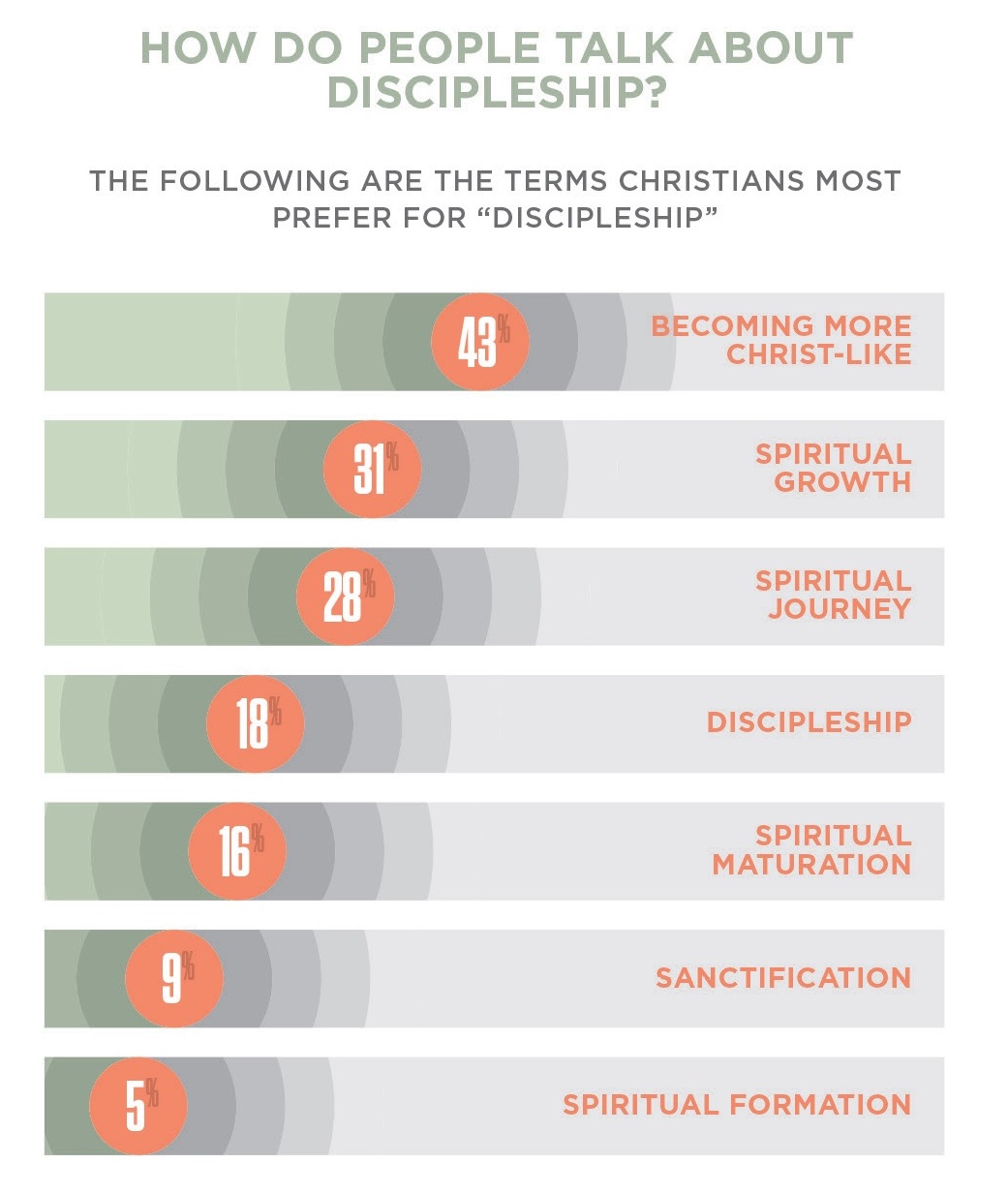
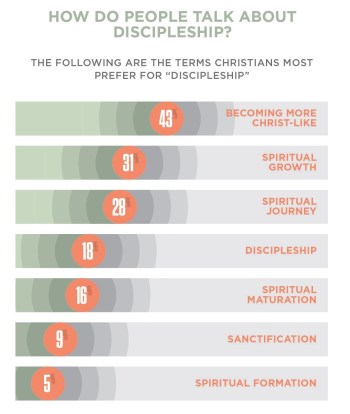
- When asked to describe “the process of growing spiritually,” both practicing and non-practicing Christians prefer the terms “become more Christ-like” (43%), “spiritual growth” (31%), and “spiritual journey” (28%) to “discipleship” (18%) and “spiritual maturation” (16%). The least popular phrases were “sanctification” (9%) and “spiritual formation” (5%).
- Pastors prefer to use small-group formats (52%) nearly twice as much as discipleship pairs (29%).
- A plurality of pastors (27%) said they would like to “develop a more clearly articulated plan or approach to discipleship.”
- Less than 1 percent of church leaders said they use a survey or other evaluative tool to determine the effectiveness of their spiritual discipleship programs.
CT's past coverage of discipleship includes why some multiethnic churches don't mandate diversity in small groups, how boring work is good for the soul, and becoming a servant by dressing like one. On The Exchange, Ed Stetzer has blogged on the essential elements of transformationalsmallgroups.
 Barna Group