


There are no sheep or goats or even llamas at the Capital Christian Center, a 3,000-seat Assemblies of God megachurch in Sacramento this Christmas season. Not even a pair of church members dressed up in a camel suit.
And for the first time in 63 years, no giant Singing Christmas Tree.
“Tonight would have been our opening night,” said Capital Center senior pastor Rick Cole on Friday. “It’s a really weird feeling.”
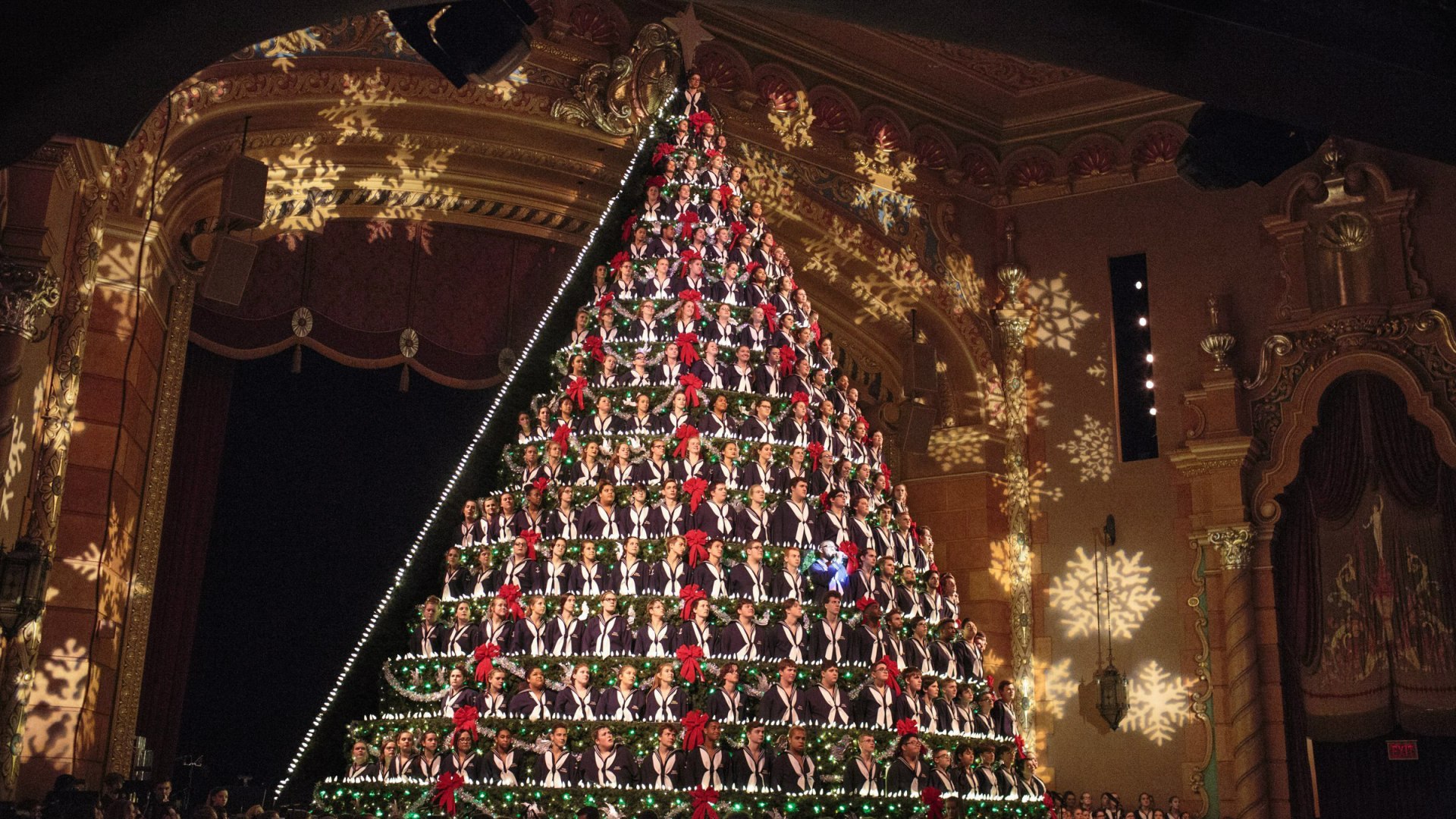
Large-scale Christian shows, including those featuring a Singing Christmas Tree—40- or 50-foot-tall structures holding hundreds of choir members—have been staples at large congregations like Capital Christian for decades. They draw in thousands of visitors who might never otherwise come to church and bring joy and a sense of community to cast and congregation members alike.
But this year, COVID-19 restrictions make such events nearly impossible to pull off.
Last year, 25,000 people came to see 11 Capital Center Singing Christmas Tree performances. Between 300 and 400 people are usually part of the production, which includes choir members, actors and a host of backstage staff and musicians who play in a specially built orchestra pit in front of the stage.
“We are disappointed,” said Cole. “It’s disappointing for every person on the planet right now. It is the nature of the moment we are in.”
First Baptist Church in Orlando is getting around the lack of in-person performances featuring two Singing Christmas Trees—each about 45 feet high from base to star and able to hold about 200 singers and tens of thousands of Christmas lights—by filming a series of short Christmas-themed videos to be shown at services during December, said Jonathan Hickey, the church’s creative arts director.
In Portland, the annual community Singing Christmas Tree, which began in 1962, will stream online from December 15 to New Year’s Day, with a mix of clips from past shows and stories from the Singing Christmas Tree’s history.
At least a few Singing Christmas Trees will go on with the show this year, with some adaptations.
Abilene Baptist Church in Martinez, Georgia, has moved its Singing Christmas Tree from the church’s sanctuary to a nearby park this year, said Thomas Sunderland, associate pastor of music and media.
Prompted in part by COVID-19 and by a major renovation of the church’s building, Sunderland said, the Singing Christmas Tree will be smaller, with no star, one less level and 70 singers, down from the usual 100 or so. They will be six feet apart, and some will stand next to the tree, rather than on it.
Sunderland said that having the tree outside will help limit the risk of spreading the coronavirus. The audience will also be socially distanced.
“In the end, God spoke to my heart to do the tree,” he told Religion News Service in an email, while admitting that things could change between now and December 10, when the first of three performances is scheduled.
“God could shut it all down tomorrow,” Sunderland said. “It belongs to him, not me, not our music ministry nor our church.”
At Belhaven University in Jackson, Mississippi, where the first Singing Christmas Tree was held in the 1930s, a lack of rehearsal—and personnel—was the problem with holding it this year.
None of the choirs on campus have sung together this year because of the risk of COVID-19, said Belhaven President Roger Parrott. And the school’s students were sent home at Thanksgiving. Bringing them back to do the Singing Christmas Tree, held outdoors each year at the school’s football stadium, made no sense.
He hopes that the Singing Christmas Tree will be back next year, and in the meantime he takes pride in the way church communities around the country have run with Belhaven’s invention.
“I’ve always said, if we franchised the idea, we could have made a lot of money by now,” Parrott added.