





Male and Female, Difference and Equality
In today’s cultural environment, conservative activists, media personalities, and public officials often get an impish thrill from grilling progressive women about the definition of womanhood. The inquisitors want to paint these women into a corner. Answer one way, and you’ll offend a subset of allies who have outlandish beliefs about gender fluidity. Answer the other way, and you’ll offend the great mass of ordinary Americans who have commonsense beliefs about biological reality.
There are a few things going on here, of course. There’s an ever-powerful impulse to make ideological opponents look foolish. And those opponents, for their part, often hold transparently foolish views that leave them vulnerable to being portrayed accordingly. But underneath the culture-war spectacle lies a genuine cultural confusion about the exact contours of male and female identity, which are clear in some respects but blurrier in others.
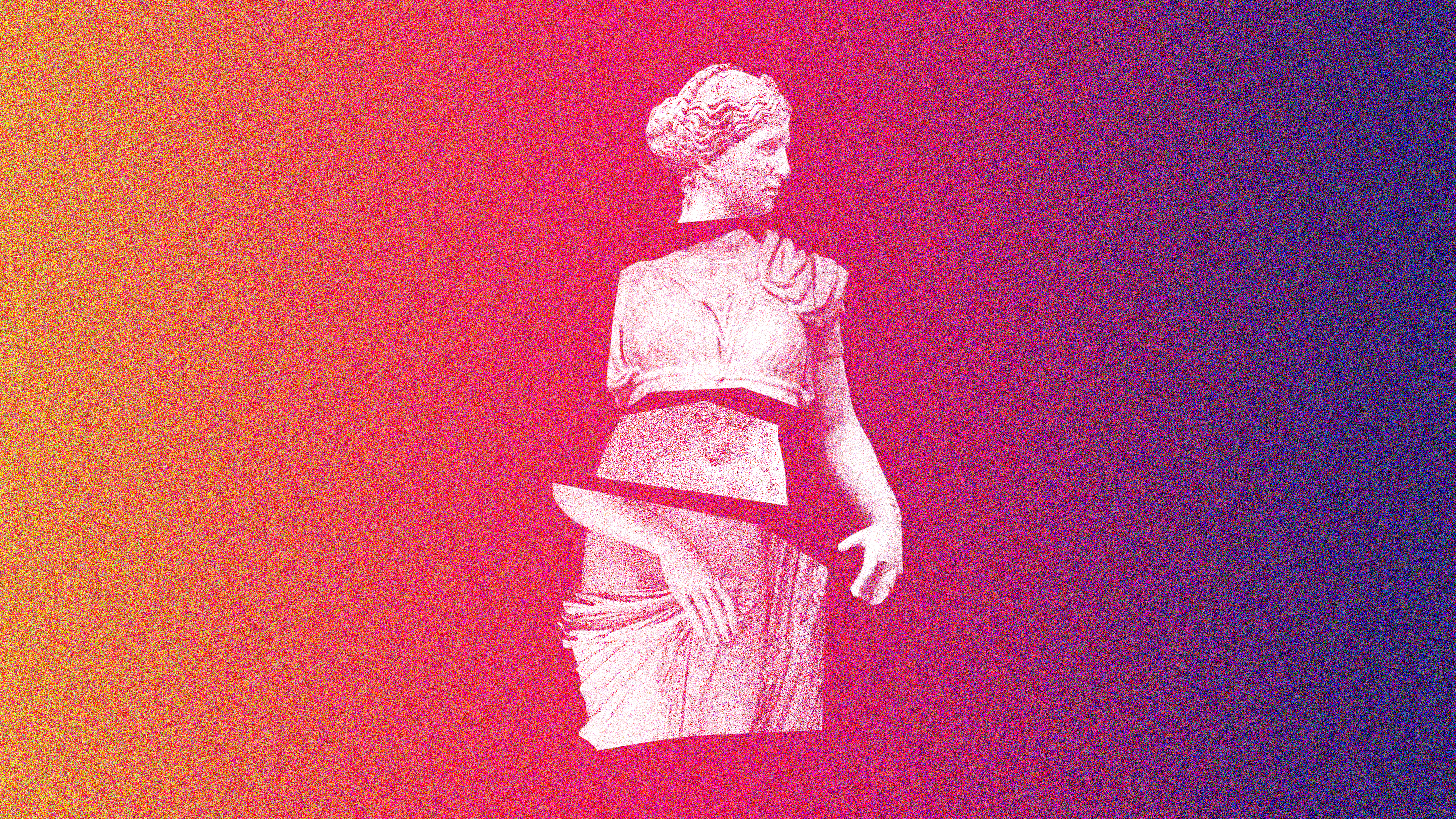
CT culture editor Kate Lucky steps into this conversation with her recent review of Immaculate Forms: A History of the Female Body in Four Parts, whose author, historian and classicist Helen King, serves as an elected lay member of the General Synod of the Church of England. Describing the book as engaging but theologically uneven, Lucky nevertheless commends it for gesturing toward a properly biblical perspective on the physiological distinctions of womanhood.
Here’s how she concludes her review:
“When women are classified as a strange human subtype, ruled by voracious wombs and swollen clitorises, spurting milk and falling into fits, then they’re ‘other,’ treated with suspicion and even disgust. But when they’re proclaimed no different from men, they’re also done a disservice: Medicines are measured incorrectly. The symptoms of heart attacks aren’t noticed.
“Despite her book’s framing as ‘a history of the female body,’ King questions whether ‘any of my four parts [are] necessary for someone to be a woman.’ I take her point. Women have mastectomies; women have hysterectomies. Those women are still women. Identifying gender has never been as easy as running down a checklist of body parts. A small percentage of people are born intersex. Hormone levels vary from woman to woman and man to man. Some people experience the pain of gender dysphoria.
“And yet Immaculate Forms reads less as an argument for sex and gender’s irrelevance or inscrutability than an argument for their importance. Though King insists that ‘sex and gender identity have never really been clear from the body,’ she’s presented an entire book about sexed body parts—womb, breasts, hymen, clitoris—that shape gendered experience…
“Just as Scripture does not endorse breastfeeding over infant formula, it does not set objective standards for hormone levels or weigh in on delivery-room decisions about determining the gender of intersex babies. What it does ‘endorse’ is that physical bodies matter. Male and female, God created us. And both difference and equality have their place for a people who are one in Christ.”
Gripped Anew by the Resurrection
A few years ago, InterVarsity Press launched a book series called The Fullness of Time. With entries (thus far) on Pentecost, Advent, Lent, Christmas, and Epiphany, the series invites readers into a deeper appreciation of the church calendar.
The latest addition comes from one of the finest Christian writers around, Episcopal priest and New Testament professor Wesley Hill. The book, Easter: The Season of the Resurrection of Jesus, helps us see this triumphal occasion as something more than a single Sunday in springtime.
Theologian Brad East reviewed the book for CT.
“The great pleasure of Hill’s book is its transparency to Scripture,” writes East. “More than once I was gripped anew by the confounding, unsettling, life-altering fact that the man condemned to death by Pontius Pilate, rejected by his people, and abandoned by his friends returned to life with mercy on his lips.
“Hill helps readers familiar with these passages to see how shocking they are. Following Robert Jenson and Rowan Williams, he suggests that the reason the apostles were huddled in the upper room may have been fear of being found out, not by the authorities but by Jesus. How could any of them, Hill asks, ‘be confident that Jesus hadn’t returned to enact a bloody vengeance?’
“This is what longtime believers need to see about the Resurrection: The man with death behind him is forgiveness incarnate. He had every reason, in perfect justice, to return in terrifying judgment. Yet the scars he bore are not omens of revenge—eye for eye, whip for whip, nail for nail. His scars are instead a testament to his faithful and unflinching love.
“The Resurrection is a vindication of Jesus and confirmation of his identity. He will not be, now or ever, other than he was in Galilee and Jerusalem. As Hill writes, ‘The Jesus we see in the Gospels, the friend of prostitutes and lepers, is now the ruler and judge of all things.’ In short, the Jesus you meet in the Bible is the only Jesus there is. If you fall in love with the man on the page, you aren’t falling in love with a dead man, like Socrates or Shakespeare, or even a saint, like Monica or Mary Magdalene. Jesus is alive. The man on the page is in heaven above.
“But, Hill notes, this continuity of character does not mean that the Resurrection is simply the continuation of Jesus’ prior life by other means. His aging did not pause on Holy Saturday and recommence on Easter Sunday. His life is not extended but transformed (1 Cor. 15:42–49). Though risen bodily, he is not locatable somewhere in the universe, if only we had the right coordinates. This doesn’t mean Jesus is distant; precisely because he is at God’s right hand, he can draw near to you and me, even now.”


don’t miss
My friends and I talk about our bodies all the time. We ask for advice; we ask for healing prayer. Some of our ailments are more general: ear infections, stomach…

Only 25 years after the crucifixion of Jesus, Paul wrote to some new believers that “if Christ has not been raised, our preaching is useless and so is your faith”…

David and Alex have always been dreamers. As brothers growing up in Esmaraldas, Ecuador, they fantasized about becoming professional soccer players—but the challenges of poverty stood in their way. The…

in the magazine
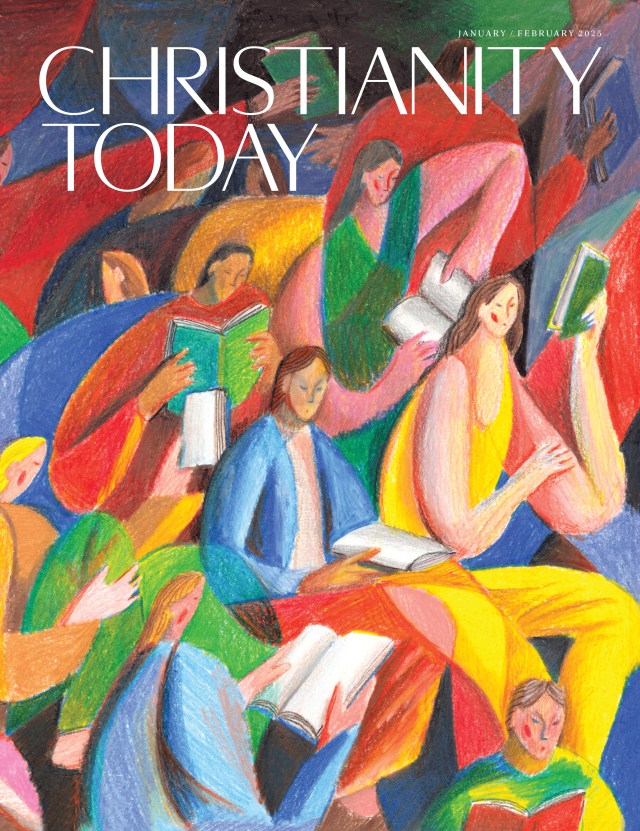
This first issue of 2025 exemplifies how reading creates community, grows empathy, gives words to the unnamable, and reminds us that our identities and relationships proceed from the Word of God and the Word made flesh. In this issue, you’ll read about the importance of a book club from Russell Moore and a meditation on the bookends of a life by Jen Wilkin. Mark Meynell writes about the present-day impact of a C. S. Lewis sermon in Ukraine, and Emily Belz reports on how churches care for endangered languages in New York City. Poet Malcolm Guite regales us with literary depth. And we hope you’ll pick up a copy of one of our CT Book Award winners or finalists. Happy reading!
more from christianity today
related newsletters
CHRISTIANITY TODAY WEEKLY: CTWeekly delivers the best content from ChristianityToday.com to your inbox each week.
CT PASTORS: Each weekly CT Pastors issue equips you with the best wisdom and practical tools for church ministry.
CT books
Each issue contains up-to-date, insightful information about today’s culture, plus analysis of books important to the evangelical thinker.
Delivered free via email to subscribers weekly. Sign up for this newsletter.
You are currently subscribed as no email found. Sign up to more newsletters like this. Manage your email preferences or unsubscribe.




Christianity Today is a 501(c)(3) nonprofit organization.
“Christianity Today” and “CT” are the registered trademarks of Christianity Today International.
Copyright ©2025 Christianity Today, PO Box 788, Wheaton, IL 60187-0788
All rights reserved.