





Reaching Black Gen Z
Happy Wednesday!
My name is Haleluya Hadero, and I’m Christianity Today’s Black church editor. I joined the magazine earlier this year to report on Black Christians and amplify voices within the traditional Black church and Black evangelicalism at large. You might have already seen some of my articles in this newsletter. But this is my first time contributing to Mosaic directly, and I’m thrilled to keep building this community with you all.
Before I get into today’s newsletter, I want to flag an interview that Sho Baraka, my colleague and editorial director of CT’s Big Tent Initiative, recently did on The Russell Moore Show. Sho offers a deeply personal reflection on race in America and speaks to the disillusionment, sin, and renewal he encountered in his own life over the past seven years. If you haven’t checked out this conversation, I would encourage you to do so. It’s a good one.
Doing ministry anywhere is tough. There are challenges, disappointments, and spiritual resistance. Yet Jesus has commissioned his church to go and preach the gospel (Matt. 28:18–20), whether in season or out of season, as Paul told Timothy (2 Tim. 4:2), with the goal of making disciples of all.
As a new academic year swings into full force, I wanted to speak with Charles Holmes Jr., who has been carrying out this work on a college campus. Earlier this year, Holmes launched the HBCU Collective, an initiative that seeks to reach people at historically Black colleges and universities and connect ministry-minded Christians across more than 100 schools.
For his day job, Holmes works as an HBCU college director for The Summit Church in North Carolina. We recently met to talk about his vision and the state of college ministry. The conversation has been edited for clarity and length.
What are you trying to accomplish with HBCU Collective, and why do you think it is needed?
It’s a grassroots idea to bring awareness to what is happening on HBCU campuses, especially among Gen Z. Often the schools that get highlighted are PWIs (predominantly white institutions), and my main objective is to highlight what God is doing in this other space. I’ve been doing ministry at The Summit Church over the past five years as an HBCU college director and focusing on North Carolina Central University (NCCU). We’ve seen the Lord grow our ministry, and we now have over 100 students who attend our weekly campus gatherings for worship and preaching.
I wanted the HBCU Collective to be a space where different people doing ministry at HBCUs can come together, share ideas, dream, and plan. It’s also a place where they can share resources, because the things we navigate are different from PWIs.
You started your role during the COVID-19 pandemic, so it must have been difficult.
Yes. At the time, the church had a few students connected with us, and it was very difficult to get on the campus because of the pandemic but also the political and racial climate. So we did everything over Zoom, which didn’t work well at all.
I spent that first year just building relationships with the administration and faculty members at NCCU. Campus officials were a bit more cautious about letting us in due to the pandemic. But also generally in HBCU culture there is skepticism of outsiders because they really want to protect the culture—and the family-like bond—within the institutions.
So I spent a lot of time cultivating relationships and helping students with different things that they needed, whether it was buying them a suit or helping them prepare for a job interview. I was trying to show them I’m not just there to build my own platform but also care for the students and the institution. There’s a passage in Jeremiah 29 where the prophet tells the Israelites that if they care for the city of Babylon, it will also make their plans prosper (v. 7). I took that on as a philosophy.
There has been a lot of talk about deconstruction in the past few years. A lot of young people, including many Black Americans, have walked away from the faith. How has that affected your conversations on campus?
These conversations do come up, especially because I work at a megachurch in the area. But in my experience, I’ve seen that if Gen Z truly feels that you care for them, they will come. We’ve paid for students’ tuition, books, and counseling sessions. Of course, we help them grow in their spiritual lives and help them read the Bible, pray, learn how to confess sin, and all the other disciplines of the Christian life. But we have a holistic approach to caring for their entire lives. That, plus being authentic and real with them, has really helped.
The Summit Church is a multiethnic but still majority-white church. However, we’ve had success attracting more HBCU students because of this approach. And their presence, in many ways, has also impacted the ministry. During our summer discipleship program, we’ve talked about race, the multiethnic church, and spiritual warfare, which is a big topic in the Black community. It has forced us, in a good way, to broaden our discipleship and the topics we teach.
One of my colleagues recently wrote a good piece that said Gen Z doesn’t need a soft gospel; they need the whole thing.
Absolutely. There’s a hunger with Gen Z. After we launched the initiative at NCCU, we decided not to attract people with trendy topics. We started a Bible study where we spoke the truth in the presence of God. People responded to that. At the end of the day, Gen Z, like all of us, needs hope, how to deal with their sin or the brokenness in their past. And the gospel offers them that.
How do you navigate difficult—and often divisive—topics that might come up on campus, whether about politics, sexuality, or something else?
I establish trust first. Once you establish trust with someone, they know you care for them. So when conversations about sexuality or some more politically charged topics come up, it typically goes well because the trust has already been built. Every summer, we talk about gender and sexuality, and we root everything in the gospel. Before anything, I want them all to know we are all sinners in need of grace.
If we get people to Jesus, then Jesus will help them to think about and confront different things in their own lives. In my early 20s, I thought different things about a host of different topics. So I want to give people the grace and time God has given me to think rightly.
Yes, it’s the path of discipleship. From my own conversations with young people, I know a lot of them in recent years have also been embracing traditional African religions and New Age spirituality. How are you seeing that show up on campus?
That’s a huge thing on campus. It’s something that I speak and preach about often. Whether it’s sage, crystals, or African spirituality, a lot of it is syncretism.
But we’ve also seen students turn away from those things and embrace the Lord. A lot of these young people are looking for identity, and they feel lost. So if they feel like they belong to a community and can experience the presence and love of God, they will put away those things.
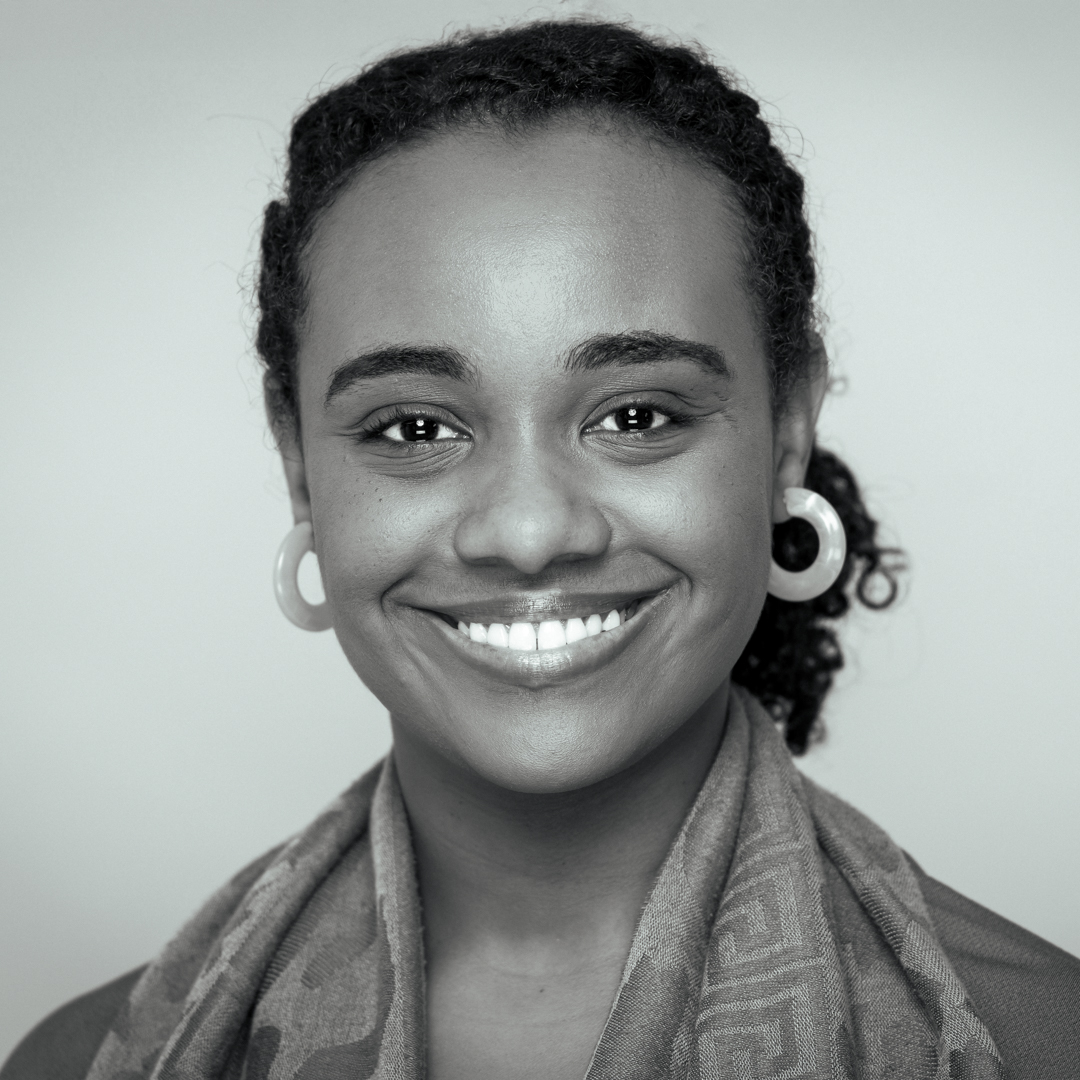
Haleluya Hadero
Black Church editor
Feedback and Talkback
As we build this newsletter and Big Tent Initiative, we would love your feedback and engagement. We plan to publish articles, host webinars, create podcasts, and more to meet the needs of our Big Tent audiences. What are some topics that you would like us to address?
We also want to highlight what’s on our shelves, our playlists, and our screens. Share your list with us, and we will select a few to include in our next newsletter. Contact us at bigtent@christianitytoday.com.
In Case You Missed It




in the magazine

As developments in artificial intelligence change daily, we’re increasingly asking what makes humanity different from the machines we use. In this issue, Emily Belz introduces us to tech workers on the frontlines of AI development, Harvest Prude explains how algorithms affect Christian courtship, and Miroslav Volf writes on the transhumanist question. Several writers call our attention to the gifts of being human: Haejin and Makoto Fujimura point us to beauty and justice, Kelly Kapic reminds us God’s highest purpose isn’t efficiency, and Jen Pollock Michel writes on the effects of Alzheimer’s . We bring together futurists, theologians, artists, practitioners, and professors to consider how technology shapes us even as we use it.
CT mosaic
CT Mosaic is a monthly newsletter that elevates the many voices and colors of God’s church.
Delivered free via email to subscribers monthly. Subscribe to this newsletter.
You are currently subscribed as no email found. Sign up to more newsletters like this. Manage your email preferences or unsubscribe.




Christianity Today is a 501(c)(3) nonprofit organization.
“Christianity Today” and “CT” are the registered trademarks of Christianity Today International.
Copyright ©2025 Christianity Today, PO Box 788, Wheaton, IL 60187-0788
All rights reserved.