





Hello, fellow wayfarers … How to know whether you are patient or just demoralized … Why one of my favorite writers told me he’s spending the Super Bowl worrying about the future of football … What five books of the Bible I would take to my own desert island … Leaving you a Louisiana Desert Island Playlist in the broad daylight … This is this week’s Moore to the Point.
How to Know If You’re Growing in Patience—or Just Giving Up
Whenever some terrible atrocity comes to light in the news cycle these days (in other words, about every 15 minutes), I hear the question “But what can we do?” I usually urge prayer and patience. The first part I have no doubts about, but I’m starting to realize the second one needs more context. That’s because, just like faith or hope or love or grace, the word patience often stands in for a cheap imitation. The right kind of patience can save us; the wrong kind will destroy us.
Last year, Leon Wieseltier wrote in his journal Liberties a kind of jeremiad against patience. It is, he wrote, the virtue those of us who believe in democracy often commend against all kinds of revolutionaries and enthusiasts, and rightly so. Still, Wieseltier wrote, patience can also be paralyzing when we don’t know where the line is between wise acceptance and unwise resignation. As he put it, “Sometimes patience has the lamentable effect of turning a player into an umpire, and umpires have no sides.”
Those words made me wince because they called to mind Martin Luther King Jr.’s “Letter from Birmingham Jail” to the “white moderate” pastors who told him they agreed with his goals but he should wait patiently for justice. Noting his own consistent commitment to nonviolence and persuasive witness, King wrote, “I have tried to make clear that it is wrong to use immoral means to attain moral ends. But now I must affirm that it is just as wrong, or perhaps even more so, to use moral means to preserve immoral ends.”
King wrote and spoke very differently when addressing a different audience than those who remained silent “behind the anesthetizing security of stained glass windows.” Many, after all, concluded King’s movement was too patient, too slow. Some decided his patience just wasn’t working. We can see why someone would come to that conclusion a full decade after the Supreme Court’s desegregation decision with Jim Crow still in effect all across the South. To those, King counseled patience. This difference wasn’t inconsistency.
If someone thinks he or she has sinned too much to be forgiven, I am not going to say “Obey God” and walk away—not because obedience is unimportant but because what that person will hear, with an already-faulty view of obedience, is “Work harder.” But if another friend tells me he’s been caught embezzling money but it really wasn’t that much, and if the company wanted him not to do it, they should have paid him more, I am not going to say simply, “Rest in God’s grace.” Again, that’s not because he shouldn’t rest in God’s grace but because he has a wrong definition of grace.
Patience is indeed what’s called for in this time and in all times. Patience is worked in us by the Spirit. But the efficacy of this virtue requires that we know what it is and isn’t. Let’s look at some common views of patience.
First, think about cynical patience. This is what King called out in the Birmingham pastors. This kind of patience says, “You’ve got to be realistic” or “Idealism is for losers.” It acts as a moral sedative against doing what is right and accepts the Devil’s account of reality—that force is ultimate, that cruelty is power.
Second is demoralized patience. Those with this kind of patience wait not because they trust but because they have given up. Demoralized patience is waiting without hope. Over time, it loses the ability even to imagine a different kind of future.
In reality, the first kind of fake patience feeds on the second. Most people aren’t calculating and opportunistic. But for those who are—the cynics—nothing is more of an obstacle than people who actually hope—who aspire to something better. The cynics often tell people to be patient when what they really want is for the demoralized to shrug and say, “Well, it is what it is.”
Sometimes what feels realistic or reasonable or mature is just a way of saying to oneself, “Nothing meaningful is coming. Adjust yourself accordingly.”
In the days of the prophet Ezekiel, the problem was not just with exiles who feared God had forgotten them but also with those who were left behind in their homeland. They concluded that injustice and violence would continue: “The Lord has forsaken the land, and the Lord does not see” (Ezek. 9:9, ESV throughout).
This pattern of thinking ends with the cynics leading the demoralized to hopelessness—right where the cynics want it. And God denounced the cynics, who had “disheartened the righteous falsely, although I have not grieved him, and you have encouraged the wicked, that he should not turn from his evil way to save his life” (13:22).
But neither of these false views is what the Bible means by patience. Paul wrote of endurance, a patient bearing-up under suffering, this way: “We rejoice in our sufferings, knowing that suffering produces endurance, and endurance produces character, and character produces hope, and hope does not put us to shame” (Rom. 5:3–5). He then wrote that “if we hope for what we do not see, we wait for it with patience” (8:25).
This is hopeful patience. It recognizes delayed outcomes but does not decay expectations.
In fact, Paul wrote that waiting with hope is not passive but active, even when we don’t know what to do. The Spirit prompts us, after all, to “groan inwardly as we wait eagerly for adoption as sons, the redemption of our bodies. For in this hope we were saved” (vv. 23–24). That’s full of lament but not despair.
If what we define as patience makes us less able to determine what is wrong, it is not patience of the Spirit. Patience instead lets go of the need to control timetables or to have hopes that are immediately measurable.
Hopeful patience does not refuse to bear witness. Often this kind of patience cannot see the next steps to take, but not because it no longer believes there’s a way forward. Sometimes hopeful patience doesn’t know how to achieve justice, but not because it has concluded that injustice is inevitable or that good and evil are the same.
Impatience, on the other hand, leads first to frenzy and then compliance. When we expect everything to be immediately made right, we become frantic when it is not. For some people, that then means forcing change to happen—even if it mimics the ways and means of the unjust. If Martin Luther King Jr. had decided to fight Bull Connor with fire hoses and attack dogs of his own, he would have lost regardless of who won—it would just create a contest to find which Bull Connor was bigger.
Even for those who retain moral integrity and authority, a waiting that isn’t energized by both hope and lament will lose heart—and give up. Eventually, the impatient look around for what does seem to work, and often they find the same thing the cynical propose and the demoralized accept.
The patience of the Spirit is different because it conforms us to the patience of God himself. If we misunderstand that, we miss it all. In The Perilous Deep: A Supernatural History of the Atlantic, author Karl Bell explores how the chaos of the oceans led to the genre of “cosmic horror” by such writers as H. P. Lovecraft. Lovecraft’s Cthulhu and other monsters are terrifying because they are, in a sense, patient. They slumber in waiting because they do not care about human beings at all. They represent a meaningless, unfeeling universe. But that is not the patience of the God and Father of Jesus Christ.
The impatient look at the injustice and suffering of the world, and they conclude, as do the cynical and demoralized patient, that everything will be this way forever (2 Pet. 3:4). They cannot see that the patience of God is active: “The Lord is not slow to fulfill his promise as some count slowness, but is patient toward you, not wishing that any should perish, but that all should reach repentance” (v. 9). Patience with hope keeps checking in, even if that means asking, “How long, O Lord?” or sighing in utterance too deep for words.
Patience is not Zen-like detachment. That’s why some of the most patient people I know feel as if they’re impatient. And some of the people who think they are patient are just procrastinating or scared or numb. If you are anguished and unsure of what to do, pray—stop and just say that in the presence of God. You will find that you are either appealing for God to intervene or praying for him to bring to mind what he is calling you to do.
Patience endures suffering, but it doesn’t cause it. Patience endures evil, but it doesn’t endorse it. Let’s wait, but not as those who have no hope.
Why Football Matters (Even If You Don’t Like Football)
As we count down to Super Bowl Sunday, this week’s podcast episode is about football—and also very much not about football.
I’m joined by Chuck Klosterman, one of America’s sharpest (and funniest) cultural observers, to talk about his new book Football and what the sport reveals about who we are, what we love, and what we tolerate.
Our conversation ranges from Roman gladiators to Super Bowl halftime shows, from masculinity and memory to violence and belief, from television economics to church attendance patterns. The claim beneath it all is simple and unsettling: Football may be one of the last truly shared rituals in American life, and even that might not last much longer.
If you love football, this conversation takes seriously your reasons for loving it—not just strategy or nostalgia but the way fandom shapes identity, loyalty, and even moral imagination. Why does criticism of football provoke more outrage than theological disagreement? Why does a game carry so much meaning—and anger?
If you don’t care about football, this episode is still for you, because the deeper question isn’t about yard lines or rule changes. It’s about what happens when a culture’s rituals outlive its imagination. It’s about how a made-for-television spectacle became a secular holy day; how churches first resisted, then accommodated, then surrendered to it; how violence, agency, and masculinity get baptized by tradition and memory.
We end by widening the lens to politics, class, religion, and even Billy Joel and by asking a question that lingers longer than a Sunday-night broadcast: When future generations judge our era by one piece of football culture, what will they see?
Whether you’re counting down to the Super Bowl or actively avoiding it, I think you’ll find this conversation worth your time.
You can listen here.
My Desert Island Bible Shelf
Sometimes I end the podcast by asking my guests which five books of the Bible they would choose, if they could only have five, to keep with them for the rest of their lives on a desert island. Sometimes I’ll complicate the question by saying that not only will they be alone, but also their memory will be fading. It tells me a little bit about that person. On our last show of the year, Leslie Thompson asked me what my desert island books of the Bible would be. Here’s my list:
1. John. No book of the Bible has influenced and shaped my life more than this one. As a matter of fact, if I had to choose only one chapter of the Bible, it would be John 1.
2. Luke. I am tempted to choose all four Gospels, because each one is important to me, but if I had to limit it to two, I would have to go with Luke. It includes most of the miracles of Mark and the teachings of Matthew but also has pieces unique to it: the reading of the scroll in Nazareth, the Good Samaritan, the Prodigal Son, Zacchaeus, and the haunting, beautiful account of the post-Resurrection appearances in chapter 24. It includes the words I’ve chosen for my gravestone: “And he said, ‘Jesus, remember me when you come into your kingdom’” (23:42). And what would I do without the good tidings of great joy as communicated in Luke 2?
3. Isaiah. This is a hard one because I love so many of the prophets—Jeremiah especially. But I would choose Isaiah because it not only ties together so much of the Old Testament promise but also shapes the entire trajectory of the New Testament. Isaiah would give me the vision John receives later in Revelation 21–22 and will bring that hope to mind. Plus, so many of my favorite passages are here, such as 30:18–21, 52:6, and 65:1. Citing this book, John noted that Isaiah spoke as one who saw the glory of Christ and spoke of him (John 12:41). I would need every bit of that.
4. Psalms. This is somewhat unfair because Psalms is massive, so choosing it gives me a bigger chunk of the Bible. Even if it didn’t, though, I would need to hear these songs—not only because in them “deep calls to deep” in every spiritual and emotional circumstance but also because so much of the rest of the Old Testament that I would want and need is echoed here: the Creation, the Exodus, the pillar of fire and cloud, the Davidic covenant, and so on.
5. Hebrews. The final one is where I struggled. I love Genesis and Exodus and 1 Samuel and Galatians and Ephesians and Colossians. But the choice came down to two—Romans and Hebrews. Romans rehearses for me the gospel itself, rooting it all the way back to Adam and Abraham, and includes my second-favorite chapter of the whole Bible (Romans 8). With Hebrews, though, I get an explicit retelling of much of the Old Testament. I would have, in miniature form, a kind of Genesis and Exodus, as well as several of my all-time favorite verses, including “We have this as a sure and steadfast anchor of the soul, a hope that enters into the inner place behind the curtain, where Jesus has gone as a forerunner on our behalf” (6:19–20). The tiebreaker, I suppose, is that I’m teaching through Hebrews right now, so the glory of it is at the front of my mind.
Desert Island Playlist
Every other week, I share a playlist of songs one of you says you’d want to have on hand if you were stranded on a desert island. This week’s submission comes from reader David Fontenot from Bossier City, Louisiana:
- “Murder in the City” by The Avett Brothers: I would miss my family on the island, and this song reminds me of them.
- “Harvest Moon” by Neil Young: The song to hear under a full moon on a desert island.
- “Into My Arms” by Nick Cave and the Bad Seeds: Dark and brooding tune about a skeptic/agnostic nearing belief because of the person they love.
- “Pancho and Lefty” by Merle Haggard and Willie Nelson: This song tells a story that gets me every time I hear it.
- “A Kiss to Build a Dream On” by Louis Armstrong: The song that wakes me up every morning on my cellphone.
- “Bad” by U2: Classic U2 song and my favorite by them.
- “Cocaine Blues” by Johnny Cash: The origin of true rock-and-roll.
- “Impossible Germany” by Wilco: Two harmonizing guitars along with another lead guitar puts my soul at ease.
- “Song for Zula” by Phosphorescent: A gorgeous tune of the driving forces of Love.
- “Reckoner” by Radiohead: A hauntingly beautiful reminder of the band that can do anything.
- “Breakers Roar” by Sturgill Simpson: Heard this the first time during the film Civil War and have loved it ever since.
- “Death and All His Friends” by Coldplay: A secular tune that reminds me of our Lord’s glorious resurrection.
Thank you, David!
Readers, what do y’all think? If you were stranded on a desert island for the rest of your life and could have only one playlist or one bookshelf with you, what songs or books would you choose?
- For a Desert Island Playlist, send me a list between 5 and 12 songs, excluding hymns and worship songs. (We’ll cover those later.)
- For a Desert Island Bookshelf, send me a list of up to 12 books, along with a photo of all the books together.
Send your list (or both lists) to questions@russellmoore.com, and include as much or as little explanation of your choices as you would like, along with the city and state from which you’re writing.
Quote of the Moment
“The late humorist James Thurber wrote a fable set in a medieval court, and he has the Royal Astronomer report that all the stars are going out! It turns out that he is simply going blind. I am probably making the same mistake. Cheers.”
—Kurt Vonnegut, Letters
Currently Reading (or Re-Reading)
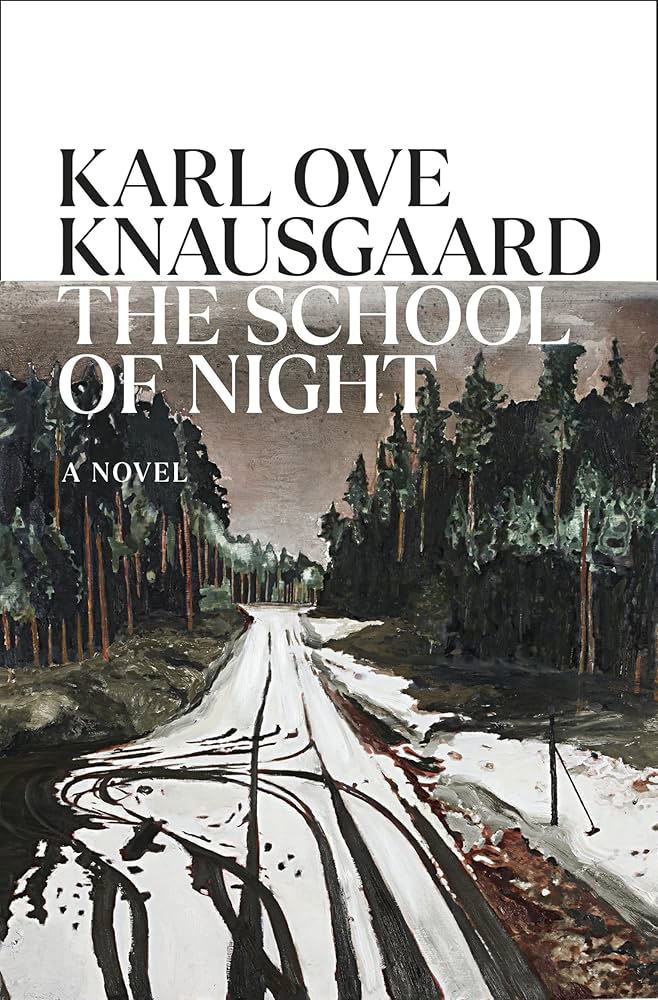
- Karl Ove Knausgaard, The School of Night: A Novel (Penguin)
- John Koenig, The Dictionary of Obscure Sorrows (Simon & Schuster)
- Viktor E. Frankl, Man’s Search for Meaning (Beacon)
- John Gray, Isaiah Berlin: An Interpretation of His Thought (Princeton University)
Join Us at Christianity Today
Founded by Billy Graham, Christianity Today is on a mission to lift up the sages and storytellers of the global church for the sake of the gospel of Jesus Christ. Subscribe now to get exclusive print and digital content, along with seasonal devotionals, special issues, and access to the full archives. Plus, you’ll be supporting this weekly conversation we have together. Or, you could give a membership to a friend, a pastor, a church member, someone you mentor, or a curious non-Christian neighbor. You can also make a tax-deductible gift that expands CT’s important voice and influence in the world.
Ask a Question or Say Hello
The Russell Moore Show podcast includes a section where we grapple with the questions you might have about life, the gospel, relationships, work, the church, spirituality, the future, a moral dilemma you’re facing, or whatever. You can send your questions to questions@russellmoore.com. I’ll never use your name—unless you tell me to—and will come up with a groan-inducing pun of a pseudonym for you.
And, of course, I would love to hear from you about anything. Send me an email at questions@russellmoore.com if you have any questions or comments about this newsletter, if there are other things you would like to see discussed here, or if you would just like to say hello.
If you have a friend who might like this, please forward it, and if you’ve gotten this from a friend, please subscribe!


Russell Moore
Editor in Chief, Christianity Today
P.S. You can support the continued work of Christianity Today and the Public Theology Project by subscribing to CT magazine.
Moore to the Point
Join Russell Moore in thinking through the important questions of the day, along with book and music recommendations he has found formative.
Delivered free via email to subscribers weekly. Sign up for this newsletter.
You are currently subscribed as no email found. Sign up to more newsletters like this. Manage your email preferences or unsubscribe.




Christianity Today is a 501(c)(3) nonprofit organization.
“Christianity Today” and “CT” are the registered trademarks of Christianity Today International.
Copyright ©2025 Christianity Today, PO Box 788, Wheaton, IL 60187-0788
All rights reserved.