





This edition is sponsored by Wellspring Group
Hello, fellow wayfarers … How the life of John Perkins should make us rethink Christian witness in the 21st century … Why I procrastinated for a decade on writing a John Perkins tribute … What I finished, at long last, this week … How we can get rites of passage back when it feels like starting over … A farm-country Desert Island Playlist … This is this week’s Moore to the Point.
Why John Perkins Stood (Almost) Alone
John Perkins died this week, and I can’t believe it.
When I say that, I don’t mean his death was a shock. He was in his 90s. I also don’t mean what we often say when someone we love and respect dies: “I just can’t believe he’s gone.” No, what I find hard to believe is that we were alive at the same time. That’s because Perkins seemed too large for this age.
Perkins seemed to be someone we should read about in history books, not someone we could know. Whenever I saw his face and name on the screen of my pulsing phone in an incoming call, I felt as if I were being contacted by George Whitefield or John Wesley or Martin Luther King Jr. Perkins seemed strange in this time in the world, and that’s because he is as close as we get in the present day to what people meant at one time when they said “martyr.”
He was no martyr the way the word’s been reduced and degraded. The psychological category of martyr complex did not fit him at all. He was a Black Mississippian of one generation, and I am a white Mississippian of another, and I could see what he was up to. He had left our home state, after all, and come back with a burden—to preach the gospel, to see lives changed, to stand up to white supremacy and the oppression of the poor, and to empower people to escape from poverty.
And he did that in the Mississippi of the 1960s—a race-nationalist police state that sought to make examples of everyone who, like Perkins, did not “know their place.” He was beaten, jailed, and hounded in every way possible, but he never yielded. Neither did he give up on what drove him to act in the first place. He never gave up on reconciliation.
After a certain point in the 1980s or 1990s, racial reconciliation became a phrase of deflection for many believers. Many American Christians, often white evangelicals, used reconciliation in reference to race as a way to signal, “We want multiethnic churches but only with white culture, except for an occasional gospel choir” or “We don’t want anyone to use racial slurs, but we also don’t want anyone looking at anything in the Bible that might sound like social justice.”
Seeing this linguistic trick, some who rightly opposed racial inequality became suspicious of the very word reconciliation. Perkins never did. He would no sooner give up that concept than he would give up the word grace because some television evangelists had used it to excuse their latest sex scandals.
Perkins truly believed what Paul wrote:
All this is from God, who through Christ reconciled us to himself and gave us the ministry of reconciliation; that is, in Christ God was reconciling the world to himself, not counting their trespasses against them, and entrusting to us the message of reconciliation. (2 Cor. 5:18–19, ESV throughout)
To those who wanted to honor civil rights and care for the poor but couch their concerns in vague generalities about “the divine,” Perkins thundered, “Jesus!”
And to those who wanted to keep the Jim Crow mentality, just substituting modern complaints for the language their grandparents would use, Perkins stood with the Bible: “Behold, the wages of the laborers who mowed your fields, which you kept back by fraud, are crying out against you, and the cries of the harvesters have reached the ears of the Lord of hosts” (James 5:4).
Perkins combined preaching the gospel, registering people to vote, advocating for justice and civil rights, and starting neighborhood initiatives to give the poor hope—not only for the life to come but also for escaping poverty now. Yet he never gave up on reconciliation, even with those who hated him.
Perkins refused to treat the greatest commandment (“Love the Lord your God,” Matt. 22:37) and the second-greatest commandment (“Love your neighbor as yourself,” v. 39) as separate options on a multiple-choice quiz.
Some will blanch at the word martyr because it doesn’t seem to apply to someone who passes quietly at home, holding hands with his wife, in the tenth decade of life. Perkins’s death doesn’t seem to fit in the same category as the deaths of those who were burned at the stake or drowned in rivers or fed to lions for their faith. But the term martyr is rooted in the Greek word for witness, and that’s what Perkins was.
A witness, like Scripture itself, is a two-edged thing. Ezekiel saw the idolatries going on in the temple, and God said to him, “Son of man, have you seen what the elders of the house of Israel are doing in the dark, each in his room of pictures? For they say, ‘The Lord does not see us, the Lord has forsaken the land’” (Ezek. 8:12). A witness has seen something and bears witness to it.
In a time when the government has proposed removing language about, for instance, the murder of our fellow Mississippian Medgar Evers being motivated by racism, we need a witness to say, “These things happen in darkness but will not be hidden forever.”
But witness is not only an act of judgment. The Book of Hebrews gives us a series of examples of men and women who were “commended through their faith” (11:39). This commendation was not from other people—indeed, some of these Christians were sawn in two or exiled—but from God, because they “endured as seeing him who is invisible” (v. 27). These are not past-tense examples, the book reveals: “We are surrounded by so great a cloud of witnesses” (12:1). The language of a “cloud” here describes an overwhelming multitude—the kind of assembly Revelation refers to as a “multitude that no one could number” (7:9).
The cloud does not witness to itself but spurs us to “run with endurance the race that is set before us, looking to Jesus, the founder and perfecter of our faith, who for the joy that was set before him endured the cross, despising the shame, and is seated at the right hand of the throne of God” (Heb. 12:1–2).
We could be tempted to think we are in a time of drought, without a cloud in the sky. But witnesses don’t just see something that’s already happened; they also look for something to come. And they sometimes get a glimpse: “Behold, a little cloud like a man’s hand is rising from the sea” (1 Kings 18:44).
Perkins stood with ideas and action and the kind of moral authority that can come only from testing those ideas with his life—standing for something true and loving something real. That’s the kind of witness Perkins was. And that’s what made him seem so strange in this juvenile, demoralized time.
John Perkins was alive. He still is. I believe it.
Why I Didn’t Have a Tribute Ready for John Perkins’s Death
Almost a decade ago, someone at Christianity Today called and said, “John Perkins is at the point of death, and we expect him to pass any day. Could you write a tribute for us?” My answer was, of course, yes. Perkins was not only a hero to me but also an encourager, a friend, and a fellow Mississippian. Before I could sit down to write, I saw an incoming call on my phone—from John Perkins.
I answered to hear John dispensing with pleasantries, as he always did, and getting right to the point: “I wonder if you could come preach a Bible study for this group I’ve got together …” I listened and nodded while reaching over and closing the screen of my laptop. John Perkins wasn’t going anywhere. He was just getting started. We would not need a eulogy for a long time.
I didn’t write that tribute ahead of time, partly because to write something I have to feel it, and I can’t really do that in advance—but also because I seemed to think that, as long as I didn’t write a goodbye to John Perkins, I wouldn’t have to.
My New Book Is Done!
Last night around dinnertime, at long last, I finished my new book and sent it off to my publisher. I can’t talk much about it yet, but I am excited to do so with you very soon!
How We Can Recover Rites of Passage in Our Ordinary Lives
A couple years ago, when our dog Waylon died, we gathered our sons together to bury him in our backyard. I realized I should say something, but I didn’t know what. I didn’t want to yield to “all dogs go to heaven” cringe sentimentality, but I also wanted to give thanks for how much this creature had meant to us and to express our gratitude before we committed him to the ground. I thought, Wait, and left my family standing around while I went upstairs and flipped through my Every Moment Holy books until I found a liturgy for the death of a pet—and it was perfect.
Most of us know how to mark big moments—a wedding, a funeral, a serious illness. But some of us falter in everyday moments, when we struggle for words to express grief or gratitude or fear or joy. And sometimes we even feel guilty for wanting to do so—What does it matter if I have writer’s block? or Who cares that I really love keeping bees? That’s where the Every Moment Holy books by Douglas McKelvey are like nothing else out there.
That’s especially true when we think about rites of passage—not weddings or funerals or even high school graduations but those in-between times when something is happening but we don’t know how to mark it. That’s why I sat down with Doug to talk about his new collection of prayers and liturgies for rites of passage.
We talk about some of my favorites, like the liturgy for someone worried about seeing an ex-girlfriend or -boyfriend. Along the way, we discuss why so many guests on my show—from Jonathan Haidt to Richard Reeves—believe recovering rites of passage is one of the most pressing tasks we face in helping adolescents thrive in adulthood. And the truth is, that problem extends far beyond those early years of “launching” our children.
You’ll find lots to think about in this conversation—about how to find what’s holy in the everyday without turning holiness into everydayness. You can listen to it here.
Paid Content
In the busyness of careers, families, responsibilities, and commitments, it’s hard to catch a breath and check in with yourself — but when you do, can you sense the quiet ache of disconnection? If so, you’re not alone. Many of us want to move beyond knowing about God’s love into experiencing it fully in the deepest parts of our hearts. Becoming Wholehearted can help you do just that.
As you read this book, you’ll find biblical truth woven through vulnerable stories of lived transformation. Each story will help you understand your heart as the channel to connection with God and others, growing your confidence to live from your true identity and to step more fully into God’s purpose for you. Pick up your copy of Becoming Wholehearted to embark on a journey to a life of identity, purpose, and authentic connection with God and others.
| Advertise with us |
Desert Island Playlist
Every other week, I share a playlist of songs one of you says you’d want to have on hand if you were stranded on a desert island. This week’s submission comes from reader Nancy Sundra from Toluca, Illinois, which she describes as “farm country two hours south of Chicago.” Nancy writes,
Music has always been a meaningful part of my life. I feel that you can find truth in all kinds of music, including even country music (I’ll take your word for it, Russell, since it’s not my thing!), but rock and pop music are what I lean toward more than “Christian” music. I still love Jesus, though.
Here’s her list:
- “Wild God” by Nick Cave & The Bad Seeds: I love the way Cave deals with faith, grief, and hard questions.
- “The Weeping Song” by Nick Cave & The Bad Seeds: Song of lament that ends on a somber note of hope.
- “Racing in the Street” by Bruce Springsteen and the E Street Band: Perfect story song capped off by Roy Bittan’s transcendent outro.
- “Mr. Brightside” by The Killers. When would I not want to hear this? And it would remind me of fun times in the past.
- “Rock and Roll Dreams Come Through” by Meat Loaf: Because sometimes they do.
- “If I Had a Boat” by Lyle Lovett: When I would need a little whimsy.
- “When the Levee Breaks” by Led Zeppelin: Because it rocks, and I could play it as loud as I want.
- “Where I Belong” by Switchfoot: Reminding me of my ultimate place.
- “Shooting Stars” by Rival Sons: Incredible vocals and a great outlook.
- “(What’s So Funny ’Bout) Peace, Love and Understanding” by Elvis Costello & The Attractions: Well? Good question!
- “I Found Love” by Lone Justice: Again, wonderful vocals, and so positive.
- “Born to Run” by Bruce Springsteen: My very favorite song.
Thank you, Nancy!
Readers, what do y’all think? If you were stranded on a desert island for the rest of your life and could have only one playlist or one bookshelf with you, what songs or books would you choose?
- For a Desert Island Playlist, send me a list between 5 and 12 songs, excluding hymns and worship songs. (We’ll cover those later.)
- For a Desert Island Bookshelf, send me a list of up to 12 books, along with a photo of all the books together.
Send your list (or both lists) to questions@russellmoore.com, and include as much or as little explanation of your choices as you would like, along with the city and state from which you’re writing.
Quote of the Moment
“The static comes alive
Beneath the broken skies.
John Perkins said it right:
Love is the final fight.”
—Switchfoot, “The Sound (John M. Perkins’ Blues)”
Currently Reading (or Re-Reading)
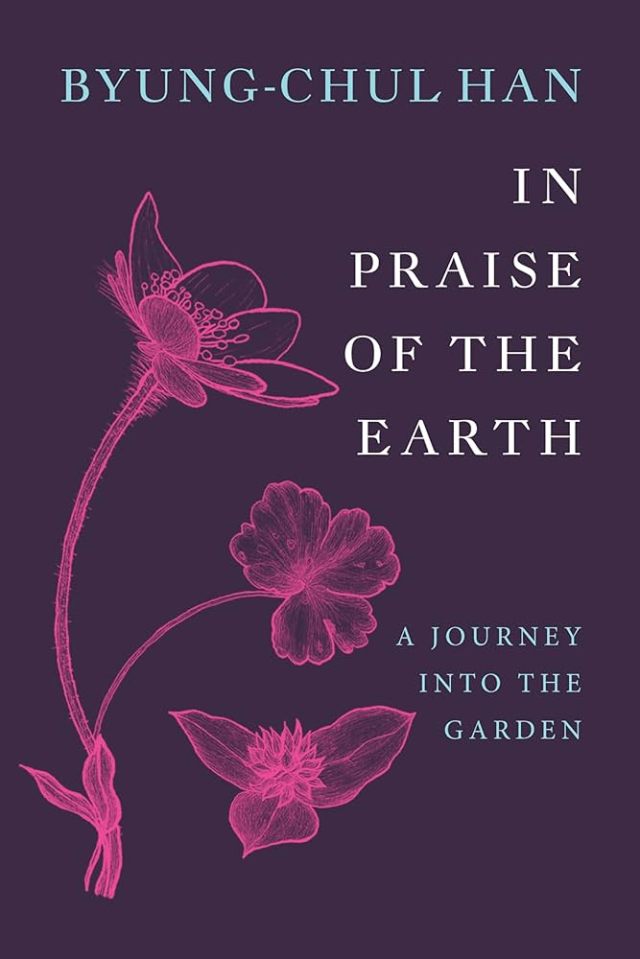
- Byung-Chul Han, In Praise of the Earth: A Journey into the Garden (Polity)
- Nicholas Wolterstorff, Divine Discourse: Philosophical Reflections on the Claim That God Speaks (Cambridge University)
- Josephus, The Jewish War (Penguin)
Join Us at Christianity Today
Founded by Billy Graham, Christianity Today is on a mission to lift up the sages and storytellers of the global church for the sake of the gospel of Jesus Christ. Subscribe now to get exclusive print and digital content, along with seasonal devotionals, special issues, and access to the full archives. Plus, you’ll be supporting this weekly conversation we have together. Or, you could give a membership to a friend, a pastor, a church member, someone you mentor, or a curious non-Christian neighbor. You can also make a tax-deductible gift that expands CT’s important voice and influence in the world.
Ask a Question or Say Hello
The Russell Moore Show podcast includes a section where we grapple with the questions you might have about life, the gospel, relationships, work, the church, spirituality, the future, a moral dilemma you’re facing, or whatever. You can send your questions to questions@russellmoore.com. I’ll never use your name—unless you tell me to—and will come up with a groan-inducing pun of a pseudonym for you.
And, of course, I would love to hear from you about anything. Send me an email at questions@russellmoore.com if you have any questions or comments about this newsletter, if there are other things you would like to see discussed here, or if you would just like to say hello.
If you have a friend who might like this, please forward it, and if you’ve gotten this from a friend, please subscribe!


Russell Moore
Editor in Chief, Christianity Today
P.S. You can support the continued work of Christianity Today and the Public Theology Project by subscribing to CT magazine.
Moore to the Point
Join Russell Moore in thinking through the important questions of the day, along with book and music recommendations he has found formative.
Delivered free via email to subscribers weekly. Sign up for this newsletter.
You are currently subscribed as no email found. Sign up to more newsletters like this. Manage your email preferences or unsubscribe.




Christianity Today is a 501(c)(3) nonprofit organization.
“Christianity Today” and “CT” are the registered trademarks of Christianity Today International.
Copyright ©2025 Christianity Today, PO Box 788, Wheaton, IL 60187-0788
All rights reserved.