





This edition is sponsored by Cru
Hello, fellow wayfarers … Why the world feels dead and what will reverse that … How my podcast guests shaped my thinking this year on death, grief, joy, and resurrection … What Dietrich Bonhoeffer, Johnny Cash, and a painting of the Exodus have in common … Why I once again need something from y’all … A Hoosier Desert Island Playlist … This is this Easter week’s Moore to the Point.
Easter Is Not a Zombie Story
Most unbelievers are civil or even curious when we talk together about the Christian faith, with less than a handful of exceptions. One of those was on a university campus when a man said, “The 21st century is not the time for a zombie story, and that’s what Easter is.” His jab was that, by believing a previously dead man is now alive, we worship a reanimated corpse. “Ah,” I said. “The 21st century is a zombie story, and that’s what Easter undoes.”
My questioner was not stupid. He was right, of course, that we expect dead things to stay dead. That was true in the first century too. And he was right that we have an uncanny dread when we hear stories of things that are supposed to be dead but don’t stay that way. That was also true in the first century.
Even before his death, Jesus had to reassure his own followers that he was not an apparition. When the disciples saw his figure walking on the sea, “they thought it was a ghost, and cried out, for they all saw him and were terrified” (Mark 6:49–50, ESV throughout). When he appeared after the Resurrection, the disciples were again “frightened and thought they saw a spirit,” to which Jesus replied, “See my hands and my feet, that it is I myself. Touch me, and see. For a spirit does not have flesh and bones as you see that I have” (Luke 24:37–39).
A zombie is kind of a ghost in reverse: A ghost is a soul disconnected from a body, and a zombie is a body disconnected from its soul. Both ideas are rooted in our fear of death and of the mysteries of what’s beyond. Ghost stories are usually about some sort of unresolved business—a grievance unavenged or a love unrequited. The concept of presence without embodiment is scary to us. Zombie stories are about corpses that are essentially just meat animated by appetite. There are bodies but no reason or imagination or love, just craving.
Zombies and ghosts are stories we tell about two sides of the same dilemma. Even those who do not recognize the authority of the Bible can see some truth in the ancient account that “the Lord God formed the man of dust from the ground and breathed into his nostrils the breath of life, and the man became a living creature” (Gen. 2:7). We intuitively know that we are made of the same matter that’s in the cosmos around us. At the same time, we can reflect on that reality with a consciousness that transcends our biological makeup.
As Walker Percy wrote a half century ago, we feel sundered from ourselves because we seem to be neither organisms reacting to an environment nor intelligences standing apart from it. So we try to resolve the tension by thinking we are either merely animals, spurred on by conditioning or instinct or repressed sexual urges, or angels, potential gods who can transcend human limits. Our attempt to be all one or the other leads us to be neither: History has shown repeatedly that the refusal to be a creature turns a person into a monster.
And so here we are, over a quarter of the way through the 21st century, and we seem to have the worst of both stories.
We move like ghosts in this digital world—connected but disembodied, present but lonely. Many of us do not know our friends or acquaintances. We merely haunt them, lurking over their Instagram photos or their posts on X.
At the same, we feel like zombies. Our biological appetites are intact, but they are tossed to and fro by algorithms that tap into our limbic responses. Pornography can give the sensation of sexuality without intimacy. Online gambling can give the rush of earning without working. Even shopping can feel like the serendipity of finding exactly what you’ve been wanting—until you realize companies have only made it seem that way.
And what is the end result? Many people feel dead inside, hollowed out. When that gets intolerable, we have ways to try to go all in and become wholly ghosts or zombies. We can get addicted to drugs that speed us up or numb us down. We can become occultists seeking spiritual escape from the world or materialists trying to merge with it. And none of it works. That’s because the forces that offer solutions are the same ones driving the problems.
Zombies, after all, are devoid of reason or reasonableness, imagination or imaginativeness. All that moves them is what they want. And what they want is to feed off the life of others, to bite and devour what they cannot experience. And they are easy to command. All one must do is to find out what they want and drive them toward more of it, making sure there’s never enough.
The Bible actually has a zombie story, or at least a preemptive attack on one. The Serpent of Genesis 3 appeals to both aspects of the human makeup: zombie and ghost. We can act like animals, driven by appetite: “The woman saw that the tree was good for food, and that it was a delight to the eyes, and that the tree was to be desired to make one wise” (v. 6). We can act like gods, free from the created limits of morality (“Did God actually say?” v. 1) or mortality (“You will not surely die,” v. 4). The aftermath the account describes is one of disconnection—from each other, from God, from the world around us, even from our own bodies.
Fallen humanity was then driven from the garden. What most of us do not think about, though, is why:
Then the Lord God said, “Behold, the man has become like one of us in knowing good and evil. Now, lest he reach out his hand and take also of the tree of life and eat, and live forever”—therefore the Lord God sent him out from the garden of Eden to work the ground from which he was taken. He drove out the man, and at the east of the garden of Eden he placed the cherubim and a flaming sword that turned every way to guard the way to the tree of life. (vv. 22–24)
To leave a dying people with access to ongoing life would be leave them in a zombie existence that we can perhaps best describe as hell. Exile from the garden was judgment, yes, but it was also grace.
In the Gospels, the tomb of Jesus is described as being in a garden (John 20:15). Angelic beings are there, but the swordsmen—soldiers Pilate hired to guard the grave—fled the scene. Clothes are shed and folded in the crypt. Jesus approaches a weeping woman and calls her by name. And he tells her to “go to my brothers and say to them, ‘I am ascending to my Father and your Father, to my God and your God’” (v. 17).
In the resurrected Jesus, everything that was pulled apart now holds together—dust and breath, matter and spirit, heaven and earth, humans and God. The curse of death has ended. The covenant promises hold true. And Jesus’ message goes to the very ones who broke from him and fled at the arrest. He is “the firstborn from the dead” (Col. 1:18), whom we cannot follow now but will later.
And follow him where? As a pioneer, he is leading us into the very presence of God. All things are put back together there. And the Tree of Life is there (Rev. 22:2), unguarded and unharmed. It’s with a people who can eat of it, not as mere animals and not in limitless autonomy but as those who can say, “Behold, the dwelling place of God is with man. He will dwell with them, and they will be his people, and God himself will be with them as their God” (21:3).
Jesus is no ghost—and he is no zombie. He’s a living man standing in the presence of God, and his life flows backward to us. We feel the first twitches of life, just enough to make us want to join him where he is. He joined us in our human nature and reconnected it to God. He joined us in our curse and undid it. And he joined us in the sentence of death and reversed it. We hide in the bushes, trembling in shame, when we sense the presence of God. He steps forward and says, “Here am I, and the children God has given me” (Heb. 2:13, NIV).
Easter is no zombie story. It’s the end of one.
What My Guests Have Taught Me About Death and Resurrection
Back in the day, a television series might have one episode per season in which people stood around and said, “Remember when …” and harp music played and the screen went blurry as we saw clips from previous episodes. My favorite framing for this type of episode was in The Office, where the banker for Sabre tried to check out whether Dunder Mifflin would pose financial risks to the potential new owners. Well, I have one of those podcast episodes for Easter. Kind of.
In going through the past year, I was struck by how many insights on death and its aftermath kept me thinking about them long after the episodes aired. I go through some of my favorite moments on those themes and tell you why they mattered.
You can hear those moments from my conversations with Francis Collins, Michael Wear, David Taylor, Christian Wiman, Kate Bowler, and the great Tim Keller.
Across stories of cancer diagnoses, intellectual conversions, poetic insight, and quiet moments of joy, this episode insists on a central truth: The Resurrection is not metaphor. What that means is that even in grief, uncertainty, and death, everything is going to be okay.
You can listen to it here.
Bonhoeffer, Johnny Cash, and the Pillar of Fire
I’ve enjoyed interacting with many of you over on my Substack page. Every Monday or so, I try to have “Office Hours,” where I write about how something from my study keeps me sane. This week, I wrote about the pictures that hang just over my shoulder: an illustration of Dietrich Bonhoeffer, a mug shot of Johnny Cash, and a print of Richard McBee’s painting of the Exodus.
Only as I wrote that post could I see that my unconscious mind must have seen connections to which I didn’t pay attention at the time. There’s a through line in all three of these, and it contains a reminder I need again and again.
You can see it over there, where I’ll check in a couple times a week.
Need More Bookshelves and Playlists
That heading says it all. If you’ve been waiting around to send me your Desert Island Bookshelf or Playlist, send it in now.
Easter Sale
This Easter, reflect, prepare, and live in the hope of the Resurrection. Enjoy 25% off your first year of Christianity Today or $50 off CT Pastors. Get started here—offer ends 4/4.
Paid Content
As the world gathers for the World Cup, engage this moment with intention, hospitality, and faith. Open your home for a watch party, invite your neighbors, and create opportunities for deeper connection, meaningful conversations, and shared hope.
This free host kit delivers 7 ready-to-use resources straight to your door—to help turn this global soccer tournament into an impactful gathering. From planning to preparing to connecting—this free kit has everything you need to succeed and host a watch party that’s simple, fun, and natural.
| Advertise with us |
Desert Island Playlist
Every other week, I share a playlist of songs one of you says you’d want to have on hand if you were stranded on a desert island. This week’s submission comes from reader Steve Pierzchala from Huntertown, Indiana:
- “Mr. Bojangles” by Sammy Davis Jr.: The song honors a man of talent and integrity.
- “Shalom Aleichem” by Andy Statman and David Grisman: I simply like Jewish music.
- “Time After Time” by Eva Cassidy: I’ve always enjoyed this song. Ms. Cassidy has a beautiful voice.
- “This Masquerade” by George Benson: An honest look at the games we play with others.
- “Little Black Train” by Indra Rios-Moore: Catchy tune about going to heaven.
- “Walk On By” by Diana Krall: A very nice cover song by a jazz singer with a very nice voice.
- “At Seventeen” by Janis Ian: Whether publicly or privately, all of us went through this. I was never able to express it until I paid attention to this song.
- “Both Sides Now” by Joni Mitchell, from the album Both Sides Now: I really enjoy this cover of the song with the instrumentation.
- “Mountains O’ Things” by Tracy Chapman: Speaks loudly to our culture—and how much I struggle against it.
- “Poetry Man” by Phoebe Snow: I just like the song!
- “Grazing in the Grass” by The Friends of Distinction: Love the vocal version of this jazz tune, especially with the many voices.
- “Middle of the Road” by The Meters: I just like this song!
Thank you, Steve!
Readers, what do y’all think? If you were stranded on a desert island for the rest of your life and could have only one playlist or one bookshelf with you, what songs or books would you choose?
- For a Desert Island Playlist, send me a list between 5 and 12 songs, excluding hymns and worship songs. (We’ll cover those later.)
- For a Desert Island Bookshelf, send me a list of up to 12 books, along with a photo of all the books together.
Send your list (or both lists) to questions@russellmoore.com, and include as much or as little explanation of your choices as you would like, along with the city and state from which you’re writing.
Quote of the moment
“As the early fathers used to express it, when a baby is born it is usually born head first, but when the head is born the whole body follows naturally, for it is the birth of the head that is the most difficult part. Now Christ the head of the body is already resurrected, the first-born of the new creation, and as such he is the pledge and guarantee that we who are incorporated with him as his body will rise with him and be born into the new creation in our physical as well as our spiritual existence.”
—Thomas F. Torrance in Atonement: The Person and Work of Christ
Currently reading (or re-Reading)
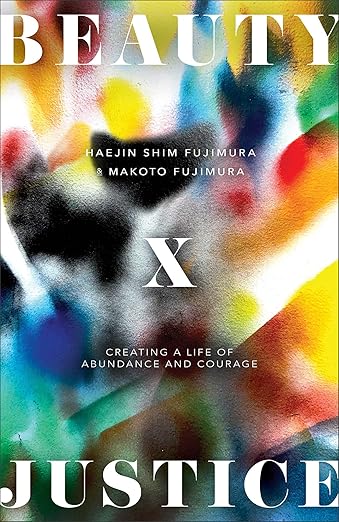
- Haejin Shim Fujimura and Makoto Fujimura, Beauty and Justice: Creating a Life of Abundance and Courage (Brazos)
- Michael Pollan, A World Appears: A Journey into Consciousness (Penguin)
- Hugh Ross, Noah’s Flood Revisited: New Depths of Insight from Science and Scripture (Reasons to Believe)
join us at Christianity Today
Founded by Billy Graham, Christianity Today is on a mission to lift up the sages and storytellers of the global church for the sake of the gospel of Jesus Christ. Subscribe now to get exclusive print and digital content, along with seasonal devotionals, special issues, and access to the full archives. Plus, you’ll be supporting this weekly conversation we have together. Or, you could give a membership to a friend, a pastor, a church member, someone you mentor, or a curious non-Christian neighbor. You can also make a tax-deductible gift that expands CT’s important voice and influence in the world.
Ask a Question or Say Hello
The Russell Moore Show podcast includes a section where we grapple with the questions you might have about life, the gospel, relationships, work, the church, spirituality, the future, a moral dilemma you’re facing, or whatever. You can send your questions to questions@russellmoore.com. I’ll never use your name—unless you tell me to—and will come up with a groan-inducing pun of a pseudonym for you.
And, of course, I would love to hear from you about anything. Send me an email at questions@russellmoore.com if you have any questions or comments about this newsletter, if there are other things you would like to see discussed here, or if you would just like to say hello.
If you have a friend who might like this, please forward it, and if you’ve gotten this from a friend, please subscribe!


Russell Moore
Editor at Large, Christianity Today
P.S. You can support the continued work of Christianity Today and the Public Theology Project by subscribing to CT magazine.
Moore to the Point
Join Russell Moore in thinking through the important questions of the day, along with book and music recommendations he has found formative.
Delivered free via email to subscribers weekly. Sign up for this newsletter.
You are currently subscribed as no email found. Sign up for more newsletters like this. Manage your email preferences or unsubscribe.




Christianity Today is a 501(c)(3) nonprofit organization.
“Christianity Today” and “CT” are the registered trademarks of Christianity Today International.
Copyright ©2026 Christianity Today, PO Box 788, Wheaton, IL 60187-0788
All rights reserved.