





This edition is sponsored by Cru
Hello, fellow wayfarers … How the image of a gambling app in a sports bar changed the way I think about what’s happening to the church … What Karen Swallow Prior told me about how she thinks about childlessness and fruitfulness … Why a John the Baptist picture helps me combat cynicism … Where a Desert Island Playlist showed up in the comeback of a recovering addict … A Desert Island Bookshelf from within the land of Rock City and Ruby Falls … This is this week’s Moore to the Point.
Against the Casinofication of the Church
Sometimes a guest says something that goes by in the moment but that I can’t stop thinking about later. Earlier this week, I recorded a conversation with McKay Coppins of The Atlantic about his essay on what it was like to spend a year doing online sports gambling. You can listen to our conversation next week on my podcast, but what kept me up at night had little to do with the question of betting and much to do with what Coppins calls “the casinofication of everything.” What he described sounds eerily familiar to the most un-casino-like setting of all—the church.
Coppins said part of the problem in American life is that the authority figures making decisions—from senators to parents—don’t really understand what gambling is now. Some of them think of it as lonely old women playing slot machines in casinos on the Las Vegas Strip or, more benignly, as a couple of coworkers betting $100 that the Timberwolves will beat the Nuggets. The latter example is one of the reasons professional sports owners believe online gambling is good for their business: People get even more invested in their teams’ wins and losses if they have, as the cliché goes, skin in the game.
The problem, Coppins notes, is that the algorithmic nature of online betting actually changes the game. He told me to imagine a sports bar full of people watching a game. They are sharing an experience as they cheer for their team or boo for the opponent. Even in loss, there’s community as the group collectively groans. That’s true even if the crowd is made up of fans of opposing teams. Their jeering over such rivalries is itself a kind of bonding.
But with the onset of online gambling, Coppins told me, the guy on the barstool is not really looking at those around him or even at the television overhead. He’s on his phone. And what he’s betting on isn’t typically about who wins and who loses or even about point spreads alone: His bets are on an almost-uncountable variety of small, random acts in the game. The sports bar might be full of people cheering for the same team, but they’re playing different games.
When Coppins describes the “casinofication” of everything, he points to the ways betting markets are now about, almost literally, everything. You can bet on whether a Venezuelan drug boat will be blown up between May 1 and May 10. You can bet on whether Tom Holland and Zendaya will split up in 2027. You can bet on whether famine will hit North Korea by winter. And on and on.
That doesn’t mean the gambler will care about those situations in and of themselves—people who bet against famine aren’t typically motivated to work on world hunger. It means the person will be invested in his or her own interests.
Casinofication breaks down community. If I’m playing my own secret, individual game, then I’m separated from the very thing the teams are meant to do—connect people in shared appreciation for the art of the game or in shared belonging to the same hometown. That’s why what seems to be a short-term win for a team’s owners is a long-term loss. It raises the apparent stakes while lowering the real ones. Corporations think betting will make young men care more about sports, but they’re actually severing them from the communities that would have made them care about sports for a lifetime.
Coppins writes in his essay about how his growing obsession with his gambling app brought out something in him he never expected: personal hatred. When a player he had bet on fumbled the ball, Coppins felt a visceral rage and then noticed that he was critical, from that point on, of everything the player did—the way he talked at the postgame press conference, even the way he walked up to the end zone. Coppins hated this player he had never met—not for the way his playing had disappointed the group of fans but for the way he had personally cost Coppins. He could see in his own psyche how his affections were being algorithmically reordered without his consent.
In that way, the individual replaces the community, and the individual is eroded too. After all, as Coppins and I discussed in our conversation, 11- to 14-year-old boys are seeing floods of ads and, more importantly, are allowed to win when they do play. Their losing is not in the companies’ interest at first. They want a bettor to experience the dopamine rush of winning—and winning really big—until the dopamine rush is the thing he’s chasing. Not the sport, not the team, not even money. He thinks that he’s a winner—that his knowledge or skill or even luck is better than other people’s—without ever knowing that behind all of that are some faceless guys in suits who don’t care about him or the team or the game.
Very few people (I hope) are betting on what praise songs they will sing at church this Sunday or how many weeks the sermon series on Philippians will go or how many infants will cry during the baby dedication. But that doesn’t mean we are safe from the casinofication around us. In fact, we are—all of us—in danger of having already accommodated to it.
Every culture assumes some kind of split between the individual and the community. The Bible does not. Israel starts with one man, Abraham, and becomes a multitude. The multitude narrows to a remnant, and the remnant narrows to one law-keeping man and then broadens out to a crowd no one can number. The church, specifically, creates both true individualism and true communitarianism. We are collectively “the body of Christ and individually members of it” (1 Cor. 12:27, ESV throughout). We have a common mission but individual giftings to accomplish it (vv. 1–11). We have a common ethic as a community, but we respect the consciences of individual persons among us (Rom. 14:1–23).
To press the metaphor, we win together and lose together—and both can bond us closer to Christ (8:17) and to one another (12:15). In many ways, we have different games and teams going on in our lives, but what ultimately binds us together is that we are playing the same game, with the same stakes and scoreboard.
We have always been tempted to forget our common goal. The New Testament is filled with stories of the church being confused about whether the “game” it’s playing is celebrity identification (1 Cor. 1:11–13) or ethnic tribalization (Gal. 2:11–14) or financial prosperity (Acts 8:9–24) or political captivity (Rev. 13:1–18). In every age, the church must be shaken out of that confusion.
The guy looking at his smartphone in the sports bar and checking his betting app isn’t really watching the game. The game is just a means to achieve what he really cares about—his bank balance or his self-image as a winner or the little adrenal rush that comes with it. There are always forces at work that want to do the same thing to us—with a much more ultimate game.
The gospel and the church become carriers for what we already care about on our own individual or tribal terms. When the gospel becomes a tool—for culture war, institutional survival, partisan politics, and personal brand—its relevance feels sharp and immediate. The things I already care about are being addressed. But the slow formation of intuitions, instincts, and affections is being hollowed out.
If the New Orleans Saints are just a vehicle for a gambling addiction, a fan can find a team that can do that better. If football itself is the same kind of vehicle, the addict will ultimately find a sport that can serve him more reliably. Eventually, he is no longer a sports fan—he’s an app fan.
Once a new generation sees the church as being about marketing products or voter mobilization or ethnic tribalization or anything else, people will find both the “I” of individual identity and the “we” of group identity in something other than the gospel of Jesus Christ. Having money or supporting a ministry or being a Republican or Democrat or demonizing and idealizing people in the “correct” categories—that becomes the thing. That becomes the game.
This mindset can work especially well with fear and anger, which can give the illusion of both a personal jolt of life and a cohesive group of “us versus them.” Our minds shift. We keep score by different metrics than those Jesus gave us. We think we are claiming the individual and the communal when we’re really losing both.
And all the while, neither approach to these concepts is true. It’s in somebody’s interest to get me playing his or her game. The house always wins.
The danger is there as long as it’s invisible. When we realize we are on a different field, we can remember that, as Paul put it, we are playing according to a different set of rules (2 Tim. 2:5). We can see that the stands are full of a different cloud of onlookers than those we can see (Heb. 12:1). We can recover a real “we” that doesn’t bypass but instead makes the “I.” And we can do it with the slow, boring, unglamorous work of being formed by churches that we didn’t pick for their algorithmic fit and that aren’t using us to do something else.
We can look up from whatever devices are holding us in thrall and love the game again. Is that hard in times like these? Yes. Will it be difficult for the church to counter casino culture with something that really matters? Of course. Can we do it? You bet your life.
Karen Swallow Prior on Birds, Bees, Babies, and Her
Maybe you’ve been the one praying for children and looking every month for that line on the pregnancy test. Or maybe you’ve looked over at the baby dedication at church to see your friend who wants very much to have children but is still waiting.
Karen Swallow Prior wrote an essay for CT called “The Birds and the Bees, Babies and Me,” about her journey with God’s grace in infertility and childlessness, about finding what it means to be fruitful when fruitfulness doesn’t look the way you expected. She sat down with me this month for a subscribers-only livestream on the question.
We talked about lots of stuff: What does it mean for God to shape a life outside of cultural expectations? What does spiritual motherhood or fatherhood look like in a real community, and not just as a consolation prize? And how do churches become the kind of places that bear burdens together rather than explaining them away?
We also took questions live from viewers, and some of them were really good—the kind that come from people who have been living with unanswered prayers and that go beyond platitudes.
If you’ve ever looked at the distance between what you prayed for and what you received—or if you love someone who has—I think you’ll find this conversation worth your time.
Keeping Office Hours with John the Baptist
This week in Office Hours over at Substack, I wrote about why I keep a picture of John the Baptist on the shelf behind me—and how it reminds me of a passage I’ve read countless times but never felt the force of until a few years ago.
I wrote:
We’ve all seen some ugly stuff in the past decade or so, a lot of it going under the name of Christianity. Much of it some of us can look back, in retrospect, and think, “We should have seen where this was heading.” In the kind of “shaking” the church is undergoing now, many moments for something new happen, but so do many dangers, toils, and snares. For many of us, one of those vulnerabilities is cynicism.
We become cynical when we want to protect ourselves. We start to think, If something I thought was so stable turned out to be so fragile or If I something I thought was so convictional turned out to be corrupt, then how do I ever know what’s real? We can start then to preemptively conclude that everything’s fake and everyone’s corrupt. The cynicism offers a kind of armor so that we can’t be hurt again or fooled again. But it doesn’t work, and it leaves a person empty and alone.
On the other hand, there can be the pull to the reverse: to just try to wipe from our minds all the ways that institutions have failed. That’s self-protective too, we think. It doesn’t work either. The heart knows what it knows. And more importantly, this kind of willed gullibility allows structures to fail others in the future, others who will resort to cynicism or gullibility, and the process starts all over.
The pointing John the Baptist figure reminds me, every time I see it, of how it felt, sitting here in my study a few years ago, when I stopped as I was reading John and felt the weight of that verse [John 10:41]. It was as though I were sitting there hearing it addressed directly to me.
You can read it here. And if you like to engage via Substack, it’s a fun community where we can continue some of the conversations we have here through the week.
A Man in Recovery Finds Our Desert Island Playlists
A reader wrote in a couple of weeks ago with a note that made me smile. She wrote that she volunteers every week in a recovery center in New England, alternating between the women’s house and the men’s house. She said one man in recovery there was once a disc jockey for a radio station. He loves music and knows about it exhaustively.
She said she’s been able to connect with this man by going through our Desert Island Playlists here in the newsletter. “I show him the music selections that you have posted almost every time,” she writes. “He loves it when people editorialize their choices. We have joked that we should send in our choices sometime.”
“I wanted to share with you that that list every other week is touching a damaged and lovely soul here,” she writes. “He brightens up every time we discuss the new list together.” She also says he argues “Wichita Lineman” is lyrically one of the best songs American popular culture has produced, which shows me he really does know music.
That made my day and motivated me for the week. Send in your Desert Island Playlist, and know that you might well be helping a man who is valiantly getting his life back together to hear what breaks through to many of us when nothing else will: God’s good creation of music.
Paid Content
What if you could turn the world’s most-watched sporting event into a moment that matters?
This summer, open your home, spark faith conversations, and share hope through hosting a soccer watch party. Because moments like this don’t just entertain—they open doors for connection and meaningful conversation.
This free Host Kit offers 7 simple resources to host a fun, natural watch party to step into this opportunity with purpose and confidence. Order your free kit today!
| Advertise with us |
Desert Island Bookshelf
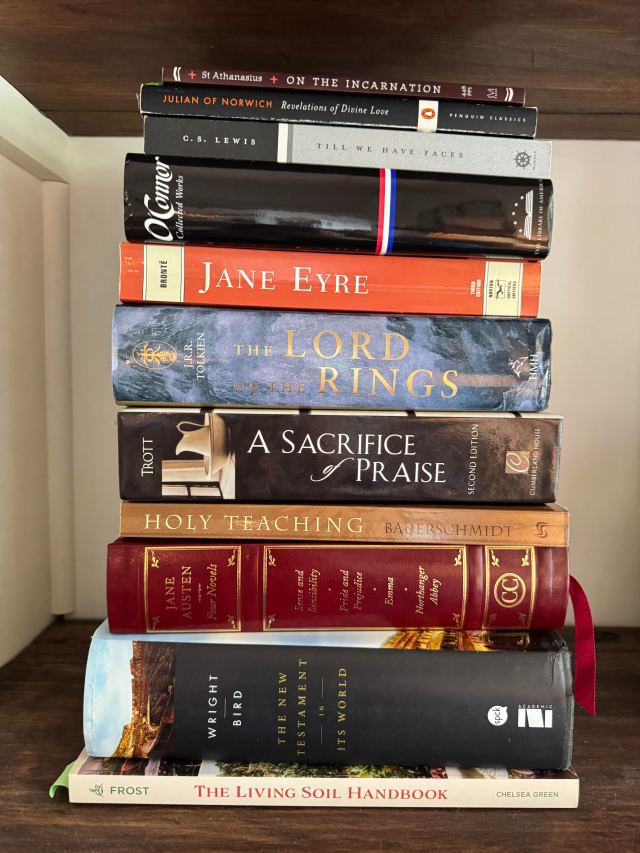
Every other week, I share a list of books that one of you says you’d want to have on hand if you were stranded on a deserted island. This week’s submission comes from reader Madeline Grace Daniels in Chattanooga, Tennessee, who writes, “Thank you for your work on the podcast and at CT—both have been enjoyable and edifying to me for many years (perhaps even more so now that I’m a stay-at-home mom in need of intellectual stimulation!).” Here’s her list:
- Jane Eyre by Charlotte Brontë: The novel that made me fall in love with literature as a teenager—forever a favorite.
- Collected Works of Jane Austen: Perhaps I’m cheating a little by choosing a collection, but who would miss TV when you have Austen’s insight and humor?
- Collected Works by Flannery O’Connor: Though I love her stories, my favorite parts of this collection are her letters and journal entries. She’s so witty.
- Till We Have Faces by C. S. Lewis: It’s a little heartbreaking to only pick one work of Lewis, but I think this is the one I’d want to visit repeatedly.
- The Lord of the Rings by J. R. R. Tolkien: Is any explanation needed?
- On the Incarnation by Saint Athanasius: Possibly my favorite work of theology.
- Revelations of Divine Love by Julian of Norwich: An amazing piece of Christian mysticism—it’s like a jolt of lightning into your understanding of God’s love.
- The New Testament in Its World by N. T. Wright and Michael F. Bird: I would have to have something by Wright, so I picked the biggest book of his on my shelf. It’s a textbook, but far from boring.
- Summa Theologica by Thomas Aquinas: In all honesty, I’ve only read small sections of the Summa, but I bet I could work through the whole thing on a desert island!
- A Sacrifice of Praise edited by James H. Trott: A fabulous collection of devotional poetry spanning the centuries, from Caedmon to Luci Shaw.
- The Living Soil Handbook by Jesse Frost: I figure a gardening book would be helpful with surviving on my island!
Thank you, Madeline!
Readers, what do y’all think? If you were stranded on a desert island for the rest of your life and could have only one playlist or one bookshelf with you, what songs or books would you choose?
- For a Desert Island Playlist, send me a list between 5 and 12 songs, excluding hymns and worship songs. (We’ll cover those later.)
- For a Desert Island Bookshelf, send me a list of up to 12 books, along with a photo of all the books together.
Send your list (or both lists) to questions@russellmoore.com, and include as much or as little explanation of your choices as you would like, along with the city and state from which you’re writing.
Quote of the moment
“Eventually, all things merge into one, and a river runs through it. The river was cut by the world’s great flood and runs over rocks from the basement of time. On some of the rocks are timeless raindrops. Under the rocks are the words, and some of the words are theirs.
“I am haunted by waters.”
—last words of Norman Maclean’s A River Runs Through It, first published 50 years ago next month
Currently reading (or re-Reading)
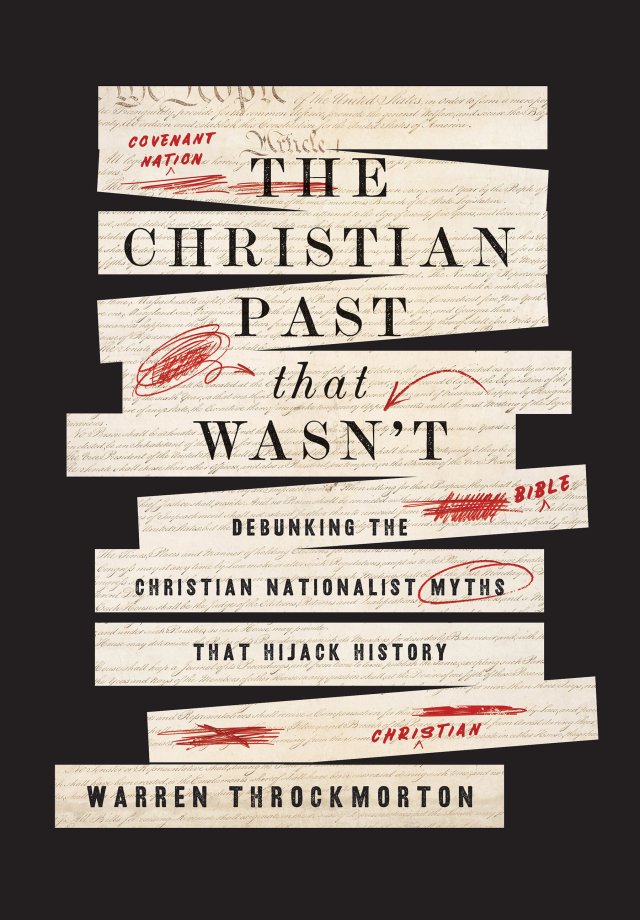
- Warren Throckmorton, The Christian Past That Wasn’t: Debunking the Christian Nationalist Myths That Hijack History (Broadleaf)
- Paul Emory Putz, The Spirit of the Game: American Christianity and Big-Time Sports (Oxford University)
- Solvej Balle, On the Calculation of Volume I (New Directions)
- Seth D. Postell, The Art of Narrative Analogy (Baker Academic)
- Zack Kass, The Next Renaissance: AI and the Expansion of Human Potential (Wiley)
join us at Christianity Today
Founded by Billy Graham, Christianity Today is on a mission to lift up the sages and storytellers of the global church for the sake of the gospel of Jesus Christ. Subscribe now to get exclusive print and digital content, along with seasonal devotionals, special issues, and access to the full archives. Plus, you’ll be supporting this weekly conversation we have together. Or, you could give a membership to a friend, a pastor, a church member, someone you mentor, or a curious non-Christian neighbor. You can also make a tax-deductible gift that expands CT’s important voice and influence in the world.
Ask a Question or Say Hello
The Russell Moore Show podcast includes a section where we grapple with the questions you might have about life, the gospel, relationships, work, the church, spirituality, the future, a moral dilemma you’re facing, or whatever. You can send your questions to questions@russellmoore.com. I’ll never use your name—unless you tell me to—and will come up with a groan-inducing pun of a pseudonym for you.
And, of course, I would love to hear from you about anything. Send me an email at questions@russellmoore.com if you have any questions or comments about this newsletter, if there are other things you would like to see discussed here, or if you would just like to say hello.
If you have a friend who might like this, please forward it, and if you’ve gotten this from a friend, please subscribe!


Russell Moore
Editor at Large, Christianity Today
P.S. You can support the continued work of Christianity Today and the Public Theology Project by subscribing to CT magazine.
Moore to the Point
Join Russell Moore in thinking through the important questions of the day, along with book and music recommendations he has found formative.
Delivered free via email to subscribers weekly. Sign up for this newsletter.
You are currently subscribed as no email found. Sign up for more newsletters like this. Manage your email preferences or unsubscribe.




Christianity Today is a 501(c)(3) nonprofit organization.
“Christianity Today” and “CT” are the registered trademarks of Christianity Today International.
Copyright ©2026 Christianity Today, PO Box 788, Wheaton, IL 60187-0788
All rights reserved.