





This edition is sponsored by Cru
Hello, fellow wayfarers … Why it’s wrong to use the Bible to justify war crimes … What Malcolm Gladwell told me about how he sees mercy and capital punishment … How an Adam and Eve plaque on my wall reminds me of Easter truth … A Methodist minister’s Desert Island Bookshelf … This is this week’s Moore to the Point.
The Bible Doesn’t Justify War Crimes
As of my writing this, the United States and Iran have agreed to a two-week cease-fire. Earlier this week, the president posted a profanity-laden Easter message promising that Iranians would be “living in Hell” if they did not reopen the Strait of Hormuz. After that, he threatened to wipe out “a whole civilization” in what would have been at best a war crime and at worst a genocide. Regardless of whether the cease-fire holds, we have crossed a scary threshold in American life. And in this flurry of words, there is one Christians especially should not miss: hell.
Back in the days of hippie counterculture, a song by John Lennon asked the world to envision world peace. All we had to do was “imagine there’s no heaven.” “It’s easy if you try,” Lennon told us—and indeed it is, in this world red in tooth and claw. The result would be people all over the world uniting as one, Lennon sang, “living for today.” The song was silly and utopian and brings to mind how easy it was for Joseph Stalin and Mao Zedong to imagine that above them was “only sky.”
Now we face a mirror image of all that, and it has a bit more truth to it: Imagine there’s no hell. And if there’s not, bombs away.
What’s more is that some of those justifying or looking away from the possibility of war crimes use the Bible to make their claim. One person, in telling me he supported the carpet-bombing of entire civilian populations, told me we would be no less justified in doing so than Joshua was in taking out the Canaanites in the Land of Promise. We can expect to hear that language more in the days to come, whether in the Middle East or elsewhere, whenever someone wants to advocate in a social media attention economy for what any previous American generation would have seen as war crimes.
But that’s not true.
I write those words as someone who is not the least bit embarrassed about Joshua. One of my first sermons was on 1 Samuel 15:33, which says, “And Samuel hacked Agag to pieces before the Lord in Gilgal” (ESV throughout). And I would preach it today exactly the same way. I have no sympathy whatsoever for those who suggest the Old Testament version of God is bloodthirsty and immoral. Instead, I agree with the assessment of Marilynne Robinson: “A great many of us feel an emphatic moral superiority to the God of Abraham, Isaac, and Jacob. This is surely bizarre, since to say the least Jesus shows no impulse at all to dissociate himself from him.”
The problem is not with Joshua but with those who do not read the Bible and then hide behind it to justify what it condemns. This is precisely the problem the Orthodox Presbyterian scholar Edmund Clowney identified in those who try to apply the Bible as a jumble of chaotic examples to follow rather than one coherent story line held together by Christ.
“Dreadful consequences have ensued when blindness to the history of revelation was coupled with the courage to follow misunderstood examples,” Clowney wrote. “Heretics have been hewed to pieces in the name of Christ, and imprecatory psalms sung on the battlefields.”
Joshua against the Canaanites and Samuel against the Amalekites fit into the flow of redemptive history. They were part of a covenant nation with specific revelation from God for those entrusted with the sword of his justice. It is not immoral for God to take life. He holds every breath, and when he takes it away, we die (Ps. 104:29). But it is immoral for someone to take the life of another innocent human being (Ex. 20:13)—even more so when the murderer pretends to speak for God (1 Kings 21:8–19).
The warfare of Joshua and of the kings immediately following him was the warfare of the anointed, those tasked with carrying out God’s judgment, precisely for the purpose of demonstrating what God’s ultimate justice would look like. The warfare of the Old Testament points us not toward future armies of Christian jihadists but to the Cross, where God’s justice and mercy meet over Jesus himself (Rom. 3:21–26).
As Clowney noted, the task of judgment has now been handed to another Joshua: the Lord Jesus Christ. He did not tell us to use a sword—he specifically disarmed the church by telling Peter to put away his weapon (Matt. 26:52–54). Instead, he gave us “keys” (16:19) through a gospel that warns of judgment but offers mercy.
That’s why the apostle Paul applied the language of warfare specifically not against “flesh and blood” (Eph. 6:12) and specifically not to earthly violence (2 Cor. 10:3–4) but to the proclamation and embodiment of the gospel. The Old Testament’s command to the covenant nation to “purge the evil person from among you” now applies not to the civil authorities but to the church, not to physical violence but to spiritual discipline, not to the outside world but to the inside (Deut. 17:7; 1 Cor. 5:1–13).
There is a place for the sword of justice in maintaining order, but God has carefully limited who can carry it, how it can be wielded, and whom it can strike (Rom. 13:1–6). Anyone who claims to speak for God in using means of violence he has forbidden claims an anointing in conflict with Jesus himself—meaning it is, quite literally, anti-Christ. To speak for God where God has not spoken is to take his name in vain. To speak for him to justify what he has forbidden is even worse (Deut. 18:15–22).
Those who would use the Bible to justify setting no moral restrictions on war (other than the power to carry it out) treat the Scriptures much the way a prosperity-gospel evangelist treats the promises of blessing, fertility, and abundance to Israel in Old Testament. In both cases, the arguer bypasses Christ and goes directly to the believer, as though the blessings and curses were not mediated through the goal to which they pointed: Christ and him crucified (Gal. 3:10–14).
To apply the warfare of Joshua or Saul to the United States or any other military is akin to seeing Solomon’s concubines as an example to apply directly to our own marriages, an option Jesus specifically denied (Matt. 19:3–8).
But in line with the Bible, those who wield the sword are held accountable for the use of it. And that means the language of hell is quite relevant. We can do in God’s name what he forbids only if we really do not believe that he is there, that we will stand in judgment before him. In other words, to do this evil, we must be convinced that there is no hell. When we take that bargain, we had better be right. Otherwise, there’s quite literally hell to pay.
War is complicated, and often it generates morally ambiguous questions with which we must wrestle. Targeting civilian populations and wiping out entire civilizations are not among those hard dilemmas. War is not hell, but war can make us hellish. And the way we wage war can send us there.
Let’s pray for those who make these decisions and for those who must bear the consequences. But let’s also pray for souls. Those who sing “Onward Christian Soldiers” must ever ask in what direction they’re marching.
I Talk to Malcolm Gladwell About Radical Forgiveness and the Death Penalty
One of the issues I hold most tenuously—and I told Malcolm Gladwell so on this week’s episode—is capital punishment. In theory, I am not opposed to it for the worst crimes. But “in theory” is doing a lot of work in that sentence, and listening to Gladwell’s seven-part Revisionist History series, The Alabama Murders, did not make it easier.
The story starts where so many of them do: in a church. A Church of Christ preacher in northwestern Alabama, afraid of losing his congregation and his livelihood, hires two men to kill his wife. They are caught, tried, and sentenced to death. The case drags on for nearly four decades. One of them is finally executed in 2024.
Gladwell’s argument is that forgiveness—radical, costly, action-requiring forgiveness—would have been the more merciful path for everyone caught in the orbit of the crime, including the families, the churches, and the communities left to wait for a closure that never quite arrived.
He found a contrasting case—a Mennonite pastor’s daughter who fought to spare the life of the man who killed her father. She succeeded. And in doing so, she freed something in herself, in the killer’s family, in her congregation.
Here’s how Gladwell put it to me: “The failure to grant him forgiveness meant that suffering persisted for decades. It’s not just about the criminal; it’s about everybody else.”
What became clear in our conversation is that justice, as we usually imagine it, doesn’t resolve things nearly as cleanly as we think. And in our waiting, we’re forced to confront something deeper: whether we really believe in the possibility of redemption or have quietly decided some people are simply beyond it.
I also couldn’t let him go without asking about my favorite episode of Revisionist History, “The King of Tears,” which is about the making of “He Stopped Loving Her Today.” And what he said about George Jones bore directly on everything we had just been discussing about Alabama, punishment, and grace.
You can listen here.
Adam and Eve on My Wall
As some of you know, every Monday over on Substack I take readers into my study for Office Hours, where we look at one item I keep because it keeps me sane. We’ve looked at my teenage-years Bible, the Thomas Merton prayer on my desk, and the Deitrich Bonhoeffer and Johnny Cash portraits behind me. This week, we look at a stone plaque of Adam and Eve after the Fall. It hangs on the other side of the room. I tell the story of how I got it and what it tells me every time I look at it, especially in the days immediately following Easter.
Livestream with Karen Swallow Prior
Join Karen Swallow Prior and me on April 15 at 1:30 p.m. Central Daylight Time for a discussion of Karen’s latest CT article on infertility, childlessness, and Christian identity.
CT members can register here. If you’re not a member, you can join CT now to get 25% off your first year and unlock event access.
Paid Content
This summer, more than 5 billion people will tune in to the World Cup. Moments like this don’t just entertain, they open doors—for connection, for community, for conversations.
Step into this moment with faith and confidence by hosting a fun, welcoming watch party for your neighbors. These simple, flexible resources will help you engage the world’s most-watched sporting event with hospitality and faith.
Order your free kit today!
| Advertise with us |
Desert Island Bookshelf

Every other week, I share a list of books that one of you says you’d want to have on hand if you were stranded on a deserted island. This week’s submission comes from reader Dave Raines, who is a United Methodist minister in Eugene, Oregon. Here’s his annotated list.
- The Holy Bible edited by Sarah H. Lancaster, Karen Strand Winslow, and others: I chose the Wesley Study Bible from the dozen of Bibles on my shelf. Some have more thorough study helps, but as a United Methodist, I value the Wesleyan slant and references to John Wesley.
- The People’s New Testament Commentary by Fred B. Craddock and M. Eugene Boring: Concise but thorough coverage of the New Testament by two solid scholars and people of faith.
- A Guide to Prayer for Ministers and Other Servants by Rueben P. Job and Norman Shawchuck: This is not how-to book but a devotional one, pointed largely but not exclusively at persons in any kind of ministry. For each week of the Christian year, it includes daily Scriptures to look up, prayers, and spiritual readings from respected sources like Henri Nouwen, two Saint Teresas (Avila and Calcutta), and many others. I’ve used my copy since 1988. Its margins are filled with my notes: agreements, disagreements, related blessings and challenges in my own life. Rueben Job, the co-compiler of the book and former world editor of The Upper Room, was my bishop when I began pastoral ministry, and he was a good one. He encouraged his pastors to pray! His protégé Bruce Ough called him a “progressive evangelical.” I like that.
- The United Methodist Hymnal, 1988. What would I do without my music? Also prayers and liturgies. I hope I can have a tin whistle or something on this island so I can find the right key. A guitar would probably slow me down if I were chased by a cougar.
- Oxford Anthology of the English Language, vol. 1 (1973) edited by Frank Kermode and John Hollander. I got this and volume 2 back in my English major days (1973–76). It covers great literature from the Middle Ages through the 18th century, including some old favorites of mine. But much of it remains unread, which affords me plenty of new reading on the island.
- Oxford Anthology of the English Language, vol. 2 edited by Frank Kermode and John Hollander. Same as above, but from 1800 to “present” (1973). These English anthologies do not include any American literature.
- The American Tradition in Literature, vol. 2 edited by Richmond Croom Beatty, E. Hudson Long, and Sculley Bradley: A late addition. Couldn’t do without something from Mark Twain, Emily Dickinson, Robert Frost—these rules are cruel.
- The Riverside Shakespeare by William Shakespeare, edited by G. Blakemore: No explanation necessary.
- Scientific Progress Goes “Boink” (Calvin and Hobbes) by Bill Watterson. I likely will need some help laughing.
- The Chronicles of Narnia by C. S. Lewis. The copy I’d take has all seven books in one volume. When I was 9, I thought these were a bit tame as fantasies—there were no rocket ships—but I grew into them and love them. (I picked this instead of Mere Christianity, but it was a close thing.)
- Have Space Suit, Will Travel by Robert Heinlein. A pretty ordinary teen sees the universe and saves the world, sorta. About 65 years ago, this book infused awe in my reading life, for the first time if I remember correctly. It still holds up well. And science fiction MUST be represented on this list.
- A Canticle for Leibowitz by Walter M. Miller Jr. Ticks off two boxes, science fiction and religion. Though the religion has some oddities.
This assumes that whoever put me on this island has arranged for necessities of food, water, clothing, et cetera. If not, I’d need to substitute in Tom Brown’s survival guide. It’s probably not Fantasy Island here, because that wouldn’t be deserted. Also, if I had a one-volume Lord of the Rings … hm.
Also, I will hope that Kurt Armstrong from 2/25/26 is on the same island. With his books.
Thank you, Pastor Raines!
Readers, what do y’all think? If you were stranded on a desert island for the rest of your life and could have only one playlist or one bookshelf with you, what songs or books would you choose?
- For a Desert Island Playlist, send me a list between 5 and 12 songs, excluding hymns and worship songs. (We’ll cover those later.)
- For a Desert Island Bookshelf, send me a list of up to 12 books, along with a photo of all the books together.
Send your list (or both lists) to questions@russellmoore.com, and include as much or as little explanation of your choices as you would like, along with the city and state from which you’re writing.
Quote of the moment
“I should like to save the Shire, if I could—though there have been times when I thought the inhabitants too stupid and dull for words, and have felt that an earthquake or an invasion of dragons might be good for them. But I don’t feel like that I now. I feel that as long as the Shire lies behind, safe and comfortable, I shall find wandering more bearable: I shall know that somewhere there is a firm foothold, even if my feet cannot stand there again.”
—Frodo Baggins in J. R. R. Tolkien’s Fellowship of the Ring
Currently reading (or re-Reading)
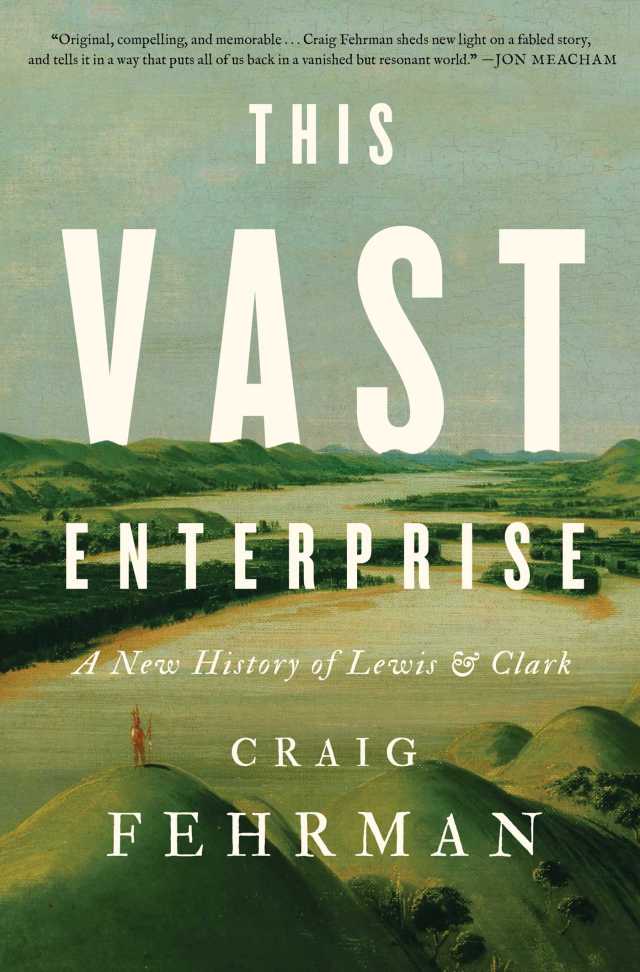
- Craig Fehrman, This Vast Enterprise: A New History of Lewis & Clark (Simon & Schuster)
- Karl Jaspers, Socrates, Buddha, Confucius, Jesus (Harper Perennial)
- John Ostrander and Tom Mandrake, The Spectre, Omnibus vol. 1 (DC Comics)
- Alan E. Johnson, The First American Founder: Roger Williams and Freedom of Conscience (Philosophia)
join us at Christianity Today
Founded by Billy Graham, Christianity Today is on a mission to lift up the sages and storytellers of the global church for the sake of the gospel of Jesus Christ. Subscribe now to get exclusive print and digital content, along with seasonal devotionals, special issues, and access to the full archives. Plus, you’ll be supporting this weekly conversation we have together. Or, you could give a membership to a friend, a pastor, a church member, someone you mentor, or a curious non-Christian neighbor. You can also make a tax-deductible gift that expands CT’s important voice and influence in the world.
Ask a Question or Say Hello
The Russell Moore Show podcast includes a section where we grapple with the questions you might have about life, the gospel, relationships, work, the church, spirituality, the future, a moral dilemma you’re facing, or whatever. You can send your questions to questions@russellmoore.com. I’ll never use your name—unless you tell me to—and will come up with a groan-inducing pun of a pseudonym for you.
And, of course, I would love to hear from you about anything. Send me an email at questions@russellmoore.com if you have any questions or comments about this newsletter, if there are other things you would like to see discussed here, or if you would just like to say hello.
If you have a friend who might like this, please forward it, and if you’ve gotten this from a friend, please subscribe!


Russell Moore
Editor at Large, Christianity Today
P.S. You can support the continued work of Christianity Today and the Public Theology Project by subscribing to CT magazine.
Moore to the Point
Join Russell Moore in thinking through the important questions of the day, along with book and music recommendations he has found formative.
Delivered free via email to subscribers weekly. Sign up for this newsletter.
You are currently subscribed as no email found. Sign up for more newsletters like this. Manage your email preferences or unsubscribe.




Christianity Today is a 501(c)(3) nonprofit organization.
“Christianity Today” and “CT” are the registered trademarks of Christianity Today International.
Copyright ©2026 Christianity Today, PO Box 788, Wheaton, IL 60187-0788
All rights reserved.