The Mother of Modern Missions


In the 21st century, whether the job is evangelism or social outreach, women missionaries are essential to cross-cultural work. Who has not heard of Lottie Moon, Gladys Aylward, Elisabeth Elliott, Mother Teresa, and many others? Yet when the "modern missionary movement" began, many people considered pioneer mission work too dangerous for women. Throughout the history of Christianity, the typical missionary had been a celibate male. But a breakthrough came in the early 19th century: When the American Board commissioned the first American foreign missionaries, the young volunteers refused to go unless they were allowed to marry.
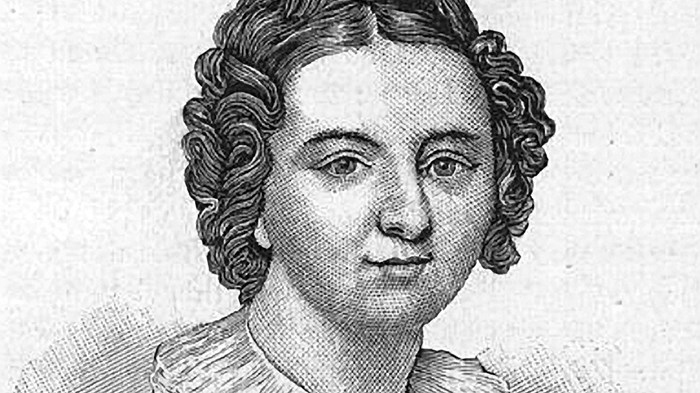
Chief among the proponents of missionary marriage was Adoniram Judson. During the clergy association meeting that authorized the first American mission, he boarded with the family of John Hasseltine, a deacon at the local host church. As tradition has it, Hasseltine's daughter Ann waited on the table and caught Adoniram's eye. After considerable pressure from him—and opposition from others who thought she was throwing her life away—Ann agreed to marry Adoniram and thereby became one of the three pioneer American missionary women.
Of the three young wives, Ann's career was the most extraordinary. Her accomplishments were so phenomenal that she set high standards for future women missionaries to come—and proved for all time that women belonged in the mission field as much as men.
The urge to be useful
Early accounts of Ann Hasseltine indicate that she was a cheerful, strong-minded, and intelligent young girl. Her parents allowed her to attend Bradford Academy, one of the first chartered academies that admitted women. In 1806, as a revival swept through the school, Ann began a spiritual struggle against worldliness and gaiety that lasted for several weeks. The catalyst was her reading of Strictures on the Modern System of Female Education by Hannah More, a prominent English evangelical writer and educational reformer. More argued that education for women should be geared toward making them of service to others, rather than transmitting ornamental accomplishments that served merely to assist them in finding husbands. Ann was struck by the sinfulness and futility of a life devoted to herself, and she decided to seek a life of "usefulness."
After her conversion, Ann put herself on a course of theological self-study that was characteristic of a male student enrolled at Andover Seminary. A friend recalled that she studied Scripture daily, using the appropriate commentaries as guides: "When reading Scripture, sermons, or other works, if she met with any sentiment or doctrine, which seemed dark and intricate, she would mark it, and beg the first clergyman who called at her father's to elucidate and explain it."
Ann was not content to remain in her parents' home until marriage. Seeking usefulness, she went out into the world to teach young children and soon gained a reputation for helping to bring her pupils to the point of Christian decision.
Married to the ministry
After Adoniram Judson met Ann at her father's house in Bradford, he proposed marriage to her by letter. But Ann was unable to answer him immediately—not only because she barely knew him, but because she realized she would be marrying not only a man, but a vocation.
She wrote in her diary on September 10, 1810: "An opportunity has been presented to me, of spending my days among the heathen, attempting to persuade them to receive the Gospel. Were I convinced of its being a call from God, and that it would be more pleasing to him, for me to spend my life in this way than in any other, I think I should be willing to relinquish every earthly object, and, in full view of dangers and hardships, give myself up to the great work."
For two months she wrestled over feelings of religious duty, her attachment to her family, and her dread of suffering alone in a foreign land. Despite opposition from friends who deemed missions a "wild, romantic undertaking," she ultimately concluded that marriage to Judson represented God's will for her life: "O, if he [God] will condescend to make me useful in promoting his kingdom, I care not where I perform his work, nor how hard it be. Behold, the handmaid of the Lord; be it unto me according to thy word."
In an age when women's employment opportunities were limited, marriage to a minister was the surest path to Christian service, allowing evangelical women to act as associates of their clergy husbands in ministry directed toward women. The foreign mission movement was on the cutting edge of this development in women's ministry. By marrying a missionary, Ann Hasseltine legitimated the role of the missionary wife as a "calling." With her success, other women could hope for marriage to a missionary as a solution to their own vocational desires to serve in an arena wider than small-town New England.
A new vision for women
The revolutionary public justification for including women in the foreign mission enterprise was to reach the otherwise unreachable women and children, since men would have little access to them in the gender-segregated societies of the East. The role of the missionary wives, therefore, went far beyond acting as traditional helpmeets for their husbands.
On March 14, 1812, Ann Judson wrote on shipboard bound for India, "I desire no higher enjoyment in this life, than to be instrumental of leading some poor, ignorant heathen females, to the knowledge of the Saviour. To have a female praying society, consisting of those who were once in heathen darkness, is what my heart earnestly pants after, and makes a constant subject of prayer. Resolved to keep this in view, as one principal object of my life."
From the beginning, women had to be pioneers of mission method every bit as much as their husbands. Ann's own goals for mission were shaped by her previous employment as a schoolteacher. While in America, she had found that conversion often took place in the context of revivals in school under the influence of a Christian instructor. Ann's hunch that teaching would be an appropriate forum for women's missionary work was confirmed when she visited the school for mission children run by the Baptist wives in Calcutta, where the Judsons stayed when they first arrived.
In a letter to her sisters in 1812, she articulated her first reflections on a concrete mission method for women: "Good female schools are extremely needed in this country. I hope no Missionary will ever come out here without a wife, as she, in her sphere, can be equally useful with her husband."
The many roles of Ann Judson
Once in Burma, Adoniram spent all day in language study in view of his central role as translator of the Bible into Burmese. Ann was left to manage the family and household matters and so could not begin language study until 10:00 each morning. She endured constant interruptions, especially after the birth of their first child in 1815. But by handling all the household affairs, Ann Judson used Burmese until her spoken language was better than her husband's.
As soon as possible, Ann gathered together a group of female inquirers into a Sabbath Society where she read the Bible to them and tried to tell them about God. While Adoniram discussed religion with the men, Ann met with the women, visiting, praying, and talking with them. She also visited the viceroy's wife regularly, in hopes that making friends in high places might someday reap benefits to the mission.
Ann assisted Adoniram in his literary work by translating several tracts, as well as the books of Daniel and Jonah, into Burmese. She also wrote a catechism in Burmese. In 1817, she became interested in the many Siamese (Thai) in Rangoon and began to study their language. She became the first Protestant to translate any of the Scriptures into Siamese with her translation of the Gospel of Matthew in 1819. She also translated the Burmese catechism and a tract into Siamese and endeavored to introduce Westerners to Siamese religious writings by translating a Siamese sacred text into English.
In 1822, her health broken, Ann returned to the United States for a rest. While in America, she wrote A Particular Relation of the American Baptist Mission to the Burman Empire, one of the first published accounts of an American foreign mission written by a missionary. Ann planned to use the proceeds to redeem female children who were sold as slaves, to educate them, and so to convince the Burmese of the usefulness of female education. After the Judsons moved to the city of Ava in February 1824, Ann began a school for three small girls, supported in part by money from the "Judson Association of Bradford Academy."
It was not her evangelistic and literary accomplishments, however, that made Ann Judson's name a household word in the United States. Rather, it was her status as heroine and savior of her husband during the war that broke out between the British government and the Burmese in May of 1824. After her untimely death, the life of Ann Judson became a stock item of female hagiography across denominational lines. Her courageous and activist career provided an inspirational model for missionary women in the 19th century and continues to do so today.
Dana L. Robert is professor of world Christianity and the history of mission and co-director of the Center for Global Christianity and Mission at Boston University. This article is adapted from her book American Women in Mission (Mercer University Press, 1997).
More than rubies
Widowed twice, Adoniram Judson was blessed with not one but three extraordinary wives. Though Ann was the first and most famous, Sarah and Emily made significant contributions of their own.
Sarah Boardman Judson (1803-1845)
Sarah Hall discerned a call to missions as a teenager and longed to follow in the footsteps of her heroine, Ann Judson. When the Massachusetts Baptist Missionary Society leaders learned of her interest in Burma, they arranged for Sarah to meet George Boardman, who also wanted to serve there. The couple sailed one week after their wedding in 1824. Two of their three children died in infancy, and George himself died from lung problems in 1831. Normally, a widowed missionary wife would have returned to America, but the 28-year-old Sarah chose to stay at the encouragement of Adoniram Judson, also recently widowed. She boldly took her husband's place making evangelistic tours through remote jungles and preaching the gospel to the Karen people, who revered her, as well as supervising the mission schools.
After her marriage to Judson in 1834, Sarah balanced the challenges of a growing family with mission leadership responsibilities and linguistic work, proving herself to be a brilliant translator and writer. Her translation of The Pilgrim's Progress into Burmese is still used today. She also translated the New Testament into Peguan and helped Judson with his translation work as well. Adoniram was delighted with her "affectionate, amiable, pious spirit," telling her in 1839, "You know I love you more than all the world beside."
Illness forced Sarah to return to America for rest in 1844. She died on the voyage. Her life had been a powerful response to the plea in the last line of a poem she wrote many years before: "Christians! Christians! Come and help us, ere we lie beneath the sod." Sarah's humble personality, courage, and willingness to proclaim the gospel through both the spoken and written word made her a memorable missionary.
Emily Chubbuck Judson (1817-1854)
Judson wrote in a letter after Sarah's death, "I hope I feel thankful to God that he has granted me, during my pilgrimage, the society of two of the most excellent women and best wives that ever man was blessed with." Little did he know then that his remaining years on earth would be graced by a third.
Born into poverty, Emily Chubbuck helped support her family by writing under the alias "Fanny Forrester." As her work gained national recognition, she earned a good living by writing poetry, popular fiction, biographical sketches, articles, and Sunday school material. Adoniram Judson, struck by her potential, challenged her to write on "more worthy" subjects.
Like Sarah, Emily's interest in missions had been sparked by reading about Ann Judson; marriage to a missionary hero like Adoniram was a dream come true. As the third Mrs. Judson, Emily lovingly cared for her new stepchildren and gave birth to a daughter of her own, Emily Frances. Despite health problems, she managed to master the Burmese language and brought her keen analytical ability and literary flair to the tasks of composing a biography of Sarah Boardman Judson, translating tracts, and writing Sunday school materials.
After Adoniram died, Emily returned with the children to America, where she supported the family by writing. Her compelling stories of the Judsons' life and work in Burma helped promote the cause of missions and keep the memory of Adoniram Judson alive in America.
Four years after Adoniram's death, Emily died of tuberculosis in 1854. In the shadows of Ann and Sarah, the woman Adoniram called "the earthly sun that illumines my present" proved to be her own person, able and willing to serve God in a "worthy" and creative way.
Rosalie Beck is assistant professor of Christian history and missions at Baylor University.
Copyright © 2006 by the author or Christianity Today/Christian History & Biography magazine.
Click here for reprint information on Christian History & Biography.

Support Our Work
Subscribe to CT for less than $4.25/month