Theologian and social critic Richard John Neuhaus gave us the phrase the naked public square, in a 1984 book of that name, to describe the secular ideal of civic discourse without the benefit of religious and moral insight. First as an inner-city Missouri Synod Lutheran pastor, and more recently as a Catholic priest, Neuhaus has served as a rallying point for moral and theological conservatives from a variety of backgrounds—Catholic, Protestant, Orthodox, and Jewish—to reintroduce religion into the cultural debates.
Toward that end, Neuhaus, now editor-in-chief ofFirst Things: A Monthly Journal of Religion and Public Life, here explains for Christians outside the Roman church the significance of John Paul II’s recent writing on morality.
“You guys have a pope who sure knows how to pope.” That is the admiring comment of a friend, a Southern Baptist who is surprised, and just a bit uneasy, about finding that he and John Paul II are on the same side in the great moral conflicts of our time.
My friend does not agree with Catholic teaching about the continuing office of Peter in the church, and he is not sure what to do with his childhood belief that the pope is Antichrist; but he will accept help from wherever he can get it, and, increasingly, he discovers he is getting it from this pope. The recent encyclical Veritatis Splendor (The Splendor of Truth) is a case in point. The encyclical has provoked widespread and generally favorable comment from sources not usually sympathetic to Catholic moral teaching.
When it appeared in October, some newspapers blazoned that the pope is clamping down on sexual ethics. And it indeed turns out that he has not changed his mind on, for instance, fornication and adultery; but that is rather to miss the point of this extended argument on the nature of morality. Other reports focused on his criticism of moral theories that go by awkward names such as proportionalism and consequentialism. That is closer to the point, but it still does not quite get it.
In this encyclical (encyclical means simply a letter to be circulated), the pope does not so much analyze the sorry moral condition of the contemporary world as he asks us to reflect on the meaning of “moral truth.” The sorry truth of the matter is that many people today think “moral truth” is a contradiction in terms. You have your “values” and I have mine, and that’s that. Beyond the individual assertion of values,” there is nothing left to discuss. “What is truth?” asked Pilate. Like many of our contemporaries, he took that question to be a discussion-stopper. John Paul II argues that ought to be a discussion-starter.
He notes that the modern world has had a great deal to say about freedom, and that is good. But freedom must be grounded in truth. Freedom is not enough. Freedom standing by itself inevitably degenerates into license. License, which is unbridled freedom, quickly becomes the enemy of freedom. Friedrich Nietzsche, the brilliantly mad philosopher of the nineteenth century, well understood this. He saw that, once the reality of absolute truth is denied, all arguments—indeed, all human relationships—become nothing more than the exercise of “the will to power.” Against Nietzsche and those of like mind, John Paul contends that power—and freedom itself—can be made and must be made accountable to truth. “Authentic freedom,” he says repeatedly, “is ordered to truth.” Not my truth, your truth, or her truth, not the truth of a class or a tribe or a nation, but truth. As in “absolute truth.”
The central text of the pope’s argument is John 8:32—”You will know the truth, and the truth will make you free.” The claim that there is a necessary connection between freedom and truth is hardly new. Aristotle understood that, as did the American founders who signed a Declaration of Independence that begins, “We hold these truths to be self-evident … ” The apparently new thing about our time is the idea that freedom can get along without truth. In this encyclical, John Paul attempts to explain why that is a very bad idea intellectually unpersuasive, spiritually incoherent, and morally disastrous.
Clear thinking about moral truth has enemies. The enemies are often called relativism and subjectivism. Ours is a radically individualistic culture in which it is hard to make the case that we must discern and obey what is objectively true. Rather, each of us decides what is “true for me.” In other words, says John Paul, we arrogate to ourselves the right to create the truth. Biblical believers will recognize that this way of thinking and acting began with the serpent’s temptation in the garden and has resulted in herds of so-called independent minds marching toward moral oblivion with Frank Sinatra’s witless boast on their lips, “I did it my way.”
Many intellectuals today argue that everything, including ideas about morality, is created by culture. We are, they say, “socially constructed all the way down”—truth has no foundation in either reason or revelation. This is called “antifoundationalism,” and it is a cherished theory of those who call themselves “postmodernists.” According to this theory, freedom may be high among your “values,” but that is only because you are the product of a culture that values freedom. Put bluntly, what you call your freedom is a delusion. You are as captive to your culture as somebody else who is the product of a culture that values collectivism, or child sacrifice, or the worship of Baal, or whatever. John Paul knows these arguments inside out. He recognizes that they are very clever, very intriguing, and very false.
The human person, he contends, truly is free—created for freedom and, although wounded by the depravity of sin, capable of freedom. Without a firm understanding of human freedom, talk about morality makes no sense. John Paul appreciates the insights of psychology, anthropology, and the behavioral sciences into the ways we are “conditioned” by culture, genes, and factors yet unknown. But deep within each “acting person” (a key phrase in this pope’s thought) is an aspiration toward the good, which is finally an aspiration toward God, that we either follow or defy.
Veritatis Splendor opens with an extended reflection on the rich young man who comes to Jesus and asks, “Teacher, what good must I do to have eternal life?” (Matt. 19:16). That, says John Paul, is really the question of every man, no matter how tentatively or confusedly it is asked. And the answer of Jesus is the answer to every man: “If you wish to enter into life, keep the commandments.” Life is to know the truth and do the truth. Life is ultimately fulfilled in following the One who said, “I am the way, and the truth, and the life” (John 14:6).
Many of our contemporaries will object that all this is very nice; it may even be true in some sense of the word. But, they say, there is no going back to “simpler days” when it was possible to assert that “we hold these truths” as though there are actually truths to hold and to be held by. Nowadays we live in a “pluralistic society,” don’t you know? There is no agreement on what truths we hold, we must not impose our values on others, and on and on.
John Paul turns the usual talk about pluralism on its head. Precisely because we live in a pluralistic world, he says, it is all the more urgent that we engage one another in civil argument about the truth that undergirds human freedom and dignity. Our differences notwithstanding, we can make sense to one another because we have in common our human nature and the capacity to reason, and these are universal. Here enters the important concept of “natural law”—or, as some Protestant theologians prefer, the order of creation as distinct from the order of redemption. In this encyclical, the pope makes a very close connection between creation and redemption, insisting that the latter does not negate but fulfills the former.
John Paul is keenly aware that in contending for universal nature and reason he is going up against dominant views in universities and other elite institutions. As freedom has turned against itself, so also reason has turned against itself. Some of our most clever philosophers have “rationally” demonstrated that reason is an illusion. What people call reason, they say, is only a veneer of “rationalization” that disguises the irrational factors determining who we are and how we behave. The result is that confidence in what is distinctively human has been severely undermined. We are, it is said, no more rational than the animals.
John Paul’s defense of reason should not be confused with the truncated and reductionist rationalism of the secular Enlightenment. He is for sure no friend of “secular humanism.” True humanism, he contends, is directed toward the transcendent, toward the ultimate good, who is God. And reason participates in the fullness of truth through revelation. But to people who are made nervous by references to God and revelation, the pope is saying that we still have a lot to talk about. And we had better get on with it before humanity staggers more deeply into the night of moral nothingness.
Like Paul, John Paul is confident that we can engage the question of moral truth with nonbelievers because, when “Gentiles who have not the law do by nature what the law requires, they are a law to themselves. … They show that what the law requires is written on their hearts, while their conscience also bears witness and their conflicting thoughts accuse or perhaps excuse them” (Rom. 2:14-15). In other words, reason and nature are universal.
It follows, says the pope, that human rights and duties are “universal and immutable.” This, not so incidentally, is the position taken by the United States against countries that claim that the idea of universal human rights reflects Western “cultural imperialism.” In fact, such countries may have a case. The human rights agenda is no more than an ideological imposition by the West, if the cause of freedom is divorced from the claims of truth. The same applies also in our life together in society. If what you call your rights is no more than an assertion of your interests, I can counter your interests with my interests. If I can muster greater force, you lose. So much for your vaunted rights. Again, in the absence of truth, power is the only game in town.
The idea that there is no objective or universal truth has achieved a measure of official status among us by fiat of the Supreme Court. In Planned Parenthood v. Casey, for example, the court declared that it is up to each individual to determine “the concept of existence, of meaning, of the universe, and of the mystery of human life.” It is an astonishing piece of “theology” cooked up by lawyers to justify the abortion license. John Paul, by contrast, warns against “the risk of an alliance between democracy and ethical relativism.” This means that when truth itself is democratized—when truth is no more than the will of each individual or a majority of individuals—democracy is deprived of the claim to truth and stands naked to its enemies. Thus does freedom, when not “ordered to truth,” undo freedom. If there is no objective truth that compels you to respect my freedom, why should you? Especially when my freedom gets in the way of your doing what you want with your freedom?
Moral truth that is evident in a natural law that is accessible to all reasonable persons includes commands both positive and negative. But it is not for nothing that the Ten Commandments delivered at Sinai are framed in the negative. We cannot always do the good that we would, but we are called always to refuse to do evil. In our actual life situations, we discover with Paul, “I can will what is right, but I cannot do it. For I do not do the good I want, but the evil I do not want is what I do” (Rom. 7:18-19). Moral responsibility means never fudging the reality of evil.
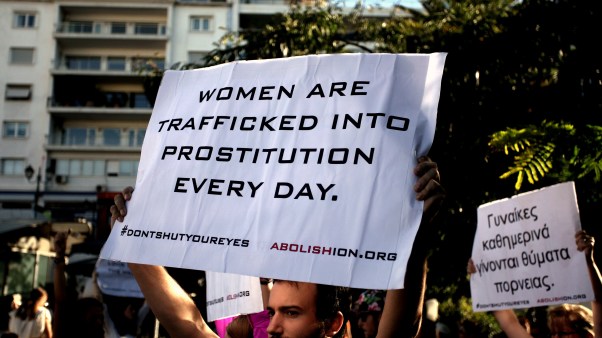
Some acts are intrinsically evil, evil per se—always and everywhere. As examples, John Paul cites homicide, genocide, abortion, slavery, prostitution, and trafficking in women and children. He quotes Paul VI: “Though it is true that sometimes it is lawful to tolerate a lesser moral evil in order to avoid a greater evil or in order to promote a greater good, it is never lawful, even for the gravest reasons, to do evil that good may come of it.” Evil must never be called good, nor good evil. If good and evil are confused, not only are we more likely to do evil, but we are deprived of the highest freedom of being forgiven sinners who can declare with Paul, “Wretched man that I am! Who will deliver me from this body of death? Thanks be to God through Jesus Christ our Lord!”
Here John Paul II takes on those moralists, including some Catholic theologians, who say that an evil act may be justified by the end to which it is directed or by weighing the other goods at stake. Liberal Protestants have been plagued with similarly deviant theories, such as the late Joseph Fletcher’s “situation ethics.” To call evil good is morally incoherent and, equally important, undercuts the gospel of forgiveness. To be excused is not the same thing as to be forgiven. In fact, they are opposites. An act that is excused cannot be forgiven. Only evil, as in “sin,” can be forgiven. If we are to be clear about the grace of God, we must be clear about the law of God.
John Paul is adamant on this: It is never right to do evil in order to achieve good. To those of a contrary view, the question might be put: When is rape morally justified? Or the torture of children? Or Auschwitz? Or, to get it down to the everyday, slandering your neighbor? John Paul’s answer is never. Intentions may be noble, people may claim that they are acting “in good conscience,” circumstances may mitigate personal responsibility, but the act remains, always and everywhere, evil.
The moral person is prepared to die rather than do evil. The word of Jesus could not be more explicit: “Do not fear those who kill the body but cannot kill the soul; rather fear him who can destroy both soul and body in hell” (Matt. 10:28). This moral wisdom is not limited to Christians. John Paul cites the pagan poet Juvenal, saying that his words apply to everyone: “Consider it the greatest of crimes to prefer survival to honor and, out of love of physical life, to lose the very reason for living.” That conviction should not be alien to those for whom the very reason for living is to follow the One who is the way, the truth, and the life.
The encyclical concludes with an extended meditation on the meaning of martyrdom, drawing examples from the Scriptures and the history of courageous resistance to tyranny. Martyr, of course, means witness. We are not all called to martyrdom, but we are called to bear witness to the truth that makes, and keeps, us free. And that, according to Verita Splendor, is the splendor of living in the truth.
It is a splendor splendidly articulated in this document that is not only for Catholics and not only for Christians, but is directed to all who, at the bottom-most base of their being, intuit the call to live a life of moral meaning. My Baptist friend who says that this pope sure knows how to pope adds, “He’s your pope, but I hope you don’t mind if we borrow him from time to time.” Not at all.
Copyright © 2005 Christianity Today. Click for reprint information.