A couple of years ago, I participated in a conference in which two prominent postmodern philosophers addressed a group of Christians on a range of theological, philosophical, and practical issues. Those attending were largely committed to addressing some of the postmodern challenges in North America.
I was happy to hear some commonly held misconceptions of postmodern thought—like texts can mean anything that readers would like them to say—decisively critiqued and corrected. At another point, presenters demonstrated how deconstruction can be an ally of vibrant Christian faith.
On the last day, the discussion focused on Christian engagement with other religions. I resonated with much of what was said: the need for respectful dialogue, the willingness to listen and learn, and the intent to promote peace and understanding. But I also experienced a growing sense of unease. As my concern crystallized, I asked our distinguished guests: As those who self-identified with the Christian tradition, how did they understand the uniqueness of Jesus Christ?
Their response was that of course Jesus is unique. But, they continued, so are the leaders of the other world religions. While it was certainly true that Jesus is unique and different from other religious leaders, they said, it is also true that they are unique in relation to him. The uniqueness of Jesus was no different from that of any other important religious figure. Only in this way, they suggested, is equality among religions established as a basis for interreligious dialogue.
This view is not held merely by those in the lofty climes of the academy. I was once with a group of Christian students who were happy to maintain that Jesus was unique, but also quick to affirm that so is every human being, since all are made in the image of God. This reminded me of a statement from George Burns, playing the title role in the 1977 movie Oh, God! When asked if Jesus was his son, he says, yes, Jesus was his son—and Buddha was his son, and Muhammad was his son, and in fact, all human beings are his sons and daughters since he created them all.
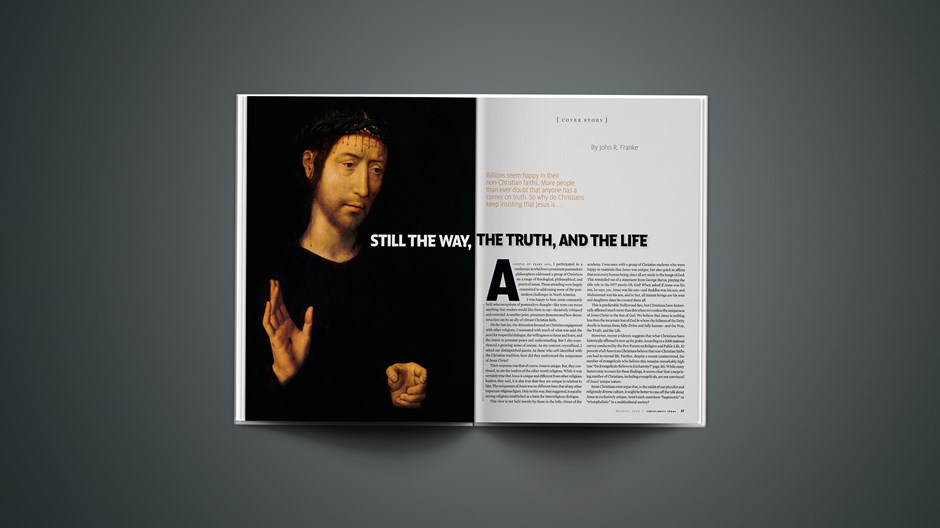
This is predictable Hollywood fare, but Christians have historically affirmed much more than this when we confess the uniqueness of Jesus Christ as the Son of God. We believe that Jesus is nothing less than the incarnate Son of God in whom the fullness of the Deity dwells in human form; fully divine and fully human—and the Way, the Truth, and the Life.
However, recent evidence suggests that what Christians have historically affirmed is now up for grabs. According to a 2008 national survey conducted by the Pew Forum on Religion and Public Life, 52 percent of all American Christians believe that non-Christian faiths can lead to eternal life. Further, despite a recent countertrend, the number of evangelicals who believe this remains remarkably high. While many factors may account for these findings, it seems clear that a surprising number of Christians, including evangelicals, are not convinced of Jesus' unique nature.
Some Christians even argue that, in the midst of our pluralist and religiously diverse culture, it might be better to ease off the talk about Jesus as exclusively unique. Aren't such assertions "hegemonic" or "triumphalistic" in a multicultural society?
In fact, there is a great deal at stake in denying that Jesus is the Way, the Truth, and the Life.
The Way
In the midst of a world teeming with religious diversity, what does it mean to say that Jesus is the Way? Simply put, it means we should look to Jesus to discover how God acts in the world. As the divine incarnation of God's love and mission, Jesus exemplifies the Way of God in the world. He was with God "in the beginning" and was sent into the world not only to tell us about God but also to demonstrate how God wants us to live.
And how does God want us to live? The short answer is that God calls us to love: "Dear friends, let us love one another, for love comes from God. Everyone who loves has been born of God and knows God. Whoever does not love does not know God, because God is love" (1 John 4:7-8; all biblical quotations are from the TNIV). But the question is, What is love?
Many assume they know what love is. Love makes you feel good. Love doesn't judge. Love means never having to say you're sorry. From the perspective of the Christian faith, such answers are both inadequate and false. These common ideas about love are shaped by our culture—the music we listen to, the movies we watch, and the books we read. Instead, we learn about love by looking at Jesus.
The affirmation of Jesus as the Way means to acknowledge that he shows us who God is and how God acts in the world.
Jesus Christ is the living embodiment of God's gracious character as the One who loves. This love is not an abstract notion or a set of feelings, but is rather characterized by the action of God in the person of Jesus Christ. Commitment to Jesus as the Way means we do not presume to know the nature of divine love ahead of time. We certainly do not let our culture tell us what love is. Rather, our understanding of true love, the love of God, is shaped by the particular way in which God loves in and through Jesus Christ.
Article continues below
As the One sent by the Father, Jesus exemplifies the Way of love in his mission to the world. Three biblical texts help us to understand his mission and how we participate in it.
In the first, Jesus goes to the Nazareth synagogue on the Sabbath and takes onto himself the words of the prophet Isaiah: "The Spirit of the Lord is on me, because he has anointed me to proclaim good news to the poor. He has sent me to proclaim freedom for the prisoners and recovery of sight for the blind, to set the oppressed free, to proclaim the year of the Lord's favor" (Luke 4:18-19). In calling disciples and creating a community of the Way, Jesus calls us to join him in his struggle for the liberation of human beings from all the forces of oppression.
In the second, the tax collector Zacchaeus, in response to Jesus, promises to give half of his possessions to the poor and pay back fourfold anyone he has cheated. Jesus says to him, "Today salvation has come to this house, because this man, too, is a son of Abraham. For the Son of Man came to seek and to save what was lost" (Luke 19:9-10). The church, after the pattern of Jesus, is to seek the lost and to proclaim the good news of salvation in Christ. Hence, evangelism is central to the liberating and reconciling mission of God.
A third text stands at the heart of the gospel: "Who, being in very nature God, did not consider equality with God something to be used to his own advantage; rather, he made himself nothing by taking the very nature of a servant, being made in human likeness. And being found in appearance as a human being, he humbled himself by becoming obedient to death—even death on a cross!" (Phil. 2:6-8). Faithfulness to the mission of Jesus means emulating his humility by valuing others above ourselves. This is the Way of Jesus.
The affirmation of Jesus as the Way, then, means to acknowledge that he shows us who God is and how God acts in the world, and the unique nature and character of the divine mission. All roads do not lead to God. The Way of Jesus is not simply about an inwardly focused or otherworldly spirituality, or a social activism that is often viewed as its alternative. Rather, it is the Way of humility and self-denial for the sake of others. Denial of the unique nature of Jesus compromises the redemption accomplished through his life and death as well as the Way of life he models for us and calls us to follow.
Article continues below
The Truth
What does it mean to say that Jesus is the Truth in a world filled with competing truth claims, as well as people who doubt the very existence of truth? Convoluted and inconclusive speculation about truth has led many to become, like Pilate, cynical about the very idea—"What is truth?" The Christian belief that Jesus Christ is the Truth suggests a hopeful answer.
Truth is not finally to be found in abstract notions or theories, but rather in the person of Jesus Christ, the unique Son of God and the living embodiment of truth. From this perspective, knowing truth depends on being in proper relationship to this one person who is divine truth. Jesus is categorically different from all other prophets, witnesses, and messengers from God. Jesus is all of these things, yet more. Along with the Father and the Spirit, Jesus himself is God.
In the Gospel of John, this affirmation is expressed by calling Jesus the logos of God, the living and active Word of God, the very basis of creation: "In the beginning was the Word, and the Word was with God, and the Word was God. He was with God in the beginning. Through him all things were made; without him nothing was made that has been made. In him was life, and that life was the light of all people. The light shines in the darkness, and the darkness has not overcome it" (1:1-5).
John explicitly says what he means when he says Jesus is the logos of God—and he certainly means more than abstract truth: "For the law was given through Moses; grace and truth came through Jesus Christ. No one has ever seen God, but the one and only Son, who is himself God and is in closest relationship with the Father, has made him known" (1:17-18).
Jesus, then, is presented as the all-encompassing Truth of God, a truth that is personal, active, relational, and gracious.
John fills out this picture in terms of Jesus' relationship to the Spirit. "When the Advocate comes," says Jesus, "whom I will send to you from the Father—the Spirit of truth who goes out from the Father—he will testify about me" (15:26). The Spirit of truth bears witness to Jesus (not to some philosophy or theory) as the incarnate manifestation of truth—truth that has "moved into the neighborhood," as Eugene Peterson puts it in The Message. And clearly, an important aspect of the Spirit's truth-bearing work is found in the inspired Scripture, which is at its core a witness to Jesus Christ the Truth.
Article continues below
This too has many consequences, but let me note three. First, because Jesus is the Truth, the very Truth of God, we cannot limit our understanding of him as merely a good moral teacher and significant religious leader, one ethical genius among others. This is to pull the rug out from under the most basic Christian understanding of Jesus. When we claim Jesus is unique, we mean that he is in an altogether different category from Moses, Buddha, Muhammad, or whomever. Such religious geniuses have indeed spoken many truths, but those truths are truths only insofar as they finally point to the Truth of God, that is, the life and work of Jesus Christ, the Truth. As Christians enter into interfaith conversations, it is important that we maintain this fundamental understanding of Jesus.
A second consequence is illustrated by a discussion I was in recently. A pastor who wanted to demonstrate the strength of his conviction said that if Jesus himself were to appear and affirm the opposing view, he would look him straight in the eye and say, "No, Jesus, you are wrong, I know this based on my experience, and nothing you can say will lead me to believe otherwise."
Phrases like "you have your truth and I have mine" or "that may be true for you but it's not true for me" also express this cultural mood. Such expressions imply that truth is determined by the particular community one happens to be in. Cultural relativists deny that a particular set of ideas, beliefs, or practices can provide the basis for shared convictions about ultimate truth. Thus, it is impossible for people to arrive at common conceptions of truth, except perhaps to affirm their commitment to the idea that there is no ultimate truth. Everything is interpretation: mine, yours; ours, theirs; each as good as another.
The Christian church has the audacity, in this climate, to insist that some things are true for everyone regardless of their social location, beliefs, or particular opinions. Not everything that is claimed to be true actually is true. Some beliefs and convictions, no matter how sincerely held, are false and untrue and must be opposed. We must assert this in humility—because the Christian message is not "our" truth, but is a divine gift to us, as it is a gift to the world. Nor do we claim to know truth fully and completely—that only God can do—but what we are given to know by God in Christ, we know truly and confidently. Christians cannot adopt moral relativism without compromising the conviction that God, the source of all truth, speaks in and through Jesus Christ, the Truth.
Article continues below
Finally, this affirmation that Jesus is the Truth is a stark challenge to abstract ideas of truth. As noted above, in Jesus we discover that truth is not merely intellectual or even moral, but personal and relational—truth for Christians is very much woven into the theme of love. Some of that was noted in the section about Jesus as the Way. Another dimension is outlined below.
The Life
The fullness of Life in Jesus is found in proper relationship to the Father through the person of Jesus. This life is not simply an escape from the divine judgment of death and destruction, but also a quality of life, in particular, a life lived in fellowship with the triune God through Jesus.
In thinking about the divine life we should ask, What was God doing before the creation of the world? We might at first be tempted to reply, with some early Christian writers, that God was preparing a place for people who asked such questions! And some speculations about God in church history might make this seem the best answer. But answering this apparently abstract question can help us understand what we mean when we say that Jesus is the Life.
Admittedly, we do not know much about the activity of God before creation, but this much seems incontrovertible: Throughout all eternity, God lives a life of love between Father, Son, and Holy Spirit. When Scripture says that "God is love" (1 John 4:8), it points not simply to God's feelings but to the life that God lives. Love is a verb. God is involved in giving, receiving, and sharing love from all eternity as three distinct persons: Father, Son, and Holy Spirit.
Without denying the traditional teaching that the unity of Father, Son, and Holy Spirit is found in a common essence or substance, thinking about God in such terms can become overly abstract. God's unity can also be understood through the idea of relationality. The three persons of the Trinity, while wholly distinct from each other, are also bound together in such a way that they depend on each other for their very identities as Father, Son, and Spirit. In other words, Father, Son, and Holy Spirit are one by virtue of their interdependent relationality. From the beginning and throughout all eternity, the life of the triune God has been and continues to be characterized by love.
Indeed, there is no God other than Father, Son, and Spirit bound together in the actions of love throughout eternity. And the love lived out by the Trinitarian persons among themselves provides a description of the inner life of God apart from any reference to creation.
Article continues below
God does not create humans in order finally to have someone to love. Creation reflects the expansive love of God, whereby the triune God brings into being another reality, that which is not God, and establishes a covenantal relationship of love, grace, and blessing—to draw creation into the divine fellowship of love. To participate in this fellowship is the Life. Jesus, as the unique Son of God, lives his eternal life in this reality, and he invites all of humanity to participate in this life through him.
The church, the community of Christ's intentional followers, is called to be a foretaste of this life, this relational fellowship of love, a provisional demonstration of God's will for all of creation. We are a people who, because we share in the Holy Spirit, participate in the eternal love of God. As such, we represent God in the midst of a fallen world through lives that reflect God's own loving character. Only through relationships and in community can we truly show what God is like, for God is the community of love, the eternal relational dynamic enjoyed by the three persons of the Trinity.
Again, the consequences are immense. Take apologetics and evangelism. When we have conversations with people of other faiths or no faith, we must of course give a credible intellectual account of the faith. But recognizing that Jesus is not just the Truth but also the Life means that we're not just calling them to change their worldview or to take up a new moral agenda. We're inviting them into a relationship with God. Not an abstract, ethereal relationship, but rather a concrete fellowship of love with God through his people, a fellowship experienced here and now in the life of the church, a fellowship lived in anticipation of the climax of God's work of new creation. To be a Christian means to participate in Life, that is, in Jesus Christ as he participated in the life of the triune God.
Jesus is the all-encompassing Truth of God, a truth that is personal, active, relational, and gracious.
And once more we see that this approach to Life is so unique, we simply cannot abandon it—as if it were just another way of approaching God or living spiritually. Denial of the uniqueness of Jesus as the Life ends up compromising the distinctive Christian teaching that God is triune. Doing so cuts the heart out of Christian witness in the world.
Article continues below
Bearing Witness
As we try to witness to our relativistic world about the uniqueness of Christ, we have to abandon the idea that this is something we can demonstrate with definitive proof, particularly to those who are predisposed to deny this. It is beyond the scope of human ability to produce in others the faith to see Jesus as he is. But it is the church's calling to continue to bear witness to Jesus and demonstrate the significance of his person for the whole fabric of Christian faith.
The belief that Jesus Christ is none other than God come in the flesh shapes our understanding of every point of distinctive Christian teaching. I've argued in a recent book that the diversity of the church is not a problem to be solved but is, in fact, the blessing of God. Indeed, the proper expression of orthodox, biblical faith can only be characterized by plurality. But in the midst of our diversity, we must remain unified on this point—Jesus is the Way, the Truth, and the Life. If we fail to stand fast here everything else will be in vain and the Christian church will lose its bearings. We will fail in our missional vocation to be the image of God and the body of Christ in the world.
John R. Franke is the Lester and Kay Clemens Professor of Missional Theology, Biblical Seminary, Hatfield, Pennsylvania. He is the author of Manifold Witness: The Plurality of Truth (Abingdon). Go to ChristianBibleStudies.com for "The Uniqueness of Jesus," a Bible study based on this article.
Last year the Pew Forum surveyed American Christians, asking them to choose between the statements 'Many religions can lead to eternal life' and 'My religion is the one, true faith.'















 While we pray for peace, we need moral clarity about this war.
 As my doubts about his teachings grew, so did a secret fascination with Jesus.
 Beyoncé’s right. Whether listening to Cowboy Carter or reading theology, diversity is a good thing.






