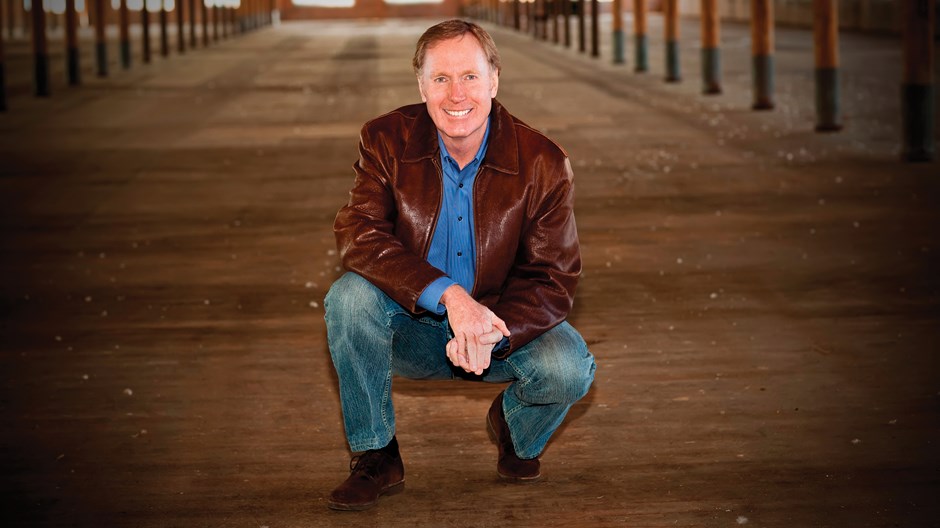
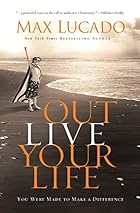
My other books are more, 'Let's get on our knees,' while this book is more, 'Let's roll up our sleeves,'?" says Max Lucado, whose upcoming book royalties will go to World Vision. Lucado will be on tour with TobyMac, Michael W. Smith, and Third Day for World Vision's "Make a Difference Tour" this month. He spoke with CT online editor Sarah Pulliam Bailey about Outlive Your Life: You Were Made to Make a Difference (Thomas Nelson) and his recent shift in focus.
What provoked your interest in poverty?
About four years ago, a guy asked me what my great-grandchildren would think about my response to the one billion hungry people on the planet. I had neglected this area in my life and in my teaching. It led to a series I did for the church, which led to this book, which is based on the Book of Acts, about the Jerusalem church. When you study the first 12 chapters of Acts, you see how the church responded to things like hunger, bias, persecution, racial tension, and hypocrisy inside the church.
You write, "Cut concern out of the Bible, and you cut the heart out of it." How do you prioritize poverty among other issues?
Compassion is the best apologetic. There are many controversial issues in our culture. The church should take a strong stance on issues like abortion and same-sex marriage. But there's something about compassion that causes society to say, "We're going to take this person seriously." Take Mother Teresa. She was confrontational on abortion, but she wasn't rejected by society.
You ask people to "outlive" their lives. Does the title suggest that you have to appeal to people's own interest before you can call them to action?
Good point—although I think Jesus appealed to that when he talked about not laying up treasures on earth. I don't believe our works save us, but I believe they follow us into heaven and bring glory to God.
You seemed to have a similar experience like Kay and Rick Warren, who saw a need for HIV/AIDS outreach.
Yes. When I gave my life to Christ when I was 20 years old, I was very involved in social justice. I got caught up in the necessary part of being a pastor, a writer, and a father. I felt like the Holy Spirit was calling me back into that about five years ago.
Compassion in evangelical churches is out of balance. When I talk about it, I get a lot of glazed expressions. My book is Compassion 101. It's not nearly as developed as books by Richard Stearns, Tony Campolo, and Ron Sider.
Fox commentator Glenn Beck urged Christians to leave their churches if they said anything about "social justice." How would you respond to his suggestion?
I think that a church should be setting the pace for social justice. There's a great statement in the Book of Acts: "No one was in need." There's not an indication that it was a forced thing. If there were a spirit of volunteerism in our churches, would all the needs in the world be met? Ideally, I think so.
You participated in a meeting with Barack Obama in 2008. How has he handled poverty and other issues?
I am really concerned about debt. I just don't see how that reconciles with responsible stewardship. Our church has tried to address debt for 10 years now. I'm not anti-liberal. I love the word liberal—it means generous. I want the government to do all it can to enable people to get out of poverty. I'm not a political activist.
I do have stronger feelings than others on immigration reform because we have so many people here in San Antonio who have lived as illegal aliens for a decade or two. If they were told to return to Mexico, it's not a realistic solution for many people I'm close to. I think finding a pathway to citizenship is a more responsible, respectful, neighborly approach to the solution.
How would you address some critics who suggest your writing is simplistic?
I would give them a good John Stott book or a John Piper book. I realize that I'm kind of nightstand reading. Some people write lullabies; I write lullabies.
















 While we pray for peace, we need moral clarity about this war.
 We’ve got little information on Jesus’ appearance and personality. But that’s the way God designed it.españolFrançais
 Beyoncé’s right. Whether listening to Cowboy Carter or reading theology, diversity is a good thing.






