Eugene A. Nida’s work in dynamic equivalence translation led to the development of such translations as the New Living Translation and The Message. It is a “meaning-based” approach to biblical translation and focuses on translating “thought-for-thought” rather than “word-for-word.”
Nida’s career in translation spanned the globe, as he traveled to more than 85 countries throughout his life. He served as executive secretary of translations for the American Bible Society from 1946 until his retirement in 1980, and he was involved with the Summer Institute of Linguistics (SIL) from its founding in 1942, first attending and then teaching there each summer until 1953.
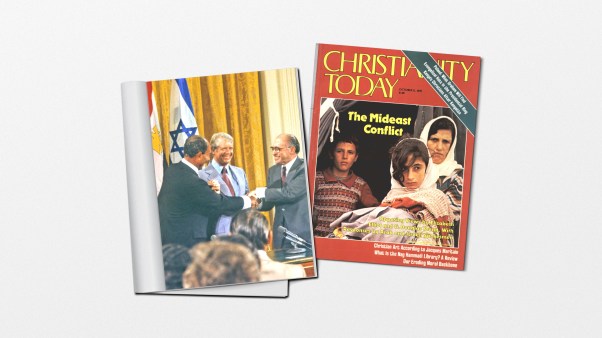
Throughout his career, Nida emphasized the need for multiple translations, as well as a desire to understand and spread the meaning of the Bible. “What is really needed is for people to take the message seriously and share it with other people, focused primarily on what this message has meant to me,” he said in a 2002 interview with Christianity Today. “So many Christians love to argue about the Bible rather than take it seriously as a message that is important for their own lives.”
Here Bible translation executives reflect on his ministry and legacy:
Bob Creson, President of Wycliffe Bible Translators USA:
“We stand on the shoulders of giants like Dr. Eugene Nida … Bible translation was hugely influenced by [the dynamic equivalence approach] and [Nida] was very influential to our organizations in helping to develop this approach to translation that continues to be used today, giving people opportunities to hear the good news of the gospel in a language and form they relate to best.”
Freddy Boswell, CEO/Executive Director of SIL International:
“Nida’s influence over Bible translation programs in the 20th century, it is very safe to say, is more than that of any other single person. We at SIL are greatly indebted to so much of his foundational work, which he never stopped building upon. … He was phenomenal, moving to Brussels later in his life so he could continue to speak English, Spanish, and French on a daily basis and interact with the young translation scholars of Europe on a regular basis. He felt that Europe was a place where so much of the translation frontier work was being done … particularly at universities, and he wanted to be near that. He modeled for all of us lifelong learning. He modeled continued improvement [and] academic discovery. He was just amazing in that way.”
Philip Stine, former director for publishing, marketing and translation services for United Bible Societies, and author of the biography Let the Words Be Written: The Lasting Influence of Eugene A. Nida
“Dr. Nida will be best remembered for the revolution he brought about in the field of Bible translation in the mid-twentieth century. The resulting impact on the growth and development of the Church continues to be felt as millions of people in hundreds of languages around the world have access to the Bible because of the approach he developed and promoted.”
Copyright © 2011 Christianity Today. Click for reprint information.
Related Elsewhere:
Christianity Today earlier published an obituary of Nida. The magazine interviewed him in 2002.