Jump directly to the content

After D'Souza's Departure, The King's College Seeks Doctrine Over Politics

And TKC isn't the only Christian school moving away from political conservatism.
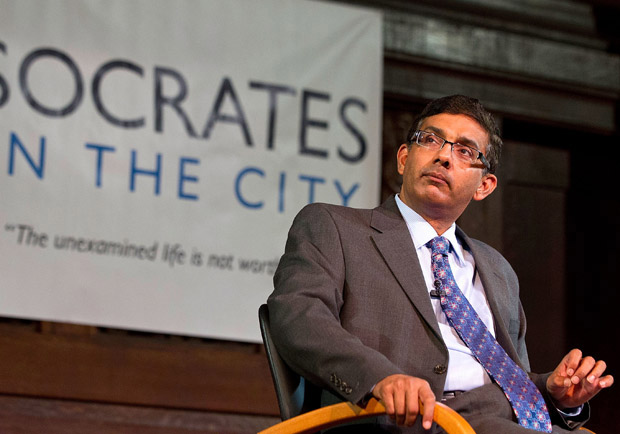
Ben Hider / Getty

After D'Souza's Departure, The King's College Seeks Doctrine Over Politics

The King's College (TKC) raised eyebrows in Christian higher education circles when it selected Dinesh D'Souza as its president in 2010. The author and pundit had little administrative experience, but TKC saw his potential to raise the school's profile (and funds).

Two years later, D'Souza—now best known for two books and a film criticizing the presidency of Barack Obama—resigned. This followed reports of his appearance with a new fiancée while still legally married to his wife of 20 years.

The day of the resignation, one TKC student asked interim president Andy Mills if the college would distinguish itself from D'Souza's approach to politics.

"[TKC] is a Christian college. Period," Mills said. He reiterated the point in an interview with CT. "We are reaffirming the reason students came here. Students come here for the [Christian] mission and vision."

In the presidential search that led to D'Souza's hiring, TKC published a list of "'true ideas' that distinguish King's within … higher education," including "biblical competition" and the right to "seek prosperity and risk bankruptcy." TKC no longer lists these on its website.

TKC was not the only Christian school to include economic and political theory among its core commitments. But changes have been afoot at similar schools that have positioned themselves as conservative in more than just theology.

Gene Edward Veith, provost at Patrick Henry College, says his school's conservatism has become "more sophisticated" since its founding in 1998. What he described as a "meltdown" in conflict between faculty and administrators six years ago "was mainly a matter of the institution maturing and going through some disillusionment struggles," he said. "I see that happening across the board. Christian activists who get involved with politics soon find that things are not so simple as getting Christians elected."

Meanwhile, Colorado Christian University includes in its strategic objectives support of "traditional family values" and "sanctity of life," but also "limited government," "free markets," and "original intent of the Constitution." But spokesman Ron Benton says the school wants "to be known as a Christian university first and foremost."

Many more Christian schools used to have explicit ties with cultural and political conservatism, says Allen Guelzo, professor of history at Gettysburg College. But some have tried to "return to center."

"There are many pressures against being known as a conservative institution," he said.

But Guelzo says it is good news if TKC students truly want more doctrine instead of politics. "Doctrinal integrity is number one," he said. "There will be issues that lead politically from that."

Mills agrees. "We've got to be careful not to set up a false dichotomy between the idea of being faith-based on the one hand and the idea of engagement on the other," he said. "I don't think we want to set the two against each other."

But the D'Souza incident serves as a warning for administrators at other Christian colleges, said David Dockery, president of Union University and author of The Future of Christian Higher Education.

"We have to be reminded that our calling is to serve the kingdom of God and the church through Christian higher education, first and foremost," he said. "When the focus is only in the cultural sphere, we run the risk of missing our calling."



From Issue:
December 2012, Vol. 56, No. 11, Pg 17, "'A Christian College. Period.'"
More from Christianity Today
A Fractured and Beautiful Faith

A Fractured and Beautiful Faith

How songwriter Audrey Assad transcended "positive and encouraging" to create music for the church.
A Terrifying Grace

A Terrifying Grace

Why God’s omniscience is good news for us.

Streaming This Weekend, May 24, 2013

What to watch this weekend (hint: don't make a huge mistake).
Can a Christian Family Ever Be Too Big?

Can a Christian Family Ever Be Too Big?

Experts weigh in.
Get Instant Access
Christianity Today Magazine
Subscribe now for a year (10 issues) at $24.95 for print, iPad, and instant web access.

International Orders

Comments

Displaying 1–3 of 18 comments

NORMAN STOLPE

December 07, 2012  4:32pm

From what I know of D'Souza and Ockenga (which is admittedly all second hand), I get the impression that D'Souza's political agenda defined if not distorted the Gospel he took to the public square, in contrast to Ockenga's concern for the Gospel to speak to the public square. Since the time of Constantine the political arena has consistently tried to coopt the Gospel for its own ends and rarely if ever tolerates allegiance to Christ over nation.

Report Abuse

Glen Waugh

December 06, 2012  9:23am

Criticize D'Souza if you like and remonstrate him for his apparent adultery, but doesn't he epitomize what H.J. Ockenga stated that evangelicals should be about namely, "a new emphasis upon the application of the gospel to the sociological, political, and economic areas of life" (From the inaugural address on the New Evangelicalism, 1948). So we might ask are those colleges who fail to support those who implement Ockenga rendering his statement above invalid? As to his adultery, Dr. Ockenga stated the following in December of 1957, "The New Evangelicalism has changed its strategy from one of separation to one of infiltration". So while D'Souza's behavior is against the will of God, it is not necessarily unevangelical according to the above quote on seperation. Bottom line is should D'Souza and those like him be eschewed from now on and on what basis?

Report Abuse

Claire Guest

December 05, 2012  9:37am

I appreciate Colorado Christian University's statements and objectives - they sound soundly Biblical to me. In the increasingly politically-corrected atmosphere which pervades this nation, I don't doubt that "[t]here are many pressures against being known as a conservative institution." I just hope and pray that a "return to center" does not equal becoming lukewarm. Christ Jesus plainly said He'd rather us be hot or cold, that lukewarmness brings harsh judgment.

Report Abuse
See All 18 Comments
You must be a Christianity Today subscriber to post comments
(on articles open to the public, you must at least register for a free account).
Login
or
Subscribe
or
Register

Don't Miss

Rob Bell's 'Ginormous' Mirror

Rob Bell's 'Ginormous' Mirror

To read his book is to read about our fascination with ourselves.
Losing my Edge

Losing my Edge

When your initial enthusiasm fades, you need a plan if you're going to bring your best to your calling

War and Peace

War and Peace

Pastor Tullian Tchividjian survived a leadership coup by finding rest in the liberating power of the gospel.

more | current issue

Today's Christian Woman

Ministering to Military Families

Ministering to Military Families

Five tangible ways to...

Books & Culture

A Measure of Forgiveness

A Measure of Forgiveness

Memories of a British...

Small Groups

Conflict in Small Groups

Conflict in Small Groups

Work through conflict...

Out of Ur

Review: Missio Alliance Gathering 2013

Review: Missio Alliance Gathering 2013

Reflections on mission...

Facebook

CT eBooks & Bible Studies


Shopping