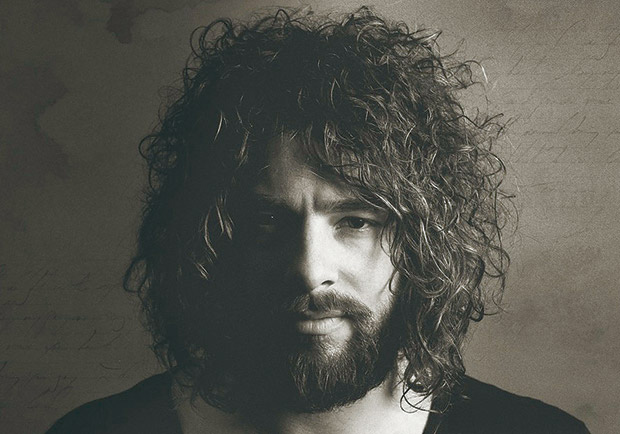

Two years ago, Gabriel Wilson traveled from California to Oklahoma for the funeral of his paternal grandfather, a man he’d never known but felt a strong connection to. He learned of Cornelius McGuire's work as a musician and a minister, heard some of the songs his granddad wrote, and felt the impact of the man's life and art on the world.
It sent Wilson—former front man for the Rock ‘n’ Roll Worship Circus and The Listening—on a personal and artistic journey of discovery, delving into the fractured relationship with his estranged father and their ongoing efforts at reconciliation. Wilson’s parents had divorced when he was two; he rarely saw his dad again. His mom remarried, and Wilson took that new name; he says his stepdad was “fantastic,” but “there was always a part of my life that had a question mark.”
As Wilson investigated his biological father’s side of the family, he learned he was kin to some pillars of gospel music history. His grandfather, Cornelius McGuire, was a self-taught guitarist who grew up in a family of fiddlers and banjo pickers. One of Cornelius’s sons, Dony McGuire (Wilson’s uncle), married Reba Rambo—daughter of gospel legends Buck and Dottie Rambo—and Dony and Reba went on to make a name for themselves in gospel music as well. (Buck Rambo was recently named into the Gospel Music Hall of Fame; his late wife was already a member.)
What came out of Wilson’s digging was his solo debut, The McGuire Side, a suite of songs cut with the blunt edges of country and folk—and smoldering with long-burning emotions. The first “side” of the album covers that family history, while the second side includes songs played at the funeral, country gospel songs written by his grandfather and father, and a moving rendition of "Amazing Grace."
We spoke with Wilson to learn more about the journey behind The McGuire Side, and how the album has affected relations with his birth parents.
Was it difficult for you to wade into these emotional waters for you or did it feel cathartic to get all this out?
A little bit of both. It was difficult yet it happened very naturally. It started when I attended my grandfather's funeral in 2010. The whole experience flipped me on my ear. I was going to see my family, many of whom had never met me before. Just to witness my grandfather's legacy being talked about. It took my whole life to see parts of myself in these people—the music and creativity and passion for ministry.
Being there in Oklahoma, it made so much sense. I'm a McGuire. I just started processing through journaling and through songwriting. The songs started emerging to help me process this stuff. I was torn, though. Do I release this stuff or should it be a private journal? I decided to share the songs with people and watch the way they would affect them. I'm hoping that the details of the story will inspire others to walk a journey of reconciliation, and inspire fathers and sons to build relationships.
Do you have a better relationship with your father now?
The best way to say it is that we're building a relationship. We're fighting through years of not having a relationship. But there's an amazing chemistry as father and son. We laugh alike, we look alike. It’s been a pretty slow build, though. The discovery of the McGuire side has been bridge-building between my dad and me. It gave the relationship a sense of purpose.
Have your parents heard the album?
I sat down with my birth father in Nashville and showed him the record when it was being mixed. I told him the story behind each song. I sat and cried with him a lot. He said it brought up a lot of memories and feelings. And I recorded two of grandfather McGuire’s songs and one of my dad’s songs, and he loved what we did with them. That brought us even closer too.
When I showed my mom, it was a different kind of experience. It was a risk talking about my family. You don’t want to write anything that would bring up the past and try to pull at things that have been forgiven and forgotten. I wanted to give honor to everyone. But if we’re walking forward, you have to talk about some of that stuff. It’s a balancing act. At the end of the day, they were pretty excited about it. They didn’t feel criticized and didn't feel like I was bringing up anything that was disparaging toward either of them.
Talk about the album’s structure.
Side A is the story of my family, and the other side is the music that was played at the funeral. It was so inspiring to hear those songs. I wanted to bring the listener into the experience of hearing those songs. My dad's song is just to tip my hat to him, to show that he was a songwriter too, and his legacy of music runs through my blood.
What’s the story behind the song "How to Keep a Girl"?
I was living in Nashville, and my wife and I weren't married yet. We came over to my dad's house for dinner. My dad looked at me and said, "I can't tell you what it takes to make a girl like that fall in love with you, but I can tell you how not to chase her away." I didn't have that song until almost right before we got into the studio. All of a sudden, the chorus hit me. I grabbed my iPhone, and the lyrics and melody just poured out.
You were in mainstream rock for a while before moving to Christian rock and worship. Was that a tough transition?
It was difficult initially because I was scared to give myself to the music ministry. My ego had to die. Indie rock is about creating art for art’s sake. You have to have little regard for the listener unless you want to grab popularity. Doing ministry with music is a balance of making great art but also serving people. It was a really good life lesson to learn because I was a selfish young man. I was struck with the awareness that when I rocked on a stage at a club, people would come up and say, "Man, you effin' rock." That would be the highest compliment you could get. But in ministry people would come up and say, "I felt the Lord tonight," or "I found God for the first time in my life. My heart's been healed." The gap between those responses started to seem huge.
Are you planning to tour in support of the new album?
It's tough. I'm a family man with two kids and one on the way. So plans for a fall tour don't make any sense. I want to tell the story of this album so I have some ideas for it. We're going to be doing what we call the "Vinyl Living Room Tour." We'll visit people's living rooms that can fit like 50 to 100 people, play the record, and tell the story of the record. Maybe I'll play a couple of songs acoustically. And I can share the family story of redemption.