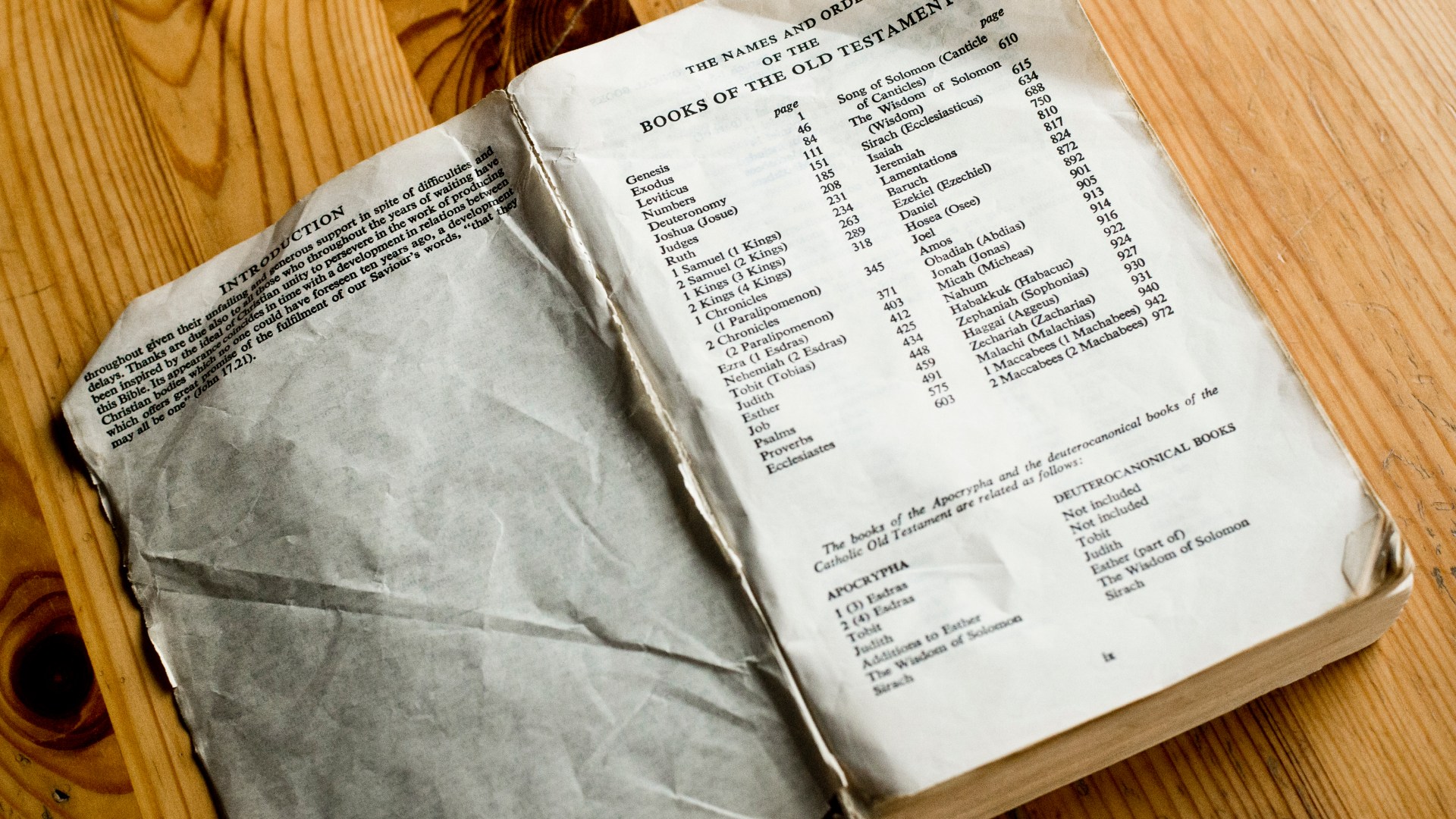
What do Christians do with the Old Testament, with its weird laws, brutal violence, and unpredictable God? Some are confused by it, some are afraid of it, and some simply ignore it. Our confusion, fear, and avoidance of the Old Testament has led to a severe problem. Like a doctor examining a patient, Brent Strawn examines our Old Testament habits and makes a dire diagnosis that supplies the title of his new book: The Old Testament is Dying.

Strawn’s analysis is divided into three sections. The first two focus on the problem (Part 1: “The Old Testament as a Dying Language” and Part 2: “Signs of Morbidity”), while the final section offers a solution (Part 3: “Path to Recovery”). Strawn’s grave assessment should cause great concern to any who believe, along with Paul the apostle, that all Scripture is divinely inspired and profitable for teaching (2 Tim. 3:16). But his suggested treatment should be a source of great hope.
A Disappearing Language
Strawn bases his diagnosis on empirical data from a 2010 Pew Forum survey (inspired by Stephen Prothero’s 2007 book, Religious Literacy: What Every American Needs to Know—And Doesn’t). In addition, he draws on patterns of Old Testament usage in popular sermons, hymns, and songs, and in the Revised Common Lectionary (a daily Bible-reading plan used by certain Protestant denominations). Despite widespread claims of religiosity among the US population, Strawn’s evidence strongly suggests that most American Christians are relatively ignorant of basic truths about the Bible, particularly the Old Testament—and that trends in sermons and worship are contributing to the problem. For the most part, the Old Testament is ignored, and even when it isn’t, only a narrow selection of familiar texts are read, sung, or taught.
To convey the severity of the problem, Strawn uses two helpful metaphors (medical and linguistic), and terminology from these realms permeate the book. While the book’s title emphasizes the medical analogy (the Old Testament as dying patient), the linguistic analogy plays a larger role in illustrating the book’s point. Strawn conceives of the Old Testament as a language that has been disappearing due to neglect and avoidance by the church. When people fail to learn the language in its full complexity, they end up essentially recreating it in a simplified, pidgin form.
In the middle of the book, Strawn looks at the problem from a different angle by focusing on three problematic groups: New Atheists, Marcionites, and “Happiologists” (Joel Osteen–types). New Atheists like Richard Dawkins misrepresent the Old Testament with flat, overly literal readings. Strawn insightfully points out some of the problems with Dawkins’s use of Scripture. Despite what Dawkins claims, Genesis 19 (an account of the destruction of Sodom and Gomorrah) doesn’t present Lot in anything like a positive light. And while Genesis 22 is a difficult text, it is abundantly clear that Abraham was being tested and that ultimately God did not want him to sacrifice his son.
Next, Strawn takes up ancient and contemporary versions of Marcionism, a second-century heresy holding that the Old Testament’s portrayal of God is inconsistent with the New Testament’s portrayal. (Marcion, the originator of this view, ended up rejecting the Old Testament as something other than valid Scripture.) Because of their disdain for the Old Testament specifically and Judaism more generally, Marcion’s more recent followers, like the German theologian Adolf von Harnack and the language scholar Friedrich Delitzsch, contributed to the rise of anti-Semitism in Germany in the 1920s and 1930s. Strawn illustrates how their views infected the German church with an ignorance of the Old Testament and a lack of appreciation for the profound ways God had worked through the nation of Israel. (Since Strawn clearly is aware that Marcionism is alive and well in our churches, I wish he would have given a more direct challenge for the church to learn from the tragic mistakes of pre-World-War-II Germany and to stop avoiding important Old Testament themes like pursuing justice or welcoming foreigners.)
Because of the widespread popularity of their message, prosperity gospel preachers—Strawn calls them “Happiologists”—present a far greater threat to the church’s Old Testament fluency than atheists or Marcionites. Using fragments of Bible verses taken out of context, the Happiologists claim that people can simply declare their own blessings. Strawn helps us see how language popularized by Osteen and other prosperity gospel preachers ignores the vast majority of not just the Old Testament (particularly Job, Ecclesiastes, and Proverbs), but the New Testament as well. Vital themes of lament, suffering, and costly discipleship are pushed aside.
Signs of Hope
In Part Three, Strawn asks “What, if anything, can be done to prevent the untimely death of the Old Testament?” A major part of his answer, of course, lies in reintegrating Old Testament passages and themes into our preaching, teaching, public reading of Scripture. He also makes a helpful call for further training in Old Testament languages, not only for teachers and preachers, but also for ordinary believers ill-served by the New Atheists, Marcionites, and Happiologist prosperity preachers. Especially encouraging, to me, was Strawn’s compelling vision of Christian community where both testaments are valued, “equally yoked, as it were.” And he provides an excellent discussion of Deuteronomy, showing not only how the book shapes the rest of the Old Testament but also how it offers a model for teaching Scripture (repetition, practice, performing, and singing).
Yet I can’t help thinking that Strawn could have done more to emphasize signs of hope that the dying patient can be revived. For instance, I would have appreciated seeing Strawn comment on how Psalm 119 could motivate us to delight in God’s laws like riches (v. 14), to enjoy them like honey (v. 103), and to treasure them more than silver or gold (v. 72, 127). Strawn could have reminded people who love the Gospels about how Jesus, during his time in the wilderness, feasted on the Word of God and used it to resist Satan’s attacks—“Man shall not live by bread alone, but on every word that comes from the mouth of God” (Matt. 4:4, Deut. 8:3), “Do not put the Lord your God to the test” (Matt. 4:7, Deut. 6:16), etc. We have it on no less an authority than Jesus himself that Christians who ignore the Old Testament are starving themselves.
As a fellow teacher of the Old Testament, and one who has attempted to address some of the obstacles Strawn has observed, I’m deeply sympathetic toward his project in The Old Testament Is Dying. I’m committed to doing my part to bring the language of the Old Testament back to life. Part of me wonders whether most readers of this book will be like me, people who already love the Old Testament, making the book essentially a sermon preached to the choir. I hope and pray, however, that this is not the case. Because in the end, when we make a commitment to regularly read, teach, preach, and sing the Old Testament, we’re doing more than nursing a dying language back to health. We’re also connecting personally to a living God.
David T. Lamb teaches the Old Testament at Biblical Theological Seminary in Hatfield, Pennsylvania. He is the author of God Behaving Badly: Is the God of the Old Testament Angry, Sexist and Racist? (InterVarsity Press) and Prostitutes and Polygamists: A Look at Love, Old Testament Style (Zondervan).