Christians across many different stripes—racial, denominational, class, to name a few—are known for being outspokenly pro-life. We have made a name for ourselves as protestors at abortion clinics, servants at crisis pregnancy centers, and advocates seeking to pass legislation for the unborn. We are relentless in our pursuit for the right to life of all human beings, and rightfully so.
But are we overlooking one key flaw in our zeal for protecting life?
In a recent column at Patheos, Ellen Painter Dollar writes about what she calls the "liminal nature" of embryos, otherwise known as their in-between status. She describes embryos as occupying a space between one state of being and another. In turn, she sees this as most evident in the way our culture, even our pro-life culture, responds to miscarriage and frozen embryos. She writes:
The liminal nature of embryos and the importance of naming and considering their in-between nature more fully are apparent in two phenomena: cultural responses to miscarriage, and how parents perceive their unborn children, whether they are embryos in a laboratory freezer or images on an ultrasound screen.
She highlights two families, both pro-choice, and how they responded to their pregnancy situations, one a miscarriage, the other a prenatal diagnosis of abnormalities. In each situation, the parent, though pro-choice, recognizes the emotion that comes with a loss without acknowledging that a human life was lost. But Dollar also points out that some pockets of the pro-life community likewise don't acknowledge that a human life was lost.
She has a point. Miscarriage is a silent sorrow that many couples walk through alone. To my shame, I remember telling a friend who suffered a miscarriage that "these things are really common," as if that fact eliminated her loss. I knew a woman who dismissed another's miscarriage as minor because "how can she be so upset when she wasn't that far along?" Such statements weren't coming from abortion advocates. Instead, they came from people like me, who would be first to stand up for an unborn baby at the hands of an abortion doctor. Ministering to parents in the throes of grief—namely, by acknowledging that a human life was lost—has proven more difficult for many of us Christians.
Knowing how to respond well to miscarriages is not a new predicament. For years miscarriage was scarcely mentioned, a sorrow that many women faced in isolation, even in the church. That trend is slowly changing, and that's to the good. While we shouldn't follow all of Hollywood's cues, celebrities are now more inclined to share their own stories of pregnancy loss. In an effort to remove the shroud of secrecy associated with miscarriage, Lisa Ling openly shared about her loss over two years ago. When the Duggars lost their baby last year, some criticized their public response, but others identified with it. In a world where our private lives are increasingly public, the once very-secret reality of miscarriage is finding its way into public discourse.
With such knowledge comes even greater responsibility. In some cases, even with the most open environments, responses to miscarriage and embryo loss find little more than an obligatory hug and a quick, "I'm sorry for your loss." What Dollar and others recognize is that our inability to respond to the loss reveals an inconsistency in our pro-life position.
But is the answer to the problem really to define these embryos as simply being in a holding pattern between nothingness and life? Are they merely potentials for life? Or can we define our terms in a more responsible and accurate way?
I would like to suggest another way. Perhaps the most pro-life thing a Christian can do is to begin applying pro-life rhetoric with the same vigor to the woman in the pew next to her who recently miscarried her child.
It's been many years since I uttered those heartless words to my grieving friend. Having now lost one child of my own through miscarriage, and having since walked with a number of women through miscarriages, none of us would say that what we lost was the "potential" for life. It was so much more than that. Our lost baby took with it the many dreams and hopes that began forming in our minds the moment we knew of the baby's existence. What was lost was a life that will never be replicated.
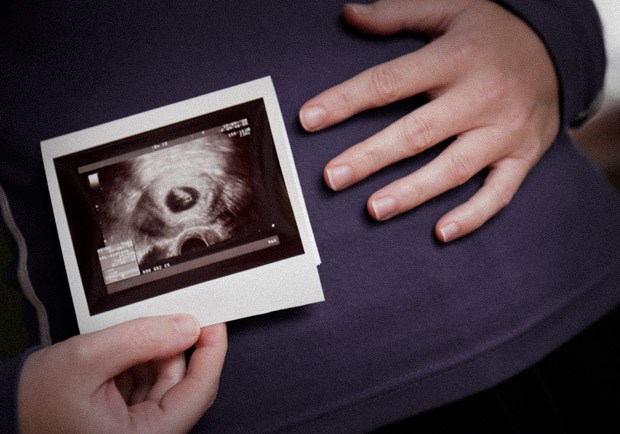
It's really important to never delegitimize the life that was once growing inside of a grieving mother or was once frozen in an IVF clinic. To her (and to God), this life was never a mere blob of tissue or a fetus. He or she was a life. Treating the baby as such gives meat to the bones of our fight for the unborn. And if we want to be consistently pro-life, we must care about every life, from the tiniest dot on an ultrasound machine to the embryo in the petri dish.
As Christians, we must never treat pregnancy loss as some fluke accident that at least proves pregnancy is possible. We should be the first to grieve over every baby lost, regardless of the gestation, circumstance, or result of their death. Our zeal for caring for the mother who grieves over her abortion should carry over into our care for the mother who loses her child through miscarriage.
Article continues below
Are you pro-life enough? It seems like a heartless question considering all that Christians are doing to turn the tide on abortion in this country. But it's worth considering. Does our language to the grieving mother stay the same regardless of how her baby was lost? Maybe then our critics might see that we mean what we say.












 While we pray for peace, we need moral clarity about this war.
 A Christian reconciliation group in Israel and Palestine warned that war would come. Now the war threatens their relevance.españolالعربيةFrançaisрусскийУкраїнська
 The rage of the mob is a poor substitute for real community.





