Ministry, Computer Style

“Do not fold, spindle, or mutilate” may become a requirement for students of Christian apologetics if Walter R. Martin has his way. The general director of Christian Research Institute would like to see an international computer network established to aid scholars. Last September the New Jersey institute sponsored a European conference to consider how churches use computers.

Martin anticipates that smaller computers (within ten years they will be about the size of a briefcase) can be linked to a central memory bank from which students can draw theological information. Already the CRI has conducted seminars demonstrating information retrieval from text of the New English Bible stored in computers.

Last month a United Methodist Church committee approved “in principle” a plan to computerize personnel information for the denomination. In addition, American Baptists, United Presbyterians, Episcopalians, the Lutheran Church in America, and the United Church of Christ are considering whether computerized methods could help them screen ministers for pulpits and special ministries, and find laymen to fill church posts.
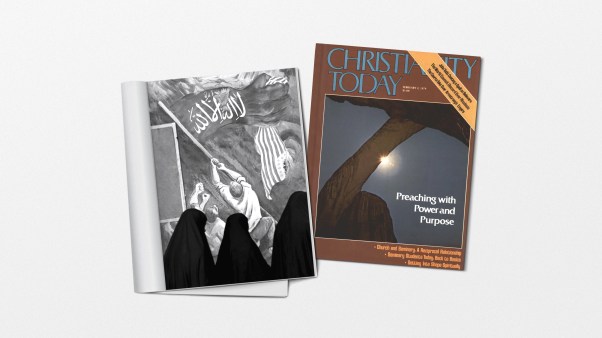
Also in this issue

The CT archives are a rich treasure of biblical wisdom and insight from our past. Some things we would say differently today, and some stances we've changed. But overall, we're amazed at how relevant so much of this content is. We trust that you'll find it a helpful resource.

'Co-belligerent' Reconciliation

Editorial

The Role of Lebanese Christians

Editorial

Justice and the Chicago Eight

Editorial

Capitalism in the Soviet Union

Editorial

The Book for All Seasons

Editorial

Speeding Up Desegregation

Editorial

Man's Judgement

Belfast Imbroglio

The Complete NEB

Denominational Regrouping

Editorial

Foundations and Tax Reform

Fruitful Shakedown for 'Evangel' Craft

Prayer Day for Captives

Ouster in Missouri

New York Council: Problems in the Immediate Family

John Wesley College: Disengaging the Nazarenes

Indonesian Phenomenon

Inaguration Ceremonies: Dividends for Dollars

Latin, Litter, Limitations

ACCC: No Longer Doing Its Founder’s Will

News Briefs from November 21, 1969

Scientology: Religion or Racket?: Second of Two Parts

Joseph Martin Hopkins

The Quaker Movement West

What’s the Mutter with Astrology?

Religious Cartoons: Needling Inconsistencies

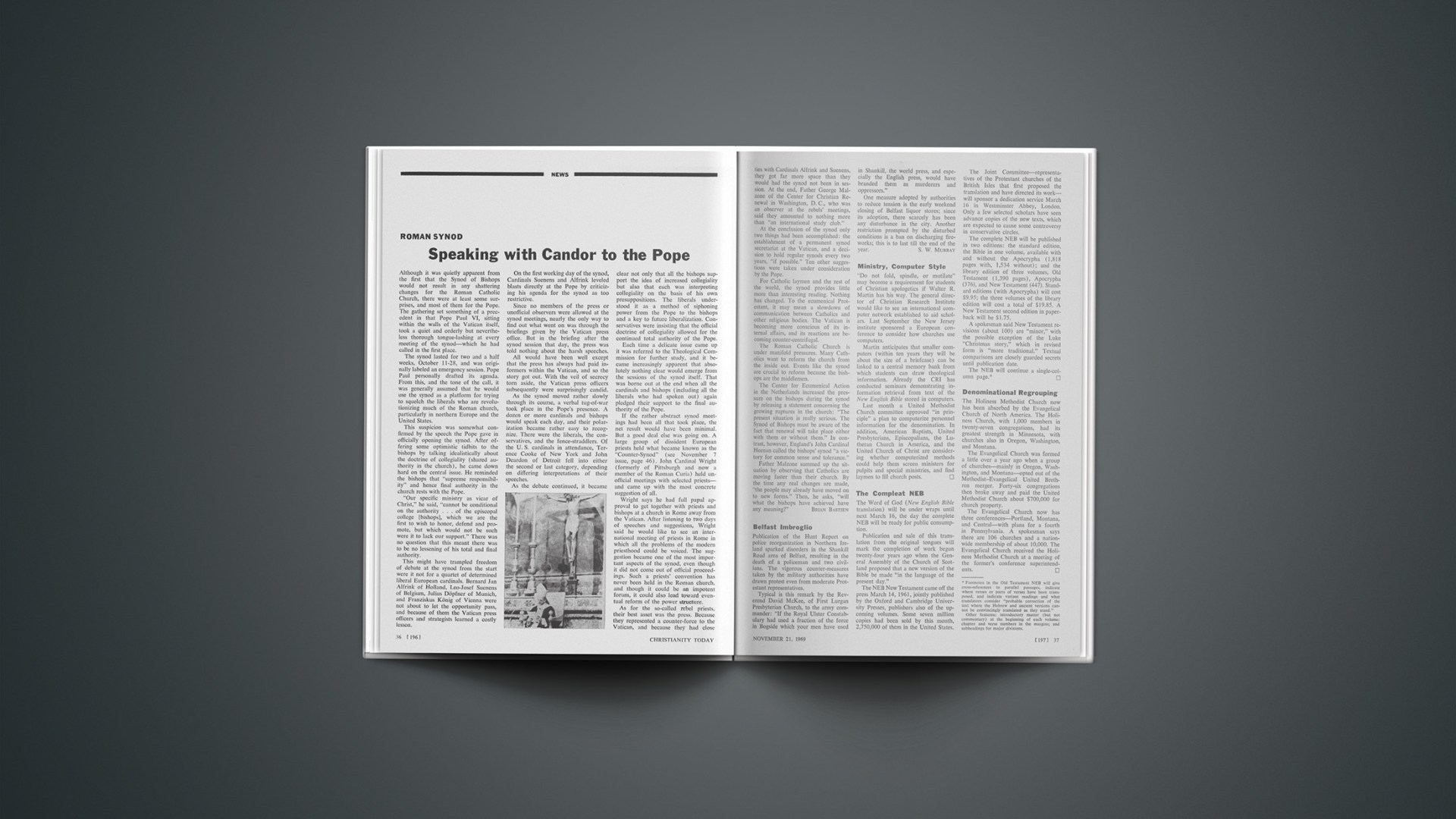
Roman Synod: Speaking with Candor to the Pope

Book Briefs: November 21, 1969

Editorial

God, Grace, and Gratitude

Testing for Maturity

That Searching Look

Eutychus and His Kin: November 21, 1969

Who Needs History?

Richard L. Tobin

Editor's Note from November 21, 1969

’Tis the Season to Be Gluttonous

Stanley Paregien

The Human Experience of Death

Thomas Howard

The Nonsense of Liberal Catholics

James P. Degnan

Poverty: The Psychological Effects

The Heritage of Plymouth

Editorial

The President’s Viet Nam Policy

Editorial

A Philosophy of Despair

Editorial

Charisma in Context

Editorial

'Death' In a Beatle's Life

View issue

Our Latest

Public Theology Project

Your Understanding of Calling Is About to Change Radically

You can do little about what artificial intelligence is doing around you, but you can do something about you.

Late to a 1,400-Year-Old Church Tradition? Me Too.

My nondenominational church is having its first Ash Wednesday service today. But why start now?

Christian Doctrine in 70 Hebrew Words

Martin Luther called Psalm 110 the core of Scripture for its 7 short verses of foundational doctrine.

News

Refugees Disappeared. Churches Prayed and Lawyered Up.

Christians who fled violence in Myanmar were largely Trump supporters. Then ICE started arresting their congregants.

The Russell Moore Show

Jen Wilkin on Recovering Bible Literacy

What if the church’s biggest discipleship problem isn’t disbelief—but disinterest in learning?

Excerpt

How the Lord’s Supper Heals Church Hurt

Communion makes us face our relational conflicts.

Review

We’ve Still Got Heaven Wrong

Claude Atcho

N.T. Wright’s Homecoming hits familiar notes, but they’re still needed.

Review

Emotions Don’t Just Happen to You

Our society tends to treat feelings as inevitable and authentic. A new book explores an older understanding in the Bible and the church.

Apple PodcastsDown ArrowDown ArrowDown Arrowarrow_left_altLeft ArrowLeft ArrowRight ArrowRight ArrowRight Arrowarrow_up_altUp ArrowUp ArrowAvailable at Amazoncaret-downCloseCloseEmailEmailExpandExpandExternalExternalFacebookfacebook-squareGiftGiftGooglegoogleGoogle KeephamburgerInstagraminstagram-squareLinkLinklinkedin-squareListenListenListenChristianity TodayCT Creative Studio Logologo_orgMegaphoneMenuMenupausePinterestPlayPlayPocketPodcastprintRSSRSSSaveSaveSaveSearchSearchsearchSpotifyStitcherTelegramTable of ContentsTable of Contentstwitter-squareWhatsAppXYouTubeYouTube