There is a Christian in Yugoslavia who is convinced Americans are uninformed about Eastern Europe: he has been introduced in American churches as a citizen of “Yugoslovakia.” He has even been asked if there are any churches open in Yugoslavia—though that nation has perhaps more religious freedom than any other in Eastern Europe.
The very diversity of the USSR and Eastern Europe—with 400 million people in an estimated 170 different ethnic groups—is a riddle to many Westerners. Our comprehension is further complicated because borders have shifted frequently; nations like the Baltic states—Estonia, Latvia, and Lithuania—for example, have been swallowed totally by larger nations.
Politically, the Soviet Union and Eastern Europe are Marxist, but their Marxism is not monolithic. The ideological mixture ranges all the way from rigid Albania to the economically experimental societies of Yugoslavia and Hungary. Furthermore, not all East European countries belong to the Soviet bloc. Yugoslavia is nonaligned, and Albania is aloof. The other six countries (except perhaps strongly pro-Soviet Bulgaria) are unwillingly dependent economically and politically on the Soviet Union, though Romania tries to steer a somewhat independent course.
While all of these countries are officially Marxist and therefore opposed to Christianity, they represent a wide spectrum of religious traditions, with varying shades of religious liberty. In Yugoslavia, a Christian leader was recently permitted to sell Christian books in a Communist bookstore located on Karl Marx Square. By contrast, religion has been officially outlawed in Albania since 1967.
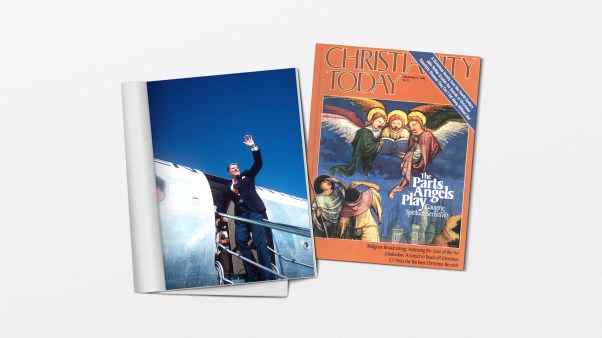
Billy Graham’s recent preaching expeditions to the USSR and Eastern Europe illustrate the differing degrees of religious freedom in these countries.
- In both the USSR and Romania, Graham preached to gatherings whose attendance was restricted.
- In Poland, East Germany, and Hungary, attendance was unrestricted, and in Hungary, Graham was even allowed to speak in a public stadium.
- In Romania and the USSR, Bibles and Christian books are unavailable in bookstores.
- In Poland, East Germany, and Hungary, Christian books, including some of Graham’s, are available in limited quantities.
By Anita Deyneka.