In this series


Christianity
FIRST HINTS—1740s & 1750s
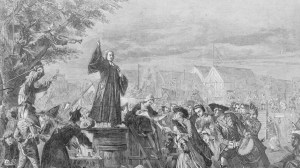
1740s Great Awakening inspired by George Whitefield’s preaching spreads through colonies
1747 Jonathan Edwards’s The Visible Union of God’s People envisions Americans bound together by shared conversion experience
1750 Jonathan Mayhew’s Discourse Concerning Unlimited Submission and Non-Resistance announces Christian duty to resist tyranny
PRELUDE—1760s
1768–1769 Northern Anglicans demand appointment of a colonial bishop
1768 John Witherspoon becomes president of the College of New Jersey; unites Presbyterians and introduces Scottish Common Sense philosophy
TURNING POINT—1770–1776
1772 Boston Committee of Correspondence indicts British policies, including prospect of a colonial Anglican bishop; John Allen preaches on The Beauties ofLiberty
1774 May, Quebec Act condemned as extending “Papist Rule”; Sept., Baptist Isaac Backus demands that First Continental Congress, meeting in Carpenter’s Hall, Philadelphia, protect Baptists’ religious liberty
1775 July, Continental Congress calls for day of prayer and fasting; preachers debate whether to submit to British authority
1776 July, Declaration of Independence invokes “the laws of nature and of nature’s God”; Sept., New Jersey Dutch Reformed split on political lines; Dec., North Carolina constitution restricts officeholding to Protestants; Dec., Virginia disestablishes the Anglican church
WAR & AFTERMATH—1777–1789
1777 Aug., Pennsylvania officials deport 40-plus Quakers for “disloyalty;” Nov., Lutheran patriarch Henry Muhlenburg defends his neutrality
1778-1780 Henry Alline, “Nova Scotia’s Whitefield,” ignites a Canadian revival that spreads to New England
1778 South Carolina permits Anglican-like churches that meet certain criteria
1779 Virginia considers public subsidies for churches
1780 Massachusetts decides to continue public funding of Congregational churches
1781 Presbyterian Samuel McCorkle preaches against looting and abusing of loyalists
1786 Virginia adopts Thomas Jefferson’s Statute for Religious Liberty
1788 Presbyterians establish a national denomination
1789 George Washington takes presidential oath on the Bible, adding “So help me, God.”
The Revolution
FIRST HINTS—1740s & 1750s
1740–1748 King George’s War—French and British maneuver to dominate North America
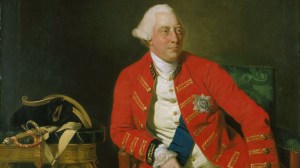
1760 George III becomes king of England
1756-1763 Seven Years’ War—British expel French from North America
PRELUDE—1760s
1763 Peace of Paris ends Seven Years’ War; British government in financial straits
1764 Sugar Act—Britain tightens enforcement of the acts of trade, seeking more revenues from colonies
1765 Stamp Act—Americans complain of taxation without representation
1767 Townshend Acts—attempts to indirectly tax the colonies
TURNING POINT—1770–1776
1770 Boston Massacre—five protesting Bostonians killed
1773 Boston Tea Party protests Tea Act of 1773
1774 Intolerable Acts: including quartering of troops in homes; First Continental Congress meets
1775 Apr., Battles of Lexington and Concord force a British retreat; May, Second Continental Congress seeks repeal of British policies; creates Continental Army and names George Washington commander; June, Battle of Bunker Hill
1776 Jan., Thomas Paine’s Common Sense ignites feelings for independence; July, Thomas Jefferson pens Declaration of Independence; Dec., Washington crosses Delaware and defeats British at Trenton
WAR & AFTERMATH—1777–1789
1777 Battle of Saratoga: American victory prompts France to support United States
1777–1778 Washington’s army suffers through winter at Valley Forge
1778 June, Battle of Monmouth: longest action of the war a draw
1781 Cornwallis surrenders at Yorktown, forcing peace negotiations
1783 Treaty of Paris—British recognize American independence
1787 U.S. Constitutional Convention
1789 Bill of Rights guarantees religious freedom
Robert Calhoon is professor of history at the University of North Carolina at Greensboro. He is author of Dominion and Liberty: Ideology in the Anglo-American World (1994).
Copyright © 1996 by the author or Christianity Today/Christian History magazine.Click here for reprint information on Christian History.