
On the old Bob Newhart Show, the one that cast Bob as a psychiatrist, one regular character carried meekness to a fault. He was a failure as a door-to-door salesman because he feared knocking on people’s doors might disturb them. So he’d wait on the doorstep, hoping they’d happen to open the door.
One day this fretful character bustled into Bob’s office muttering, “I’m sorry I’m late.”
“You’re not late,” said Bob.
“Well then, I’m sorry I’m early,” he replied.
“You’re not early, either,” Bob told him.
“I’m sorry,” he sighed.
I was reminded of this apologetic character by the recurrent waves of apology sweeping over the country: whites apologizing to blacks, Catholics apologizing to Jews, Promise Keepers apologizing to everybody. In some cases there are good reasons for apologizing, and it’s a necessary first step. But what’s the second step? You can’t go on being sorry forever, unless you want to wind up on a psychiatrist’s couch. What’s supposed to happen after repentance?
Of course, the prior question is whether we’re dealing with true repentance at all; in some cases, the popular device of formal apology might only be a token paid to blunt criticism. It sounds like, “I’m sorry,” but it means, “I said I was sorry.” Thus at one end of the apology spectrum are those who intend to do nothing more than say the magic words. It’s a get-out-of-jail-free card—sometimes literally. Men of public stature caught using funds or women in questionable ways often use this ploy.
Then there’s the apology that takes a diplomatic tone, where one group makes a formal statement to another regarding wrongs in history. I imagine that these statements are made when the apologizers feel crushed by the guilt of yesteryear and search for a way to alleviate it. I suspect it doesn’t work; such an apology can’t alleviate guilt, because the apologizers are not the ones who did the wrong. Departed ancestors can’t participate in the repentance or the forgiveness; the past is stubbornly unchangeable. It constitutes a pyschodrama in which players have assumed roles they are unable to discharge.
Thus historical apologies deliver a measure of frustration. Additionally, they can derail genuine progress. The passage of time has already accomplished some healing, as demonstrated by the appearance of a desire to make apology. Treating past division as if it were still in full force uproots naturally growing unity, insidiously suggesting that it’s always us-versus-them, forever and ever, amen.
The recent events most resembling biblical repentance are the waves of revival at churches and colleges, and at the Promise Keepers rallies. Hundreds of thousands of men weeping for their sins is a bracing image, yet I wonder if our pk brothers will ever be allowed to say anything beyond “I’m sorry.” Systematic denigration of men has left them with little other role.
So what do you say after you say “I’m sorry”? You get on with your life and make changes. As Bob Beckel, cohost of CNN’s Crossfire Sunday, asked feminist Eleanor Smeal, “If 10,000 of them become better husbands, better providers … what’s wrong with that?” The Hebrew word for repentance, shub, means turning your life around 180 degrees. After apology comes change.
I once heard an overenthusiastic retreat leader proclaim, “Repentance means we turn around 360 degrees!” Of course, in some cases, we do; then we repent again. Even the publican in the temple, heartfelt as his repentance was, may not have walked out the door and into a pristine life. He may have only partly understood the changes God was requiring of him; he may have even failed, initially, at those he did attempt.
The shocking news of the gospel is that we can always be forgiven. God desires “I’m sorry” more than “I did it,” contrition more than confession. We cart the broken heap of self into the repair shop and beg for mercy and strength, knowing this is what he loves. “A broken and a contrite heart … you will not despise” (Ps. 51:17, NIV).
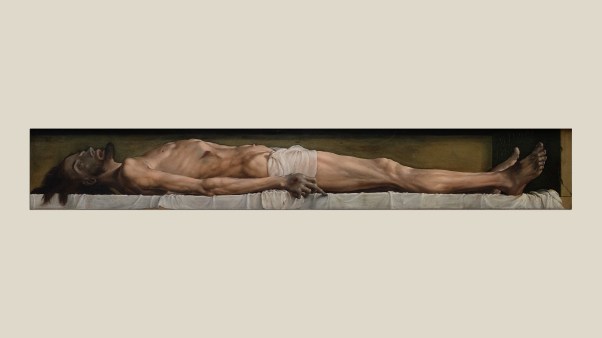
Broken and contrite hearts have been showing up in odd places lately, not necessarily where the faith journey is complete. Author and Salon digizine columnist Anne Lamott holds the usual raft of liberal opinions, yet she is vocally sold out to Jesus, grateful to the church that welcomed her when she was unwed, pregnant, and recovering from substance abuse. Her faith mystifies her family, friends, and even herself. She writes of looking at an image of Christ crucified: “I believe in it, and it’s so nuts. How did some fabulously cerebral and black-humored cynic like myself come … to believe as much as I believe in gravity or the size of space that Jesus paid a debt he didn’t owe because we had a debt we couldn’t pay?”
“I’m sorry.” It’s a good place for understanding to start.
Copyright © 1998 Christianity Today. Click for reprint information.