U.S. News points fingers at Jesus’ killers
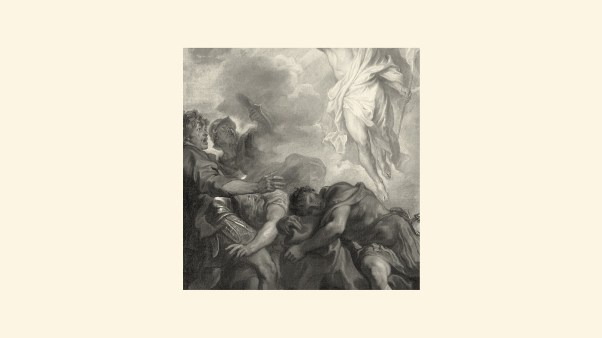
Last week’s cover story of U.S. News & World Report asks the question “Why did Jesus die?” But most of the article is concerned with a more specific question: “Who killed Jesus?” The answer, from Jeff Sheler (who recently won a Christianity Today book award for Is the Bible True?) won’t surprise CT readers: “On the most basic level, most scholars today agree that the official responsibility for Jesus’s death rests with Pilate, who had the final say at the time in capital-punishment cases. Yet few doubt that Pilate would or could have condemned Jesus without some involvement of the leading Jewish authority in Jerusalem-Caiaphas, the chief Temple priest.” But Sheler treads lightly on this latter clause, noting that Christians have historically taken the Jewish involvement in Christ’s death to antisemitic, often murderous lengths. As to why Jesus died, Sheler’s answer is better suited to the question “Why was Jesus killed?” (He challenged political and religious authorities and was considered an insurrectionist). But the reason Jesus died—at least in Christian theology—is to save the world.
Bumbling messiahs
Why Jesus died also comes up in a New York Times Magazine conversation between Jeremy Sisto, who plays Jesus in a CBS miniseries next month, and Glenn Carter, who’s currently starring in Jesus Christ Superstar on Broadway. It’s a pretty outrageous discussion, though it demonstrates just how little some people know about Christ. “I think so much was edited out of the Bible,” says Carter. “I can’t imagine that Jesus was crucified for telling people to love thy neighbor. There was more to it than that.” Adds Sisto, “We’re just trying to make the story more accessible to people, to take away his inherent divinity and make him a real guy who has doubts about his mission, his journey and even his belief.” And it goes on. “I don’t think it’s necessary to believe in God to play Jesus, just like it’s not necessary to think that murder’s a good thing to play a murderer” (Carter). “There’s no way I could play the real Jesus. … Therefore I think it’s best not to try” (also Carter).
I believe in miracles Almost everyone believes God performs miracles, says this week’s Newsweek. “According to a new NewsweekPoll,” reports Kenneth Woodward, “84 percent of adult Americans say they believe that God performs miracles and nearly half (48 percent) report that they have personally experienced or witnessed one. Three fourths of American Catholics say they pray for miracles, and among non-Christians—and people of no faith at all—43 percent say they have asked for God’s intervention.” But Woodward, who’s pushing his new book, The Book of Miracles, gets a little universalistic at the end of his article: “Miracles alone are never a substitute for faith. But as the United States becomes home to all the world’s religions, miracle stories have acquired a new and almost civic dimension. While they show that religions provide very different visions of how the transcendent operates in the world, those differences need not divide us: miracle stories also invite spiritual seekers to journey into worlds other than their own. As Gandhi understood, religion is itself an “experiment with truth.” But miracle stories can be interpreted only by communities of understanding and memory—that is, traditions.” Apparently, his book examines how these traditions see miracles in more depth than the quick glosses in the article.
Related Elsewhere
See our past Weblogs:
April 19 | 18 | 17 April 13 | 12 | 11 | 10 April 6 | 5 | 4 | 3 March 31 | 30 | 29 | 28 | 27 March 24 | 22 | 20 March 17 | 16 | 15 | 14 | 13 March 10 | 9 | 8 | 7
Copyright © 2000 Christianity Today. Click for reprint information.