I pull out the text for next Sunday’s sermon first thing Monday morning. Almost always I wonder, What in the world I was thinking when I picked this text months ago?
By Tuesday, I have worked through several commentaries, and with their help I am now thoroughly confused about what I will say. A day later this has reached the point of despair.
On Thursday, I often entertain thoughts of forgetting this text completely and starting over with a new one. But my helpful secretary always reminds me, “Too late. The bulletin has already gone to the printer.” So I keep trudging my way through.
When the time comes for me to stop reading and researching, and start writing the sermon, I am always over-caffeinated. I keep checking my e-mail and playing with the fonts on the computer. I adjust my chair, again. When I discover that I am actually writing the sermon, I always want to celebrate by taking a little break. What all this is about is nothing less than fear.
Writing sermons is hard work. It doesn’t matter how gifted you are, how long you’ve been at it, or even how much you enjoy it. It’s never easy to write good sermons; worse yet, it’s painful.
The preacher’s heart is the crucible in which the words of the people and the Word of God get mixed together. This is a sacred process the Holy Spirit uses to present Scripture with all the kerygmatic power it had when first uttered by prophets and apostles. But it hurts for mortals to be the vessels of holy words. When we look at the cost paid by the prophets and apostles, we shouldn’t be surprised that we are hesitant, every week, to go through this again.
If my assignment were simply to write an exegesis paper every week, that would be challenging, but not painful. Or if my job were only to listen to the laments and hurts of my people, that would be hard, but not necessarily painful. But to speak into the chaos of human hearts with the beauty of God-breathed words is more than mere mortals can pull off. Unless, of course, we have been seized by the Holy Spirit.
That’s the part that hurts.
It hurts to preach because we have to confront our own need to hear this message. It hurts because we would rather be the agreeable parson in a tweed coat who simply shows up when called to bless things. It hurts because our hearts are too small to be the earthen vessel the Spirit uses to grind God’s Word into our people’s lives.
But most of all, it hurts to preach because our lives are not our own, which is another way of saying that we are ordained.
Almost every Sunday when I climb the steps of our pulpit, I see someone in the congregation whom I recognize as being a far superior preacher to me. But then I remember the counsel an elder gave me when I was a fumbling seminary intern.
“Craig,” he said, “we are not here because you are the best speaker around. We’re here because God called you to speak to us.”
That is important to remember before you arrive at the pulpit. But the calling isn’t just to arrive with a relevant sermon. Rather it is to spend all week brooding over what it means for your congregation to be relevant to God.
To fulfill such a calling, there is no alternative but to spend another week walking through hospital rooms, counseling appointments, and the legion of committee meetings. And then, day after day, you bring all you’ve collected from those places into your study, like a terrified priest walking into the Holy of Holies.
By the time I drive to church on Sunday morning, I am convinced that this is exactly the best sermon for our congregation to receive. That isn’t because I know it is constructed well, or that it will be delivered well. It’s because all week long the sermon has been putting me through the wringer, converting me, to make me useful to God’s ministry in our congregation.
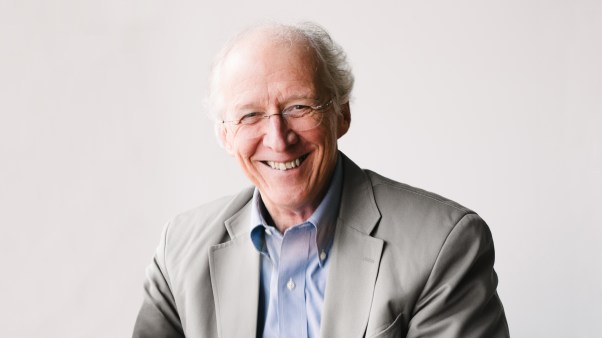
M. Craig Barnes is pastor of National Presbyterian Church in Washington, D.C., and editor-at-large of Leadership.
Copyright © 2002 by the author or Christianity Today/Leadership Journal. Click here for reprint information on Leadership Journal.