 “What Is It About 20-Somethings?” Robin Marantz Henig asked recently in The New York Times Magazine. Young American adults are taking longer than previous generations to grow up. They are faced with more possibilities, and their idealism runs rampant. Therefore, they are left wallowing in indecision and uncommitted lifestyles, which makes them “emerging adults,” a term coined by psychologist Jeffrey Jensen Arnett.
Emerging adults’ most distinct trait is an inability to settle down. Henig notes that “the traditional cycle seems to have gone off course, as young people remain untethered to romantic partners or to permanent homes … forestalling the beginning of adult life.” In other words, to quote Mark Edmundson’s excellent Chronicle of Higher Education essay “Dwelling in Possibilities,” young people are “possibility junkies” and “enemies of closure.”
The point of all the recent scholarly discussion about 20-somethings isn’t to complain about their habits, but first, as Henig says, to figure out “whether the prolongation of this unsettled time of life is a good thing or a bad thing.”
However, I think many Christians have already concluded that emerging adulthood is a bad thing. The voices who have noted the trend have immediately begun grasping for a solution, which, in many cases, is marriage. This is essentially what Mark Regnerus argued in his Christianity Today cover story, “The Case for Early Marriage.” If young adults have not gotten married, or are still wandering the world, they are not serious adults, he suggest: ” … the focus of 20-somethings has become less about building mature relationships and fulfilling responsibilities, and more about enjoying oneself, traveling, and trying on identities and relationships. After all the fun, it will be time to settle down and get serious.”
And Christian Smith makes a similar case in Books and Culture, even encouraging parents to financially support their children while in undergrad, arguing that such parental support will push adolescents into adulthood sooner because to him, marriage is the primary signifier of maturity.
As someone smack in the middle of this new life stage, I admit that emerging adulthood carries with it many disconcerting patterns, and that Christians should have a unique response to them. But I also think emerging adulthood may not always be as bad as it looks. Furthermore, the idea that we should close in on emerging adults and force them into commitment may not only limit them, but limit our understanding of Christian maturity.
Admittedly, some of us are resistant to settling into the “traditional cycle” of adulthood, but is this because we are sloughing off responsibilities, or because we are waking up to a new set of responsibilities? For 20-somethings who are committed to Jesus, it could be the latter.
We are becoming increasingly ill-fitted categorical adults, but only within the narrow definition that adulthood means settling down—that is, tethering ourselves to romantic partners or to permanent homes. But if adulthood means accepting responsibility—regardless of whether we stay in one place, with the same career, or with the same people—then some of my peers aren’t emerging but have already arrived. They are taking Jesus’ call to discipleship seriously. They are embracing an expansive vision of adulthood, one that doesn’t necessarily involve getting a spouse and a mortgage, but more importantly means following Jesus, a call that sometimes requires reckless abandon (“and immediately they left their nets and followed him”), singleness (“there are eunuchs who have made themselves eunuchs for the sake of the kingdom of heaven”), and financial insecurities (“sell all you have … and come follow me”).
Some Christian 20-somethings might look like their fellow emerging adults, but by remaining single, serving overseas, working for justice, creating cultural goods, and pursuing other unprecedented opportunities for gospel advancement and renewal, they may be responding most responsibly to the call of discipleship.
Perhaps Christians don’t need to just grapple with a new stage of adulthood, but also form a more robust definition of adulthood, one that doesn’t assume settling down is the finish line for adolescence, but that adulthood is a mature acceptance of Jesus’ call—even if it leaves them unsettled.
Kristen Scharold, a graduate of Wheaton College, is an editor of Wunderkammer Magazine. She’s written for Her.meneutics about women and unhappiness.
Sunday’s evening service was anything but “regular” at Sherwood Baptist Church in Albany, Ga. An air of expectancy and members of the media were on hand to hear about the next film from Sherwood Pictures, which had already made Facing the Giants and Fireproof.
At Sunday’s service, filmmakers Alex and Steven Kendrick announced that the next film will be called Courageous. Production will begin in March; no release date has been announced.
“The movie is about fatherhood,” Alex Kendrick said at the announcement.
Keep reading for further details about the film . . .
“Four fathers who are all in law enforcement—who protect and serve together—go through a terrible tragedy,” said Alex Kendrick. “They begin looking at their role as fathers . . . and they begin challenging one another to fulfill God’s intention for fathers.” Steven Kendrick added, “God’s call is for men to rise with courage in their homes and be strong in their leadership.”
Alex Kendrick also promised “action beyond what we’ve ever done before, you’ll see tension, drama, a little bit of romance, and a good deal of humor as well. But more than that, a message that we believe God wants us to present through this project.”
For more info and to see the announcement video, go to the official website.
* * *
The River Within, a new film from Cloud Ten Pictures (the Left Behind Movies), released to DVD last week. It’s about a somewhat disillusioned young man pursuing his law degree, looking for the meaning of life – and he apparently finds some answers while volunteering as a counselor at a Christian youth camp.
* * *
 After testifying at a hearing regarding domestic minor sex trafficking on Wednesday, Craigslist officials agreed to remove adult services advertisements in this country for good.
Her.meneutics has followed the story of Craigslist closely (see a 2009 interview with Kaffie McCullough and news report from March). In June, we interviewed Malika Saada Saar, founder and director of Rebecca Project for Human Rights, which monitors Craigslist’s postings and launched a campaign to end the adult services section of the popular web site. At that time, Saada Saar urged readers:
Be very aware that all of our girls are really at risk of this issue of sexual violence. There is a statistic that 1 in 3 girls, by the time she reaches 18, will have suffered some form of sexual violence. So I think it’s important for us to honor the sacredness of our daughters, and recognize that too often our girls are sexually victimized. Whether it is a trafficker, or someone who purchases our girls, or the next door neighbor who goes onto Craigslist, we have to be able to hold accountable those persons who subject our girls to sexual violence. We should be able to honor our girls’ sacredness, to talk to them, and to recognize that they deserve only to be honored in their bodies, not hurt, not criminalized.
Due to the continuous efforts by human rights advocates, law enforcement, and Congress, on September 3, Craigslist stopped running the adult services, formerly known as “erotic services.” It has received much criticism for its adult services section, which has been linked to sex trafficking, particularly of children.
Approximately 100,000 children are prostituted every year. At the House Judiciary subcommittee hearing, National Center for Missing and Exploited Children president Ernie Allen stated, “Internet services have made it possible to pimp these kids, offering them to prospective customers with little or no risk.”
Craigslist has been reluctant to remove this section. It charges money for these types of postings – sources claim that the site makes to over million on those advertisements – and invokes the argument of free speech and censorship. The Washington Post reports:
[S]ome lawmakers questioned whether the need to protect children overrides the need to protect free speech. “Speech in the form of postings that incite violence against children is not protected speech,” Rep. Christopher H. Smith (R-N.J.) said.
Yesterday, Focus on the Family president Jim Daly posted on his blog:
Doesn’t common sense and common decency dictate that it’s just a bad idea to openly (or even subtly) advertise prostitution online?
To me, wisdom dictates that a society has an obligation to protect its most vulnerable and most easily exploited members.
By pulling down this objectionable section, I’m encouraged to see that Craigslist has taken a step in the right direction.
The permanent removal of adult services was also followed with the announcement that Philip Markoff’s case was dropped. The “Craigslist killer” took his own life before he could stand trial for Julissa Brisman’s 2009 murder, who had advertised under the adult services section. Under law, Craigslist is not held responsible for crimes committed on its site, either.
Although human rights advocates and law enforcement applaud the section’s removal, Craigslist has not agreed to remove the adult services section from other countries’ sites. Advocates are still concerned that traffickers will continue to use other, smaller sites to sell which will not be as well-monitored as Craigslist. Time reported that Craigslist’s director of law enforcement relations, William Powell, said, “Those who formerly posted ‘adult services’ ads on Craigslist will now advertise at countless other venues. It is our sincere hope that law enforcement and advocacy groups will find helpful partners there.”
What do you think about Craigslist’s new policy? What is the next step to end human trafficking?
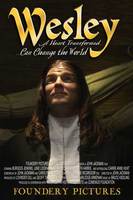
Want to know more about the “strange warming” that made John Wesley such a great preacher and one of the greats in the halls of Christian faith? Then you might check out Wesley, a new film from Foundery Pictures. The official website describes it thus: “His ministry is controversial, there is mob violence, confrontation, and tension followed by his victorious preaching to thousands in his home town. In short, this true story has everything that Hollywood loves to put into movies!”
* * *
A gay Mormon filmmaker has made a movie about his church’s activism against gay marriage in California. The film, 8: The Mormon Proposition, sprung from Reed Cowan’s conversations with his sister about her support for Proposition 8. “I thought, if this is the dialogue in my Mormon family, then what is like in other Mormon households,” the Miami-area filmmaker and former Utah television journalist said in an AP story.