Two decades ago, Maina Njenga created a quasi-religious sect known as Mungiki, whose young men snuffed tobacco, prayed to Mount Kenya, and took oaths of loyalty. The gang became synonymous with grisly machete killings, extortion, and organized crime.
In early December, Njenga seemed to take a step in the other direction, renouncing the group he led for 20 years and being baptized into one of East Africa’s largest churches. An estimated 500 Mungiki sect members followed suit in baptism, as Njenga had promised.
“Let those who were doubting know we are now moving on while they have been left behind,” he said.
The leader of a sort of Kenyan mafia claimed he converted to Christianity during a 29-month detainment on murder charges dropped due to lack of evidence.
Local evangelical leaders were skeptical: past Mungiki leaders have made the same claim but stayed involved in gang activities. Most took a wait-and-see approach, praying that Njenga’s baptism at Jesus Is Alive Ministries would be the beginning of a movement of God among the millions of Mungiki, all young men from Kenya’s largest ethnic group, the Kikuyu.
“I am not scared to welcome Mungiki into my church,” said Daniel Thiuri, moderator of the Baptist Convention of Kenya, which includes more than 4,000 congregations. “I was a sinner. God doesn’t rank sin. He forgives all of us. Everyone has the right to come to Christ.”
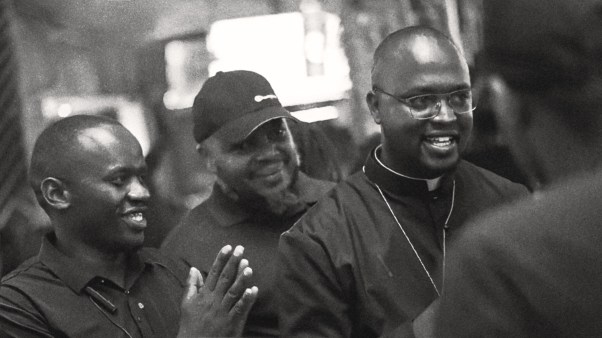
Catholic Bishop Martin Kivuva, head of the Diocese of Machakos in Nairobi, said only time will tell if Njenga and his followers have truly reformed or if they are using churches to become more acceptable to the public.
“It is only by their fruits that we shall know whether they are genuine,” said Kivuva. “I will definitely not say, ‘Hallelujah, they have all changed.'”
Working in a place haunted daily by Mungiki bogus taxes and beatings, Baptist pastor Charles Mwangi said he’s seeing evidence of change. In the past, Mungiki gangsters would show up to his Bible study groups in the Dagoretti marketplace to steal and wreak havoc. Now, Mwangi said, more than 60 Mungiki come to learn Bible stories next to women they had previously extorted.
“Is Njenga’s conversion real? Only he can answer that question,” Mwangi said. “What I can tell you is that I’m seeing hardened gangsters changing their lives for Christ. Something like this is never a small thing to God.”
Copyright © 2010 Christianity Today. Click for reprint information.
Related Elsewhere:
In January, Maina Njenga reiterated his embracement of Christianity, according to AFP.
Previous Christianity Today articles on conversion include:
What Conversion Is and Is Not | Hint: It’s not just about getting people ‘saved. (February 1, 2003)
Red Herring: Mikhail Gorbachev’s Not-Quite Conversion | Asking whether the former Soviet leader is a Christian has a long history. (April 4, 2008)
Why Muslims Follow Jesus | The results of a recent survey of converts from Islam. (October 24, 2008)