I suspect we would all be better off if we took more seriously these words from Ecclesiastes: “Be not rash with your mouth, and let not your heart be hasty to utter any thing before God: for God is in heaven, and you on earth: therefore let your words be few.” To me, this admonition has always seemed particularly apropos of the Easter season—a time of holy fear and trembling, a period of solemn meditation that culminates in celebration and resurrection glory.
Now, I love a lot of sacred choral music, particularly at Easter; the glorious second half of Handel’s Messiah is just one of many examples. But my own meditations through Maundy Thursday, Good Friday, and Resurrection Sunday seem better suited to instrumental music—and there are two records, in particular, that I play every year to put my heart and mind in the right place.
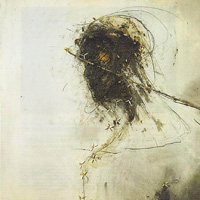
One—Peter Gabriel’s Passion—is a “world music” classic from one of the biggest pop stars of the 80s; parts of it were used to soundtrack a Martin Scorsese movie. The other—John Coltrane’s A Love Supreme—is an avowed jazz classic from a saxophone shaman with cosmic intuitions. Easter music? That’s how they speak to me, and they do so in their own mystic tongue. They speak to a sense of piety that I dare say transcends the limitations of mere words.
Gabriel’s Passion (1989) is, by necessity, the first part of the two; it speaks less to the resurrection than it does the sufferings of Christ, making it a spooky and soul-shattering soundtrack to a contemplative Maundy Thursday and a solemn Good Friday. The album was conceived by Gabriel as a musical meditation on the trials of our Lord in his final days, and the spiritual resonance seems unmistakable—enough that Scorsese used much of it in his film The Last Temptation of Christ. Years later, some of its themes were pilfered for The Passion of the Christ.
They call it “world music,” which means it doesn’t sound like anything you’d hear in the West; the musicians, instruments, and formal structures used are indigenous to Africa, South Asia, and the Middle East. Many of the compositions are based around thunderous drumming, and it sounds like the rhythms of redemption. Elsewhere, Gabriel’s own moody synthesizers provide an ominous undertow, and quietly devastating numbers like “Gethsemane” crop up early in the album, making clear from the start the fate that awaits our Lord—a fate gloriously rendered in the soaring choral number “With This Love” and the meditative conclusion, “Bread and Wine.” It’s music rich in mystery and perfect for careful contemplation.
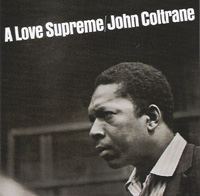
Ditto Coltrane’s A Love Supreme, albeit for different reasons. Coltrane’s work, considered one of the greatest jazz albums of all time, comes second in the program, because it just must. The project answers the grave meditations of Gabriel’s work with a spirited celebration, a sonic outpouring of the soul’s yearning to praise its Maker. I’m not making this up; Coltrane said he wanted the music to be his act of thanksgiving to God, and so the record is structured like a journey of the spirit: “Acknowledgement” opens with a steady pulse and Coltrane’s (at the time, rather shocking) spoken-word recitation of the album’s title, a sort of mantra directed at a Love Divine.
More troubled waters follow—”Resolution” and “Pursuance” both testify to a soul that is seemingly at war with itself—but the album ends on a note of glory, and not glory for the artist’s sake, but for the Divine’s. “Psalm” is a prayer, pure and simple, and it speaks to sheer revelry in a Love that exceeds all loves; Coltrane lets his saxophone do the talking, but includes the words of his prayer in the album insert. It ends this way: “Elation. Elegance. Exaltation. All from God. Thank you God. Amen.”
And Amen. He is risen indeed.
Copyright © 2010 Christian Music Today. Click for reprint information.