Paul Simon’s latest album, So Beautiful or So What, made a bunch of Best Albums of 2011 lists, including CT’s own. That Simon is acclaimed for his music is hardly news, but the fact that So Beautiful so deeply explores spiritual themes is fascinating.
“For somebody who’s not a religious person, God comes up a lot in my songs,” Simon said in press materials accompanying the album’s release.
Simon elaborated on his spiritual interests in a new interview with me for the PBS program Religion & Ethics NewsWeekly.
Simon, who comes from a Jewish background, does not describe himself as religious but told me that spiritual things are “part of my thoughts on a fairly regular basis. I think of it more as spiritual feeling. It’s something I recognize in myself and that I enjoy, and I don’t quite understand it.”
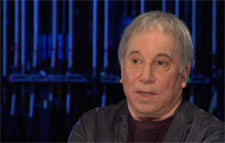
Simon has engaged in conversations about spiritual issues with several prominent people of faith, including the Dalai Lama. In my interview, he spoke at length about one such discussion with the late British evangelical theologian John Stott.
Simon said he was recording in England when he saw a 2004 New York Times column by David Brooks, which described Stott’s approach to faith.
“The piece was about how embarrassed some Christians were by the televangelists, and (it) said, no one ever talks about this guy, but he’s a really good thinker,” Simon said.
He decided he wanted to meet Stott, and a friend helped connect them. Simon called the theologian and offered to take him out for dinner. He said Stott told him he didn’t go out much anymore and instead invited the musician to his flat for tea and biscuits.
“I’d say we spent two or three hours there,” Simon recalled. “I talked about everything that was on my mind about things that seemed illogical, and he talked about why he had come to his conclusions.”
Simon was very impressed by Stott. “I liked him immensely,” he told me. “I left there feeling that I had a greater understanding of where belief comes from when it doesn’t have an agenda.”
“It didn’t change my way of thinking,” he added, “but what I liked about it was that we were able to talk and have a dialogue.”
Simon said the conversation was meaningful to him because he was “disheartened” by so much divisive rhetoric in American culture, particularly when it comes to religion.
“I was interested in speaking to the John Stotts of the world and other evangelicals because my instinct was that the animosity is not as deep as being depicted in the media, and anecdotally speaking, I have found that that’s the truth,” he said.
Simon said he’s gratified and a bit mystified, that his music has had a spiritual impact.
“Quite often, people read or hear things in my songs that I think are more true than what I wrote,” he told me. “I feel I’m like a vessel, and it passed through me, and I’m glad.”
Kim Lawton is Managing Editor of Religion & Ethics NewsWeekly. Watch this full story online or on PBS television stations. Simon image courtesy of Religion & Ethics NewsWeekly.
Copyright © 2012 Christianity Today. Click for reprint information.