Tyndale House Publishers won a temporary injunction against the Affordable Care Act's (ACA) contraceptive mandate Friday, convincing the D.C. Federal District Court that the requirement violated its religious freedom.
The injunction, which Judge Reggie Walton said he grantedbecause the Bible and Christian book publisher self-funds its insurance, is temporary. However, it raises hope of legal victory for more than 110 hospitals, schools, and corporations that have filed lawsuits against the federal government over the healthcare law. (Catholic organizations have protested the law's requirement that insurance cover contraceptives; evangelical plaintiffs have more narrowly objected to the list of contraceptives that must be covered, including "emergency contraceptives" that may inhibit uterine implantation.)
Early lawsuits against the healthcare law came from Christian organizations that have shown eagerness to engage in political and legal debates. Liberty University, for example, filed suit objecting to the insurance requirement entirely, not just the contraception mandate. Its law firm, Liberty Counsel (which has offices on campus), said the healthcare law was paving the way for "forced abortion and compulsory sterilization."
But more recent suits have come from organizations such as Tyndale, Wheaton College, and Biola University. While conservative, the institutions are not known for suing the federal government for grievances. (For both schools, this is the first such suit.)
"The organizations that have sued the administration over the HHS contraceptives mandate have done so despite, not because of, the 'culture war' aspect of the mandate," said Stanley Carlson-Thies, director of the Institutional Religious Freedom Alliance.
In fact, says Carlson-Thies, many evangelical organizations have been reluctant to act "for fear they would wrongly be labeled as culture warriors or as trying to make a political point," he said.
With the election over and the healthcare law more politically secure, more legal action is likely.
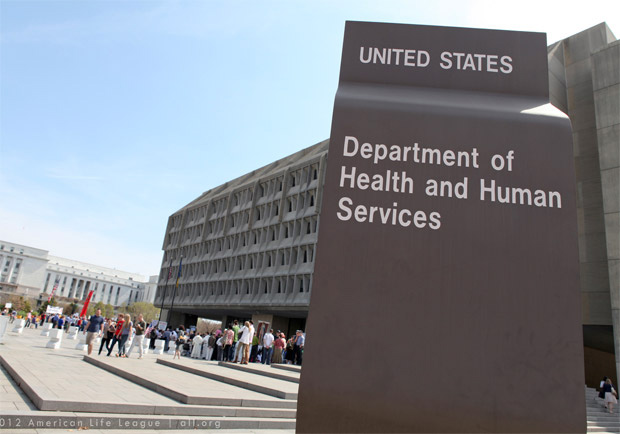
On November 1, Criswell College, a Dallas-based Christian school, filed a lawsuit against the HHS. The same day, a Michigan district judge granted Catholic-owned Weingartz Supply Company a temporary injunction against the mandate on religious grounds (a Colorado company earlier won a similar injunction). That ruling raised hopes of a similar outcome for Hobby Lobby, which began oral arguments before an Oklahoma district court on the same date. A hearing for Wheaton College has been set for December 14.
Eric Rassbach, deputy general counsel for the Becket Fund, which is representing plaintiffs such as Wheaton College and Hobby Lobby, says his clients are not looking to get involved in "culture wars." Rather, he calls it "conscience wars," because the issue for evangelical plaintiffs is not contraceptives per se, but the Obama administration's argument that they aren't religious enough to qualify for exemption. (The exemption applies only to churches that primarily employ and serve people of their own faith and have as their "purpose" the inculcation of religious belief.)
"It's a narrowing that could impede our very ability to teach, grant degrees, and function as a nationally ranked university in a manner consistent with our beliefs," Biola president Barry H. Corey wrote in September. "Biola University is about as faith-driven and religiously oriented as a university can be. So if we don't fall within the protection of a 'religious exemption,' something is fundamentally wrong."
In an interview with CT in July, Wheaton College president Philip Ryken similarly said Wheaton's decision to file suit against the government was "unprecedented" and "a last resort." He emphasized that Wheaton objects to paying for drugs that may cause abortion, but that it was the narrow exemption for religious organizations that put the school over the edge.
"We believe there's a very important religious liberty issue at stake in all of this," he said. "I think the other institutions that have filed are also doing it primarily because of their concern to protect the freedom of religion in the United States."
Similarly, Hobby Lobby founder David Green said his family's company always has operated "in a manner consistent with biblical principles, including integrity and service to others" and that the business "has always been a tool for the Lord's work." Hobby Lobby sued because it opposes the portion of the mandate requiring its health plan to provide "abortion-causing drugs (that) go against our faith," Green said.
But in its memorandum opposing Hobby Lobby, the government stated that "a for-profit, secular employer like Hobby Lobby does not engage in any exercise of religion protected by the First Amendment." Regardless of its owners' theological convictions, a for-profit business is secular by definition, the memo argues.
Rassbach says conscience wars will occur more frequently as the United States becomes more religiously diverse and as government regulation increases. In other words, the plaintiffs involving themselves in the legal battle against HHS may not be making one-time appearances, he said.
"Wherever you have more government regulation, you'll end up having more conflicts," Rassbach said. "They inevitably bump up against areas where private arrangements had been the norm previously."