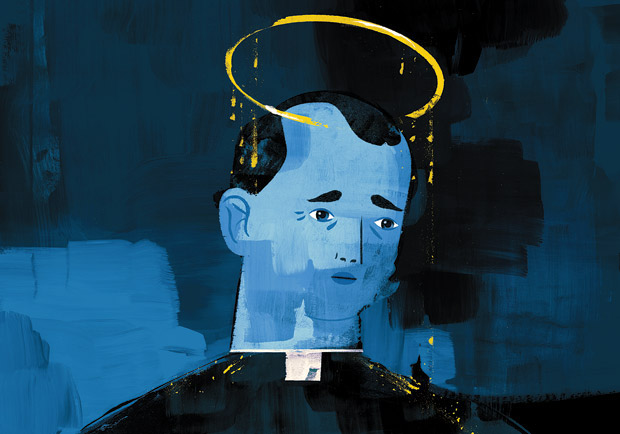
There is a disheartening rite of passage every young pastor faces. And though it was almost 10 years ago, I remember my own moment clearly. "Have you heard?" asked my senior pastor when I arrived at the church office that morning. I hadn't. So he proceeded to tell me about the well-known pastor whose moral failure had made the morning headlines. I remember two things about that moment: my pastor's grief and my inability to focus the remainder of the day. Though neither of us had met the man or been greatly influenced by his ministry, this pastor's public shame still felt deeply personal.

"Have you heard?" As the years have passed I've come to dread that question, yet it—and the sad stories behind it—is frustratingly common. The hushed conversations between pastors at these moments reflect an unsettling worry: that in our discredited colleagues, we see possible reflections of ourselves. We too have known temptation. We too inhabit a church culture that can seem to hinder our own discipleship by elevating ministry production over spiritual fruit.
In Dangerous Calling: Confronting the Unique Challenges of Pastoral Ministry (Crossway), Paul David Tripp wades into these murky and hazardous waters. An author and director of the Center for Pastoral Life and Care, Tripp knows the pastoral vocation well. His years in church ministry provide the intimate knowledge necessary to write boldly and mercifully to ministers who so often feel misunderstood by anyone but a fellow pastor. Tripp has spoken to and with enough pastors to see disturbing themes emerge.
"From Belfast to Los Angeles," he writes, "from Johannesburg to New York, from Minneapolis to Singapore, from Cleveland to Berlin, I've heard their stories and felt their discouragement, bitterness, aloneness, fear, and longing. As I've told my story, pastors have felt safe in telling their stories. And it has hit me again and again that there are too many pastors with sad stories to tell, and I've wondered again and again to myself, What's gone wrong with pastoral culture?"
Neglecting the Heart
Is a dysfunctional pastoral culture a new development? The Puritan pastor and writer Richard Baxter penned his classic The Reformed Pastor in 1656, and he too lamented the state of the pastorate. "Alas!" he wrote to his fellow pastors, "it is the common danger and calamity of the Church, to have unregenerate and inexperienced pastors, and to have so many men become preachers, before they are Christians …. O that all our students in our universities would well consider this!" The circumstances in 17th-century England were certainly different than our own, but it seems the pastorate was prone to defect all the same.
Interestingly, though separated by centuries, both Baxter and Tripp are interested in the schools that train pastors for ministry. Tripp, who has taught for years at Westminster Theological Seminary, thinks seminaries are failing to prepare ministers for the realities of ministry. They focus too narrowly on theological education for future pastors' heads, he argues, while almost entirely neglecting their hearts.
Tripp rightly holds the entire seminary system accountable for giving pastors and churches a false sense of security. Under the seminary model, future pastors leave the home church where they first discerned a call to ministry. Removed from long-standing relationships of mutual accountability and encouragement, the seminarian enters a world that values knowledge above all else. After graduation, the (usually) young pastor is called to a church, requiring another move. The leadership and members of this church rely mostly on their new pastor's seminary degree as evidence of calling and preparedness for ministry. Often they are unprepared or unwilling to look beyond the degree to see the actual person they are calling their pastor.
Like Charles Spurgeon, who once wrote that 'the black fingers of sin leave smuts upon our fairest robes,' Tripp is relentless in pointing out that pastors and churches must acknowledge the ?ongoing war with sin.
Selecting pastors simply by theological education is related to a second problem Tripp sees. Rather than paying attention to warning signs that their pastor may be struggling, churches instead look the other way as long as the supposed essentials of ministry are being covered. Within this toxic culture a pastor may be lonely and spiritually stunted, a short-tempered spouse and emotionally absent parent, as long as the sermon is decent and ministry is moving forward. Tripp offers practical suggestions to counter this dangerous tendency, such as requiring the pastor to participate in a small group, inviting the pastor's family into church members' homes, intentionally supporting the pastor's spouse, and making counseling available to the pastor.
Dangerous Calling, then, is not just a book for pastors. It's just as important to the church members who care for them. Tripp's keen observations and diagnoses target those with the influence to change the pastoral culture within a local congregation. With its realistic portrayal of ministry, the book will occasionally upset readers with no pastoral experience. Thankfully Tripp provides enough useful counsel to compensate for any discomfort. A church leadership team reading this book would gain significant insight into the minefield of pastoral ministry, discovering helpful ways to care for their pastor.
Most readers will have some qualms about Tripp's vision of pastoral culture. Advocates of house churches may dismiss the entire system as beyond reform. Those, like myself, who believe both men and women are called to pastoral ministry will be disappointed by Tripp's limitation of that calling to men. Others who see a necessary dividing line between clergy and laity will be uncomfortable with Tripp's call for pastors to participate more fully in the community life of their churches. But these are qualms evangelically-minded readers should already expect, and none should detract from the author's timely insights.
The Ongoing War
One of these insights, one that ties together much of Dangerous Calling, is Tripp's insistence on the reality of "remaining sin" in the lives of believers, including pastors. Like Charles Spurgeon, who once wrote that "the black fingers of sin leave smuts upon our fairest robes," Tripp is relentless in pointing out that pastors and churches must acknowledge the ongoing war with sin. Ignoring it not only sets up the pastor for devastating failure, but also diminishes the power of the gospel, as we lose sight of our ongoing need for a Savior. For the gospel to remain deeply personal and transformational, rather than merely theoretical sermon fodder, we pastors need to continually acknowledge our sinfulness in confession and repentance.
A couple of years ago, I shared a rejuvenating dinner with a diverse group of pastors from around the country. After the meal, I reflected on what made the conversation so good. It wasn't superficial similarities: Most of the other pastors were significantly older than me and ministering in contexts different from my own. No, the refreshment came from a deeper camaraderie. These were pastors who had known the pain of ministry and who were not afraid or ashamed to recognize it. Their witness to the gospel's power was not from the success of their ministry or the size of their churches but from Christ's power experienced through their weakness.
Pastoral ministry, as Tripp points out again and again, is regularly a painful experience. The question is not how to avoid this pain. No, the only question is whether it will isolate the pastor and damage the church, or drive us again and again to the source of our life and ministry. Dangerous Calling is an unambiguous call for pastors and churches to make our Savior known, not simply in sermons and ministries but in the very substance and shape of our lives and communities.
David Swanson is the pastor of New Community Covenant Church in Chicago and a contributing editor for Leadership Journal. He blogs at davidswanson.wordpress.com.