
Kenyans have many approaches to marriage, and in March their government consolidated types under one law that went into effect this week. One change has drawn the lion's share of attention: legalizing polygamy for men—even if the first wife protests.
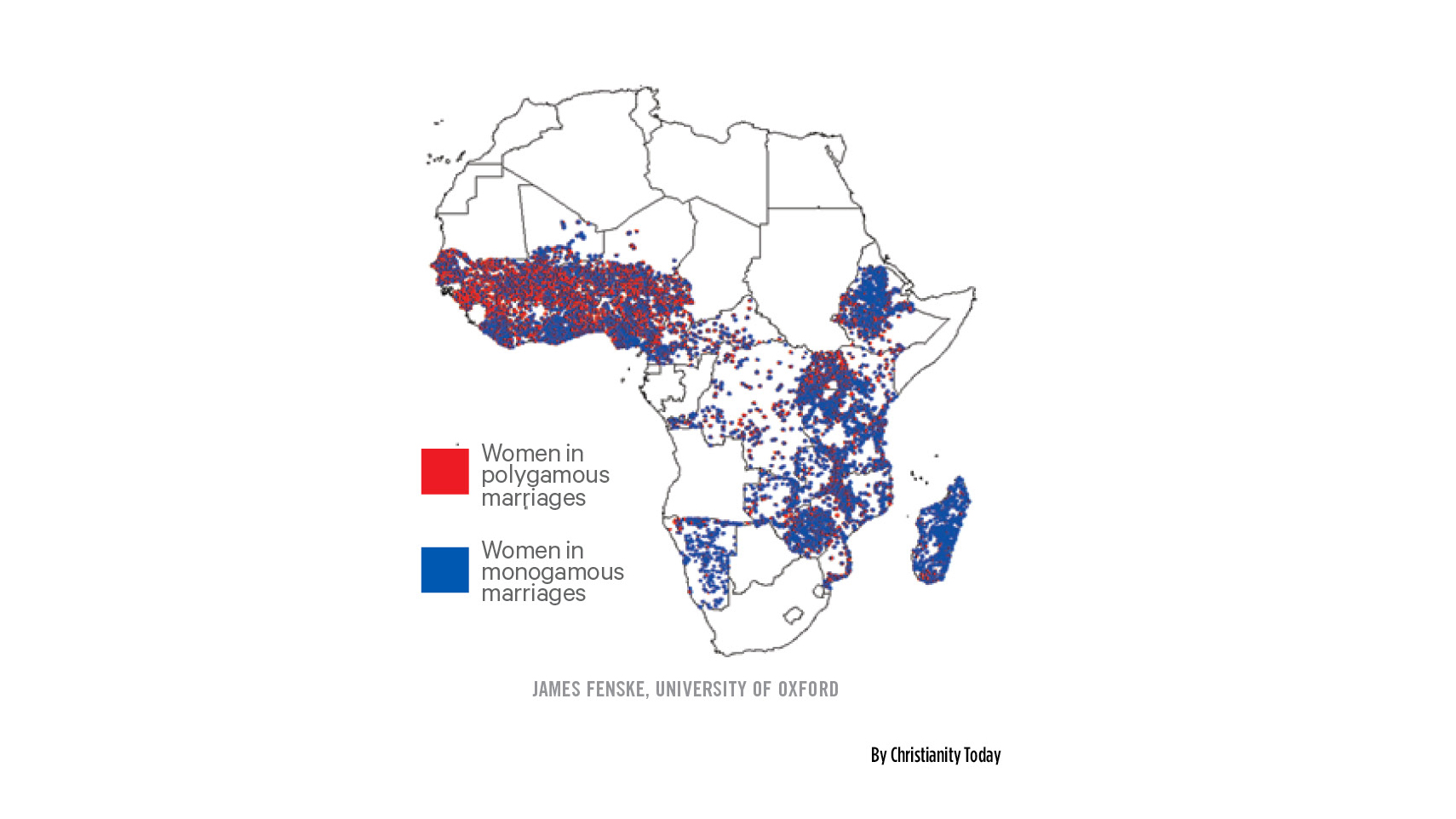
Africa has a so-called "polygamy belt" that stretches from Senegal to Tanzania. A 2009 government survey indicated that 13 percent of Kenyan women were in polygamous relationships.
The Evangelical Alliance of Kenya (EAK)says the law will erode recent gains against HIV, and lead to more divorces and court fights over inheritances. "We are promoting an old practice in a modern context, which is like putting new wine in an old wineskin," said David Oginde, leader of Christ Is the Answer Ministries. "It will burst."
But Samuel Chepkonga, former chair of Kenya's Scripture Union, is among the Christian lawmakers who helped Muslim politicians pass the bill. He even led the effort to remove a clause that let a woman veto her husband's effort to take another wife.
"Not all Kenyans are Christians," said Ken Okoth, a Christian politician who represents Kibera, a poor, largely Muslim community on the edge of Nairobi. "If church leaders want to completely outlaw polygamy, they should propose a bill. [But] that's impossible under our constitution." Approximately 4 in 5 Kenyans are Christians, but that leaves 4 million Muslims who tolerate polygamy.
"I am surprised that Christian politicians don't stand for Christian values," said Wellington Mutiso, former leader of the EAK. "It is very unfortunate. Maybe it is a failure on the part of the church to disciple its members so that they can stand for its values."
Joseph Obwanda, pastor of Lavington United Church, thinks the bill goes too far. "Respect of dignity as the premise of covenant relationship is lost," he said. "Scripture grants man a senior position in marriage as the head of family. But seniority is not superiority."
Martin Wesonga, who heads an Anglican seminary in Mombasa, supports the bill, in part noting Old Testament acceptance of polygamy. And while the New Testament is clear that polygamy is unacceptable for Christian leaders, he said, it does not explicitly condemn it in all contexts for everyone. "The bill defines Christian marriage, which is monogamous," he said. "Those who want to be polygamous will not go for Christian marriages."
James Fenske, an Oxford economist who studies African polygamy, thinks church leaders needn't worry. The law will have little effect since polygamy has been declining in Kenya for decades, he said. "I see no reason to expect this trend to reverse."