
Extremism in the defense of LGBT liberty is no vice.” That seems to be the Goldwateresque mantra of many well-meaning Americans today. But it has unfortunately created a rather ugly atmosphere.
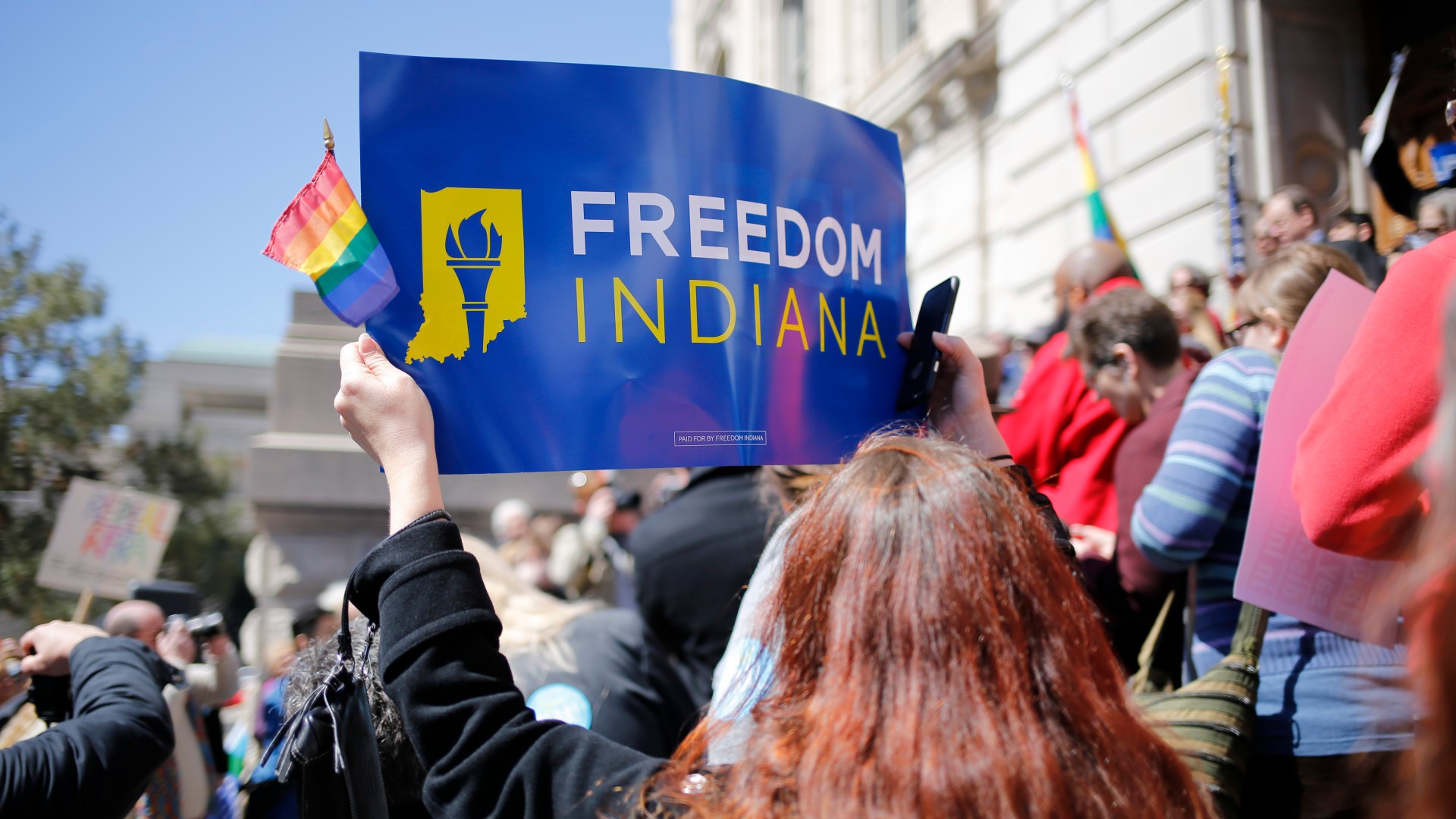
The latest flash point is Indiana’s original RFRA (Religious Freedom Restoration Act), which was signed into law in April. It was designed, in part, to protect individuals and businesses from being compelled to use their creative services to celebrate, honor, or extol behavior they find morally objectionable. The presenting issue is gay marriage, and specific examples include the Christian photographer in New Mexico who was asked to photograph a gay commitment event. The courts ruled that she could not refuse to provide such services.
The current challenge to liberty of conscience is serious, and it is likely things will get worse before they get better. But we are cautiously optimistic.
We believe that Christian business owners should offer ordinary services to anyone who seeks them. But like just causes taken up during other eras of American history, some extreme partisans of a fundamentally good cause (equal treatment for LGBT people) are now discriminating against others.
The current challenge to liberty of conscience is serious, and it is likely things will get worse before they get better. But we are cautiously optimistic. Time and again in American history, wiser heads, committed to living in a just and pluralistic democracy, have prevailed at such times (from the Salem Witch Trials to the McCarthy era). More important, the church has weathered worse crises in more dire circumstances here and abroad, and by God’s grace, Christ’s church still stands. May Christians be among the calmer heads who work steadily and stubbornly to create laws that protect the rights and consciences of all who live in this land.
Here are four ways we can do so amid the storm:
1. We can remind people on all sides what is at stake: not just our but also their liberty of conscience if the logic of these cases against Christian conscience gets applied broadly. Imagine a gay baker being required to decorate a cake with an antigay message, like “God Hates Gays.” Depending on a state’s laws, stores may not specifically refuse to inscribe cakes that identify buyers as Baptist (that would be religious discrimination). But, writes UCLA law professor Eugene Volokh, “nothing in the law bans discrimination based on ideology more broadly.” This baker could justifiably refuse to decorate that cake because it articulates a point of view he adamantly opposes. That’s the liberty of conscience we cherish, whether it protects gay people, agnostics, Mormons, Muslims, or whomever.
2. As the example above suggests, we can continue to insist that the law make distinctions. While we believe basic goods and services should be offered to all customers, we also believe Christian business owners should be able to act on conscience when customers ask them to celebrate or implicitly endorse behaviors or points of view that go against their conscience. This is not a contradiction; rather, it’s the difference between selling your neighbor a doughnut and catering your neighbor’s wedding. Of course, laws that make such distinctions are not easy to write, but it is the business of law to make important distinctions, even if gray areas remain.
3. We might moderate demanding our rights. Today, many believe we’re masking mere self-interest when we wrap our cause in the flag of religious freedom and First Amendment rights. Such language is appropriate and necessary in the courts, but we may also want to frame our concern in terms of freedom of conscience as a way to find common ground with the religious and nonreligious.
4. Regardless of what happens in courts, we can continue to reach out to our gay and lesbian neighbors in friendship. Many of our LGBT neighbors believe we are no different from the vile racists of the civil rights era. One way to show them otherwise is modeled by Palau Association president Kevin Palau, Chick-fil-A’s Dan Cathy, and others: Sitting down with our LGBT neighbors and getting to know them. That led Palau, for example, to work with the mayor of Portland, Oregon, on citywide projects and to support him during a personal crisis.
These four suggestions may not instantly quell the controversy, and each may bring its own complications. There is no magic formula when distrust and hate is in the air—only patience, perseverance, and hope. “If it is possible,” writes Paul, “as far as it depends on you, live at peace with everyone” (Rom. 12:18). That biblical command is still possible to live out, even in our day.
Mark Galli is editor of Christianity Today.