
Seeking a renewed perspective on the heels of a personal and professional breakdown, Esther Emery unplugged from the Internet for an entire year. Emery, a former theater director, recounts this experience in her memoir, What Falls from the Sky: How I Disconnected with the Internet and Reconnected with the God Who Made the Clouds (Zondervan). Here, she chooses five books to read during an Internet sabbatical.
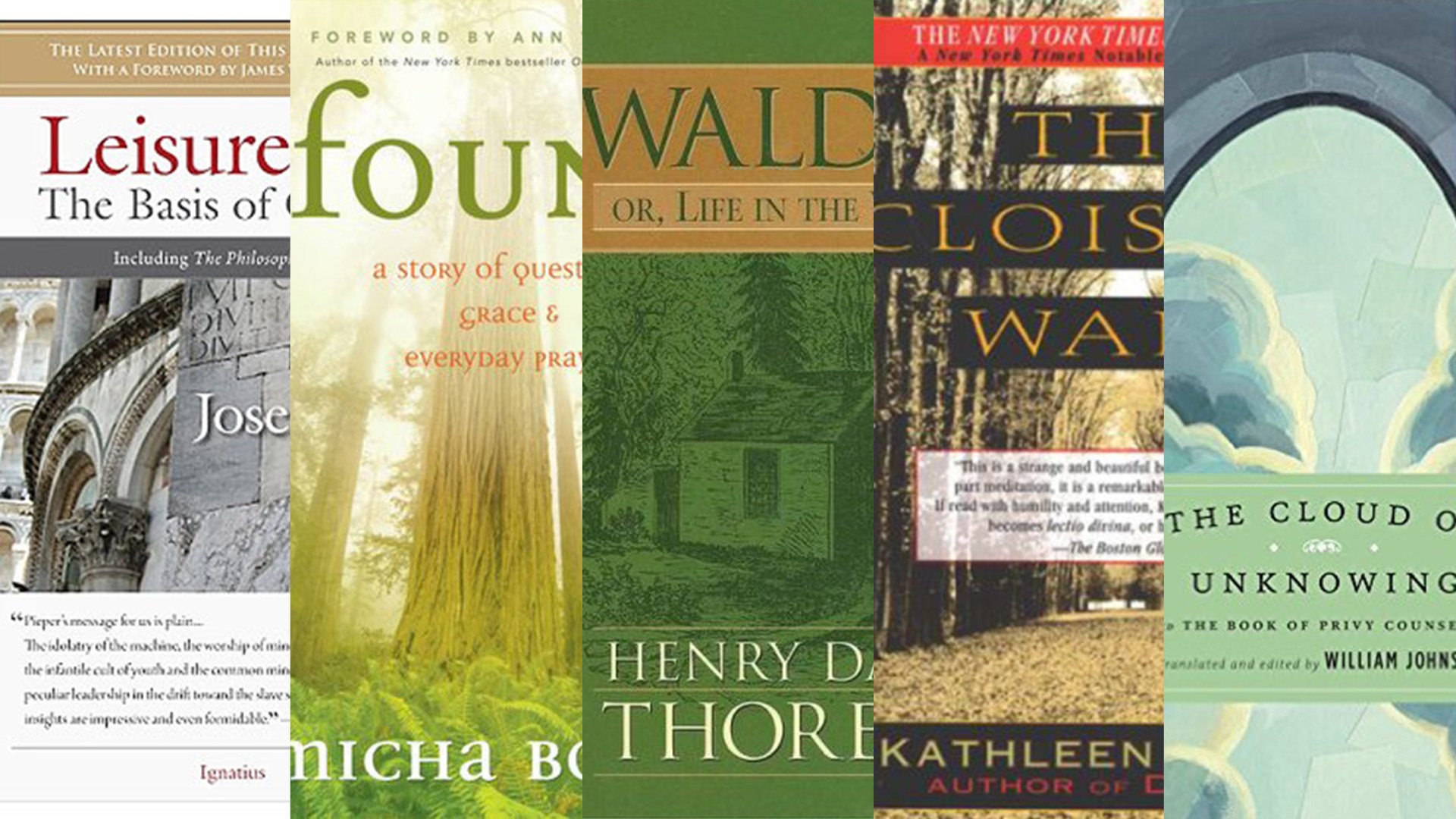
Leisure, the Basis of Culture, by Josef Pieper
The most important book that nobody knows, this slim volume of readable philosophy draws a connection between rest—freedom from labor—and the human capacity for worship. A Catholic philosopher in the tradition of Thomas Aquinas, Pieper traces the error by which economic progress and workplace efficiency are confused with the good life, comforting anyone who has ever tried to jump off the hamster wheel in search of a higher prize.
Found: a Story of Questions, Grace and Everyday Prayer, by Micha Boyett
It can be lonely work to go against the grain, looking for meaning in ordinary moments while the world rushes to the next shiny thing. Boyett’s personal memoir of motherhood, daily life, and Benedictine spirituality is a perfect companion for days when the quiet life seems too quiet. Boyett seeks God in the everyday, excavating her heart with the care of an archeologist and sharing her findings with the gentle persuasion of a loving friend.
Walden, or, Life in the Woods, by Henry David Thoreau
Arguably the original “year without” writer, Thoreau remains a go-to source on living—and defining—the simple life. First published in 1854, Walden is the story of Thoreau’s escape from society to live for two years as a hermit in the woods. Thoreau criticizes the workaday world with all the zeal you might expect from an idealist bachelor. But an Internet sabbatical is just the context for turning his 19th-century exercise into a vibrant challenge to seize a deeper, truer life.
The Cloister Walk, by Kathleen Norris
Read this one early on, when your attention span is weak and other forms of entertainment fail to satisfy. Primarily a poet, also a Protestant turned Benedictine oblate, Norris wraps her spiritual lessons in sweet packaging. The sheer beauty of her prose will have you setting the book down frequently and wandering away, filled with challenge and inspiration.
The Cloud of Unknowing, by Anonymous
An odd little book to modern eyes, The Cloud of Unknowing was written in the 14th century as an instructional text for cloistered monks. Dropping off the Internet seems an extreme step, at least to some, but it will feel perfectly sane and logical under the instruction of this English monk, whose short chapters implore readers to reach out humbly to God and live a life of prayer.