During the season of Lent, some Americans give up chocolate or alcohol. Others dump guilty pleasures like social media or binge-watching television.
But most abstain from Lent itself.
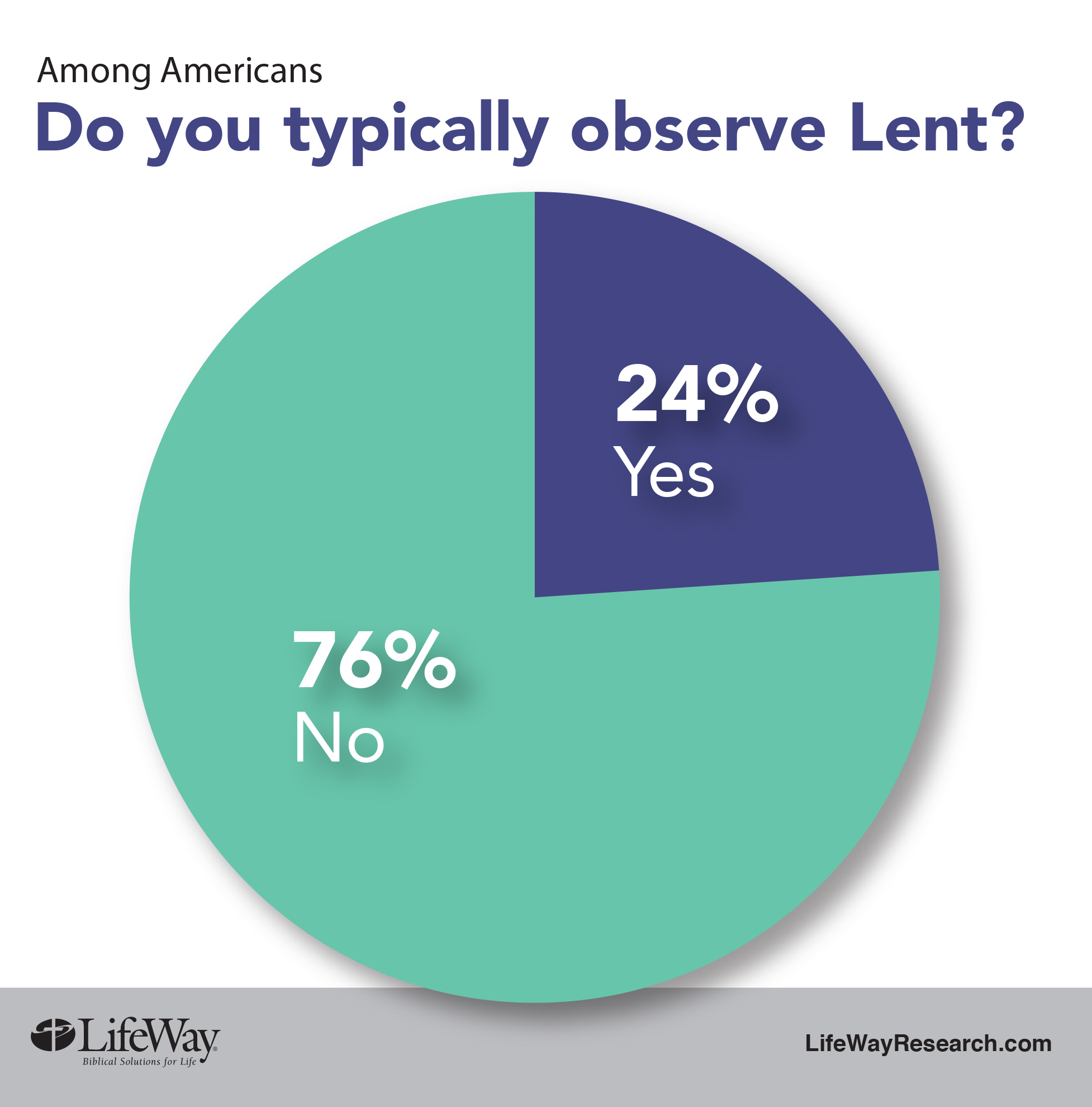
Three-quarters of Americans (76%) say they don’t typically observe Lent, according to a new survey from LifeWay Research.
Unlike other Christian traditions like celebrating Easter or Christmas, Lent seems to lack crossover appeal, says LifeWay Research executive director Scott McConnell. It has remained a religious event, rather than one that appeals to a broader public.
That’s in part because there’s no social benefit like giving gifts or getting together with family, says McConnell.
“Lent is not about having your best life now,” McConnell says. “Those who observe it believe they are giving up things they want in order to focus on what God wants. There’s little popular appeal in that.”
Lent, which begins on Ash Wednesday—March 1 this year—and ends during Holy Week, is traditionally seen as a time of preparation for Easter. Part of that preparation often includes fasting as a form of spiritual discipline—a practice that dates back to the early church. Lent traditionally lasts for 40 days (excluding Sundays), a time frame established after the Council of Nicea in 325 A.D.
Catholics (61%) remain most likely to observe Lent, according to LifeWay’s survey. Protestants (20%) and those with evangelical beliefs (28%) are less likely.
Since Lent is primarily a practice among Catholics or mainline denominations with more liturgical traditions, its popularity among those with evangelical beliefs is surprising, McConnell said.
Those who attend church at least once a month are more likely to observe Lent (43%), although with the same wide divide between Catholics and Protestants. More than 8 out of 10 regularly attending Catholics (82%) observe Lent; just 3 out of 10 regularly attending Protestants do the same (30%).
Older Americans are more likely to observe Lent (30%) than those under 55 (20%). Hispanic Americans (36%) and Christians in general (35%) are also more likely to observe Lent. Those who attend services less than once a month (15%), those from non-Christian faiths (12%), and nones (4%) are less likely.
LifeWay asked Americans who observe Lent how they do it.
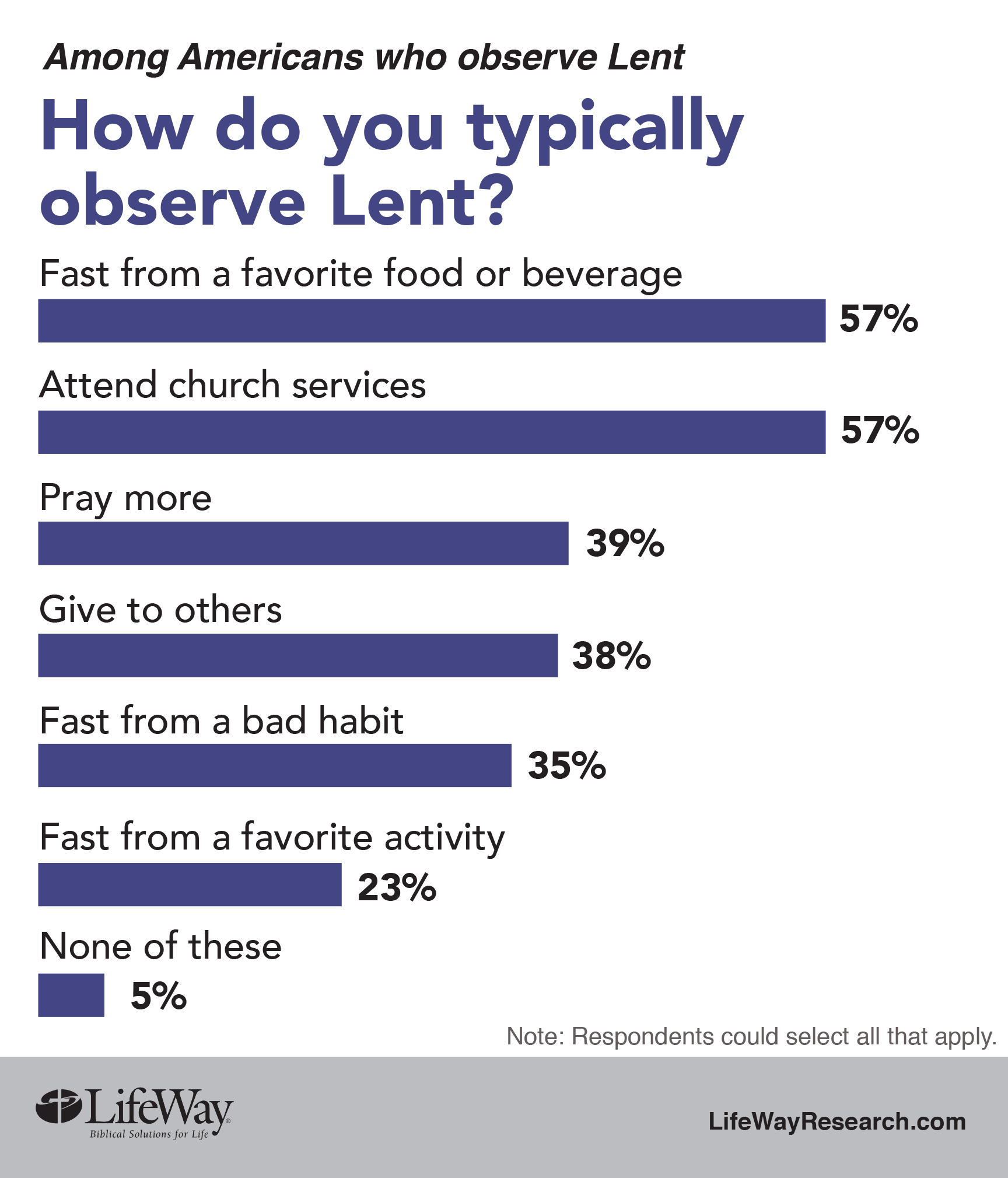
Fasting from a favorite food or beverage (57%) and going to church (57%) are the most common ways to observe Lent. Additional prayer (39%), giving to others (38%), or staying away from a bad habit (35%) are also popular. Fasting from a favorite activity is less common (23%).
Giving up a favorite food or beverage is more common out West (62%) than in the Northeast (42%). Young Americans—those 18 to 24—who observe Lent are more likely to choose this option (86%) than those over 65 (43%). Catholics (64%) are more likely give up a food or drink than Protestants (43%).
Midwesterners observing Lent are more likely to choose praying more (52%) than those in the Northeast (29%) or South (35%). Those who attend services at least once a month are more likely to pray more (55%) than those who don’t (18%).
Hispanic Americans (34%) are more likely to give up a favorite activity than white Americans (17%). They are also more likely to give up a bad habit (50%) than white Americans (30%) or those from other ethnicities (11%).
Catholics (46%) are more likely to give to others during Lent than Protestants (32%). Those who go to church at least once a month (49%) are more likely to give to others than those who don’t attend church as often (22%).
Those with evangelical beliefs (71%) are more likely to go to church during Lent than those without evangelical beliefs (54%). Those who attend church at least once a month go to church more during Lent (76%) than those who don’t (32%).
“There’s a lot more to Lent than giving things up,” says McConnell. “Americans who observe Lent also take other steps—like praying, giving, and going to church more—to practice their faith.”
Methodology:
LifeWay Research conducted the study Sept. 27 – Oct. 1, 2016. The survey was conducted using the web-enabled KnowledgePanel®, a probability-based panel designed to be representative of the U.S. population. Initially, participants are chosen scientifically by a random selection of telephone numbers and residential addresses. Persons in selected households are then invited by telephone or by mail to participate in the web-enabled KnowledgePanel®. For those who agree to participate, but do not already have Internet access, GfK provides at no cost a laptop and ISP connection.
Sample stratification and weights were used for gender, age, race/ethnicity, region, metro/non-metro, education and income to reflect the most recent U.S. Census data. The completed sample is 1,000 surveys. The sample provides 95 percent confidence that the sampling error does not exceed plus or minus 3.1 percent. Margins of error are higher in sub-groups.