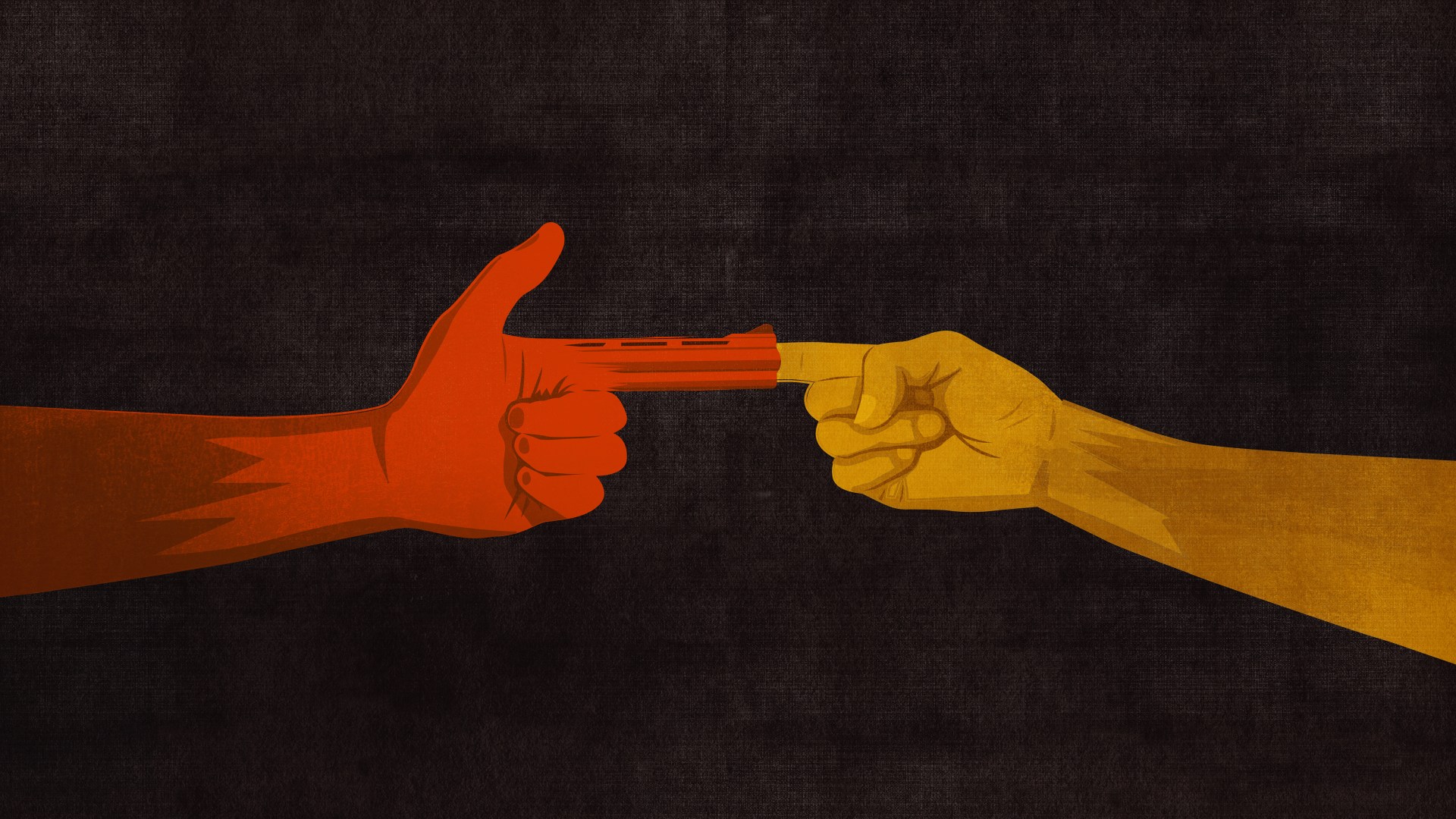

Violence enters the human story from nearly the beginning: “While they were in the field, Cain attacked his brother Abel and killed him” (Gen. 4:8).
The Genesis narrative notes that violence soon becomes endemic. In a mere two chapters, we read, “Now the earth was corrupt in God’s sight and was full of violence” (Gen. 6:11). And “God said to Noah, ‘I am going to put an end to all people, for the earth is filled with violence because of them. I am surely going to destroy both them and the earth’ ” (Gen. 6:13).
God hates violence. We see that especially in the prophets.
Ezekiel: “He [God] said to me, ‘Have you seen this, son of man? Is it a trivial matter for the people of Judah to do the detestable things they are doing here? Must they also fill the land with violence and continually arouse my anger?’ ” (8:17).
Hosea: “Ephraim feeds on the wind; he pursues the east wind all day and multiplies lies and violence” (12:1).
Obadiah: “Because of the violence against your brother Jacob, you will be covered with shame; you will be destroyed forever” (v. 10).
If the Bible is to be trusted, violence is cause for divine destruction of the people who practice and countenance it.
Americans might take note. It nearly goes without saying the United States is a violent culture. Yes, places like El Salvador, Honduras, Venezuela, and Jamaica have much higher per capita murder rates. But compare the United States with other high-income countries, and we see this: According to 2010 data from the World Health Organization, gun homicide rates range from 0 (UK) to 3 (Finland) deaths per million. No country comes anywhere close to the US rate of 36.
When it comes to countries with the most mass shootings between 1966 and 2012, among other developed nations, France experienced 10, Russia had 15, and the Philippines had 18. The US? 90.
Mass shootings force us to pay attention to our violent DNA. They also prompt our endless debates about guns.
One side argues that fewer guns in fewer hands will lead to fewer gun deaths. There is some evidence to suggest this. After four mass shootings in Australia between 1987 and 1996, Parliament passed stricter gun laws; except for one incident this month, the country hasn’t had a mass shooting since.
Then again, when assault weapons were banned in the US between 1994 and 2004, it had little effect on gun crime overall (to be clear, only 2 percent of gun crimes before the ban involved assault weapons). If the ban contributed to a decrease in mass shootings, the rates were minor.
Which is why the other side assumes that limiting guns, including assault weapons, won’t help. For example, places like Norway, Austria, Switzerland, and Germany have relatively high rates of gun ownership (though still below that of the US) and yet relatively low crime rates.
Back and forth it goes. Each side has valid points, and as Christians enter this debate, we should not cocoon ourselves but really try to listen to the other side. Only then might we help formulate policies that can work for all Americans.
Here’s how CT views the issue: Owning guns is legitimate, and guns have reasonable recreational uses, including sport shooting and hunting. But guns are one of many potentially dangerous items of everyday life—like driving, like making fires, like flying. To make society safer, we regulate such activities.
Counter to arguments from the National Rifle Association, to regulate rights does not restrict freedom but actually makes it possible. We Christians, for example, champion the right to practice religion freely while gladly submitting to building and zoning codes, noise laws, and many other “restrictions” for the sake of community harmony.
So while we support the legitimacy of owning guns, given the violence of our land and God’s hatred of violence, we also see a need to regulate the purchase and use of guns. In particular, we Christians should work to ban weapons whose main purpose is to kill a lot of people very quickly, to keep guns in general out of the hands of unstable personalities, and to ensure that everyone who buys and owns guns can demonstrate they know how to use and store them safely.
Will this alone eliminate American violence? Hardly. The problem runs too deeply in our veins as descendants of Cain. Other contributors (like the glorification of guns and violence in TV and movies, to name just one) must also be addressed. Nonetheless, increased gun safety is one small step that could become the first of many that together forestall our divine destruction.
Mark Galli is editor in chief of Christianity Today.