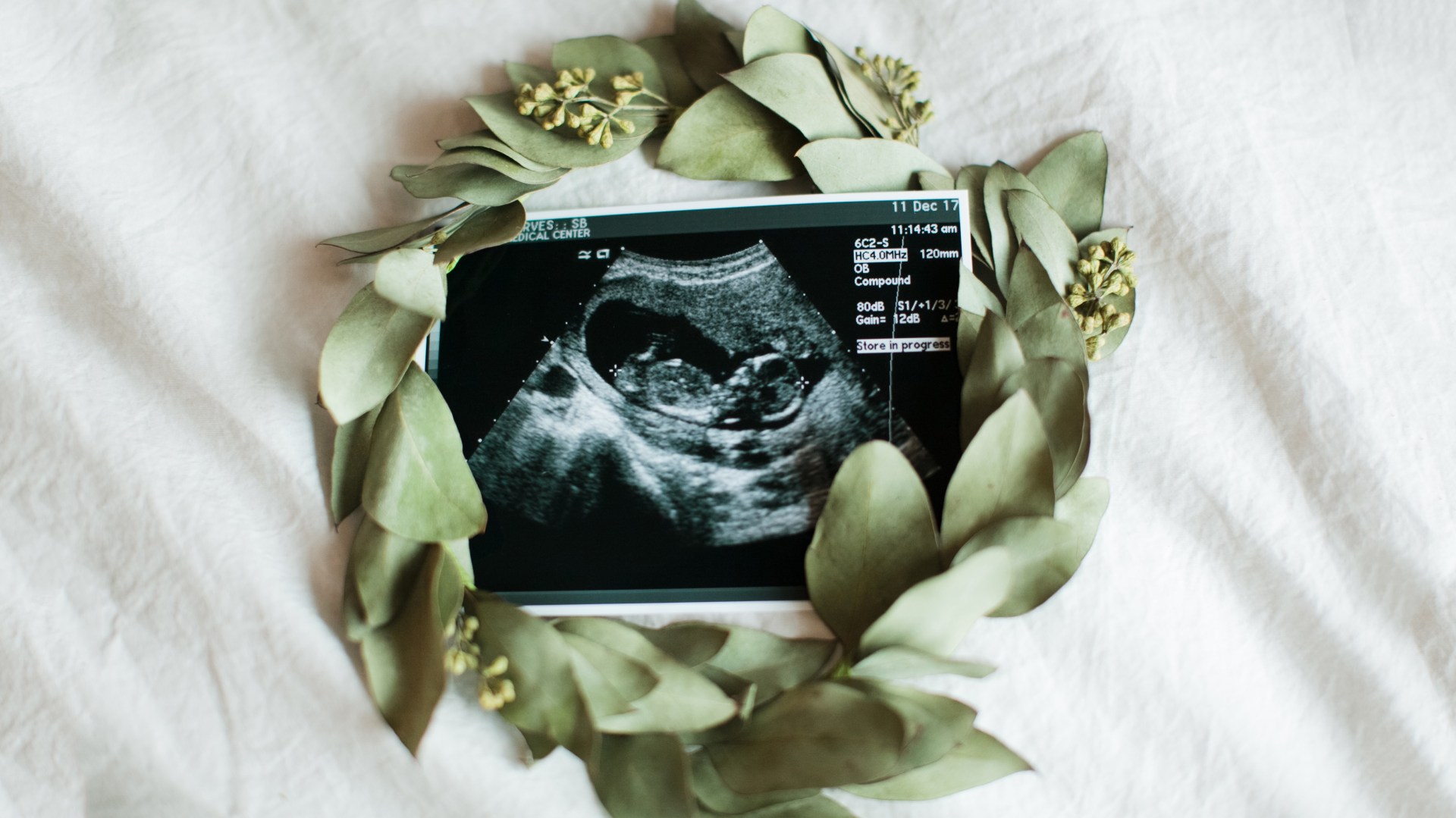

Perfectly Human: Nine Months with Cerian is a profoundly moving and wise book. In it, author and historian Sarah C. Williams tells the story of welcoming her daughter, Cerian, after a routine, 20-week ultrasound discovered a severe skeletal disorder typically resulting in stillbirth or neonatal death. Beginning with the initial diagnosis, Williams sketches a portrait of a family that loves, suffers, and endures in faith.

It would be a mistake to characterize this book merely as a grief memoir. Williams shifts seamlessly between intimate reflections on love in the midst of tragic loss and incisive commentary on the social structures that framed her experience of receiving an adverse in utero diagnosis. She sees with the loving gaze of a parent and the disciplined mind of one trained to wrestle with difficult questions. “What does it mean to be human?” she asks. “This is the question our daughter Cerian raised for me, and this is the question that lies at the core of this book.”
But it is not enough for her to raise questions about the pressures families face after a life-limiting diagnosis. She writes honestly about her own faltering attempts to comprehend Cerian’s value. She confesses that ethical and religious principles alone could not give her family the courage and hope they needed to fulfill this work of love. What they needed, they received in disciplines of prayer and the mercy of friendship. In prayer, they discerned a call—a vocation to receive Cerian as a gift to be loved. Through friendship, they received the grace to answer this call with unflinching fidelity.
The choice to welcome Cerian opened Williams to a deeper understanding of what it means to be made in the image of God. In a culture that extols strength, health, and achievement, Cerian was frail, vulnerable, and dependent. She had no agency and no capacities for choice. But she had the power to summon great love. She was perfectly human. Cerian’s name is significant; its Welsh meaning is “loved one.” And she was entrusted to those who loved her well.
What difference would it make to our culture if individuals, families, and institutions learned to welcome those with profound vulnerabilities as beloved gifts entrusted to their care? How would this change our attitudes about value, suffering, and vocation?
Williams invites her readers to ask these questions. But the narrative offers something more. It offers answers with important implications for medical practice and theological reflection.
First, the story gives a glimpse into how professional communities could offer care to families in need. Throughout the book, Williams describes tangible ways her community sought to honor Cerian’s life. During the pregnancy, they recorded her heartbeat, created special gifts for her birth, and encouraged her siblings to express their love. Although Cerian died shortly before her birth, after delivery they bathed and dressed her. They held her body and introduced her to family and friends. As a community, they mourned together.
These acts of love were vital to their identity as a family. They were crucial channels of grace. And they reveal an important opportunity for those working within medical institutions. Too often, families in these circumstances are pressured to terminate the pregnancy. They are left on the threshold of care by those indifferent to their need for welcome, hope, accompaniment, and consolation. But there is a life-giving alternative. Physicians, nurses, social workers, counselors, and hospital chaplains can support families through perinatal hospice—a novel extension of hospice care that takes the entire family into its embrace.
Second, Williams asks Christians to consider the theological significance of suffering with fresh eyes. She does not shy away from describing the devastation and sadness she experienced. And she does not attempt to make it tidy for our comfort. But instead of wallowing in her grief, she practices the holy discipline of faithful lament. She speaks of the trust one needs to “find God in the pain, not in the avoidance of it.” Her reflections point to an important truth: Entrusting our lives to God is not a technique that keeps us from suffering. Our fidelity is not a bargain for comfort. Rather, we are invited to trust in the goodness and mercy of a God who entered into the depths of sorrow—a God who has shared our tears and laments.
This is an important word for those of us wrestling with suffering and struggling for hope. And it is word given flesh in this beautiful story.
Aaron D. Cobb teaches philosophy at Auburn University at Montgomery. He is the author of Loving Samuel: Suffering, Dependence, and the Calling of Love (Cascade Books).
Have something to say about this topic? Let us know here.