
Consciously or not, ambitious book authors make a kind of existential choice early in their career: Write to sell, or write to win awards. Those two camps occasionally overlap for the fortunate few (and an award certainly won’t hurt sales of an otherwise overlooked title), but most writers must choose one or the other.
Book awards exist because the market alone is an imperfect curator of virtue. Bestseller lists speak volumes about which plotlines and celebrity names and platitudes seduce readers, but they tell us little about which books help us become better people. Enter the contentious and admittedly elitist enterprise of literary awards. If bestseller lists are like a carnival vendor hawking funnel cakes, awards are more like a health teacher holding forth on the food pyramid. Winners do not entice in the same ways as the hottest paperback blockbuster. But if you want a good life and sustenance for a hard day’s work, you’ll eventually need some real food.
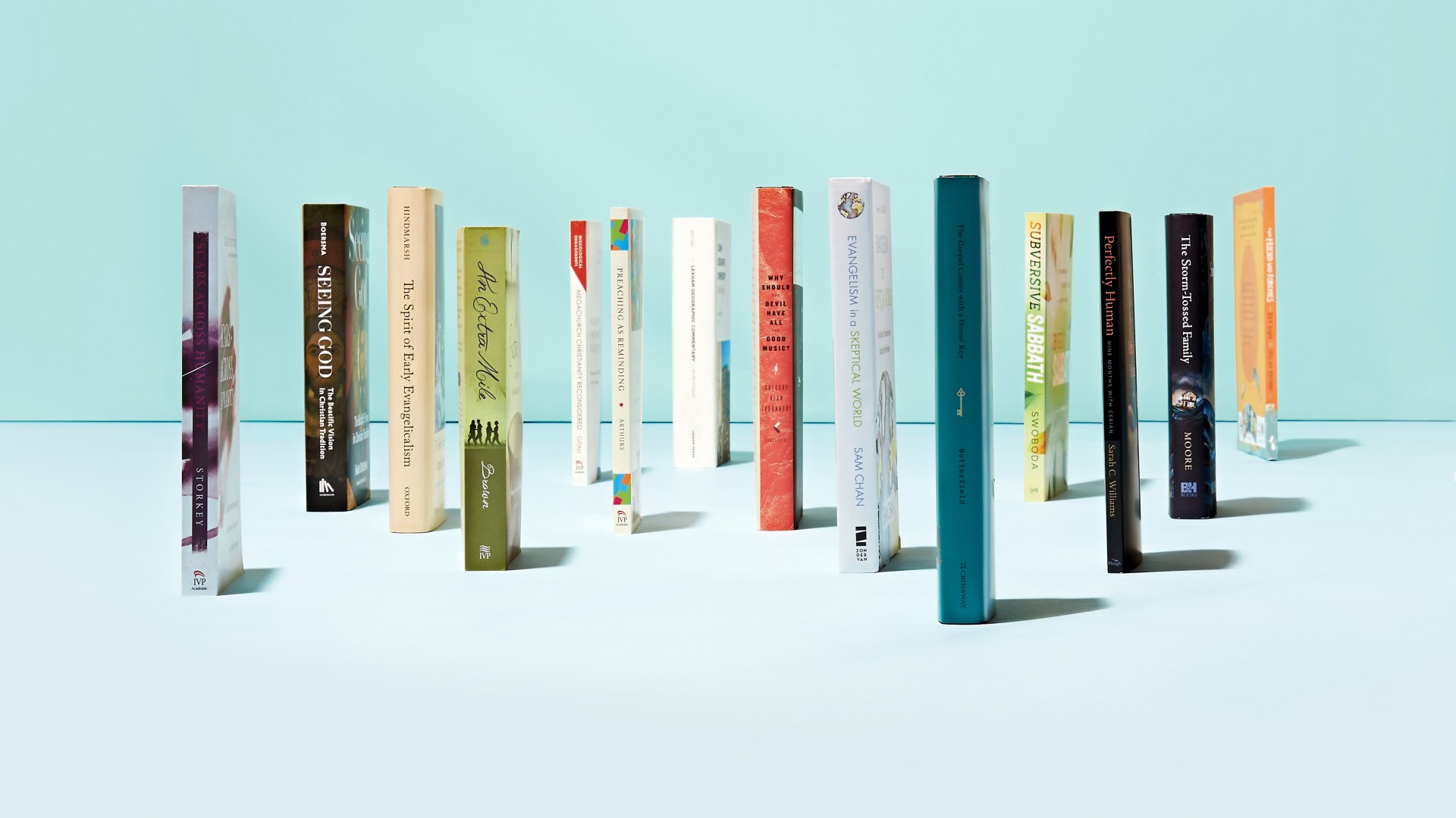
CT first published its list of “Choice Evangelical Books” in 1960, selected at the time by the magazine’s editors. Our annual awards have grown since then, with panels of outside judges this year choosing finalists in 14 categories from more than 600 submissions. Past books CT picked as most likely to shape evangelical thought include Mark Noll’s The Scandal of the Evangelical Mind (1995) and, only a year later, Philip Yancey’s The Jesus I Never Knew (1996).
If CT’s long tradition of book awards communicates anything, it’s that we’re bullish on longform regardless of its standing with the market forces of the day. We champion thoughtful, even difficult books for the same reason we’ll probably never restrict our stories to 280 characters: Some ideas simply must be engaged with at length. Take, for example, the current sociological debate reconsidering how polls categorize black and white Christians; the topic is begging for book-length treatment by a first-order scholar. But until that happens, Ted Olsen’s reporting offers an excellent primer.
It’s probably unwise to live by award-winning books alone, at least for anyone who wants to be pleasant dinner company. I came to the life of books as a teen by way of Michael Crichton and a beloved English teacher reading her seventh-graders snatches of Dean Koontz—not gateways I recommend for malleable young consciences, but they were rungs on a ladder that eventually led me to C. S. Lewis and Dallas Willard and other esteemed CT honorees. That seems consonant with Karen Swallow Prior’s philosophy of reading well. As such, I’ll never apologize for my annual Advent indulgence of a John Grisham novel.
Andy Olsen is managing editor of Christianity Today. Follow him on Twitter @AndyROlsen.