In this series









“Some people are relieved. Some people are devastated.” These were my words to one of my classes when we first met following the November 2016 election of Donald Trump as president. The relief stanched any worry over the delay, if not the loss, of the culture wars; the distress exacerbated worries over emboldened hostility to minorities, women, and immigrants.
While the responses are quite opposite, both share a common element: fear. I see this fear as a gateway to considering a Christian basis for political engagement about issues of greatest importance.
Why should Christians care about politics or other public concerns? The answer begins with the beginning, with creation itself. God has given humans the task of caring for his world (some call this the cultural mandate). The blessing/command of Genesis 1:28, “Be fruitful and multiply…and have dominion…” (ESV) indicates a responsibility for stewarding life in this world. Politics is one way we do this. Politics manages our common life; government exists to uphold justice and facilitate the well-being of citizens.
To take this first commission in Genesis seriously is to care about what happens in the public domain. We concede a constant tension with life in this world as Christians, but unlike the earliest Christians, for whom the Roman Empire restricted genuine political engagement, we live in the United States, a republic where citizens have the opportunity to contribute to the shape and direction of the country. We enjoy the opportunity to participate in the political system from the local to the national level.
To view political engagement as Christian stewardship is to pursue a world where there is flourishing and justice. As a fundamental orientation of politics, the aim is not to acquire and hoard power for its own sake or to seek the formation of policies that mainly serve the interests of one group over another. The ultimate goal is the common good. This should not be confused with establishing God’s kingdom on earth. The perfect politics of God’s kingdom will arrive with Christ’s return. In the meantime our participation in politics happens with humility and kingdom commitments.
Why should Christians care about issues we believe are most important? For many of us, political concerns arise because of some need or problem (“We have many more cars in our town now; we should have our streets widened”) or because developments in society present us with questions we had not yet considered (“How should I think about protecting privacy as artificial intelligence gets ‘smarter’ and more pervasive in our daily interactions?”).
The political concerns tethered to the aforementioned fears partly result from the emergence or persistence of problems connected to questions about marriage, free speech, discrimination on the basis of race and sex, and the protection of life. Their importance is enhanced by Christian convictions over what is right, good, and just.
For Christians, the second greatest commandment is to love our neighbors as ourselves (Mark 12:31). Political actions are a large, if indirect, way to seek the good of our neighbors even as we seek our own protection and flourishing. When thinking about the ways our politics can pursue the best for others and counteract the ways fellow humans are experiencing the antithesis of neighborly love, we need to have our commitments aimed toward the common good. Such politics would prove truly pro-life in the best sense—the pursuit of a society (and world) where antagonisms are neutralized if not overcome.
Race is a focal point of antagonism in our political climate. While it is often considered as a black/white binary, what I mean by race involves various ethnic groups (I prefer ethnicity over race because it gives more place to the complexities of involved) in our country (and world). In the United States, the high aspirations of our founding documents and laws have been practiced as a mixed bag at best. Racism operates above and beneath the surface of our society. To insist “I don’t see problems about race” is to begin with a conclusion rather than an inquiry. It is important to recognize that all of us have limited perception, and when we think about our desire for a country that facilitates the common good, it will require us to learn about the ways our neighbors may be experiencing resistance to their flourishing, whether this is from current policy or the long shadows of policies that have left ghostly effects.
“What should be our top political priority?” might be recast as “What are the ways we can pursue the public good of our neighbors?”
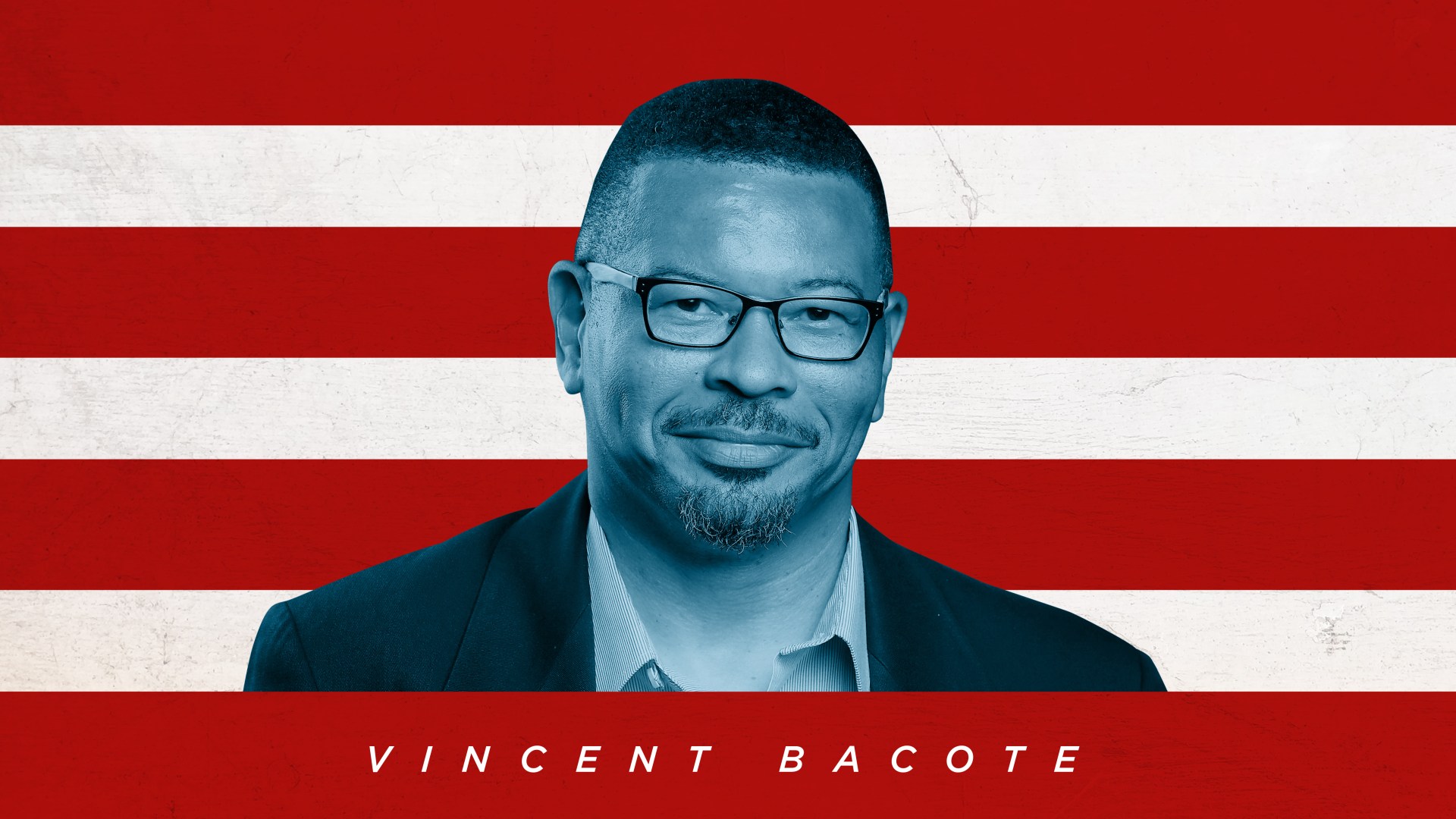
Vincent Bacote is an associate professor of theology and the director of the Center for Applied Christian Ethics at Wheaton College.