Theology

The God Who Suffers

An Advent reading for December 12.

Nicole Xu

Advent Week 3: Sacrifice and Salvation


God spoke through the prophets in the Old Testament, using poetic words and imagery, to describe the hope of salvation. This week, we contemplate prophecies pointing toward the Messiah—the servant, the light, the promised one God’s people longed for.

Read Isaiah 52:13–53:12.

During Advent, it is easy to sentimentalize the Incarnation. We imagine the God-man as a baby with his mother; we anticipate his ministry as “Wonderful Counselor” and “Prince of Peace” (Is. 9:6). These are true aspects of Jesus’ identity and humanity, and are certainly appropriate scriptural themes for this time of year. But Isaiah’s prophetic words in this last of his Servant Songs—which describe a coming servant of the Lord who will be found faithful to lead the nations—augment our understanding of Christ’s incarnate life: Jesus was born to suffer and die.

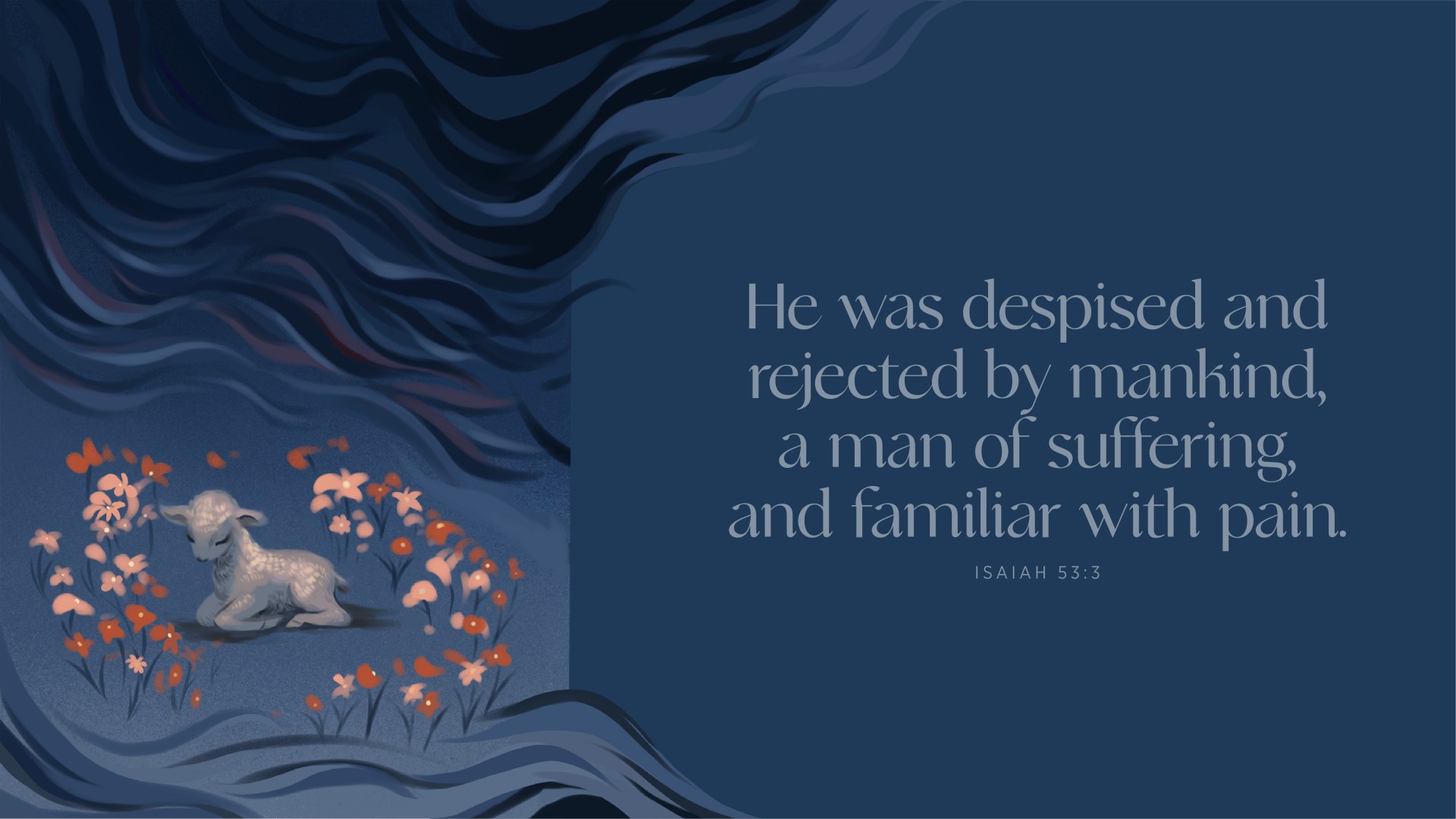
Jesus’ path to glory was not straightforward. Instead of being accepted by the world, he was despised and rejected (53:3). Instead of being exalted as king, he was tortured and murdered (53:5, 9). This is not merely a human tragedy—it is mysteriously part of the divine plan (53:10). Christ’s voluntary suffering reveals his willingness to be not only our High Priest, but also the sacrificial lamb.

This profound reality is more than a theological concept. Jesus suffered as a human being in a physical body, sharing in the most painful and dark aspects of the human experience. He knows what it is to be brutalized and humiliated (52:14), oppressed and abandoned (53:8). In the Incarnation, Jesus identifies with us even in our worst forms of suffering. For those who experience the holidays as painful or lonely, this aspect of Jesus’ life can be strangely comforting. No human tragedy extends beyond his understanding or his solidarity.

But Isaiah also makes it clear that Jesus’ story does not end in suffering and death. Rather, his affliction is the means through which he achieves his victory: “After he has suffered, he will see the light of life and be satisfied” (53:11). This is more than personal vindication. As God’s righteous servant, Jesus establishes justice and redemption for the nations of the earth. In other words, Jesus shares in our suffering so that we can share in his resurrection. His wounds redeem our own and become the very source of our healing (53:5).

As we contemplate the Incarnation in all its beauty, we can also be thankful for its grit. Jesus came down from heaven and then went further still: to the very depth of human shame and suffering. He did this for our sake. And when we meet him in our own suffering, sin, and shame, we can be confident that he will not leave us there—for by his wounds we are healed.

Hannah King is a priest and writer in the Anglican Church in North America. She serves as associate pastor at Village Church in Greenville, South Carolina.

Meditate on Isaiah 52:13–53:12.

What draws your attention most? How does this poetic prophecy deepen your engagement with gospel? Pray, reflecting on how these dark descriptions of what the servant would suffer are crucial in our observance of Advent.

Also in this issue

Many core tenets of the gospel reverberate powerfully throughout Advent’s traditional readings and themes. In these daily devotional readings from CT, we reflect on the mystery of the Incarnation, on Christ’s purpose as the long-awaited Messiah, on our sin and need for repentance, on God’s promises of salvation and justice, and on our firm hope in Christ’s return and everlasting kingdom. We prepare to celebrate the “newborn King” who was “born that man no more may die,” as Charles Wesley’s beloved carol declares. And we’re reminded again and again throughout Advent that the gospel is not just for us, but it is a message of “great joy for all the people” (Luke 2:10)—it’s good news that’s meant to be shared.

A Light to the Nations

Glenn Packiam

Great Joy for All People

Rachel Gilson

Quietly Hidden

Tracey Gee

Gospel Anticipation

Matthew D. Kim

A Pregnant Promise

Let it Be

Glenn Packiam

Silent Time, Holy Time

Jonathan T. Pennington

What it Means to Be God

Wesley Hill

The Baby King

Matthew D. Kim

The Light Is Coming

Rich Villodas

The Messiah’s Mission

Glenn Packiam

True Hope

Kristie Anyabwile

Bringing Us Home

Marlena Graves

What Hope Looks Like

Marlena Graves

The Gospel of Advent: Good News for the Season

Behold the Lamb

Anthony J. Carter

Amazing, Cleansing Grace

Jen Pollock Michel

Good, Severe News

Jen Pollock Michel

Repentance Made Possible

Jen Pollock Michel

The Rising Son

Wesley Hill

Comfort My People

Jennifer M. Rosner

He Won't Leave Us Alone

Jennifer M. Rosner

The Gospel Life in Person

Matthew D. Kim

Come, Lord Jesus!

Richard Bauckham

City of Light

Richard Bauckham

All Things New

Richard Bauckham

Right or Left?

Rachel Gilson

Watch and Pray

Rachel Gilson

We Begin at the End

Kelli B. Trujillo

View issue

Our Latest

Hark! The Boisterous Carolers Sing

Ann Harikeerthan

I grew up singing traditional English Christmas hymns. Then I went caroling with my church in India.

“Christian First, and Santa Next”

Even while wearing the red suit, pastors point people to Jesus.

The Russell Moore Show

A Reading of Luke 2

Voices across Christianity Today join together to read the Christmas story found in Luke 2.

How Pro-life Groups Help When a Baby’s Life Is Short

Adam McGinnis

Christian groups offer comfort and practical support for expectant families grappling with life-limiting illness.

The Bulletin

The Christmas Story

The CT Media voices you know and love present a special reading of the Christmas story.

My Top 5 Books on Christianity in East Asia

Insights on navigating shame-honor cultural dynamics and persecution in the region.

A Rhythm of Silence and Solitude

Our culture rewards the sharpest take, but two spiritual practices can help Christians show up better in the public sphere.

What Rosalia’s ‘LUX’ Reveals About Religion Today

Christina Gonzalez Ho and Joshua Bocanegra

Young women score higher in “spirituality” than young men, but they’re leaving the church in droves. That comes through in recent releases like this one. 

Apple PodcastsDown ArrowDown ArrowDown Arrowarrow_left_altLeft ArrowLeft ArrowRight ArrowRight ArrowRight Arrowarrow_up_altUp ArrowUp ArrowAvailable at Amazoncaret-downCloseCloseEmailEmailExpandExpandExternalExternalFacebookfacebook-squareGiftGiftGooglegoogleGoogle KeephamburgerInstagraminstagram-squareLinkLinklinkedin-squareListenListenListenChristianity TodayCT Creative Studio Logologo_orgMegaphoneMenuMenupausePinterestPlayPlayPocketPodcastRSSRSSSaveSaveSaveSearchSearchsearchSpotifyStitcherTelegramTable of ContentsTable of Contentstwitter-squareWhatsAppXYouTubeYouTube