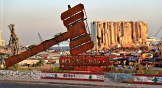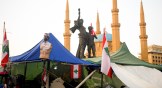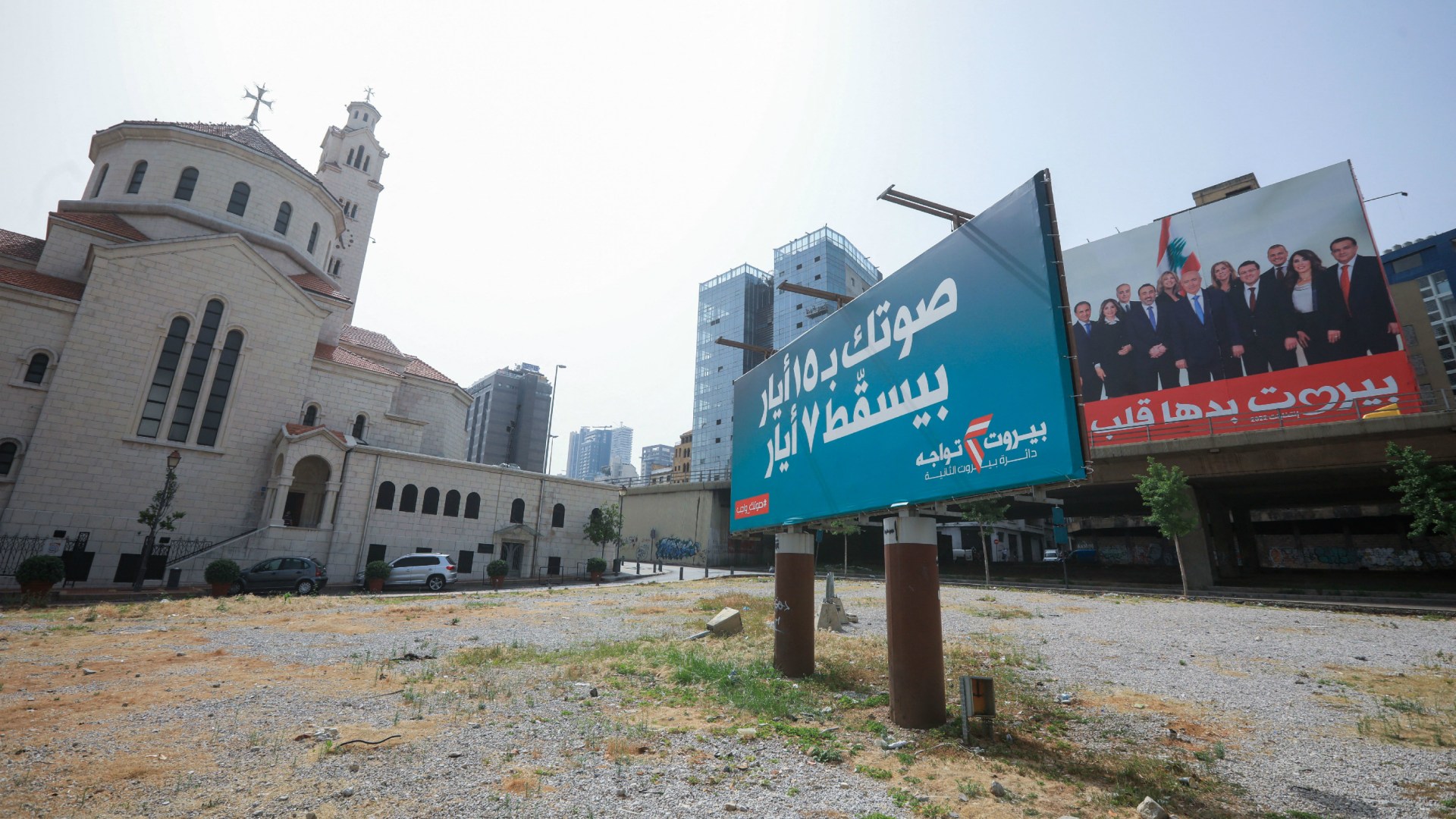
Lebanon is a mess. A stalled revolution. The Beirut explosion. Economic collapse.
But now we have a chance to vote. On May 15, for the first time in four years, citizens can react officially to the disastrous failure of our ruling parties. Even if in limited fashion, ballot boxes can change the course of a country.
No matter your nation, elections offer hope.
But also uncertainty. In Lebanon, will we renew the mandate of leaders who have led us into this malaise? Will one side of the political spectrum ascend against the other? Will opposition movements and individuals manage to win seats?
These elections are of massive importance.
But what will happen afterwards, when the excitement of democratic involvement wears off? Lebanon teeters regularly between expectation of upheaval and disillusionment with the corrupt system. Some view this weekend’s vote as our best chance to hold leaders accountable. Others, in apathy or despair, doubt anything will change.
Amid these questions, evangelicals are debating their faithful response.
Last week, I was the guest of a weekly morning Christian radio show. Given our political season, the host asked me about the believer’s duty to participate in the elections. Sharing a zeal for political change, she offered a softball question inviting me to give a moving speech encouraging Christian listeners to make a difference.
I chose my words carefully.
I will vote, I replied, and I have a clear preference. The secular movements opposed to our sectarian system offer the best hope for justice and change. But—and it is a big “but”—I told her there is no biblical or theological obligation for Christians to take part in elections.
She pushed back, surprised by my answer. Knowing my history of political activism, she likely expected an enthusiastic ramble about the responsibility to vote. We grew up in the same Lebanese evangelical circles, where the prevailing view is that faithful Christian citizenship involves casting a ballot.
I want to be clear: Our current ruling regime has behaved in a criminal fashion against the people of this country—Lebanese, refugees, and foreigners alike. They should be voted out of power.
But this is not a Christian mandate.
As believers, we have a rich biblical and historical tradition of opting out of the messiness of political life. Alternately, though it makes me uncomfortable, we also have legitimate examples of voting for the “lesser of two evils.” Some of us will abstain altogether. Others, in good faith, will vote for the parties I despise. But no matter our choices, the Bible consistently affirms that we belong to a new Kingdom that transcends political borders and divisions. Our citizenship is in heaven.
But on the earth, 1 Peter and 1 Timothy call us to accept current rulers and to pray for those in authority. It is possible to enact change through faithful witness and living out the gospel, rather than through direct political engagement. But we balance these passages with the examples of Israel’s prophets facing off against oppressive kings, and John’s description of the Roman empire as a murderous beast.
The Bible is full of politically charged passages, offering a spectrum of reactions to worldly realities. And among them, equally political, is the choice to abstain from political life.
All are viable Christian positions.
We are not being faithful to our scriptures if we tell our congregations that our biblical duty is to vote. Our biblical duty, simplified, is to be faithful to the gospel—the good news of Jesus. God has launched the new creation, uniting heaven and earth to himself in Christ. He invites us to join in this marvelous divine plan as a church, as we seek justice, love mercy, and live in service as a feet-washing community to each other and the world.
How we do that can vary among individuals, faith communities, and situations. I choose to seek justice through voting. You might choose to seek justice through acts of mercy in the local community. The two are not mutually exclusive, nor does one hold privilege over the other.
The key is faithfulness to the gospel. Do our choices and actions further the reach of the Kingdom? Do they glorify God? These are the question we must wrestle with as communities and individual travelers on the road of faith—far more than any specific political choice.
Of course, the different democratic and governmental systems bring different sets of theological questions. I may be compelled to vote in one situation but then refrain in another. Theology in practice always demands degrees of fluidity, and it is good to regularly evaluate our postures and convictions.
Does your conscience compel you to not vote? That’s fine. Consider the Anabaptist tradition of practicing Christian ministry in humility and mercy to all parties. Does your conscience compel you to vote? Wonderful! Consider the example of William Wilberforce, who labored 20 years in parliament to end the British slave trade.
What does this mean for us in Lebanon—or for believers in any nation?
Let us know—before, during, and after the elections—that Jesus is Lord.
Let us be wary of dressing our political decisions with biblical certainties.
Let us take care that our political philosophies, whether leading us towards direct engagement or conscious disengagement, be biased towards the marginalized and against the interests of power, money, and accumulation of privilege.
Let us pray: Lord, have mercy over our nation and its people.
A faithful Christian can vote. A faithful Christian can also abstain from voting. Our tradition is a big house with room for both. But in all places and times, the faithful disciple in the way of Christ must decide in accordance with the principles of justice and mercy.
This is the truth that guides us on election day—and every day.
Nabil Habiby is a Beirut-based lecturer in New Testament studies at Arab Baptist Theological Seminary (where a version of this op-ed was first published), and is a political activist with the Li Haqqi secular opposition movement.
Speaking Out is Christianity Today’s guest opinion column and (unlike an editorial) does not necessarily represent the opinion of the publication.