
Much of Terry LeBlanc’s adult life has been driven by one question: Can you be fully Indigenous and fully a follower of Jesus?
His answer has been a resounding yes.
Over the past three decades, he and others have built a seminary to offer theological education to Indigenous people in the United States, Canada, and the world, so that they can answer yes too.
NAIITS, previously known as the North American Institute for Indigenous Theological Studies, was founded in 1998 with a vision of seeing “men and women journey down the road of a living heart relationship with Jesus in a transformative way which does not require the rejection of their Creator-given social and cultural identity.” In 2021, it became the first Indigenous school to receive full accreditation from the Association of Theological Schools. NAIITS can now offer accredited master of arts, master of theological studies, and master of divinity degrees, as well as doctorates in Indigenous Christian theology.
Last year, NAIITS received two grants worth $6 million from Lilly Endowment to do just that. The school will use $1 million to develop a master’s program in trauma-informed spiritual care. The other $5 million will go toward creating the Canadian Learning Community for Decolonization and Innovation, a collaborative project with four other universities.
LeBlanc, who is Mi’kmaq-Acadian and holds a PhD from Asbury Theological Seminary, said NAIITS teaches people how to reimagine the relationship between faith and culture. The academic term is decolonization, which LeBlanc said doesn’t mean diminishing the power of Jesus or the gospel, but making space for Indigenous perspectives and learning to see Indigenous identity and culture as God-given instead of something to be discarded.
“There is often an assumption that Indigenous cultures are negative and should be left behind,” LeBlanc said. “All theology is culturally bound and engaged, and none is ideal or perfect. But we believed that we too could embed our faith in our culture and identity.”
At the school’s 20th annual symposium this June, scholars and church leaders looked at how Christian faith can be expressed through Indigenous music. Historically, some Christians have condemned using drums, saying they are inherently sinful. The NAIITS teachers believe they can be used to proclaim the gospel and worship God.
At the gathering, in Manitoba, one professor taught people an Indigenous worship song on drums and shakers. The people sang with him: “Jesus is good medicine / good medicine, ah hey.”
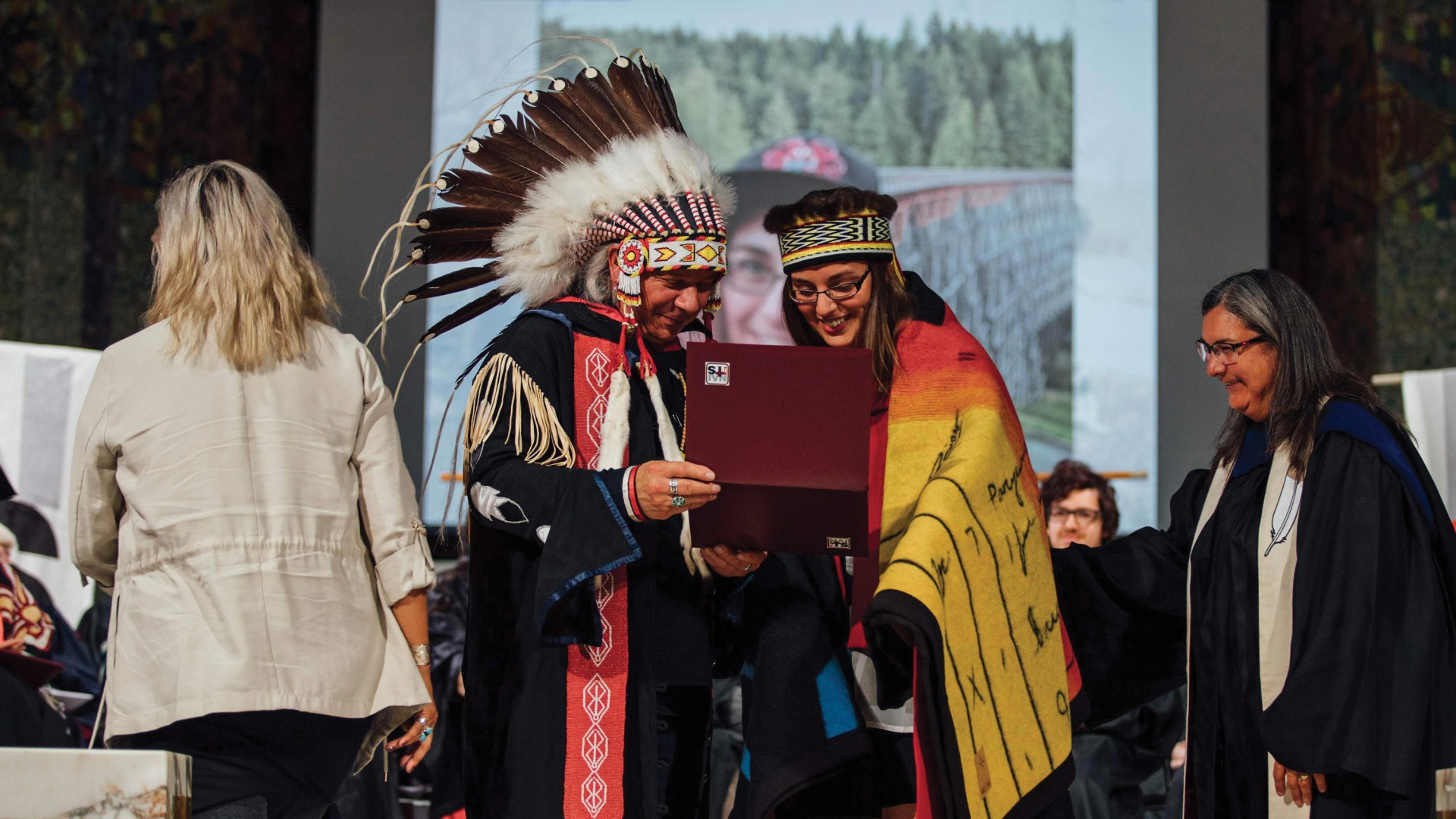
NAIITS also celebrated 11 graduates at the symposium. The school operates on a trimester schedule, with students taking online classes for two semesters and attending a third in person. The in-person trimester takes place at three partnering institutions—Acadia Divinity College in Nova Scotia; Tyndale University and Seminary in Toronto; Kairos University in South Dakota—so NAIITS does not need to maintain a physical campus. NAIITS also parnters with Meachum School of Haymanot in Missouri and Sydney College of Divinity Australia.
Keeping the education mostly virtual allows students to remain in their own communities, which is less disruptive and less expensive. NAIITS hopes the graduates will form deep connections to better minister in their own contexts. At the same time, they come together enough to form a common bond.
“It’s a community—we share life together,” LeBlanc said. “It’s not simply academics. And it’s also not simply Indigenous people coming together and having a hug fest.”
As NAIITS expands its vision and reach, its leadership is also growing—and changing. LeBlanc, the school’s founding director, is transitioning to director emeritus and will join the NAIITS elders along with his wife, Bev.
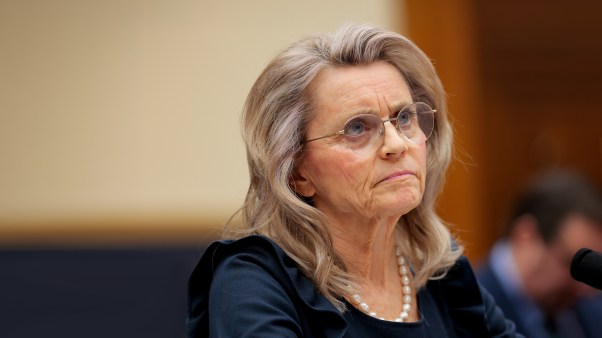
NAIITS leadership is being taken up by Shari Russell, who is treaty-status Saulteaux (Anishinaabe) from the Yellow Quill First Nation in Saskatchewan. Russell, who is also an ordained officer in the Salvation Army, is an example of how NAIITS hopes to help people reconcile their faith and culture.
“I didn’t know what it meant to be Indigenous and a follower of Jesus,” Russell said. “And then I met these guys. It’s truly been a wonderful journey.”
As a child, Russell and two of her siblings were removed from their home on the reserve—separated from their family and community—and put in the child welfare system. This is known in Canada as the “Sixties Scoop,” part of the long and brutal record of white Canadian Christian attempts to “help” by eradicating Indigenous culture.
That history left many, like Russell, with the sense that they had to choose: If they were going to follow Jesus, they would have to completely assimilate to Western Christian culture. If they were going to embrace their Indigenous identity, they would have to reject Jesus.
NAIITS proposes the two can be reconciled and were, in fact, never really opposed. For people like Russell, NAIITS offers the space to reclaim and relearn the parts of their identities and cultures once taken from them.
“It’s been a process. Even for some of the founders,” said Russell, who was reunited with her family and joined NAIITS in 2002. “A lot of people have been wounded before. But people come to NAIITS because it’s different.”
Danny Zacharias, a NAIITS New Testament professor who met LeBlanc while working on his doctorate, remembers when LeBlanc urged him to make his Indigenous identity central—as a person and a Christian.
“That wasn’t something we were told was important,” said Zacharias, who is Cree and Anishinaabe on his mother’s side. “We were even told it was demonic sometimes.”
But Zacharias, who is ordained by the Canadian Baptists of Atlantic Canada, came to see that LeBlanc was right. The integration of his Christian identity with his cultural heritage was transformative for him.
“Indigenous believers would say, ‘I am an Indigenous Christian’—not that I’m ‘just a Christian,’” he said. “It’s both the decolonizing of theology and rethinking what gets packaged with the Christian message.”
Another faculty member, Kimberlee Medicine Horn Jackson, a Yankton Sioux poet and writing professor, said the NAIITS community is special because of its Indigenous leadership.
“In the mainstream, most of the academic voices who were speaking were outside of those Indigenous communities,” said Jackson, who is also a NAIITS PhD student. “When that happens, there is a level of disconnection.”
Since the beginning, NAIITS has been Indigenous taught and governed. The school also welcomes non-Indigenous students, but their total number is capped.
Part of the mission of NAIITS, according to Russell, is to create a space where Indigenous people can do theology. But the goal is to do more than that. Indigenous theologies challenge “the Western framework Christian theology often comes in.”
She said that many Christian theological perspectives, for example, begin with the Fall in Genesis 3, when sin enters the world and separates humanity from God. Indigenous theologians, on the other hand, often start with the beauty and goodness of God’s creation.
According to Russell, a learning community that cultivates those kinds of insights not only leads to healing and flourishing for many Indigenous Christians—fully Indigenous, fully followers of Christ—it can also be a blessing to the broader church.
“The value that Indigenous world-views and epistemologies bring to our expression as Christ followers sometimes is missed,” Russell said. “But there’s so much that we have to bring that will enhance, I think, the full body of Christ.”
Hannah McClellan is a reporter in North Carolina.
Correction: An earlier version of this story said NAIITS was founded in 2000. It was founded in 1998 and incorporated in 2000.