Books
Excerpt

Some of My Social Justice Allies Are Terrifying, and I Value Them for It

“Sensitive” types like me won’t always mesh with more intimidating activists. But we need each other to thrive.

Joe Yates / Unsplash

In almost every nonprofit or social enterprise job I’ve had, at least one coworker terrified me. There was the boss who gave unexpectedly negative feedback on my performance review. There was the director who had sudden, inexplicable outbursts of anger and frustration. There was the colleague who asked pointed questions, one after another, staring at me intensely and unrelentingly until I responded. There was the manager who frequently sent angry emails in ALL CAPS, punctuated with rows of exclamation marks.
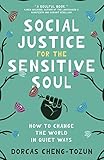
Social Justice for the Sensitive Soul: How to Change the World in Quiet Ways

Social Justice for the Sensitive Soul: How to Change the World in Quiet Ways

Broadleaf Books

227 pages

Not surprisingly, I had a hard time working with these individuals. They caused me intense stress and anxiety. Yet in hindsight, I find that I deeply value those colleagues. I appreciate the ways in which they pushed me beyond what was comfortable and the ways I grew as a result.

In any discussion about sensitives and empaths like myself, it is easy to focus on the negative aspects of being around those who aren’t like us. And while it is vital to set boundaries with toxic people in your life—including in social justice work—it’s also healthy to create space for “nonsensitive” peers who genuinely care about you and the social good. They may come across as prickly or aggressive, but they also bring many gifts to the table.

My nonsensitive colleagues have wowed me time and again with their confidence, persistence, resilience, and risk-taking. They are willing to fight the battles that I can’t, taking on the adversaries I would sooner run away from. They aren’t afraid to say hard truths or challenge long-held assumptions. They see and pursue opportunities that intimidate me. They help me to see what’s possible, and their efforts amplify my own.

Social justice work is complex and dynamic. It demands people who bounce back more quickly, who eagerly jump into the fray. We need colleagues who will challenge our assumptions in private and readily come to our defense in public. Their strengths counterbalance our strengths.

I still struggle with criticism and strongly worded emails. But I’d like to think that I’m a healthier version of my highly sensitive self: willing to take action a little sooner and better at understanding what’s worth processing and what’s worth letting go.

In a sphere like social justice, conflict and resistance are inevitable. When the warrior activists take on the louder, messier fights, they create space for us priestly advisers to work in more subtle ways. When we can respect and appreciate our differences, creating space for one another’s skills and gifts, there’s so much more we can accomplish.

From Social Justice for the Sensitive Soul: How to Change the World in Quiet Ways by Dorcas Cheng-Tozun copyright © 2023 Broadleaf Books. Reproduced by permission.

Also in this issue

Our cover story this month explores the question, Does it matter if Christians declare their personal pronouns or use those given by others? Also in this issue: the changing face of atheism, reclaiming Martin Luther King Jr.’s “Dream,” how churches in Appalachia are responding to the opioids crisis, and a closer look at repentance in the Gospel of Luke.

Cover Story

Should I Offer My Pronouns?

15 Percent of Churches Laid Off Staff in COVID-19. Many Are Still Looking for Work.

Reclaiming MLK Jr.’s ‘Dream’ 60 Years Later

Mika Edmondson

With Eyes to See Addiction, Appalachian Churches Respond to the Opioids Crisis

S. J. Dahlman

Christians Could Change Adoption Laws in the Middle East. Will They?

Lawsuit Seeks Information about Missing Malaysian Pastor

At Indigenous Seminary, Students Learn the Power of Faith Embedded in Identity

Hannah McClellan

A Russian Pastor Spoke Out Against Putin’s Invasion. It Cost Him His Church.

Your Mind Is on God’s Mind

Paul Put His Own Stamp on the Ancient Pattern of Opening and Closing Letters

Testimony

Jesus Met Me on the Morning of My Funeral

Cedric Kanana with Benjamin Fischer

Repentance Is Both Vertical and Horizontal

Darrell L. Bock

A Washington Church Grows Great Commission Wheat

Loren Ward

Mormons Expect More of the Next Generation. Why Don’t We?

A Righteous Cry

A Chorus of Replies about Church Worship

Kate Lucky and Alexandra Mellen

Jesus Loves Opioid Addicts

New Atheism Is Dead. What’s the New New Atheism?

Western Theologians Need Non-Western Theologians—and Vice Versa

Interview by J. Nelson Jennings

Review

Since When Did Pleasing God Become an Unattainable Ideal?

Anne Kennedy

Review

Repairing the Evangelical House Means Renewing the Evangelical Imagination

Carolyn Weber

New & Noteworthy Books

Matt Reynolds

View issue

Our Latest

Public Theology Project

Why John Perkins Stood (Almost) Alone

The civil rights leader treated love of God and love for others as inseparable.

The Russell Moore Show

Doug McKelvey on Rites of Passage and the Sacredness of Ordinary Life

Every Moment Holy author Douglas McKelvey on writing prayers for the moments both sacred and mundane.

From a Galaxy Far, Far Away to Carol Stream, Illinois

CT tracked cultural changes while going through several of its own.

What Loving South Africa Taught Me About Patriotism

Christina Stanton

Attachment to another country didn’t diminish my affection for America. It showed me God’s love for all peoples.

Wonderology

Owner’s Manual Part One: The Instructions

What if our bodies came with operating instructions—and we could finally read them?

The Bulletin

IDF and Lebanon, Ukraine’s Fears, AI Data Centers, and a Korean Messiah

Mike Cosper, Clarissa Moll, Russell Moore

Israel fights Hezbollah, Ukraine left behind, US builds data centers, and North Korea’s Evangelical roots.

Review

Trashing Evangelicals Is No Way to Fight Conspiracism

Jared Stacy’s new book correctly identifies a serious problem. But his depiction of evangelicalism is overblown and unreasonable.

Some Israelis are Turning to Faith Amid Ongoing War

Studies show a renewed interest in Judaism, and pastors report an increase in baptisms.

Apple PodcastsDown ArrowDown ArrowDown Arrowarrow_left_altLeft ArrowLeft ArrowRight ArrowRight ArrowRight Arrowarrow_up_altUp ArrowUp ArrowAvailable at Amazoncaret-downCloseCloseEmailEmailExpandExpandExternalExternalFacebookfacebook-squareGiftGiftGooglegoogleGoogle KeephamburgerInstagraminstagram-squareLinkLinklinkedin-squareListenListenListenChristianity TodayCT Creative Studio Logologo_orgMegaphoneMenuMenupausePinterestPlayPlayPocketPodcastprintRSSRSSSaveSaveSaveSearchSearchsearchSpotifyStitcherTelegramTable of ContentsTable of Contentstwitter-squareWhatsAppXYouTubeYouTube