A Christian ministry in Honduras has waited nearly two months to receive 700 water filters, 300 desks, and school supplies for 200 students. But the goods aren’t stuck on the side of the road or lost at sea.
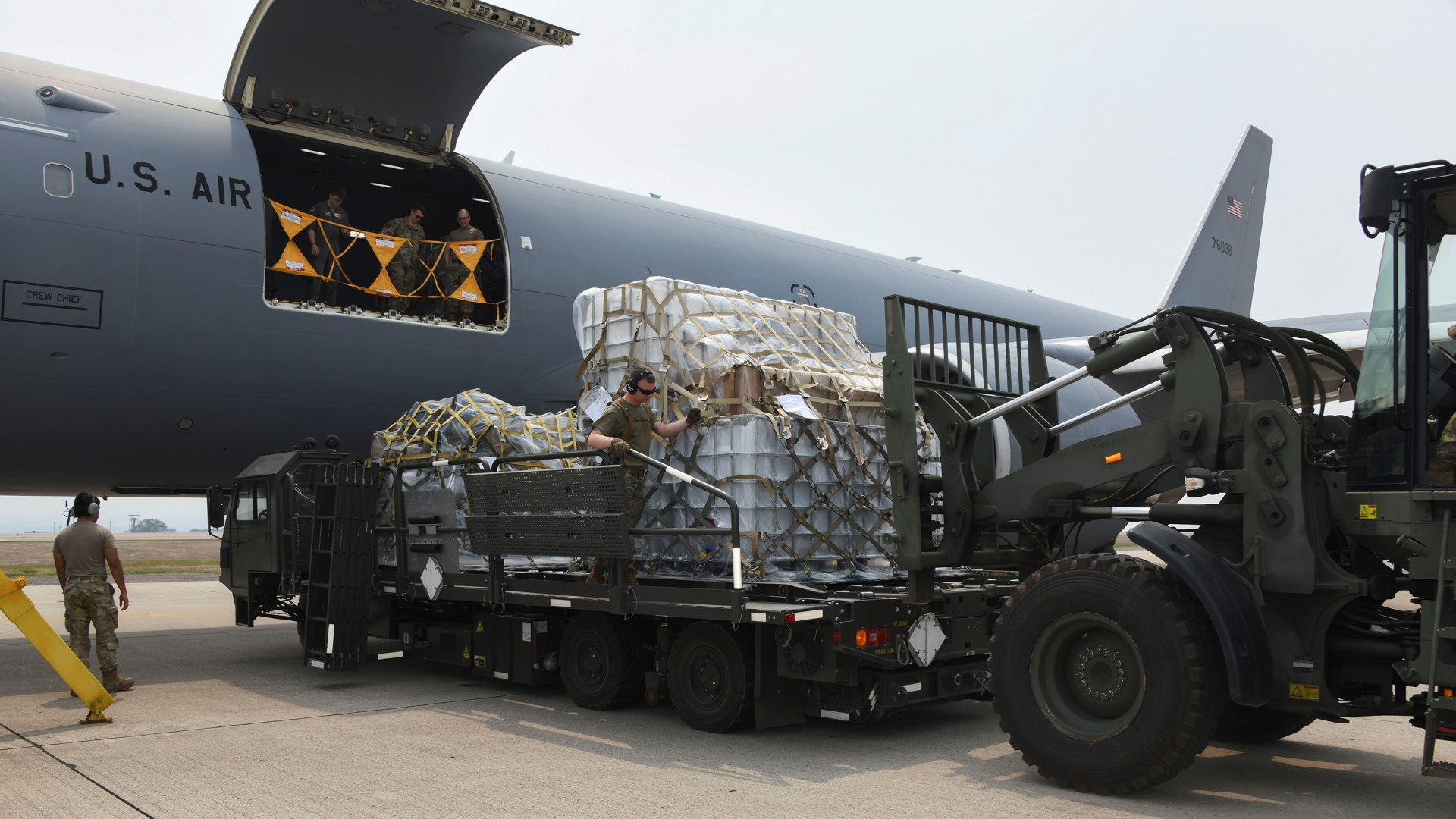
Instead, they’re sitting 10 miles away in the city of Palmerola, at a storage facility in the largest US military base in Central America. It is this site, Soto Cano Air Base, that the Honduran government threatened to close in January after hearing that the US might begin deporting undocumented immigrants back to the country.
In February, just days after the shipment arrived, the Honduran government informed El Ayudante, the Christian ministry, that it would not allow the cargo to be cleared even though staff could easily make the drive.
“It’s frustrating to be so near and not be able to collect the cargo,” said executive director Tristan Mohagen.
Honduran president Xiomara Castro said on January 1—before President Donald Trump took office—that the country would have to “reconsider our cooperation policies with the United States, especially in the military sector” while “facing a hostile policy of mass expulsions of our brothers.”
“For decades, they have maintained military bases on our territory without paying a single cent,” she said. “In this case, those bases would lose all reason to exist in Honduras.”
These statements were a response to the plan of mass deportation of undocumented immigrants mentioned by President Trump in speeches during last year’s electoral campaign.
Honduras’s ambassadors to Mexico, Guatemala, and the US met with Castro following Trump’s inauguration, but the government has yet to announce a new strategy. After weeks of silence, on March 20, Foreign Affairs Minister Eduardo Enrique Reina said that both countries have “started a process of very frank and direct conversations” about migration issues.
Honduran immigrants in the United States play a crucial role in Honduras’s economy. Remittances sent by Hondurans abroad to their families account for 25 percent of the nation’s GDP. A mass deportation of Hondurans living abroad would lead to widespread economic hardship for the local population, where 60 percent of the 10 million inhabitants already live in poverty.
El Ayudante, which started its ministry in 2004, has been working to address these socioeconomic challenges in Comayagua, a city in central Honduras about 60 miles west of the capital.
Its church and ministry partners in the United States regularly rounded up materials and resources and transported them to Honduras through the Denton Program, which allows nonprofit organizations to use empty spaces on military aircraft to ship humanitarian aid at no cost. The program is operated by the US Air Force and managed by USAID.
Beyond the supplies in Soto Cano, additional goods remain in the United States while the ministry figures out a logistics plan. These supplies include a panoramic x-ray machine for dental care, wheelchairs, crutches, and medical equipment, which are currently stored in partner-organization warehouses in Illinois and Connecticut.
In February, however, the ministry told its partners to pause collecting donations. Even if the issues related to the Honduran government are resolved, the USAID cuts, which suspended 1,600 of USAID’s public-service staffers and froze humanitarian aid programs, may end the Denton Program.
Christianity Today reached out to the Department of State and the Department of Defense about the status of the program but did not receive a response.
Over the years, El Ayudante has received at least eight supply shipments through the Denton Program, said Mohagen. The initiative addresses one of the biggest challenges faced by US compassion ministries operating in Honduras: accessing equipment and materials larger than a suitcase.
Since registering for the program, the ministry has received solar panels, which have reduced energy costs; computers, which El Ayudante donated to local public schools; and appliances, which are used in ministry facilities.
While ending Denton would not make El Ayudante’s work impossible, it would significantly increase operational costs, said Mohagen.
El Ayudante had been counting on this equipment for its Comayagua clinic, whose staff of three doctors, three dentists, and a team of nurses treats around 15,000 patients annually. The desks are for local public schools, which El Ayudante had said it would deliver for the start of the school year at the beginning of February. “We promised, but we were not able to deliver,” said Mohagen.
His biggest concern, however, is the missing water filters, which harness gravity rather than electricity to purify water. Given the region’s irregular water supply, many families rely on these filters for drinking and cooking.
Every year, El Ayudante hosts 28 short-term teams from the US that build churches and homes, install concrete floors in makeshift houses, set up latrines, and distribute water filters while supporting other ministry activities. The mission also runs a tutoring center that supports 180 high school students and offers scholarships to 20 college students.
Combating poverty in Honduras is a core goal of El Ayudante, which operates under the vision “Changing Lives, Transforming Communities.” With this mission in mind, Mohagen remains optimistic that the humanitarian aid—especially the supplies already stored at the air base—will soon be cleared for delivery.
“The military doesn’t need that cargo taking up space,” he said. “We can certainly make good use of it.”